Why grow broad beans?
If you want something in the ground that quietly gets on with it through a British winter, this is the crop. Broad beans (also called fava beans) are one of the toughest and earliest things you can grow, and few vegetables reward a beginner so kindly. An autumn-sown row will sit out frost, wind and grey January and then hand you a pick of sweet, buttery beans in May or June, weeks before almost anything else is ready.
They earn their place in other ways too. Broad beans are a legume, so like peas they pull nitrogen from the air and fix it at their roots, leaving the soil richer than they found it. The plant is more or less dual-purpose: you eat the beans, of course, but the soft growing tips you pinch off are a lovely spring green in their own right. And the flowers smell wonderful and the bees adore them. For a low-fuss first crop, they take some beating.
Should I sow in autumn or spring?
Here is the nice part: you get to choose, and both work.
Autumn sowing means putting seed in during late October or November, using a properly hardy variety. The plants make a little growth, sit tight over winter, then race away in spring for a crop that is ready in May or June. Two big wins come with this. First, you are eating broad beans while everyone else is still sowing theirs. Second, an early crop is often podding up before blackfly numbers hit their summer peak, so you dodge the worst of your main pest. The catch is that soggy, waterlogged ground over winter will rot the seed, so autumn sowing suits free-draining soil and milder or sheltered gardens best. A cloche or a bit of fleece helps in colder spots.
Spring sowing is the more forgiving route and fine for anyone. You can start seed indoors or under cover from February, then sow direct outdoors from March through to May once the soil has begun to warm. Germination is more reliable in spring warmth. Sow a short row every three weeks or so and you will spread the harvest over a longer stretch rather than facing a glut.
How and where do I sow them?
Broad bean seeds are big and easy to handle, which is part of why they are such a good crop to start with. You have two ways to go.
- 1
Choose your spot and variety
Pick a sunny, sheltered position. For autumn sowing use a hardy variety such as 'Aquadulce Claudia'. Short of space or in a windy garden? A dwarf type like 'The Sutton' stays around 45cm and copes well in pots.
- 2
Sow direct
Push each seed about 5cm deep into the soil, roughly 20cm apart. The classic layout is a double row: two lines about 20-23cm apart, with around 60cm between each pair so you can get in to pick and support them.
- 3
Or start them in pots
Sow into deep pots, module trays or root-trainers indoors or in a cold frame, one seed per cell. This is handy for a February start or if mice tend to dig up direct-sown seed. Plant out once they have a few centimetres of top growth.
- 4
Water and wait
Keep the soil moist but not soggy. Seedlings usually push through in a couple of weeks in spring, and rather more slowly from an autumn sowing.
What soil and site do they like?
Broad beans are not fussy, but they do have preferences. They want a sunny spot and soil that drains freely. Waterlogged ground is the main thing that scuppers an autumn sowing, so if your plot sits wet over winter, either lift it with some compost or wait for spring.
Don't overdo the feeding. Very rich soil pushes lots of soft, leafy growth, which is exactly what blackfly want, at the expense of pods. A soil in reasonable heart is plenty. If you are digging in well-rotted manure or garden compost, do it in moderation. Our composting guide covers how to make the kind of gentle, crumbly stuff these beans appreciate.
Do broad beans need support?
They do, and it is worth doing before they need it rather than after. Broad bean plants grow tall, get top-heavy once the pods swell, and then flop or snap in the first stiff wind, usually taking your crop down into the mud.
The simplest method suits that double-row layout perfectly. Push a sturdy cane or stake in at each corner of the double row, and another every 1.2m or so along its length. Then run string around the outside of the canes to box the whole row in, adding a second and third line of string higher up as the plants grow, roughly every 30cm. The plants lean on the string rather than on each other, and the row stays upright right through to harvest.
An autumn-sown row sits out frost and grey January, then hands you sweet beans in May, weeks before anything else is ready.
How do I deal with blackfly?
Blackfly, properly the black bean aphid, is the pest that defines growing broad beans in the UK. You will spot them as dense black colonies clustered on the softest, newest growth right at the top of the plant, and left alone they weaken it and spoil the tips.
The good news is they are very manageable without reaching for anything nasty. Pinching out the growing tips (see the tip box above) is your single best move, because it removes their favourite spot just as they arrive. Beyond that:
- Encourage the predators. Ladybirds and their larvae, along with hoverflies and lacewings, hoover up aphids. A garden that isn't sprayed keeps these allies around.
- Use water. A sharp jet from the hose knocks small colonies clean off, and many won't make it back.
- Catch it early. Check the tips every few days once flowering starts and rub off or snip out the first small clusters before they explode.
- Sow in autumn. As mentioned, an early crop is often well podded before blackfly peak in summer.
The same relaxed, predator-friendly approach pays off across the plot. It is exactly what we lean on for peas and runner beans too.
When and how do I harvest?
Start picking when the pods are well filled but the beans inside are still young. This is the bit beginners most often get wrong: it is tempting to leave pods on to "get bigger", but small beans are sweeter and more tender, while big old ones turn tough, floury and grey. A good tell is the scar on the bean, the little mark called the hilum where it joins the pod. On a bean picked at its best it is white or green. Once it darkens towards black, you have left it too long.
Pick regularly from the bottom of the plant upwards, and more pods keep coming. Very young, flat pods of around 6-7cm can be topped, tailed and cooked whole like mangetout. For everything else, pod them: split the pod along its seam and thumb the beans out.
Many cooks then "double-pod", slipping each bean out of its grey-green inner skin to reveal the bright green bean beneath. It is fiddly but gives you sweeter, more delicate beans, and it is easiest after a quick blanch. Purely optional, and plenty of people happily skip it.
Can I eat the tips and freeze the glut?
Yes to both. Those pinched-out shoot tips are one of the quiet pleasures of the crop: wash them and cook like spinach, steamed or stir-fried, while the beans are still filling out. It feels like getting two harvests from one plant.
Broad beans also freeze beautifully, which matters because a good row all comes at once. Pod the beans, blanch them in boiling water for three minutes, then plunge them straight into a bowl of cold water to stop them cooking. Drain, bag up and freeze. They keep their colour and sweetness far better this way than if you freeze them raw.
Do they really feed the soil?
They do, and it is one of the best reasons to keep them in your rotation. Broad beans are legumes, and legumes work with soil bacteria to fix nitrogen from the air into little nodules on their roots. So when you have finished picking, resist the urge to yank the whole plant out. Instead, cut it off at ground level and leave the roots in the soil. That stored nitrogen then feeds the next crop, and leafy, hungry plants like brassicas do especially well following beans.
What can go wrong?
Broad beans are hardy, but a few things are worth knowing about so they don't catch you out:
- Chocolate spot is the common one, a fungal disease that speckles the leaves, stems and pods with reddish-brown blotches. It thrives in damp, still, crowded conditions, so decent spacing and airflow are your best defence. Autumn-sown plants can be more prone to it after a wet winter.
- Rust shows as dusty brown spots on the leaves, usually later in the season. It rarely does much harm to a crop that is already podding.
- Pea and bean weevil is a small brown beetle, only about 4mm long, that chews neat U-shaped notches around the leaf edges. It looks alarming but established plants shrug it off. Young seedlings are more vulnerable, so keep them growing strongly.
- Mice and slugs will take newly sown seed and tender shoots. Starting seed in pots and planting out sturdy young plants sidesteps a lot of this.
Related guides and tools
Broad beans are a brilliant gateway into growing your own, and they pair naturally with the other easy legumes. Once you have got the hang of them, try growing peas for early summer pods and growing runner beans to carry the harvest right through to autumn. To feed your soil the gentle way these beans like, our guide to composting at home is the place to start, and you can browse everything else in our vegetable growing hub. Not sure whether it is a week for autumn sowing or spring? Our planting calendar tool tells you exactly what to sow and when for your part of the UK.
Frequently asked questions
Sources
- Broad beans: grow your own , RHS
- How to grow broad bean , Garden Organic
- How to grow broad beans , BBC Gardeners' World
Kit for this job (Ad)

MIXC Seed Trays, 10 Pack 120 Cells Seed Tray for Seedlings Reusable Seed Trays with Lids, propagators for plants, Germination Trays Kit Plastic for Greenhouse/Garden Green
Check price on Amazon →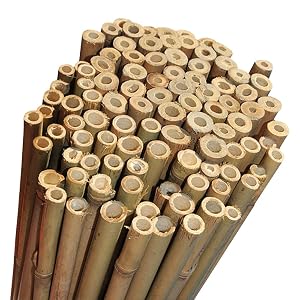
Elixir Gardens Strong Heavy Duty Professional Bamboo Plant Support Garden Canes | All lengths in stock 2, 3, 4, 5, 6, 7 & 8ft | Choose from a range of pack sizes from 10 to 250 | 3ft x 10
Check price on Amazon →
Vegetable Seeds Variety Pack - 30 Different Varieties of Vegetables, Beans, Herbs and Tomato Seeds. Grow Indoor and Outdoor. Father's Day Gardening Gifts for Women and Men
Check price on Amazon →
12 Vegetable Plants Seed Box, Grow Your Own Kits, 5100 Vegetable Seeds | Courgette, Chilli, Tomato Seeds for Planting UK, Unusual Gardening Gifts for Women & Garden Gifts for Men, Allotment Gifts
Check price on Amazon →We may earn a small commission, at no cost to you. We only list kit we'd use.
Written by
UK Homesteading Team
Editorial team
The UK Homesteading editorial team, offering UK-specific, evidence-led guidance on growing, keeping, preserving and the law.