Ask a room of smallholders what they charge, and you will hear the same instinct again and again: keep it cheap, be nice about it, and price just under whatever the supermarket is asking. It feels generous, it feels neighbourly, and it is the single biggest mistake in the whole business. Pricing too low does not win you loyal customers. It wins you a lot of hard work, a feed bill that never quite gets paid off, and a nagging sense that the whole thing is not really worth it.
This is the mindset companion to our practical page on how to price your produce, which walks through the mechanics step by step. Here we are going to talk about strategy: why cheap is a trap, how to find the floor below which you are losing money, and how to price on value so your produce actually pays you. It pairs naturally with our guides on enterprises that make money and adding value for profit.
The biggest mistake: pricing too low
Start with the trap, because most people fall straight into it. The reasoning goes: the supermarket sells eggs at £1.50 a box, so I will sell mine at £1.30 and undercut them. It is the worst possible yardstick.
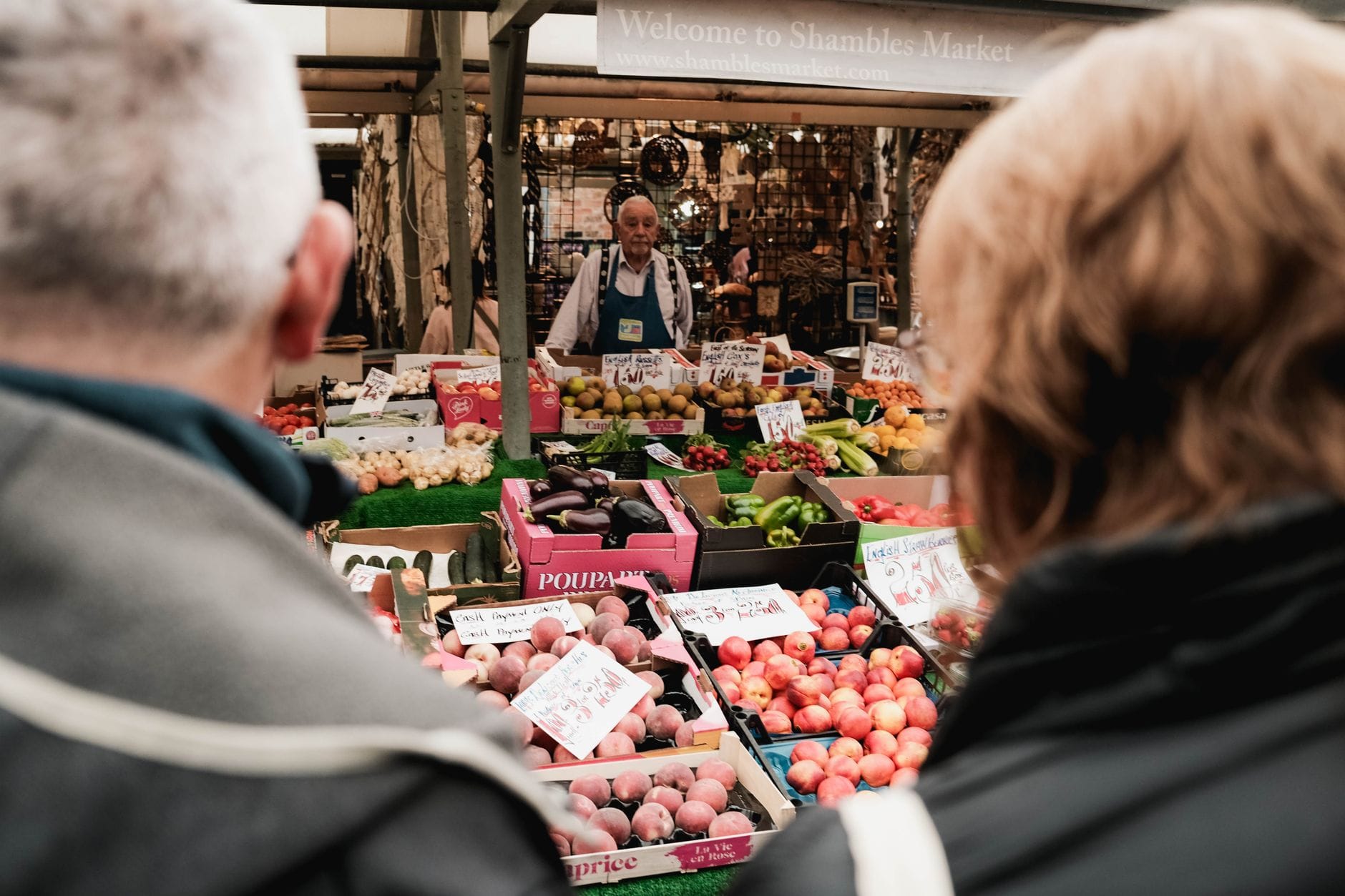
Supermarkets are not really your competitor, and you should stop treating them as one. They buy in vast volume, and they routinely sell fresh vegetables and eggs as loss leaders: priced at or below cost to get shoppers through the door, with the profit made elsewhere in the trolley. Geoffrey Wakeling, who runs Brimwood Farm in Suffolk and writes about market-garden pricing, puts it bluntly. You cannot, and should not, sell at supermarket prices, because the big stores use cheap veg as a hook and make up the shortfall on everything else in the shop. You have no everything-else to fall back on. Match their price and you simply lose money on every sale.
The real damage of pricing too low is not just to you. It drags down what every other small producer in your area can charge, and it quietly tells customers that local, hand-raised food is worth about the same as a factory tray of it. It is not.
You can see this play out in real life. On the Accidental Smallholder forum, smallholders selling free-range eggs report prices from around £1 up to £2 per half dozen, with a lot of them landing near £1.50. Read the same thread closely and the honesty is striking: one seller admits their £1.30 a half dozen "doesn't cover my costs" but says they need to "clearly undercut" the supermarket to shift them at all. Another does the sum out loud: 350 eggs a week at £1.50 for six comes to about £87.50, before a penny of feed, bedding, boxes or time is taken out. One grower is openly angry at "British farmers selling below production costs". That is what the race to the bottom looks like from the inside.
Know your floor: cost first, so you never sell at a loss
Before you can price on value, you need to know the price below which you are actually paying customers to take your produce. That is your cost floor, and working it out is the least glamorous but most important sum in the business.
Add up everything that goes into a batch. Seed or stock, compost, feed, water and power, packaging and labels, any market pitch or stall fee, fuel and delivery time, plus a sensible allowance for wastage, because not everything you grow will sell in good condition. Then divide by the number of units you actually sell, not the number you produced. Wonky, glutted or unsold stock still cost you money to make.
Geoffrey Wakeling is honest that when you are starting out, obsessing over the cost of every single seed can bog you down, and he prefers to do rough whole-garden accounting at first to see what sells. That is fair for finding your feet. But you still need a floor, and the floor has one component almost everyone forgets, which is important enough to get its own section.
Pay yourself, or admit it is a hobby
Here is the line that separates a business from an expensive pastime: cost your own labour.
Most smallholders leave their own time out of the sum entirely, then wonder why the money never adds up. If you put zero value on the hours you spend sowing, weeding, harvesting, washing, bagging and standing at a stall, then of course a low price looks fine. It is only fine because you are working for free. Put even a modest hourly rate on your time (decide what your hour is worth, and be realistic) and add it into the cost of the batch. Now you can see the truth.
This is not a fringe worry, it is where the numbers live or die. The Community Supported Agriculture Network's study of the economics of UK horticultural CSA farms found that wages and salaries make up a very high proportion of costs compared with other small businesses, and it recommends aiming for a 40% gross margin, split roughly as 20% on inputs, 40% on labour, 20% on overheads and 20% to reinvest. Notice that labour is the single biggest slice. A price that does not fund it is not a price, it is a subsidy you are paying.
Then price on value, not on cost
Costing tells you the floor. It does not tell you the price. Once you know you are safely above your floor, you set the actual number on what the produce is worth to the buyer, and that is almost always above the supermarket. That is fine. Your customers are buying something different.
They are buying freshness (picked this morning, not shipped last week), local provenance, how it was grown, and the story and trust that come with buying from the person who raised it. That is real value and it commands a real price. Wakeling prices his lettuces at £1.50 a head, having noticed his local grocer charging £1.75 for organic ones, and offers two for £2. He sells beetroot bunches at £3, or two for £5, openly "more than others locally", and still sells out, because he prices on his values rather than on being cheapest. Charge for what makes your produce better, not for what makes it comparable.
You can see the same principle in what actually pays on a smallholding. Charles Dowding's quarter-acre market garden at Homeacres, profiled by Agricology, turned over around £21,000 gross in a year, mostly from salad leaves sold to local restaurants and shops, and he is candid that salad is the crop that is "regularly profitable". High-value produce, priced on quality and sold close to home, is what makes a small area pay. Racing the supermarket on cheap staples is not.
If pricing on value makes you nervous (and it makes almost everyone nervous at first), you are not alone. UK flower-farming educator Georgie Newbery of Common Farm Flowers, one of the first of the new wave of artisan British flower growers and an author on the subject, runs whole workshops on pricing precisely because so many growers instinctively undercharge for beautiful, seasonal, locally grown work.
A worked example: cost it, then price it
Here is the two-step in action for a bag of mixed salad leaves. The numbers are illustrative and will differ for you by area, scale and year, so treat them as a method to copy, not gospel figures.
How to price a bag of salad so it pays
- 1
Add up the real inputs per bag
Seed and compost share about £0.15, the bag and label about £0.10, and an apportioned slice of your stall fee, fuel and any card fees about £0.25. Running inputs so far: roughly £0.50 a bag.
- 2
Cost your own time
Picking, washing, spinning and bagging might take six minutes a bag once you include the share of setup and selling. At a modest £12 an hour for your labour, that is about £1.20 of your time in every bag.
- 3
Add a wastage allowance
Some leaves bolt, spoil or do not sell. Add roughly 10% to cover it. Inputs plus time plus wastage lands your true cost floor at about £1.85 a bag.
- 4
Check the supermarket, then ignore it as a target
A supermarket bagged salad might be £0.80 to £1.00. That is below your floor. Selling there would mean paying to give salad away, so it is not your benchmark.
- 5
Price on value, above the floor
The Soil Association's price data puts the retail or farm-shop range for a mixed salad bag well above wholesale. A round, friendly £2.50 sits comfortably above your £1.85 floor, rewards the picked-today freshness and no soggy supermarket bag, and still reads as good value to a local buyer.
The discipline is the order. Find the floor (about £1.85 here) so you never sell at a loss, then set the price (£2.50 here) on value. If your local market genuinely will not bear a price above your floor, that is vital information: it means this product, at your scale, is a hobby or a loss leader of your own, not income, and you should either add value, change channel, or grow something that pays.
Price for the channel, and in friendly numbers
One product does not have one price. It has a price per channel.
Selling direct to the person who eats it (farm gate, stall, box scheme) earns the most per unit, because nobody is taking a cut in between. Wholesale to a farm shop, box scheme or restaurant is lower, because they add their own margin to cover their costs and risk. The Soil Association's horticultural price data lays this out plainly, listing a wholesale range and a separate, higher retail or farm-shop range for each line. Do not offer your farm-gate price to a shop and then wonder why it does not work for them, and do not accept a wholesale price at your own stall and quietly lose the margin. Work out a viable number for each route, and make sure even the lowest of them clears your cost floor.
When you do land on a number, round it to something friendly. Prices like £1.50, £2.50, £3 or two for £5 are easy to say, easy to have change for, and easy for a customer to justify. Wakeling's "two for £2" lettuces and "£3 or two for £5" beetroot are a small masterclass in this: a clean anchor price plus a gentle multi-buy that nudges people to take two.
Raise your prices as your costs rise
A price is not set in stone, and treating it as if it were is how good producers slowly slide into loss. Feed, compost, fuel and packaging all creep up every year. A price that was fair two seasons ago is quietly a loss-maker today.
Wakeling makes the point directly: nothing needs to stay the same, and if the cost of living rises and you need more revenue, prices need to rise with it. The trick is to do it calmly. Raise in small steps rather than one alarming jump, time it to a natural moment like the start of a season or the new year, and be honest about why if anyone asks. Most loyal direct customers take a modest, well-explained rise in their stride, because they know full well that your costs have gone up too. And the customer who leaves purely because you went from £2.50 to £2.75 was only ever there for the lowest price, not for you.
Keep it legal (the short version)
Pricing is a business decision, not a legal minefield, but a couple of guardrails sit alongside it. Be careful with protected words: you cannot call eggs or veg "organic" without certification, and forum sellers rightly warn against it, so describe your methods honestly instead. Selling eggs, meat, dairy or prepared food brings its own registration and labelling rules. The mechanics of setting up to sell (registration, labelling, invoicing and record-keeping) are covered on our companion page, how to price and sell your produce. Keep simple records of what you sell and what it costs, both to price properly and to keep the taxman happy.
This page is general business information, not financial, tax or business advice. Prices vary widely by area, scale, season and year, and the worked figures here are illustrative to show the method, not a recommended price list. Work out your own numbers, and speak to a qualified accountant about tax, registration and whether you are trading for profit. Last checked July 2026.
Frequently asked questions
Sources
- How to Price Market Garden Produce , Brimwood Farm (Geoffrey Wakeling)
- Horticultural produce price data (organic wholesale and retail) , Soil Association
- Farmer profile: Charles Dowding, Homeacres , Agricology
- Selling organic pasture-raised eggs: price point and other info (forum discussion) , The Accidental Smallholder
- The Economics of Horticultural CSA Farms in the UK , Community Supported Agriculture Network UK
- About Georgie and the farm , Common Farm Flowers (Georgie Newbery)
Written by
UK Homesteading Team
Editorial team
The UK Homesteading editorial team, offering UK-specific, evidence-led guidance on growing, keeping, preserving and the law.