The most useful thing anyone can tell you about making money on a smallholding is this: it depends far less on how hard you work and far more on two numbers. How much you earn per unit of land, and how much you earn per hour. Two people can put in identical days of graft, and one comes out with a wage while the other barely covers the feed bill, simply because of what they chose to grow and how they chose to sell it.
Get those two levers right and a small plot can pay. Get them wrong and no amount of effort rescues it. This page is the honest map: which enterprises actually make money in the UK, which are really pocket money, and how the people who do earn a living put it together. It leans on real growers and real figures throughout, and where a number is illustrative it says so.
The one rule that beats every crop choice: value per area, sold direct
Before we rank anything, hold onto the principle, because it explains the whole table below.
Commodity products, bulk potatoes, cheap store lambs, eggs sold at cost, compete on price against people with far more land and machinery than you. You will lose. High-value products that you have added labour to, and that you sell direct to the person using them, let a small plot punch far above its size.
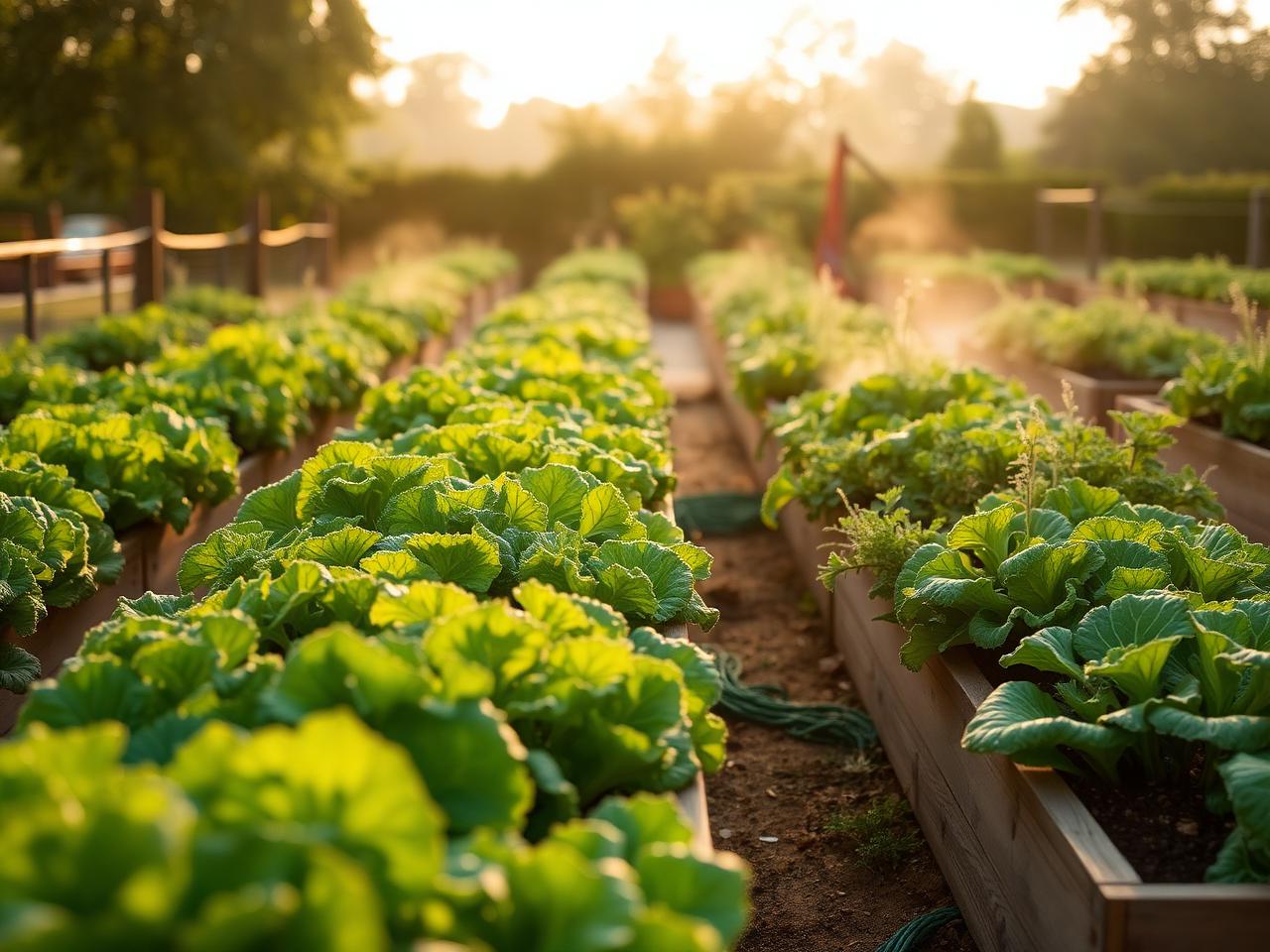
Charles Dowding's no-dig garden at Homeacres is the cleanest illustration in the country. On a quarter acre, roughly 0.1 hectares, he reports around £21,000 of gross output a year, and he is blunt about where it comes from: salad is "the only crop that is regularly profitable", picked as washed mixed leaves and sold to local restaurants and shops, over a tonne of it a year. Same soil, same hours, but salad leaves at several pounds a bag behave completely differently from maincrop potatoes at pennies a kilo. That is value per area doing the heavy lifting.
The same logic runs through veg boxes. Iain Tolhurst's stockfree Tolhurst Organic sells the bulk of its produce through a weekly box scheme direct to families in Reading and Oxford, cutting out the wholesaler and capturing the retail price. Direct selling is not a nice-to-have on a smallholding; it is usually the difference between a margin and no margin.
The honest ranking
Here is a realistic comparison of the common enterprises. "Return" is about the margin you can realistically make, not turnover. Treat land and effort as rough guides, because everything scales, but the relative picture is what matters.
| Enterprise | Realistic return | Land needed | Effort | Best sold as |
|---|---|---|---|---|
| Intensive salad / market garden | High per area (Dowding: ~£21k gross off 0.1 ha), a full-time graft | Small, from ~0.1 ha | Very high, most of the year | Restaurants, shops, veg boxes |
| Cut flowers | Among the highest per area; supports families from 0.5 to 7 acres | Small, from ~0.5 acre | High, big seasonal peaks | Weddings, bouquets, subscriptions |
| Plants / seedlings | High margin, low volume; a strong add-on | Tiny, a few benches | Moderate, spring-heavy | Gate, markets, online |
| Value-added (preserves, soap) | Turns cheap inputs into higher-value stock | Kitchen, little land | Moderate, plus admin | Markets, farm shops, online |
| Eggs | Low margin (~40p/bird); offsets feed, not a wage | Small | Daily, low skill | Gate (under-50-bird rule) |
| Honey | Hobby volumes tiny (~£100/hive/year) | Minimal | Seasonal, genuinely skilled | Gate, local markets |
| Rare / native breeds | Premium meat and breeding stock, but slow | More, for grazing | High, long timescales | Direct, breed networks |
| Pigs / commodity meat | Thin at small scale; needs an abattoir | More | High, welfare and movement rules | Direct meat boxes |
| Courses / experiences | Can match or beat the growing | Uses what you already have | High people-time | Direct booking |
| Renting space / diversification | Often where the real money is, different game | Buildings or land | Variable, can be passive | Ongoing lets |
The pattern almost draws itself. The top of the table is high-value and sold direct. The middle turns cheap raw materials into something worth more. The bottom either competes on price, which is a losing game at your scale, or moves you into a different kind of business altogether.
The high-value core: salad, market garden, cut flowers
If you want your land to earn, this is where to look first.
Intensive salad and market-garden veg. As above, this is the highest reliable income per square metre for most growers, but be honest about the trade-off: it is very labour-intensive, most of the year, and the money is in the picking, washing and direct selling as much as the growing. Dowding also makes a point worth remembering when you plan: his courses and paid garden visits "bring in as much income as the growing". The teaching, not just the lettuce, is part of the business model. There is more on turning that into a plan in our guide to making money from a smallholding.
Cut flowers. These sit right alongside salad as one of the highest-value things you can grow per unit of area, and the market is wide open. UK consumers spend billions on flowers a year, and around 90% are imported, so "British, seasonal and scented" is a real point of difference rather than a slogan. The National Farmers Union put the wholesale value of British-grown cut flowers at around £82m, roughly 12% of the market, with plenty of room to grow.
Crucially, real people make real money at small scale. Beth and Simon Hillyard of Cornish Blooms left professional jobs and now pay their mortgage and raise two children on scented narcissi and pinks. Georgie Newbery's Common Farm Flowers in Somerset supports her family from a seven-acre plot. Gill Hodgson founded the Flowers from the Farm network precisely because so many growers were quietly building viable businesses. But note two honest caveats. First, how you sell it is everything: weddings, hand-tied bouquets and subscriptions pay far more than wholesale stems. Second, it is hard, early-stress work, as one Flowers from the Farm grower, Debbie of Nature's Posy, describes candidly after renting half an acre and losing her first dahlias to contaminated compost. High ceiling, real graft.
The margin-makers: plants, seedlings and value-added
You do not always need more land. You need more value in the same footprint.
Plants and seedlings are high margin and low volume: a tray of module-raised vegetable plants or perennials sells for many times the cost of the seed and compost, takes little space, and hits its market in spring when gardeners are keenest. It is one of the easiest add-ons to bolt onto an existing growing operation.
Value-added products, preserves, chutneys, soap, dried flowers, turn a glut of cheap or surplus raw material into shelf-stable stock worth several times more, and they smooth out your income across the quiet months. This is the core idea behind our guide to adding value for profit: the profit is created in the kitchen and the labelling, not just the field. The trade-off is time and the food-safety and labelling rules that come with processed food, so factor those in.
The honest bottom of the table: eggs, honey and cheap meat
This is the part most guides gloss over, and getting it straight is where the value is.
Eggs are a gateway, not a wage. The margin is thin even for commercial producers, where the British Free Range Egg Producers' Association has estimated an average of around 40p per bird over the life of the flock, and at smallholding scale, buying feed by the bag, it is tighter still. What eggs do well is bring customers to your gate and cover their own feed, and the rules are gentle: you can sell ungraded eggs direct at the gate or door to door without stamping or registration whatever your flock size, and if you keep fewer than 50 birds you can sell at a local market too, though you cannot use protected terms like "free range" or "Grade A" on ungraded eggs. Let eggs pull people in for your better-margin lines.
Honey is a rewarding craft that roughly breaks even. Most hobbyists keep three to five hives, average UK yields sit at roughly 25 to 31 lb per hive in a good year and far less in a poor one, and even at around £5.50 per lb the honest conclusion from beekeeping writer The Apiarist is that "no one is going to get rich quickly on £100 per hive per year". Lovely at the gate, not an income.
Pigs and commodity meat are among the hardest ways to earn a margin small. Months of feeding, welfare and movement paperwork, and a trip to an increasingly scarce small abattoir all eat the return, and sold cheaply, meat is a pure commodity. It works only when you sell direct at a genuine premium, ideally a rare or native breed with a story, which is really a marketing enterprise wearing a livestock costume. Price it for the premium end and sell it direct, or leave it alone.
Where the real salary-replacement money often is
Here is the uncomfortable truth behind the honest framing. The produce enterprises above can, at their best, pay a hard-earned part-time wage. Full salary replacement usually comes from a different direction: diversification. Courses and experiences, a farm shop, holiday lets, letting a barn or a field, weddings, agri-tourism. Farmers Weekly's diversification case studies are full of farms where the added income, and often the profit, comes from these rather than from the land itself.
That is not a reason to skip the growing. The growing is what gives you the produce, the skills, the story and the reason people come. But be clear-eyed: if your goal is to replace a salary rather than to supplement one, the plan almost always involves stacking a diversification stream on top of the produce, and it is a different game with its own capital, planning and insurance questions.
The strategic takeaways
The honest headline is simple. Do not ask "what can I grow?" Ask "what can I grow to a high standard, add value to, and sell direct at a price that pays for my time?" Then stack two or three of those together. That is how the growers in this guide actually make it work.
Keep it legal (the short version)
None of this is a licence to skip the rules, but the rules are lighter than people fear at small scale. Selling eggs at the gate is fine under the under-50-bird exemption, with the right labelling. Value-added and processed foods bring food-safety, hygiene-registration and labelling duties. Meat means welfare, movement and abattoir rules. And once you are trading, there is tax, record-keeping and pricing to get right, which is where our guides to pricing for profit and pricing your produce come in. Check the specific rules for your enterprise before you sell, and talk to an accountant about tax once there is real money moving.
This page is general business information, not financial, tax or business advice. Figures are drawn from named growers and published UK sources and are illustrative of what is achievable, not a forecast of what you will earn: your own results depend on your land, market, skill and costs. Work from your own numbers and speak to a qualified accountant about tax and to the relevant authority about the rules for your specific enterprise. Last checked July 2026.
Frequently asked questions
Sources
- Charles Dowding (farmer profile: Homeacres, quarter acre, £21,000 gross output) , Agricology
- Small Farm Profits (profiles of sub-5-hectare UK farms making a profit) , Ecological Land Cooperative
- British flower power: how home-grown blooms can compete with cheap imports , The Guardian
- How I changed from HR to flower farmer (Nature's Posy, half-acre grower story) , Flowers from the Farm
- Beekeeping economics (yields per hive, honey price, profit per hive) , The Apiarist
- Margins fall for free-range egg producers (BFREPA ~40p/bird margin) , Farmers Weekly
- Egg marketing standards (under-50-bird gate-sale exemption and labelling) , GOV.UK (Defra / APHA)
- Case Study: Tolhurst Organic Produce (veg-box scheme as main income) , Farm Carbon Toolkit
- Farm business: diversification (case studies and how to assess an opportunity) , Farmers Weekly
Written by
UK Homesteading Team
Editorial team
The UK Homesteading editorial team, offering UK-specific, evidence-led guidance on growing, keeping, preserving and the law.