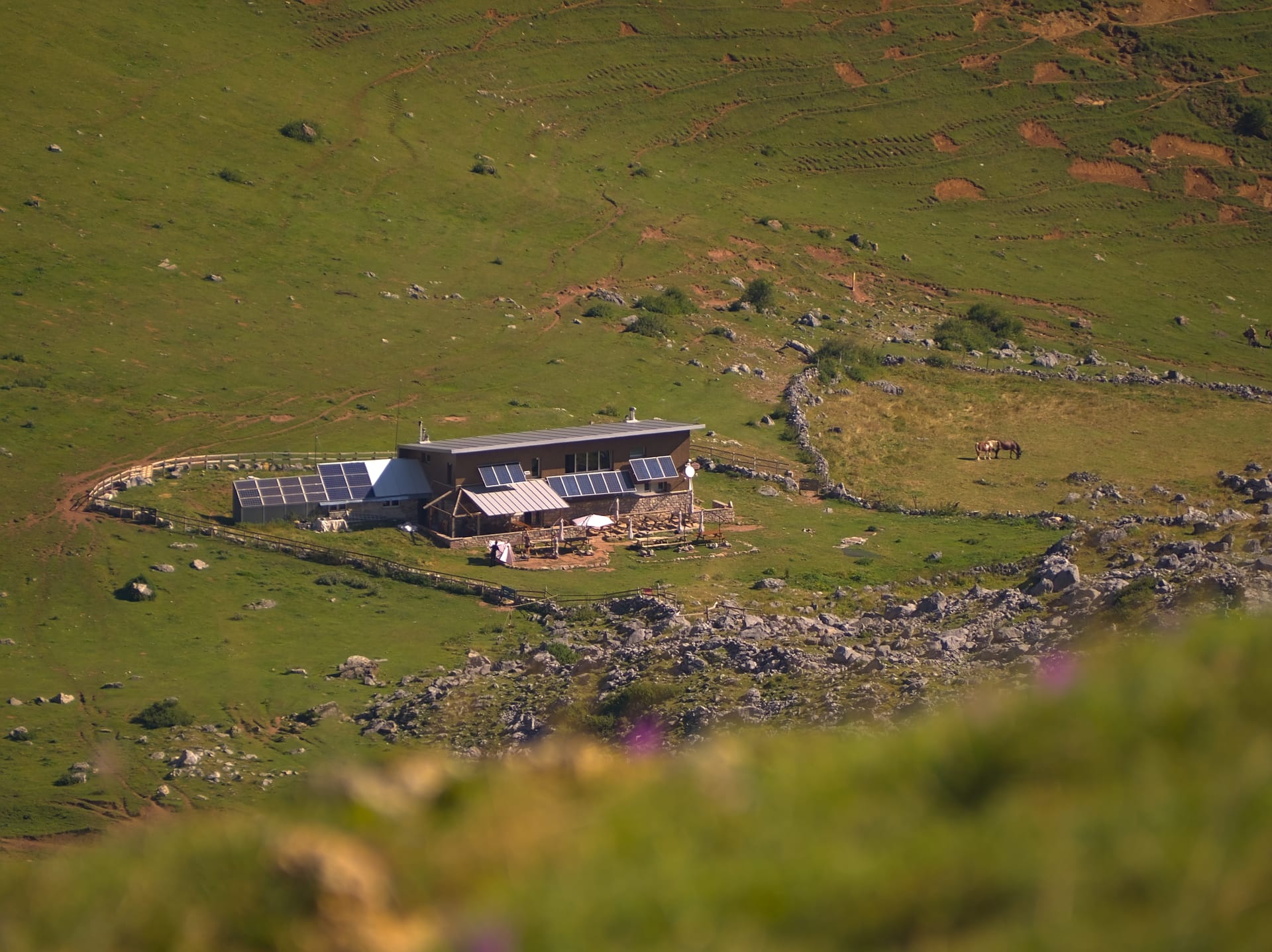
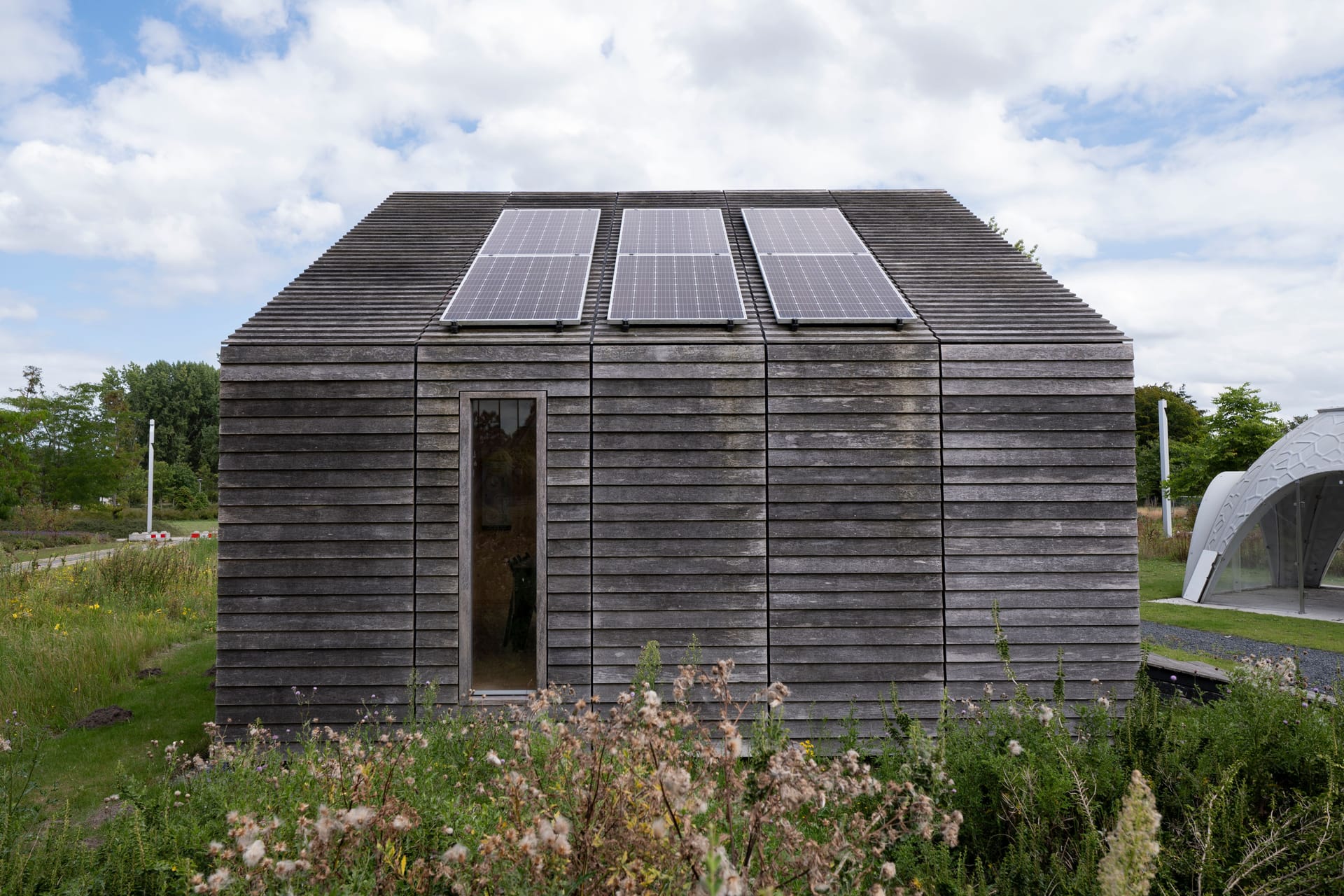
Ask "is it legal to live off-grid in the UK?" and you get two answers that people constantly muddle. The first is about the utilities, and here the answer is a clean yes. No law requires your home to be connected to mains electricity, gas, water or sewerage. You are entirely free to disconnect and supply yourself: solar panels and a battery for power, a wood-burner for heat, a borehole or rainwater for water, a septic tank or composting loo for waste. Self-sufficiency in services is not just allowed, it is normal for a lot of rural Britain.
The second answer is the one that catches people out. Going off-grid does not put your home outside the law. A home is still a home, and the ordinary rules that apply to any dwelling apply to yours too, whether or not a single wire runs to it. The single most important of those rules is planning permission, and it, not the electricity board, is the real gatekeeper. This guide walks through what off-grid living does and does not exempt you from, and the legal routes that genuinely work. It is our plain-English companion to the fuller off-grid getting-started guide.
The clear answer: yes, you can disconnect and self-supply
Start with the good news, because it is genuine and unambiguous. There is no statutory duty on a household to be connected to any mains utility. You can generate your own electricity, heat with wood or other fuel, draw water from a borehole, spring or rainwater harvesting, and treat your own sewage on site. Utility companies have obligations to offer connections in many situations, but that is a right you can decline, not a requirement placed on you. If you own a house that is already a lawful dwelling, you can take it off-grid tomorrow and no planning or utility law stands in your way.
That is why the "is it legal" question is really two questions. Self-supply is legal. The thing that determines whether you can lawfully live somewhere is not how you get your power and water, it is whether the law recognises the place as a home in the first place. And that is decided by planning.
Planning permission is the real gatekeeper
In England and Wales, planning permission is needed for "development", which under section 55 of the Town and Country Planning Act 1990 covers both building work and a "material change in the use" of land. Both parts matter for off-grid living. Building a new house is plainly development. Less obviously, taking a field in agricultural use and turning it into where you live is a material change of use from agriculture to residential, and that needs permission too, even if you never lay a brick.
This is the trap in the dream of buying cheap agricultural land and simply moving on. Agricultural land does not come with the right to live on it. Siting a static caravan, tiny house, cabin or shepherd's hut and using it as your main residence turns it, in planning terms, into a dwelling, and doing that without permission is unauthorised development. We cover the caravan and tiny-home position in detail in tiny house and caravan law in the UK; the short version is that once a structure becomes your settled home, the "it's only a caravan" argument rarely saves you.
Permitted development rights, which let you do certain things without a full application, generally attach to the curtilage of an existing dwelling. They do not conjure a home out of bare land. There are also genuine, but strict, exceptions that allow new homes in the countryside. National planning policy accepts an "essential need for a rural worker" to live at or near their place of work, which is the basis for agricultural and forestry worker dwellings, and these often come with an agricultural tie or occupancy condition that limits who can live there and can reduce the property's value. Outside those defined exceptions, policy is deliberately hostile to new isolated homes in open countryside. So planning permission is not a formality you can assume, it is the whole game.
The "four-year rule" is out of date, so don't rely on timing it out
You will still read, all over the internet, that if you keep an unauthorised home quiet for four years it becomes lawful and safe. In England that is no longer the general rule, and it was always a risky game. Under the Levelling-up and Regeneration Act 2023, the enforcement time limits changed. As the Planning Inspectorate puts it, "a single 10-year tariff will apply to all breaches of planning controls", and this "ten year limit for bringing enforcement action will apply where alleged operational development was substantially completed on or after 25 April 2024, or where the date of an alleged change of use to a single dwellinghouse was on or after 25 April 2024".
In everyday terms, an unauthorised off-grid home created now would generally need to survive ten continuous, open years before it could even begin to claim immunity, not four. And concealment, such as hiding a dwelling behind hay bales or inside a barn, can defeat the clock altogether. The rules around older breaches, part-completed changes and the transitional cases are genuinely intricate, and the devolved nations run their own enforcement regimes, so this is not something to navigate from a forum post.
Building regulations still apply
Planning permission asks whether you may build or live somewhere. Building regulations ask whether the building itself is safe and sound, and they apply to a new dwelling whether or not it is connected to any mains service. They set minimum standards for structure, fire safety, insulation, ventilation, drainage and more. An off-grid house still has to meet them, and self-supplied systems still have to be safe: your electrics, your heating appliance, your drainage and your water all have to be done properly. Being off the mains is not a reason the regulations stop applying; if anything it puts more of the responsibility for safe systems on you.
Council tax still applies to a lawful dwelling
A common assumption is that no mains connection means no council tax. It does not work like that. Council tax is a tax on domestic property, not on utility hook-ups. Once you have a lawful dwelling, the Valuation Office Agency can place it in a council tax band and the local council can charge council tax, regardless of how you get your power and water. Off-grid is not a council tax exemption. There are specific discounts and reliefs in defined circumstances, but self-supply is not one of them. We go into the detail, including where new or altered dwellings get banded, in council tax and off-grid living.
Water and sewage: legal to self-supply, but regulated
Self-supplying water is a normal part of off-grid life and entirely legal, but it is regulated rather than unrestricted. In England the Private Water Supplies (England) Regulations 2016 govern private supplies, and your local authority has duties around them, including risk assessment and sampling for many supply types, to make sure the water is wholesome. As the person responsible for a supply, you have a duty to keep it safe and maintained. Scotland and Wales have their own equivalents.
Getting rid of waste water is regulated too. If you use a septic tank or small sewage treatment plant, you must meet the Environment Agency's general binding rules for a small sewage discharge, or hold a permit. Those rules cover how the system is built, maintained and discharged so that it does not pollute. We explain them fully in septic tanks and the general binding rules. The theme is consistent: self-supply is allowed, but it comes with a duty of care and real rules, not a loophole.
The legal routes that actually work
The good news is that there are well-trodden, lawful paths to an off-grid life. They take more patience than the cheap-field shortcut, but they lead to a home the law recognises.
How to live off-grid legally
- 1
Buy a property that already has residential planning
By far the simplest route. Buy an existing house, cottage, smallholding or plot with residential planning permission, then take it off-grid by choice. Disconnecting a lawful dwelling from the mains raises no planning issue at all.
- 2
Apply for planning permission for a new dwelling
Go through the ordinary planning process for a home on your land. Expect scrutiny in open countryside, engage the local planning authority early with pre-application advice, and be realistic that policy resists new isolated homes without a strong justification.
- 3
Use Wales' One Planet Development policy
In Wales, One Planet Development is a genuine route to a low-impact home in open countryside. It is demanding: you must produce a robust management plan showing the site will meet most of your needs from the land, minimise your ecological footprint, and be reviewed over time. Where it fits, it works.
- 4
Qualify as a rural or agricultural worker's dwelling
National planning policy accepts an essential need for a rural worker to live at or near their place of work. This underpins agricultural and forestry worker dwellings, but the tests are strict and the permission usually carries an occupancy condition or agricultural tie that limits who can live there.
- 5
Get professional advice before you buy or build
A planning consultant or solicitor who knows rural work can tell you what a specific plot can realistically become before you spend money. On a decision this size, paid advice up front is far cheaper than an enforcement notice later.
Two of these deserve their own reading. The Welsh route is covered in depth in One Planet Development in Wales, which remains the most developed low-impact-living policy anywhere in the UK.
Nation by nation
Planning, water and building rules are devolved, so never assume an English answer travels. England and Wales share the Town and Country Planning Act 1990 framework, but Wales adds the One Planet Development policy and has its own building regulations and water guidance. Scotland has a separate planning system and separate enforcement time limits, its own building standards, and SEPA rather than the Environment Agency for discharges. Northern Ireland has its own planning legislation and its own regime again. The core principle holds in all four nations, though: self-supply is legal, but a home still needs to be a lawful home. Whichever nation you are in, check that nation's rules with its planning authority before you commit.
The bottom line
Yes, it is legal to live off-grid in the UK. You can disconnect from every mains service and supply yourself, and for many rural homes that is entirely ordinary. What off-grid living does not do is exempt you from the laws that apply to any home. Planning permission decides whether you can lawfully live somewhere, building regulations decide whether the home is safe, council tax still applies to a lawful dwelling, and your water and sewage carry their own rules. Get the "is it a lawful home" question right first, take the off-grid part as the straightforward bit, and the dream is very much achievable within the law.
This guide is general information to help you understand how the law fits together, not legal, planning or financial advice. Planning, building, water and enforcement rules are devolved and change over time, and your own situation may turn on specific facts. Last checked July 2026. Before buying land, siting a home, or relying on any time limit, confirm the current position on GOV.UK and the Planning Portal, check your nation's rules, and where the stakes are high take professional planning or legal advice for your specific plot.
Frequently asked questions
Sources
- When is permission required? , Ministry of Housing, Communities & Local Government (GOV.UK planning practice guidance)
- Enforcement appeals: key changes under the Levelling Up and Regeneration Act , Planning Inspectorate (GOV.UK)
- Town and Country Planning Act 1990, section 171B (time limits for enforcement) , Legislation.gov.uk
- Building regulations approval: when you need approval , GOV.UK
- Understand how Council Tax bands are assessed , Valuation Office Agency (GOV.UK)
- General binding rules: small sewage discharge to the ground , Environment Agency (GOV.UK)
- The Private Water Supplies (England) Regulations 2016 , Legislation.gov.uk
- Private water supplies: roles and responsibilities , Drinking Water Inspectorate
- Planning permission: one planet developments in open countryside , Welsh Government
- Housing needs of different groups (isolated homes and rural workers) , Ministry of Housing, Communities & Local Government (GOV.UK planning practice guidance)
Kit for this job (Ad)

Encyclopedia of Country Living,: The Original Manual for Living off the Land & Doing It Yourself
Check price on Amazon →
The Practical Prepper’s Survival Bible: Your Complete Guide To Crisis Preparation With 100+ No Grid Survival Projects, Homesteading, Canning, Off Grid Living, Medicine, Water Filtration & More
Check price on Amazon →We may earn a small commission, at no cost to you. We only list kit we'd use.
Written by
UK Homesteading Team
Editorial team
The UK Homesteading editorial team, offering UK-specific, evidence-led guidance on growing, keeping, preserving and the law.