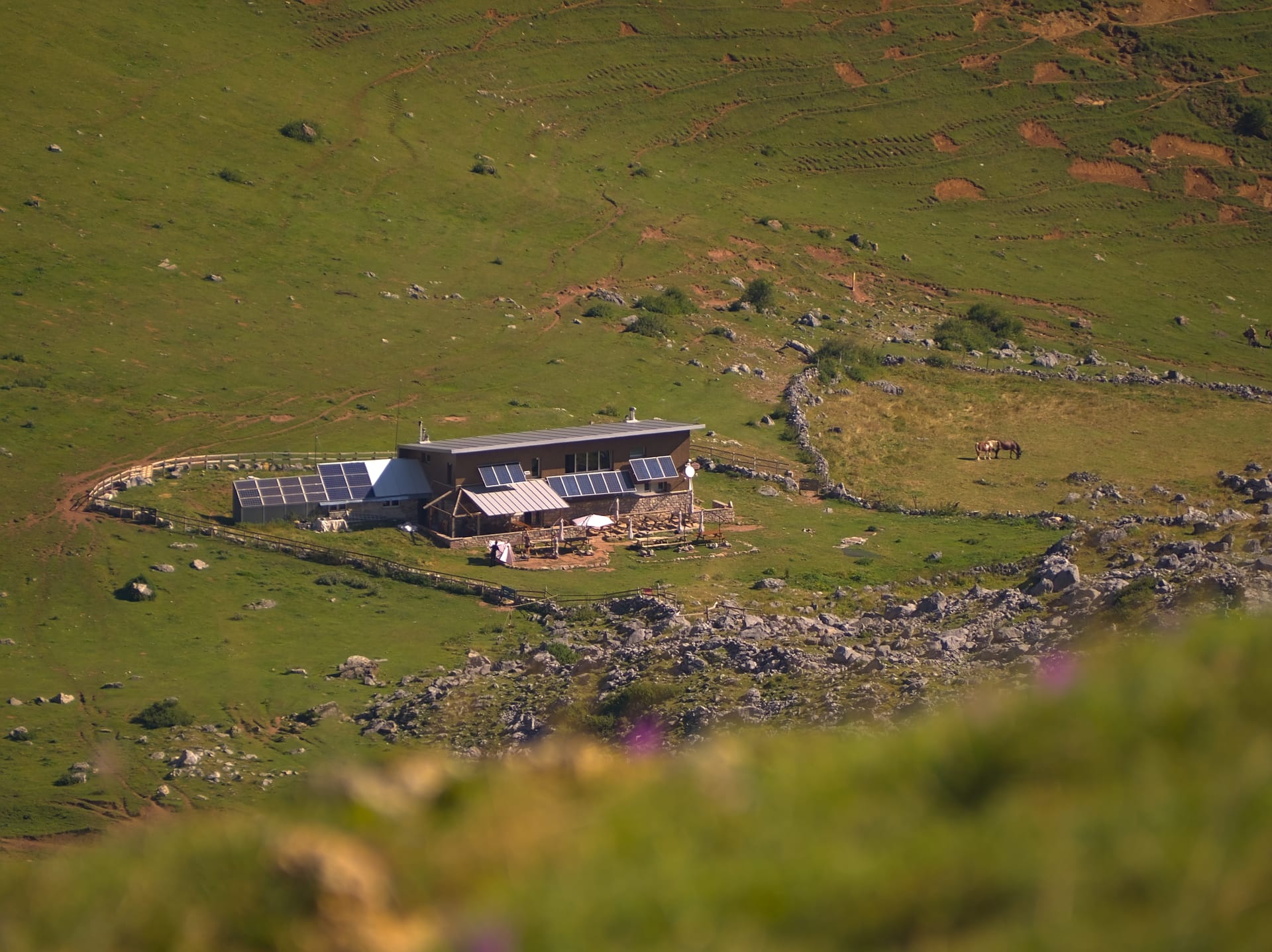
Off-grid living means running your home without a connection to the mains: no electricity supply from the grid, no water from a water company, and often no mains gas or public sewer either. In the UK that is entirely possible, and thousands of households do it. But the picture is a long way from the tiny-house videos. The panels and batteries are the easy bit. The land, the law and a safe drinking water supply are where most people underestimate the work.
This guide walks through what off-grid actually means here, whether it is legal, what it costs, and the four systems you have to solve. It is written for beginners who want the honest version.
What does "off-grid" actually mean in the UK?
Off-grid is really five separate problems wearing one label: electricity, water, heat, sewage and connectivity. You can solve some and not others. Plenty of rural homes are off-grid for gas (no mains gas reaches them) but on mains water and electricity. A true off-grid home handles all of it independently.
The five to plan for are:
- Electricity: usually solar panels and battery storage, sometimes with a wind turbine or backup generator.
- Water: a borehole, spring or rainwater harvesting, with treatment.
- Heat and cooking: wood, LPG, or both.
- Sewage and waste water: a septic tank, a sewage treatment plant, or a composting toilet.
- Connectivity: satellite internet or 4G, since fibre rarely reaches truly remote sites.
Treat each as its own decision with its own cost. That is the difference between a plan and a daydream.
Is it legal to live off-grid in the UK?
Living off-grid is legal. The catch is that the land and any structure on it still have to obey planning law, and this is where the well-known "just buy a field" idea falls apart.
Using land as your main home is normally a material change of use, and that requires planning permission from your local planning authority. This applies even to a caravan or mobile home: if you live in it permanently on agricultural land, you have changed how the land is used, and the council can enforce against it. The Planning Portal sets out how change of use works and when permission is needed (Planning Portal, Change of use).
Some structures and small works fall under permitted development, and land with an existing dwelling or an agricultural tie changes the picture again. But the safe assumption for a beginner is simple: do not commit money to land expecting to live on it until the local planning authority has confirmed you can. Getting this wrong is the single most expensive mistake in off-grid living.
The panels are the easy part. The land and the planning permission are where dreams get expensive.
How do you power an off-grid home?
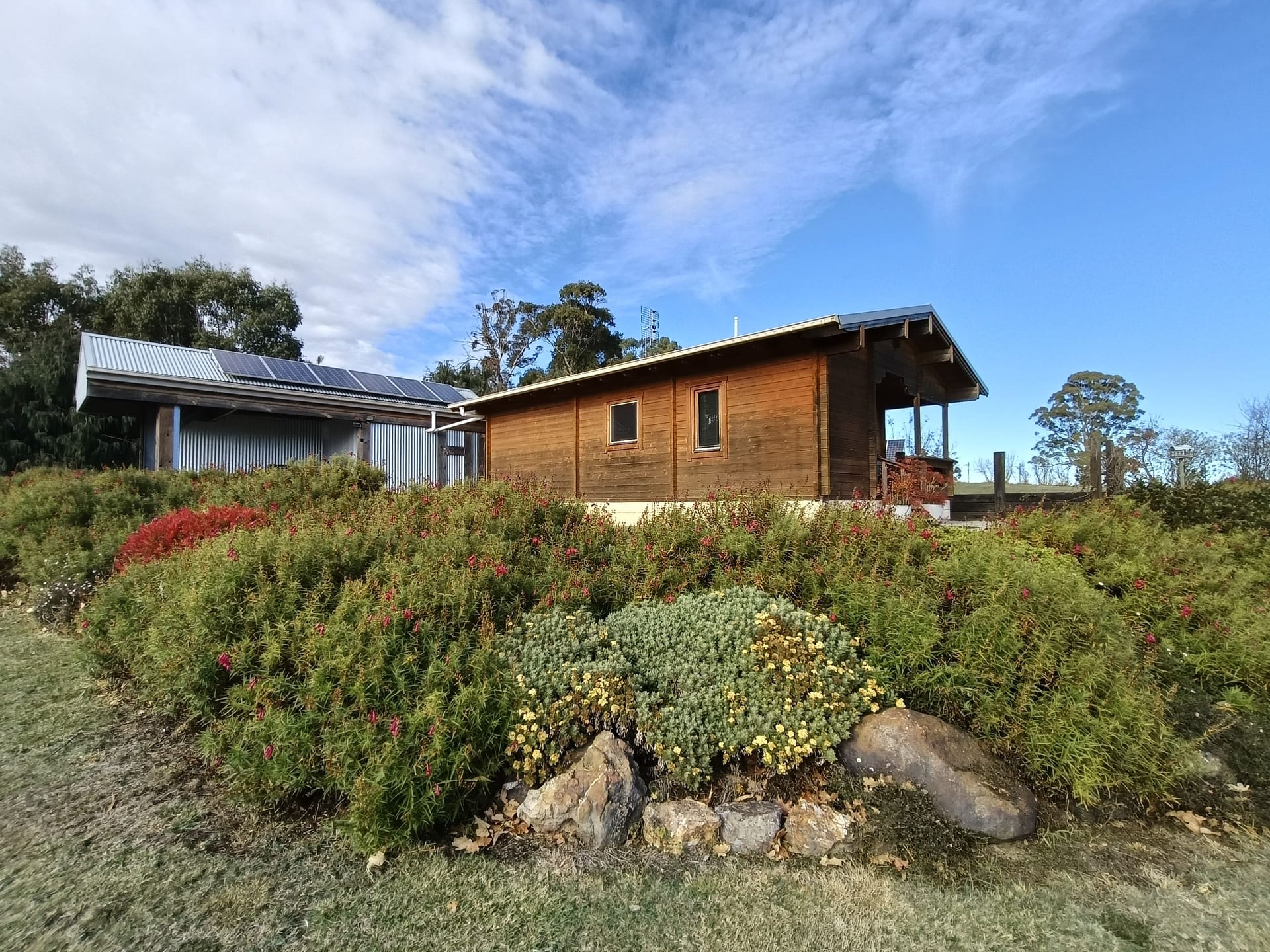
For most UK off-grid homes, power means solar panels charging a battery bank, feeding your home through an inverter. Our off-grid solar guide covers sizing and kit in detail, but the principle is straightforward: generate in daylight, store in batteries, draw down at night and through dull spells.
The honest weakness is the British winter. Short days and low light mean solar alone often cannot carry you from November to February, so most off-grid setups add a second source. A small wind turbine can complement solar nicely on an exposed site, since it often produces most when the sun produces least. Many households also keep a backup generator for the worst weeks.
On cost, the Energy Saving Trust puts home battery storage in a broad range depending on size, with a typical mid-sized battery system running to several thousand pounds (Energy Saving Trust, Battery storage). A complete off-grid solar, battery and inverter package commonly lands somewhere between £7,000 and £20,000, and rises further once you add a generator. Size the system to how you actually live, not to a perfect sunny day.
Where does off-grid water come from, and is it safe?
Off-grid water usually comes from a borehole, a spring, or rainwater harvesting. This is the system beginners most often underestimate, because water safety is a legal responsibility, not an optional extra.
Under the Private Water Supplies (England) Regulations 2016, a supply that does not come from a water company is a private water supply, and you must register it with your local council. Local authorities risk-assess private supplies, generally at least once every five years, though a supply serving a single domestic home is typically only tested at the owner's request (Private Water Supplies (England) Regulations 2016). Scotland, Wales and Northern Ireland have their own equivalent rules.
Rainwater harvesting is excellent for gardens, flushing and washing, but treat it as non-potable unless it is properly filtered and disinfected. Whatever the source, budget for treatment and ongoing testing as part of the true cost of the supply.
How do you heat and cook off-grid?
Heat is often the most manageable of the four systems. A wood-burning stove is the backbone of most off-grid homes, and if you have access to your own timber it can be close to free once you have the tools and the time. Pair it with good insulation and it will carry a well-built home through winter.
For cooking and hot water, LPG (bottled gas) is the common partner to wood, giving you controllable heat on demand without drawing on your battery bank. Some homes add solar thermal panels for summer hot water. The realistic setup for most beginners is a wood burner for space heating plus LPG for cooking, with electricity kept for lighting and appliances rather than heating, which is the heaviest load of all.
What are the rules on off-grid sewage and waste?
You have three main routes for sewage: a septic tank with a drainage field, a packaged sewage treatment plant, or a composting toilet. The important legal point is about where waste water ends up.
A septic tank discharging to a drainage field (into the ground) can be compliant, and a sewage treatment plant treats effluent to a higher standard that may allow a permitted discharge to water. A composting toilet sidesteps flushing entirely and suits smaller or more remote sites, though it needs managing properly. Whichever you choose, check the current rules for your setup, as this is an area where the law has tightened.
How do you stay connected off-grid?
Being off-grid does not mean being cut off. For remote sites where fibre broadband does not reach, low-orbit satellite internet (such as Starlink) has changed things considerably, offering genuinely usable speeds almost anywhere with a clear view of the sky. A 4G or 5G router with an external aerial is a cheaper option where there is a decent mobile signal. Factor the running cost and the modest power draw into your electricity planning, since your connection needs to stay on when the panels are not producing.
Is off-grid living right for you?
Off-grid living rewards people who like solving practical problems and dislike relying on other people to fix things. It asks for capital up front, ongoing maintenance, and a tolerance for the occasional dark, cold week when the weather refuses to cooperate.
- 1
Sort the land and planning first
Confirm with the local authority that you can legally live on the site before spending anything else. This is the make-or-break step.
- 2
Secure a safe water supply
Identify the source, register it, get it tested and budget for treatment. Never assume borehole or spring water is drinkable.
- 3
Solve sewage legally
Choose a septic tank with drainage field, a treatment plant, or a composting toilet, and check it meets the general binding rules.
- 4
Build the power system to your real usage
Size solar and battery storage for a dull British winter, and plan a second source such as wind or a generator.
- 5
Add heat, connectivity and a buffer
A wood burner and LPG for heat, satellite or 4G for internet, and a contingency budget for the things that break.
Done with open eyes, off-grid living in the UK is achievable and rewarding. The households who thrive at it are the ones who treated it as an engineering and planning project first, and a lifestyle second. Do the homework, respect the law, budget honestly, and you give yourself the best possible start.
This guide is general information, not formal legal, financial, medical or veterinary advice. UK rules, prices and best practice change, and some rules differ across England, Scotland, Wales and Northern Ireland, so always check the current position with the relevant official source (such as gov.uk, the NHS, the FSA, DEFRA or APHA, or the RHS) or a qualified professional before acting. Last checked July 2026.
Frequently asked questions
Sources
- General binding rules: small sewage discharge to a surface water , gov.uk
- General binding rules: small sewage discharge to the ground , gov.uk
- The Private Water Supplies (England) Regulations 2016 , legislation.gov.uk
- Change of use , Planning Portal
- Battery storage , Energy Saving Trust
Kit for this job (Ad)

TP-Link TL-MR105 4G LTE WiFi Router, 4G Router, Plug&Play, SIM Card Slot, 2 LAN/WAN Ports for Ethernet Cable, Up to 32 Devices, Parental Controls, Guest Network, Home/Remote, 300Mbps Wireless
Check price on Amazon →
TP-Link TL-MR108 4G LTE WiFi Router, 300Mbps Unlocked 4G Router with SIM Card Slot, Plug & Play, 4 Antennas, Connect up to 32 Devices, Better Signal & Broader Coverage for Home, Office, Travel
Check price on Amazon →
Thetford 92820 Porta Potti 365 Portable Toilet, White-Grey, 414 x 383 x 427 mm
Check price on Amazon →
Encyclopedia of Country Living,: The Original Manual for Living off the Land & Doing It Yourself
Check price on Amazon →We may earn a small commission, at no cost to you. We only list kit we'd use.
Written by
UK Homesteading Team
Editorial team
The UK Homesteading editorial team, offering UK-specific, evidence-led guidance on growing, keeping, preserving and the law.