So what does "off-grid solar" actually mean?
Off-grid solar is a standalone system. Your panels charge a battery, the battery runs your kit, and none of it is plugged into the mains. When the sun shines you fill the battery. When it doesn't, you live off what you stored. There's no grid safety net behind you.
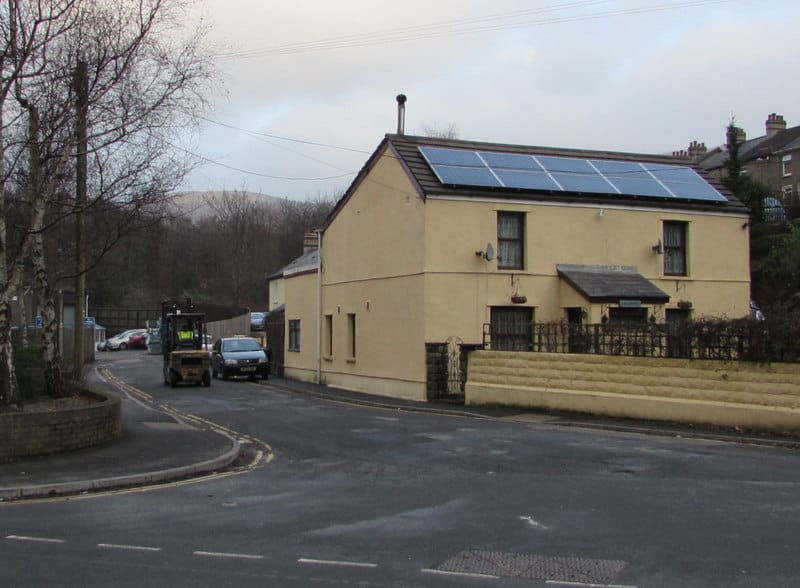
That's the bit people miss. It's a different animal from the grid-tied solar you see bolted to suburban roofs. Grid-tied panels feed your house during the day and push any surplus back to the grid, and you get paid a little for it through an export tariff. The grid is your backup and your battery, all in one. Lose the sun, and the mains quietly takes over.
Go off-grid and that safety net vanishes. If your battery hits empty on a wet week in January, nothing kicks in unless you've planned for it. That single fact shapes every decision that follows.
Does solar really work in the British climate?
Short answer: yes, and better than the pub sceptic will tell you. Panels don't need heat or blazing sun, they need daylight, and even a grey UK day produces something. As a rough rule, every 1kW of panels makes somewhere around 850 to 1,000 kWh a year here.
The real problem isn't whether solar works. It's when. Our output is wildly lopsided across the year. A UK array typically generates roughly 70% of its annual total between March and August, and only about 30% through the darker half. Put another way, winter output often runs at just 20 to 30% of summer.
The December reality is starker still. A 5kWp array that cheerfully makes 25 to 30 kWh on a long June day might scrape 3 to 8 kWh on a clear December one, and far less under thick cloud. Short days, a low sun and more atmosphere for the light to fight through all stack against you at once.
You don't size an off-grid system for the year's average. You size it for the worst week of the worst month, because that's the week it has to keep the lights on.
So here's the point the whole guide turns on. You cannot size an off-grid system on the annual average and hope for the best. You size it around December, your leanest month, because that's when it either works or it doesn't. Do that, and you'll have an embarrassing surplus in summer and a system that just about holds through winter. Size it on the summer figures, and you'll be sitting in the cold and dark by February.
That's why nearly every serious off-grid setup in Britain has a backup. A petrol or diesel generator to top the battery up on a dead week, or wood heat so you're not asking solar to do the heavy lifting for heating. Chasing a fully solar winter by buying ever more panels gets expensive fast, and there's a point where a generator is simply the sensible, cheaper answer.
What are the bits that make up an off-grid system?
Strip away the jargon and it's a short list. Five things and some wire.
Solar panels. These catch the daylight and turn it into direct current (DC) electricity. More panels, more charging, especially useful given how little winter light there is to work with.
A charge controller (MPPT). This sits between the panels and the battery and manages the charging so you don't cook the battery or waste power. Go for an MPPT (Maximum Power Point Tracking) controller rather than the cheaper PWM sort. MPPT units are far more efficient, typically pulling 95 to 99% of the available power against roughly 75 to 80% for PWM. In a British winter, wasting a fifth of what little you generate is not a saving worth making.
A battery bank. This is where your power lives overnight and through dull spells. These days that almost always means LiFePO4 (lithium iron phosphate). It's one of the safer lithium chemistries, tends to last around 10 to 15 years, handles thousands of charge cycles, and comes with a built-in management system to protect it. It costs more up front than old lead-acid, but you get more usable capacity and a longer life.
An inverter. Your battery stores low-voltage DC, but your kettle, fridge and laptop want 230V AC. The inverter does that conversion. Size it to handle everything you might run at once, with a bit of headroom for the surge when a motor or pump starts up.
Cabling, fuses and protection. Not glamorous, and absolutely not optional. Correct cable sizing, fuses, breakers and isolation are what stand between you and a fire. This is exactly the sort of thing worth paying an expert to get right.
How do you size an off-grid solar setup?
Sizing starts with a number most people have never worked out: how much electricity you actually use in a day, in kWh. Get that wrong and everything downstream is guesswork. Get it right, and the rest is arithmetic.
The mindset matters here. Off-grid living isn't about generating loads of power, it's about needing less of it. Every watt you trim is a panel and a slab of battery you don't have to buy. Ruthless is the word.
- 1
Do an honest energy audit
List every appliance, its wattage and how many hours a day you run it. Multiply and add it up to get your daily kWh. Be honest, not hopeful. Our power station sizing tool can help you tot this up.
- 2
Cut your consumption hard
Now attack the list. Swap to LED lighting, ditch or downsize the biggest drains, avoid electric heating and hot water where you can (use wood, gas or solar thermal instead). Every unit you cut here saves you far more than it costs.
- 3
Size the battery for a few dark days
Take your trimmed daily use and multiply for two to three days of no meaningful sun, so a still, grey spell doesn't leave you stranded. A full home often lands at 20 to 40kWh; a cabin might need only a few.
- 4
Size the panels for December, not June
Work out how many panels you need to refill that battery using winter generation figures, not summer ones. This is the step that stops the whole system falling over in January.
- 5
Plan your backup and get a proper design
Decide how you'll cover the worst weeks, usually a generator or wood heat. Then have the full system, especially anything touching mains AC, designed and signed off by a qualified installer.
What can you realistically run on off-grid solar?
Plenty, as long as you're realistic about scale. Off-grid solar is brilliant for a cabin, a shed or workshop, a campervan or narrowboat, an allotment, or a truly remote dwelling with no mains connection. Lighting, charging, a laptop, a water pump, a modest fridge, a bit of entertainment: all very doable.
Where it gets hard, and expensive, is heat. Electric heating, immersion hot water, electric showers and the like are enormous loads that will swallow a battery in an afternoon. Off-gridders almost always heat with wood or gas and keep the electricity for the jobs only electricity can do. Fight that and you'll spend a fortune trying to brute-force it with panels.
And to be plain about it: most ordinary homes stay grid-tied for good reason. If you've already got a mains connection, using the grid as a free, infinite backup is hard to beat. Off-grid earns its place where there's no connection to be had, or where the setting (a van, a bothy, a far-flung plot) makes it the obvious call.
Is it safe to install yourself?
Some of it, done properly. A lot of it, no.
Low-voltage DC work, wiring up a 12V system in a campervan or a shed, is well within reach of a careful DIYer who's done their reading and respects the kit. Plenty of people do it well.
But the line moves sharply once you're dealing with 230V mains AC, a permanent dwelling or a large battery bank, and that's where amateurs get hurt.
An MCS-certified installer isn't just a rubber stamp. It means the kit and the workmanship meet a recognised standard, and it's the paperwork you'll need if you ever add a grid connection or claim an export tariff later. For a home you actually live in, it's money well spent.
Is going off-grid actually worth it?
It depends on why you're doing it.
If you're chasing pure savings on a house that already has a mains connection, going fully off-grid rarely pencils out. Once you've paid for enough panels, a big battery and a backup generator to survive a British winter, you've often spent more than you'd ever have paid the grid. Grid-tied solar, using the mains as your backup, is usually the smarter financial move.
But money isn't the only reason people do this. If your plot has no mains supply, a connection can cost tens of thousands on its own, and off-grid suddenly looks cheap. And for a cabin, a van or a bit of the good life away from it all, the appeal was never really about the maths.
Just go in clear-eyed. Off-grid is a commitment: to using less, to keeping an eye on your battery, to firing up a generator on the grimmest weeks, and to maintaining kit yourself. Do it for the right reasons and it's deeply satisfying. Do it expecting cheap, hands-off, all-electric luxury and the British winter will set you straight.
Ready to work out your numbers? Start with a proper energy audit using our power station sizing tool, and browse the rest of our off-grid guides for backup, heating and water to round out the picture.
This guide is general information, not formal legal, financial, medical or veterinary advice. UK rules, prices and best practice change, and some rules differ across England, Scotland, Wales and Northern Ireland, so always check the current position with the relevant official source (such as gov.uk, the NHS, the FSA, DEFRA or APHA, or the RHS) or a qualified professional before acting. Last checked July 2026.
Frequently asked questions
Sources
- Solar panels: costs, savings and benefits explained , Energy Saving Trust
- Solar PV and the MCS quality mark , MCS
- Solar panel output in summer vs winter , Good Energy
- Solar energy calculator , Energy Saving Trust
Kit for this job (Ad)

Amazon Basics 8-Pack Rechargeable AA NiMH Batteries, 2000 mAh, 1.2V, Recharge up to 1000x Times, Pre-Charged
Check price on Amazon →
Amazon Basics 12-Pack Rechargeable AA NiMH Performance Batteries, 2000 mAh, 1.2V, Recharge up to 1000x Times, Pre-Charged
Check price on Amazon →
Blukar Head Torch Rechargeable, 2 Pack 2000L Super Bright Headlamp-8 Modes | Spotlight Floodlight Combination, Sensor Control& Red Lights, Waterproof, Long Battery Life Headlight for Running,Camping
Check price on Amazon →
Lepro Head Torch Rechargeable, 2 Pack 2000L Waterproof LED Headlamp with Red Warning Lights, 30Hrs Runtime, 6 Lighting Modes, for Running Fishing Camping, Super Lightweight Headlight for Kids & Adults
Check price on Amazon →We may earn a small commission, at no cost to you. We only list kit we'd use.
Written by
UK Homesteading Team
Editorial team
The UK Homesteading editorial team, offering UK-specific, evidence-led guidance on growing, keeping, preserving and the law.