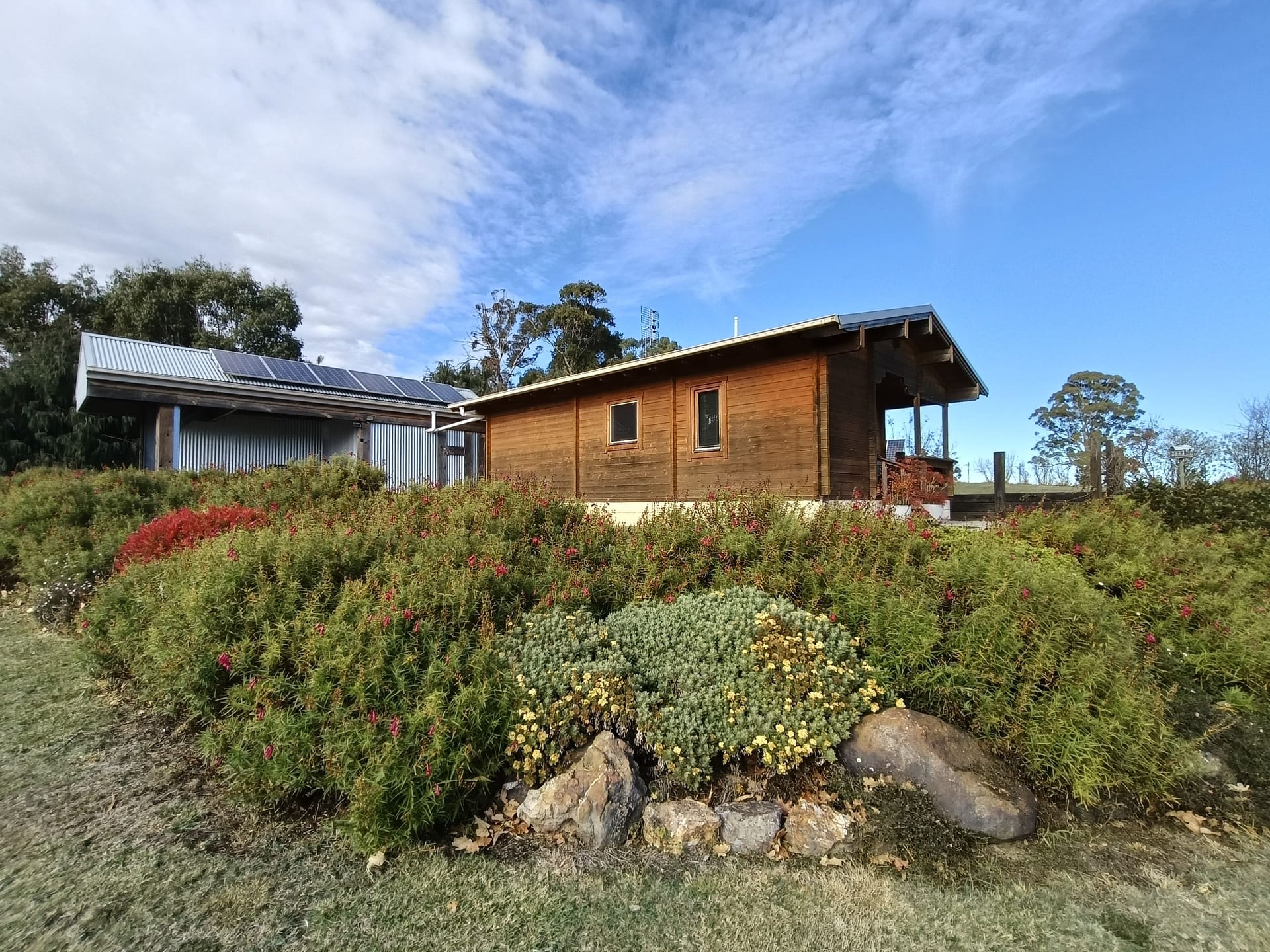
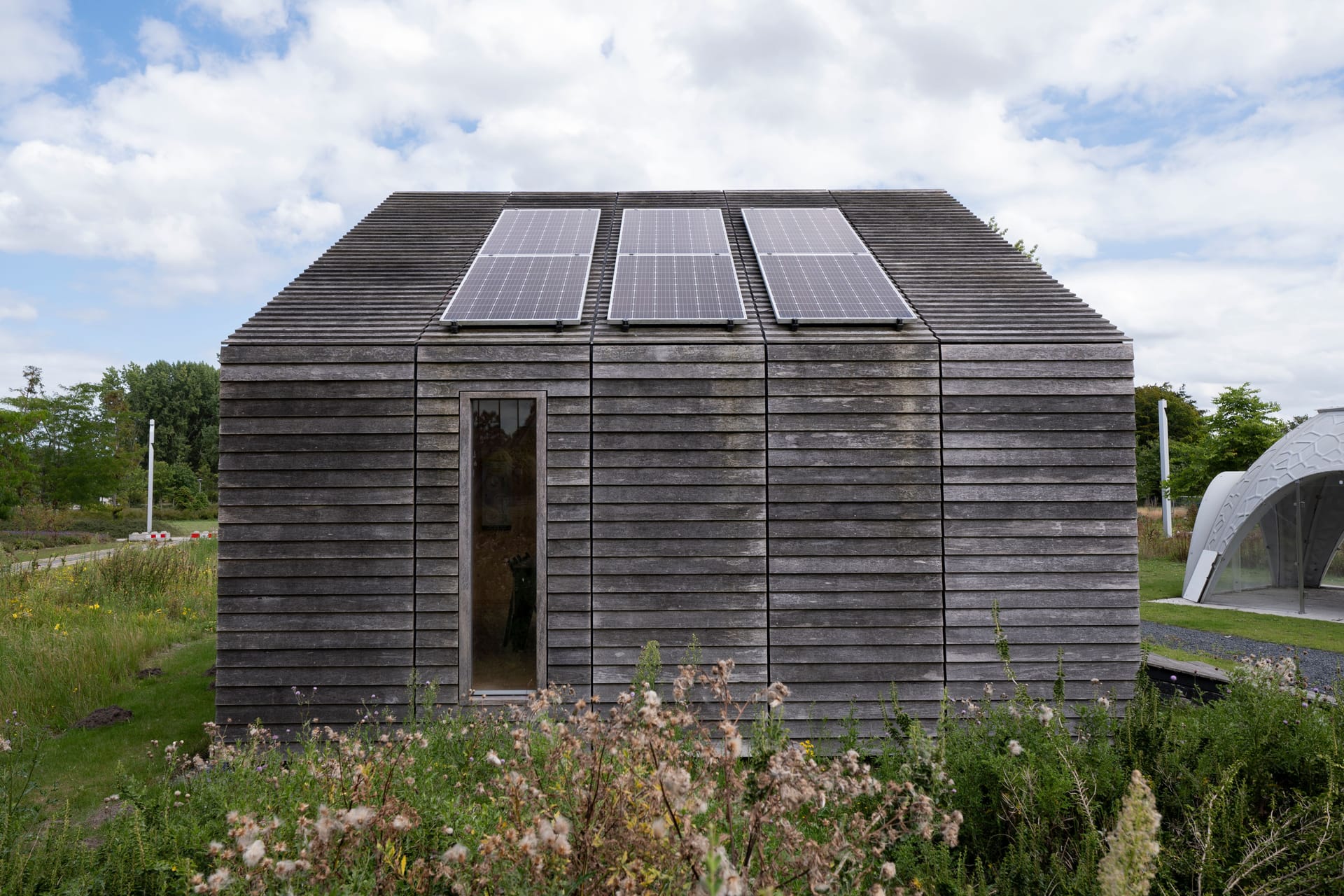
"Off-grid" is one of those phrases that sounds romantic and vague at the same time. For some people it conjures a cabin in the hills with a wood stove and an oil lamp. For others it is a modern eco-house bristling with solar panels and a battery the size of a fridge. Both are off-grid, and that is rather the point: the word describes a relationship with the utility networks, not a particular look or a particular level of hardship. Get the definition straight and the whole subject gets a lot less daunting.
This is the friendly, plain-English starting point. No jargon, no doom, just what off-grid actually means, the different degrees of it, what it involves in practice in the UK, and why it is not the same thing as being self-sufficient. When you want to go deeper on any part, we will point you to the guide that covers it properly.
So what does "off-grid" actually mean?
At its simplest, living off-grid means your home is not plugged into the public, or mains, utility networks. You are not a customer of the systems that pipe electricity, gas, water and waste to most houses in the country. Instead, you generate and manage those things yourself.
The grid that gives the phrase its name is the electricity grid. In Great Britain that is the National Grid, the high-voltage network that carries power from where it is generated to homes and businesses across the country. When people say a home is "off the grid", the electricity network is almost always the first thing they mean: an off-grid house makes and stores its own power rather than drawing it from the mains.
But in everyday use, off-grid usually stretches further than electricity. A fully off-grid home is typically disconnected from several networks at once:
- Mains electricity - you generate your own, usually from solar panels and a battery bank.
- Mains gas - no gas main, so heating and cooking come from wood, bottled gas, oil or electricity instead. Plenty of rural homes are already off the gas grid without thinking of themselves as off-grid at all.
- Mains water - instead of a water company supply, you collect rainwater, draw from a borehole or well, or take water from a spring.
- Mains sewerage - no connection to the public sewer, so waste goes to a septic tank, a sewage treatment plant or a composting toilet.
- Landline and broadband - sometimes, though many off-gridders keep a strong internet connection by other means.
So "off-grid" is less a single yes-or-no state and more a set of connections you can step away from, one at a time or all together.
Degrees of off-grid: a spectrum, not a switch
This is the single most useful idea to hold on to. Off-grid is a spectrum, and knowing where you sit on it saves a lot of confusion.
At the gentler end is energy-only off-grid. Here you generate your own electricity, and often your own heat, but you stay on mains water and mains sewerage. Loads of people who describe themselves as off-grid live like this. It gives you the independence and resilience of making your own power without the extra work of managing your own water and waste.
Further along is fully off-grid, where power, heat, water and waste are all self-supplied. Nothing arrives from a utility company. This is the version most people picture, and it is the most involved: every system is now yours to build, run and maintain.
Then there is a related but genuinely different idea: off-grid and self-sufficient. Self-sufficiency is about food, growing your own vegetables, keeping hens, raising or foraging what you eat. It is easy to blur the two, but they are not the same thing.
There is also a useful distinction in how your electricity system relates to the grid, and it is worth knowing the three words because you will meet them constantly once you start looking at solar and batteries.
| Grid-tied | Hybrid | Fully off-grid |
|---|---|---|
| Still connected to the mains electricity network | Still connected to the mains, but with a battery added | No mains electricity connection at all |
| Solar (if fitted) powers the house and can export surplus to the grid | You self-generate and store your own power, with the grid as backup | Every unit you use is one you have generated and stored yourself |
| Cheapest and simplest, but no power in a mains cut without a battery | Keeps some or all of the house running through a power cut | Fully independent, but you must size it for the worst British week |
| A normal home with solar panels | The most popular route for resilience without going fully off-grid | The true off-grid home, usually solar plus a big battery bank |
Most homes with solar in the UK are grid-tied or hybrid. Genuinely cutting the mains connection, with no grid to fall back on, is a bigger commitment, and it is why off-grid electricity systems are sized so carefully around the darkest, stillest stretch of winter.
What going off-grid actually involves
Strip away the romance and off-grid living is really a set of practical systems, each replacing a utility you would otherwise buy. Here is the shape of each one, with a pointer to where we cover it in depth.
Electricity. The heart of most off-grid setups. In the UK that usually means solar panels charging a battery bank, sized generously because our winter days are short and often grey, frequently paired with a wind turbine and almost always with a backup generator for the long dark spells. Getting the sizing right is the whole game. Our off-grid solar guide walks through panels, batteries, inverters and how to size a system for the British climate.
Heating. With no mains gas, off-grid homes lean on wood and biomass, bottled gas, oil, or an electric heat pump run from their own generation. A well-insulated home and a good wood stove do a lot of the heavy lifting. See our off-grid heating guide for stoves, fuel and keeping a house warm off the mains.
Water. Instead of a water company, you collect and supply your own: rainwater harvesting from the roof into storage, a borehole or well drawing groundwater, or a spring supply. Each needs the right filtration and treatment to be safe to drink. Our off-grid water guide covers rainwater harvesting, boreholes, wells and filtration.
Sewage and waste. No public sewer means dealing with waste on site, usually a septic tank, a small sewage treatment plant, or a composting toilet. These are regulated, so they have to be installed and run correctly. Our composting toilets guide explains the options and the rules.
Staying connected. Off-grid does not mean cut off. A 4G or 5G router, or a satellite service such as Starlink, gives most remote homes a solid internet connection with no landline at all. Checking mobile and broadband coverage before you commit to a plot is one of the smartest early moves you can make.
For the bigger picture of how these systems come together in a real home, our guide to living off-grid in the UK pulls the whole lifestyle together.
Why people choose it
People come to off-grid living from very different directions, and the mix of reasons is usually personal. The common threads are:
- Independence. Not being at the mercy of a supplier, a tariff or a price cap has an obvious appeal.
- Resilience. When you make and store your own power and water, a mains outage is somebody else's problem, not yours.
- Lower running costs, eventually. The kit costs money up front, but once it is in, sunshine and rainwater do not send a bill.
- Environmental reasons. Running a home on your own renewable power and using what falls on your own roof sits naturally with a lighter-footprint life.
- Remote and rural living. Some of the best, quietest, cheapest plots are simply too far from the networks to connect, so off-grid is the only way to live there.
- The cost of connecting. This one surprises people. Getting a remote property connected to the electricity grid can run to tens or even hundreds of thousands of pounds, with quotes in extreme cases reported well into the hundreds of thousands. When a connection costs that much, generating your own power can be the cheaper as well as the freer choice.
The realistic UK picture
Two things are true at once about off-grid living in Britain, and holding both is the key to going in with your eyes open.
First, it is more normal, and more of a spectrum, than the word suggests. Only a very small number of UK households, thought to be around 2,000, have no access to mains electricity whatsoever. But step out to the wider definition and the numbers grow fast: hundreds of thousands of rural homes are off the mains gas network and heat by other means, and the count of homes considered fully off-grid for gas and electricity runs into the low hundreds of thousands and has risen sharply since the 2000s. Most self-described off-gridders are partly off-grid, not living in total isolation.
Second, it takes money, effort and planning. Every system you take on is one you now own, size, pay for and maintain. A British winter is unforgiving on an undersized solar array, and water and waste systems carry real responsibilities. None of this is a reason not to do it, and thousands of people happily do, but it rewards planning over impulse.
The friendly bottom line: off-grid living is not an all-or-nothing leap into the wilderness. It is a set of choices about which utilities you supply yourself, made one at a time, at whatever pace suits your plot, your budget and your appetite for a bit of hands-on work. Start with the part that excites you most, usually your own power, and build from there.
This guide is a general introduction, not legal or financial advice. Planning, water, drainage and building rules differ between England, Scotland, Wales and Northern Ireland and change over time, so always confirm the current position with gov.uk, the Planning Portal and your local planning authority before you buy land or start any building work. Last checked July 2026.
Frequently asked questions
Sources
- National Grid (the high-voltage electricity transmission network for Great Britain) , National Grid
- Sub-national estimates of households not connected to the gas network , Department for Energy Security and Net Zero (GOV.UK)
- 'Living off grid is not a dream, it's a nightmare' , BBC News
- How to live off-grid in the UK , The Eco Experts
- Do you need permission? (planning permission and Building Regulations) , Planning Portal
Kit for this job (Ad)

WOLTU PE Tarpaulin Waterproof Heavy Duty Tarp Sheet Cover with Eyelets for Garden Furniture, Hutch, Trampoline, Wood, Car, Camping or Gardening - 2x3m/6.5x10ft, 280g/m², Grey-Black
Check price on Amazon →
ANSIO Tarpaulin 3m x 4m Water-resistant Tarp Large Camping Cover Sheet – Multipurpose Groundsheet with UV Protection, Weatherproof & Frost-Resistant – Reinforced Eyelets - Blue
Check price on Amazon →
Encyclopedia of Country Living,: The Original Manual for Living off the Land & Doing It Yourself
Check price on Amazon →
Thetford Porta Potty, Portable Toilet, Camping/Caravans/Motorhomes, Lightweight and Easy to Clean, 38.3 x 41.3 x 42.7 cm
Check price on Amazon →We may earn a small commission, at no cost to you. We only list kit we'd use.
Written by
UK Homesteading Team
Editorial team
The UK Homesteading editorial team, offering UK-specific, evidence-led guidance on growing, keeping, preserving and the law.