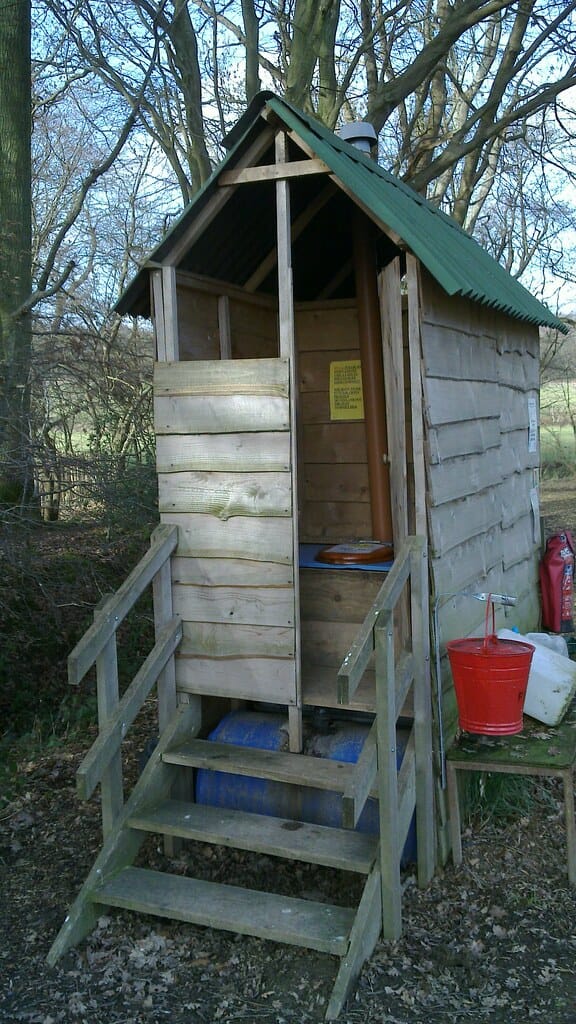
Move somewhere off the mains sewer, which is a lot of rural and off-grid homes, and the question of where your sewage goes becomes your problem rather than the water company's. Most such properties use a septic tank, and there is a widespread assumption that a tank in the ground is a fit-and-forget affair. It is not. In England the Environment Agency runs a set of rules called the General Binding Rules, and the single most important one catches people out constantly: a septic tank must let its waste water soak away into the ground through a drainage field, and must never discharge straight into a stream, ditch or river.
This guide is a plain-English map of how off-grid sewage is regulated across the UK, with England first and Scotland and Wales flagged where they differ. It is general guidance, not legal advice. The rules are devolved and they change, so always confirm the current position with the source and, if in doubt, a competent drainage engineer before you install, alter or buy a system. If you would rather sidestep the whole waterborne question, our guide to composting toilets covers the waterless alternative, and it pairs naturally with a well-planned off-grid water system.
Septic tank, treatment plant or cesspool: which is which
Three types of off-mains system get talked about, and the differences matter legally, so it is worth being precise.
A septic tank is a simple underground tank. Solids sink to the bottom and form a sludge, while the settled liquid flows out. That liquid has only been settled, not properly cleaned, so it must trickle away through a drainage field into the soil, where the ground does the rest of the treatment. Because the outflow is not clean, a septic tank must never discharge to a watercourse.
A small sewage treatment plant, also called a package treatment plant, does the same job but uses mechanical parts and air to break the sewage down to a much higher standard. The effluent is clean enough that, within limits, it can be discharged to a surface water such as a river or stream. This is why upgrading a septic tank to a package treatment plant is the standard fix for a tank that currently discharges the wrong way.
A cesspool (or cesspit) is different again: a sealed tank with no outlet at all. Nothing is treated and nothing is discharged, so it simply fills up and has to be emptied often, which is expensive. Because a cesspool makes no discharge, the discharge rules below do not apply to it, but building rules generally treat it as a last resort where nothing else is possible.
| System | How it treats sewage | Where the outflow goes |
|---|---|---|
| Septic tank | Settles solids only (basic) | To the ground via a drainage field, never to a watercourse |
| Package treatment plant | Mechanical + aerobic (high standard) | To ground, or to a surface water within limits |
| Cesspool | No treatment; sealed storage | Nowhere; emptied by tanker |
The England General Binding Rules: the drainage-field rule
In England, if you operate a septic tank or small sewage treatment plant, you do not need a permit provided you meet all of the General Binding Rules that apply to you. The rules exist to stop private sewage systems quietly polluting rivers and groundwater, and the central one is about where the waste water ends up.
For a septic tank, the answer must be the ground. As gov.uk puts it, "You must use a septic tank or a small sewage treatment plant to treat the sewage and then discharge the waste water to ground through a drainage field. You must not discharge effluent from a septic tank to a watercourse." A drainage field, also called an infiltration system, is a run of perforated pipes laid in gravel trenches so the liquid can trickle out and be treated by the soil. It has to be built to the British Standard for drainage fields, and it cannot be a soakaway meant for rainwater, or a well, borehole or the like.
The volume you discharge is capped. To the ground, the limit is up to 2 cubic metres (2,000 litres) a day. If you discharge to a surface water instead, which as we will see requires a package treatment plant rather than a septic tank, the limit is up to 5 cubic metres (5,000 litres) a day. Go over the limit that applies to you and you must connect to the public sewer where that is reasonable, or apply for a permit.
The other rules you must meet
The drainage-field rule is the big one, but it sits alongside several others that all have to be satisfied together in England.
- Domestic sewage only. The discharge must be ordinary household sewage from toilets, bathrooms, showers and kitchens, not trade effluent.
- No pollution. The discharge must not cause pollution of surface water or groundwater. If it does, that can be a separate offence.
- A British Standard system. The tank or plant must meet BS EN 12566, and any drainage field must meet BS 6297:2007. A CE mark or a certificate of compliance in the manual is the usual evidence. Systems installed before 1983 predate the standard and are treated separately.
- Correct capacity and installation. The system must be big enough for the property and installed and run to the manufacturer's specification. Extend the house or add another property and you may need to recalculate.
- Regular emptying. You must have the sludge removed before it exceeds the tank's capacity, at least once a year or as the manufacturer instructs, using a registered waste carrier. Keep the records.
- Not too close to a public sewer. For a single home you cannot rely on the binding rules if there is a public foul sewer within 30 metres of any boundary of the premises the system serves. The idea is that you should connect to it instead.
- Proper decommissioning. If you stop using the system permanently, you must remove anything that could pollute, such as remaining sludge.
When you need a permit instead
If you cannot meet every binding rule, you must either connect to the public sewer, change the system so it complies, or apply to the Environment Agency for a permit. Certain locations tip you into needing a permit even if everything else is fine. The main ones are:
- discharging more than the volume limits (over 2 cubic metres a day to ground, or over 5 to surface water);
- discharging in a groundwater source protection zone 1, which protects drinking-water sources, or within 50 metres of a private water supply such as a neighbour's spring, well or borehole;
- discharging in or within 50 metres of a protected site, meaning a special area of conservation, special protection area, Ramsar wetland, ancient woodland or biological Site of Special Scientific Interest;
- for a new discharge, being within 50 metres of another exempt discharge, or sharing an outlet where the combined volume would exceed the limit.
You should also have building regulations approval for a new tank or treatment plant, and you may need planning permission too. Where a permit is needed, the Environment Agency assesses the pollution risk at your specific location before granting it.
Selling or buying a home with a septic tank
The rules bite hardest at the point of sale, so this deserves its own note. In England, when you sell a property with a private sewage system, you must tell the new operator in writing that a discharge is in place, and hand over a description of the treatment and drainage system, where its main parts and the discharge point are, details of any changes, how it should be maintained, and any maintenance records you hold.
If the system is non-compliant, and the classic case is a septic tank discharging straight to a watercourse, the sale is normally when it has to be fixed. Buyer and seller should agree in writing who is responsible for replacing or upgrading it, as a condition of sale. A buyer's solicitor will usually ask, so a septic tank that fails the rules can hold up or reprice a sale. It is far better to find out early than to discover it during conveyancing.
How to check whether your system is compliant
If you are not sure where you stand, work through it in order rather than guessing.
Is your off-grid sewage system compliant in England?
- 1
Find out what you have and where it discharges
Confirm whether you have a septic tank, a package treatment plant or a cesspool, and trace where the outflow actually goes: to a drainage field in the ground, or to a ditch, stream or river. A competent drainage engineer can help if it is unclear.
- 2
Check the discharge is not going to a watercourse
If a septic tank discharges directly to a watercourse, it is non-compliant. Plan to connect to a sewer, upgrade to a package treatment plant, or add a drainage field, usually within about 12 months and certainly on sale.
- 3
Check the volumes and the system standard
Confirm you are within the limits (up to 2 cubic metres a day to ground, up to 5 to surface water) and that the tank and drainage field meet the relevant British Standards.
- 4
Check your location
Rule out a source protection zone, a nearby private water supply, and any protected site within 50 metres. Any of these can mean you need a permit rather than relying on the binding rules.
- 5
Check maintenance and records
Make sure the tank is emptied at least once a year by a registered waste carrier, and keep the certificates and maintenance notes. You will want them when you sell.
- 6
If you cannot meet every rule, act
Connect to the public sewer where reasonable, upgrade the system, or apply to the Environment Agency for a permit. Do not simply carry on with a non-compliant discharge.
Scotland and Wales work differently
Do not assume the English position travels. The biggest single difference is registration: England's binding rules are register-free, but both Scotland and Wales require you to tell the regulator about the system.
Scotland (SEPA)
In Scotland the Scottish Environment Protection Agency (SEPA) regulates private sewage systems, and you must apply to SEPA for an authorisation to discharge if you cannot connect to the public sewer. For a typical small system, from up to 10 domestic properties or a population equivalent of up to 50, you apply to register the discharge, and at the time of writing the registration fee for a small sewage discharge is £198.55. Some situations need a full permit rather than a registration, for example discharging to a phosphate-sensitive catchment or a freshwater loch. SEPA also expects the registration to be dealt with when a property is sold, so factor that into any Scottish purchase. The core engineering logic is the same as England's: a septic tank soaks to ground via a drainage field, while discharge to a watercourse needs a treatment plant.
Wales (NRW)
In Wales, Natural Resources Wales (NRW) runs the system, and septic tanks and package treatment plants in most cases need a one-off, free registration. The physical rules mirror England: discharge to ground must go through a drainage field, discharge to a surface water needs a package treatment plant, the volume limits are the same (less than 2,000 litres a day to ground, less than 5,000 to a watercourse), and the system must meet the British Standards. NRW applies its own protected-site distances, including keeping a surface-water discharge well clear (in the region of 500 metres) of designated conservation sites, and 50 metres for a discharge to ground. Older systems in operation before 6 April 2010 have their own registration route, so check the NRW guidance for your exact case.
The traps people fall into
- Assuming a septic tank can discharge to a handy ditch or stream. In England it cannot, full stop, and this is the most common breach.
- Carrying English assumptions into Scotland or Wales, where you must register the system.
- Buying a rural home without checking where the septic tank actually discharges, then inheriting the upgrade bill.
- Skipping the yearly empty, which clogs and ruins the drainage field and turns a small job into a big one, or using an unregistered firm and keeping no records.
- Forgetting building regulations approval, and sometimes planning permission, for a new tank or treatment plant.
- Believing the binding rules override everything: a protected site, a source protection zone or a nearby private water supply can still require a permit.
This is general guidance, not legal or financial advice, and it is not a substitute for the current rules or professional survey advice on a specific property. Sewage regulation is devolved and changes over time. Last checked July 2026. Always confirm the current position with the Environment Agency (England) via gov.uk, SEPA (Scotland) or Natural Resources Wales (Wales) before you install, alter, buy or sell a system, and use a competent, accredited drainage engineer for the physical work.
Frequently asked questions
Sources
- General binding rules: small sewage discharge to the ground , Environment Agency (GOV.UK)
- General binding rules: small sewage discharge to a surface water , Environment Agency (GOV.UK)
- Septic tanks and sewage treatment plants: what you need to do , Environment Agency (GOV.UK)
- Small sewage discharges in England: the general binding rules , Environment Agency (GOV.UK)
- Septic tanks and private sewage treatment systems , Scottish Environment Protection Agency (SEPA)
- Register your septic tank or small sewage (package) treatment plant , Natural Resources Wales (NRW)
Kit for this job (Ad)

Swell UK 5m x 5m Pond Liner | 25 Year Guarantee | HDPE | UV Resistant | Garden Fish Ponds
Check price on Amazon →
Swell UK 4m x 4m Pond Liner | 25 Year Guarantee | HDPE | UV Resistant | Garden Fish Ponds
Check price on Amazon →We may earn a small commission, at no cost to you. We only list kit we'd use.
Written by
UK Homesteading Team
Editorial team
The UK Homesteading editorial team, offering UK-specific, evidence-led guidance on growing, keeping, preserving and the law.