Right, a reality check before we start. If you've landed here hoping for a tidy list that turns your house plastic-free by the weekend, I'm going to gently let you down. It can't be done, not in the UK, not really. Your paracetamol comes blister-packed, your laptop arrived wrapped, and half the fresh food in your local shop is sealed in film. That's the system we've got, and one household can't opt out of all of it.
What you can do is use a lot less of the stuff. And that adds up more than you'd think. This is a practical, money-aware guide to doing exactly that, room by room, without the guilt-trip and without falling for products that are more marketing than muck-saving.
Can you really have a plastic-free home in the UK?
Short answer: no, and I'd be wary of anyone who says otherwise. "Plastic-free" is a lovely phrase, but "low-plastic" is the honest target.
Here's the thing that helps most people relax about it. UK households throw away an eye-watering amount of plastic packaging every week, and only about half of our plastic packaging actually gets recycled. Some types, like thin plastic film, are barely collected at all. So the goal was never to recycle our way out of this. It's to buy less of it in the first place. Reduce beats recycle every time.
You're not trying to win a purity contest. You're trying to put a bit less plastic in the bin each week than you did last week.
The trap I see people fall into is the all-or-nothing wobble. They swap one thing, spot ten more they haven't fixed, feel like a fraud, and give up. Don't do that. Every wrapper you avoid is a real, small win. Stack enough of them and you've changed how your whole house shops.
Which kitchen swaps make the biggest difference?
For most UK homes, the kitchen is where the plastic mountain lives. Which is good news, because it's also where the easiest swaps are.
Start with these, roughly in order of bang-for-buck:
- A refillable water bottle and a decent flask. Boring, cheap, and it quietly kills a lot of single-use plastic over a year. If you only do one thing, do this.
- Loose fruit and veg with a reusable produce bag. Skip the pre-bagged stuff where you can. A couple of lightweight mesh or cotton bags live in your shopping bag and go for years.
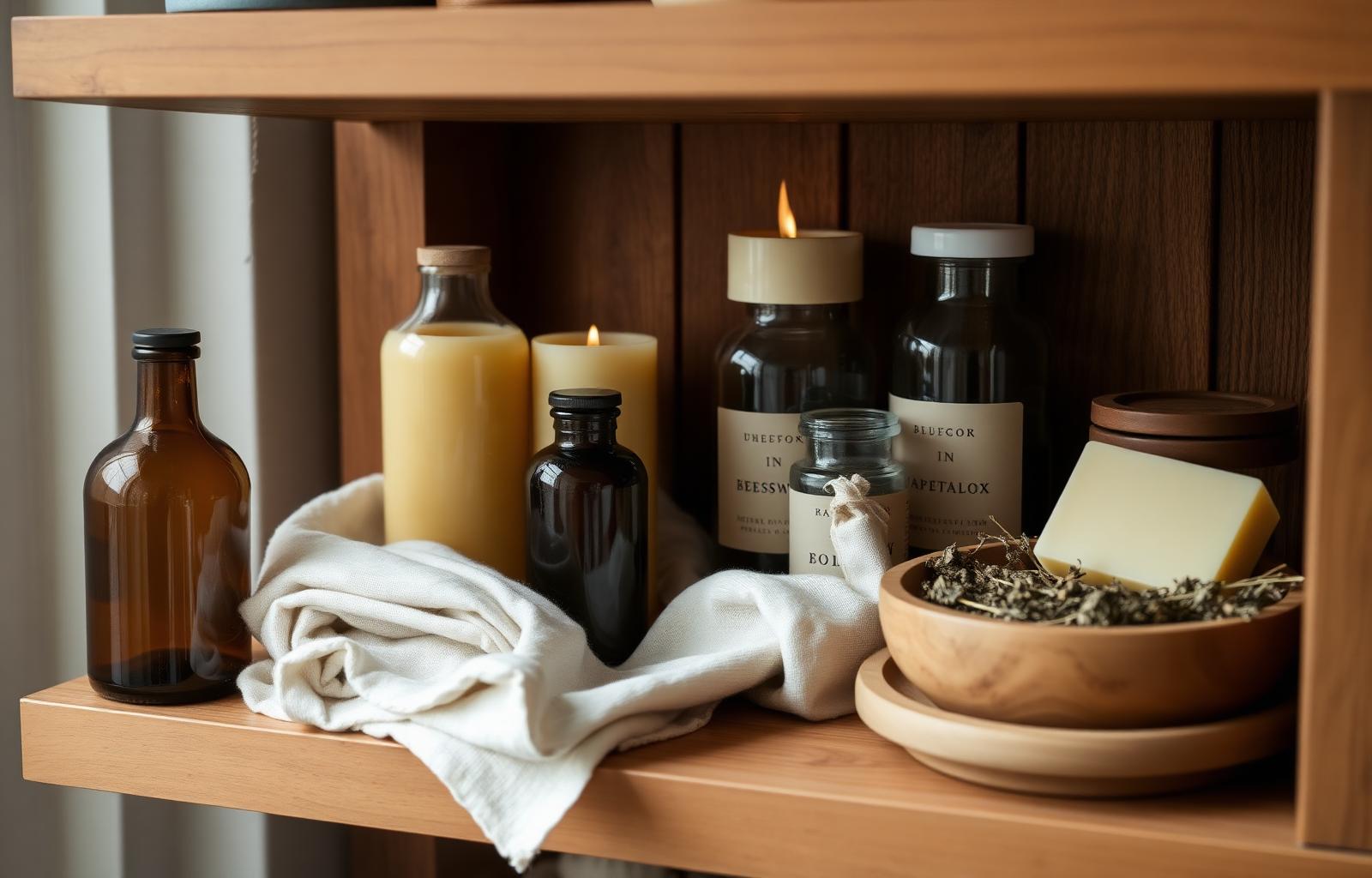
- Beeswax wraps or a plain lidded box instead of cling film. Cling film is a classic single-use offender and awkward to recycle. A wrap handles the cheese and the half-cut lemon nicely. A bowl with a plate on top works too.
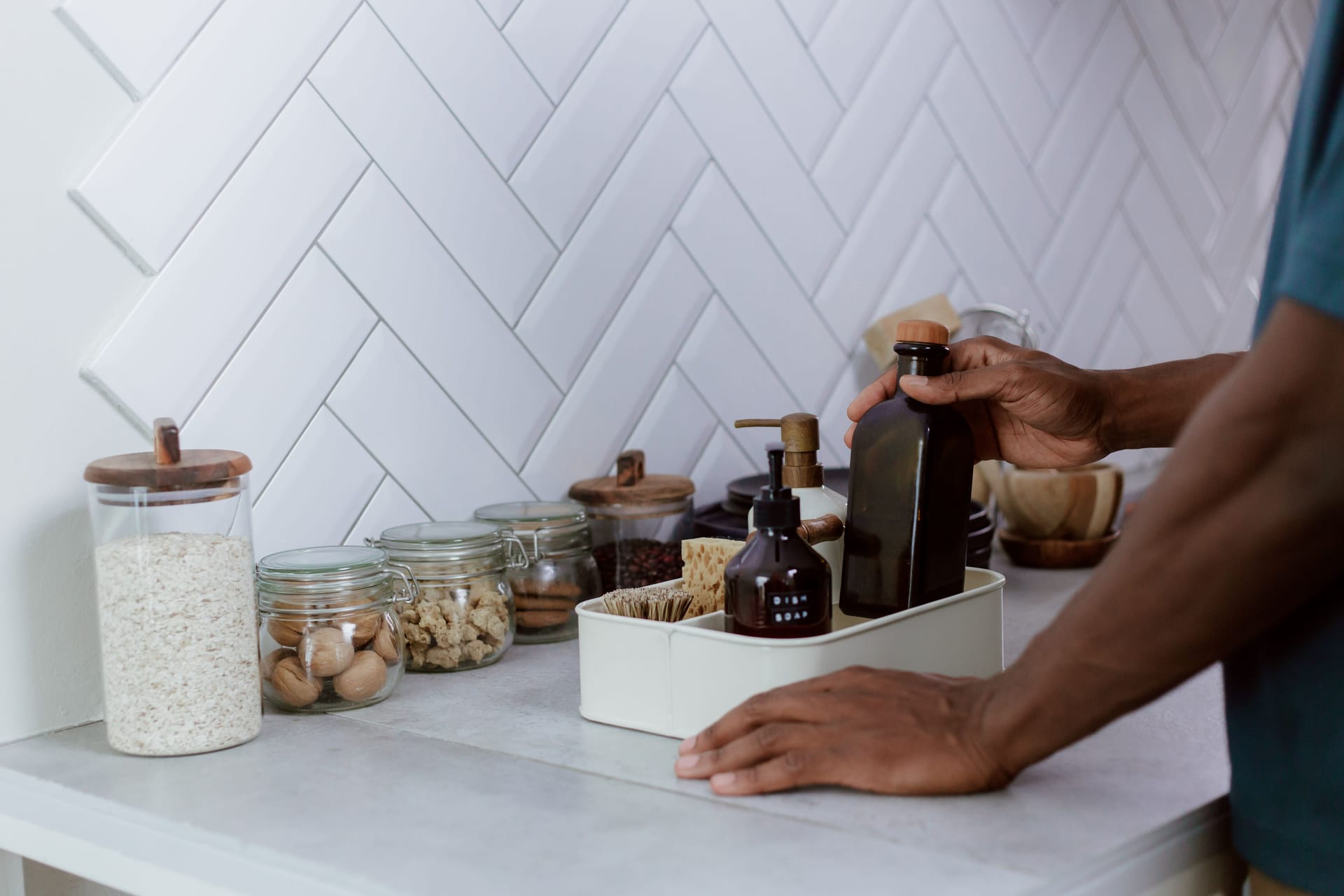
- Bar soap by the sink and solid dish soap or a refilled bottle. Bar soap ditches the plastic pump bottle entirely. Solid dish "soap" blocks take a bit of getting used to, so if you're not sold, refilling your usual washing-up liquid is a fine middle ground.
- Glass jars and tubs for storage. No need to buy a matching set. Old jam and passata jars do the job for nothing.
- Compost your food waste. Less in the bin, better for the garden. If your council does food caddies, use them, and if you've got outdoor space, a compost bin is the natural next step.
What about the bathroom and the laundry?
The bathroom is full of small plastic bottles that empty fast, so swaps here land quickly.
A bar shampoo and a bar of soap replace two or three plastic bottles and last a surprisingly long time. A bamboo toothbrush swaps a chunk of plastic for a handle you can compost (pull the bristles out first, they're usually nylon). A safety razor costs a bit up front but then it's just cheap metal blades for years, no plastic cartridges. And plenty of shops now do refillable toiletries, so you top up the same bottle rather than buying a new one each time.
You won't love every swap, and that's allowed. Bar shampoo suits some hair and not others. Try one, keep what works, bin the idea if it doesn't.
For laundry and cleaning, the pattern is the same: refill or ditch the plastic bottle. Look for cardboard-box or bar laundry detergents, refill stations for cleaning spray, or concentrated tablets you drop into a bottle you already have. Fair warning, some of these are pricier per wash than a big supermarket bottle, so check before you commit. And you can make a lot of everyday cleaning products yourself for pennies, which is a proper plastic-and-money win. We've got a full walkthrough in our guide to natural cleaning products in the UK.
Where can I shop with less plastic in the UK?
This is where it gets easier than it used to be.
Refill and zero-waste shops let you bring your own containers and fill up on dried goods, cleaning products and toiletries by weight. The free Refill app, run by the UK charity City to Sea, maps thousands of places you can refill water, coffee, groceries and more. Worth a download before you assume there's nowhere near you, because there often is.
A few other UK-friendly habits:
- Loose from the market or greengrocer. Local markets are usually a plastic desert in the best way, and often cheaper than the supermarket for veg.
- Milk in glass bottles from a local rounds delivery, where you can still get it. The bottles go back and get reused, which is exactly the model we want more of.
- Your own tubs at the deli, butcher or fishmonger counter. Most are happy to fill your container if you ask nicely.
You don't need to overhaul your whole shop. Even shifting one category, say your veg, to loose makes a visible dent.
Are microplastics from my clothes really a problem?
This one's less obvious than a cling-film wrapper, and it's worth knowing about.
Synthetic fabrics, so polyester, nylon, acrylic and the fleecy stuff, are made from plastic. Every time you wash them, they shed tiny plastic threads called microfibres. Tens of thousands or more come off in a single wash, and a lot of them are too small for treatment plants to catch, so they end up in our rivers and sea. It's a real and growing concern, and it's one of the sneakier ways plastic leaves our homes.
You don't need to throw out your entire wardrobe. Cheaper, high-impact moves: wash full loads rather than half-empty ones, wash a bit cooler, and simply wash synthetic clothes less often when they're not actually dirty. Buying fewer, better clothes and choosing natural fibres when you do helps over time, but there's no need to panic-replace anything you already own.
Which swaps are worth it, and which are just greenwash?
Here's the part most "eco swap" lists skip.
A reusable is only better if you actually reuse it, a lot. That cotton tote bag you've got a drawer full of? A UK Environment Agency study found a cotton bag needs to be used well over 100 times before it beats a single flimsy plastic bag on carbon. Use one tote for years and it's a clear win. Collect twenty and use each twice, and you've made things worse, not better. The greenest bag is the one you already have, whatever it's made of, used until it falls apart.
Watch out too for "biodegradable" and "plant-based" plastics. They sound brilliant, but many only break down in industrial composting conditions that most UK councils don't offer at the kerbside. In a normal bin, they can behave much like ordinary plastic. And a product wrapped in three layers of packaging to tell you how eco it is has rather missed the point.
The rule of thumb: a swap is worth it when it removes plastic you'd otherwise throw away regularly, and when you'll keep using it. If it's a shiny new thing bought to feel virtuous, be honest with yourself before you buy.
So where do I actually start?
Don't try to do everything. Pick three swaps, build the habit, then add more when they've stuck.
- 1
Follow your own bin
For a week, notice which plastic you throw away most. That's your hit list. Everyone's is slightly different, so ignore generic checklists and target your own waste.
- 2
Pick three easy wins
Choose three low-effort swaps, ideally in the kitchen. A refillable bottle, loose veg with a produce bag, and cling film to a wrap or lidded box is a strong, cheap starter set.
- 3
Use up what you own first
Finish the shampoo, the cling film, the washing-up liquid. Only swap as things run out. Throwing away usable stuff to 'go plastic-free' defeats the point and costs you money.
- 4
Sort out the microfibres
If you wash a lot of synthetics, add a wash bag or filter, and start washing fuller, cooler loads less often. Easy, and it tackles the invisible plastic.
- 5
Find your local refill option
Check the Refill app for a nearby zero-waste shop, market or milk round. Shift one shopping category to loose or refilled, then build from there.
That's it. No purity, no lectures, no spending a fortune. Cut what you reasonably can, feel good about it, and let the small wins compound.
If you want to keep going, our natural cleaning products guide tackles the cupboard under the sink, and starting a compost heap closes the loop on your food waste. Or head back to the Natural Home hub for the rest of our low-plastic, low-fuss guides.
Frequently asked questions
Sources
- Prevent problem plastics and the UK Plastics Pact , WRAP
- About the Refill campaign and app , City to Sea / Refill
- Life cycle assessment of supermarket carrier bags , Environment Agency (GOV.UK)
- Plastics and microplastics campaign , Friends of the Earth
Kit for this job (Ad)

Insulated Water Bottle with Straw - 650/950/1200/1800 ml - Leakproof Double-Walled Stainless Steel Metal Drink Flask BPA-Free - Sports Travel Gym Camping Hiking Kids
Check price on Amazon →
Hydro Flask - Water Bottle 946 ml (32 oz) - Vacuum Insulated Stainless Steel Water Bottle with Leak Proof Flex Cap and Powder Coat - Wide Mouth - Black
Check price on Amazon →
Bamboo Toothbrush Set, 12 Pack | BPA-Free Soft Bristles, Natural Bamboo Handle, Charcoal Bristles, Compostable, Family Pack, Eco-Friendly, Biodegradable
Check price on Amazon →
Eono Mesh Laundry Bags Reusable Washing Machine Bag for Delicate Blouse, Hosiery, Underwear, Bra, Shoes, Lingerie Baby Clothes, 6 Set (3L+3M)
Check price on Amazon →We may earn a small commission, at no cost to you. We only list kit we'd use.
Written by
UK Homesteading Team
Editorial team
The UK Homesteading editorial team, offering UK-specific, evidence-led guidance on growing, keeping, preserving and the law.