What you can (and cannot) water-bath
| Safe (high-acid) | Unsafe (low-acid) |
|---|---|
| Jams, marmalades, jellies | Plain vegetables (carrots, beans, peas) |
| Fruit in syrup or juice | Meat, poultry, fish |
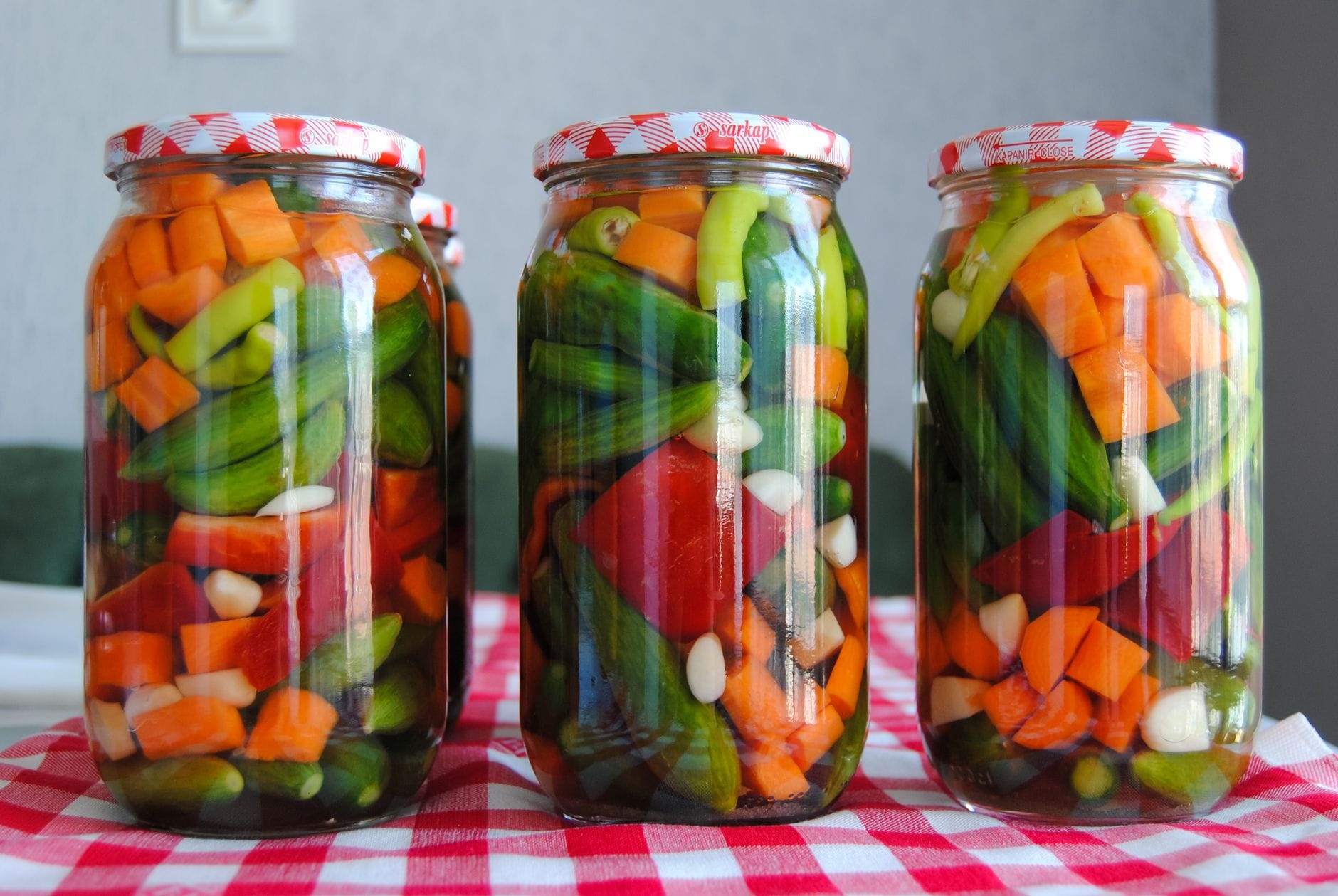
| Pickles in vinegar (5%+ acetic) | Dairy products |
| Chutneys with vinegar + sugar | Soups, stocks, casseroles |
| Tomatoes with added lemon juice / citric acid | Plain tomatoes without acid |
Why acidity matters
Clostridium botulinum spores survive boiling water but cannot grow in environments below pH 4.6. High-acid foods (jams, pickles, properly acidified tomatoes) sit safely below that threshold. Low-acid foods don't. They need pressure canning at 116°C to destroy the spores, and a water bath only reaches 100°C.
UK equipment checklist
- Large stockpot or dedicated canner. Deep enough to cover jars by 2.5cm of water
- Trivet or rack. Jars must not touch the pan base
- Preserving jars with two-piece lids (Kilner Genuine, Ball/Bernardin imports)
- Jar lifter (essential. Boiling jars are heavy and slippery)
- Sugar/jam thermometer for pectin recipes
- Funnel, bubble remover, ladle, clean tea towels
The method, step by step
Water-bath bottling, beginning to end
- 1
Sterilise jars
Wash in hot soapy water, rinse, then heat in a 130°C oven for 20 minutes. Lids: simmer in hot (not boiling) water for 5 minutes.
- 2
Prepare your recipe
Follow a tested recipe exactly. Measurements, acid additions and headspace are calculated for safety, not flavour.
- 3
Fill jars
Ladle hot preserve into hot jars, leaving the headspace your recipe specifies (usually 6 to 12mm). Run a clean knife round the inside to release air bubbles.
- 4
Seal
Wipe rims with a clean damp cloth. Any food residue prevents sealing. Place lid, screw band fingertip-tight (no more, or air can't escape during processing).
- 5
Process
Lower jars into the canner. Water must cover by 2.5cm. Bring to a rolling boil, then start your timer. Process for the recipe's full time without lifting the lid.
- 6
Cool and check
Remove jars to a wooden board or thick towel. Leave undisturbed 12 to 24 hours. Test seals. The lid should not flex when pressed. Refrigerate any unsealed jars.
British altitude adjustments
Most UK kitchens are below 300m and use printed times as-is. If you live in the Pennines, parts of the Lake District, the Scottish Highlands or the Welsh hills, water boils a little cooler and your jars need longer.
| Elevation | Add to recipe time |
|---|---|
| 0 to 300m (most of the UK) | No change |
| 300 to 600m (uplands, parts of Wales/Scotland) | +5 minutes |
| 600 to 900m (high Highlands) | +10 minutes |
Four mistakes that risk botulism
- Reusing single-use lids. The sealing compound only works once.
- Adapting a low-acid recipe for the water bath because you don't have a pressure canner.
- Reducing processing time because the jam 'looks done'.
- Storing unsealed jars at room temperature thinking the heat will hold.
This guide is general information, not formal legal, financial, medical or veterinary advice. UK rules, prices and best practice change, and some rules differ across England, Scotland, Wales and Northern Ireland, so always check the current position with the relevant official source (such as gov.uk, the NHS, the FSA, DEFRA or APHA, or the RHS) or a qualified professional before acting. Last checked July 2026.
Frequently asked questions
Sources
- Complete Guide to Home Canning , USDA / NCHFP
- Food hygiene for your business , Food Standards Agency
Kit for this job (Ad)

The Complete Guide to Pressure Canning: Everything You Need to Know to Can Meats, Vegetables, Meals in a Jar, and More
Check price on Amazon →
0.35 Litre Breakfast Jar Set with Stainless Steel Spoon and Measuring Lid Perfect for Overnight Oats, Yogurt, Smoothie Bowls, Granola, Chia Pudding
Check price on Amazon →
Pisol Wide Mouth Versatile Funnel, Canning Funnels for Kitchen Use, Food Grade Plastic Cooking Funnel Set with 4 Size Spouts and 2 Strainers for Filling Different Bottles and Bags, Grey
Check price on Amazon →
Clip Top Jar 2 Litre (2000ml) Airtight Glass Storage Jar for Preserving Fruits Vegetables Coffee Tea Rice Flour Nuts Pasta | Preserves fruits, vegetables, coffee, tea, rice, flour, pasta, and dry ingredients to prevent food spoilage and waste.
Check price on Amazon →We may earn a small commission, at no cost to you. We only list kit we'd use.
Written by
UK Homesteading Team
Editorial team
The UK Homesteading editorial team, offering UK-specific, evidence-led guidance on growing, keeping, preserving and the law.