A batch of homemade jam is one of the most satisfying things to come out of a kitchen, and once you understand how the set works you can turn almost any fruit into it. Strawberry is the one everyone wants first, so that's where we'll start.
The whole thing comes down to a balance of fruit, sugar and acid, and knowing when it's reached setting point. The recipe is below, with the general rules that work for any fruit underneath it.
How to Make Jam at Home in the UK: A Beginner's Guide
Makes About 4 × 340g jars
Prep
20 min
Cook
25 min
Total
45 min
Makes
About 4 × 340g jars
Ingredients
Fruit & acid
Sugar (choose one, see notes)
Optional
Method
- 1
Put clean jars and lids in a low oven (about 140°C) to sterilise, and chill three or four saucers in the freezer for testing the set.
- 2
For firmer fruit and a deeper flavour you can layer the strawberries with the sugar in the pan and leave them to stand for 2 hours or overnight, but it isn't essential.
- 3
Mash about a fifth of the strawberries in the pan to release their juice and pectin, then add the rest along with the lemon juice.
- 4
Warm gently for a few minutes to soften the fruit and get the juices running.
- 5
Add the sugar and stir over a low heat until every grain has dissolved, before you let it boil; undissolved sugar makes for a grainy jam.
- 6
Turn up to a full rolling boil and boil hard for 6 to 10 minutes without over-stirring.
- 7
Start testing at around 104°C: spoon a little onto a frozen saucer, wait 30 seconds, then push it with a fingertip. When it wrinkles, it's set. On a thermometer, setting point is 104.5°C.
- 8
Take the pan off the heat, stir in the butter if using, and skim off any froth.
- 9
Leave it to stand for 10 to 15 minutes so the fruit suspends evenly, then pot into the hot sterilised jars and seal at once.
Cook’s notes
- Sugar choice: jam sugar has pectin and acid already in it and gives a near-guaranteed set, which is the easiest option. Plain granulated or preserving sugar gives a softer, more traditional set but leans on the lemon and careful timing.
- Other fruits change the rule. High-pectin fruits like blackcurrant, gooseberry, damson and cooking apple set easily and need no jam sugar or extra lemon; low-pectin fruits like strawberry, cherry and rhubarb need the help. Softer and sweeter usually means more help to set.
- The overnight standing trick firms the berries so they stay whole through the fast boil, which is worth it if you like visible fruit.
- Don't over-boil. Long boiling breaks down the pectin and darkens the jam, so test early rather than boiling to be safe.
- Sterilise jars in a 140°C oven and pot the jam hot; that's what lets it keep unopened for up to a year.
What you’ll need
- Large preserving pan
- Sugar thermometer, optional but handy
- A few saucers, chilled, for the set test
- 4 warm sterilised jars with lids
Troubleshooting
My jam won't set.
Return it to the pan, add the juice of another lemon or a little jam sugar, boil again to 104.5°C and re-test on a cold plate.
It set like toffee and went dark.
It boiled past setting point. Test from 104°C next time. This batch is still lovely loosened as an ice-cream or porridge sauce.
The fruit floated to the top of the jar.
It was potted too soon. Let future batches stand for 10 to 15 minutes before jarring so the jam thickens and holds the fruit.
There's froth or scum on top.
Stir in a small knob of butter at the end, or skim it; it doesn't affect keeping.
It went mouldy in storage.
The jars weren't properly sterilised, or the jam went in cold. Always pot hot jam into hot, oven-sterilised jars and seal straight away.
More about making jam
The basic fruit-and-sugar rule. Jam is roughly equal weights of fruit and sugar, somewhere between about three parts sugar to four of fruit and a straight one-to-one. The sugar isn't only for sweetness: at that concentration it's the preservative that lets jam keep for months, and it's essential to the set.
Pectin is what makes it set. Pectin is a natural fibre in fruit that, with enough sugar and acid, forms the gel that turns syrup into jam. Fruits vary hugely: some are packed with it, some have almost none.
Acid matters as much as pectin. Pectin only gels in acidic conditions, which is why low-acid fruits like strawberries get a squeeze of lemon. The acid also helps draw the fruit's own pectin out.
The setting-point test. Jam sets at 104 to 105°C. Check it with a thermometer and confirm it with the cold-plate wrinkle test: a blob on a frozen saucer that wrinkles when you push it is ready. Boil hard but briefly, because overcooking wrecks both the set and the flavour.
Why some fruits need a hand. High-pectin fruits like blackcurrants, gooseberries, damsons and cooking apples set on their own. Low-pectin fruits like strawberries, cherries, rhubarb and blackberries need a boost, whether that's added lemon, a splash of high-pectin fruit juice, or jam sugar with the pectin already blended in. Knowing which camp your fruit is in tells you whether you need to step in.
Frequently asked questions
Kit for this job (Ad)

The Complete Guide to Pressure Canning: Everything You Need to Know to Can Meats, Vegetables, Meals in a Jar, and More
Check price on Amazon →
Joseph Joseph Nest 9 Plus, 9 Piece Compact Stainless Steel Food Preparation Set with Mixing Bowls, Measuring Cups, Sieve and Colander, Multicolour
Check price on Amazon →
Pisol Wide Mouth Versatile Funnel, Canning Funnels for Kitchen Use, Food Grade Plastic Cooking Funnel Set with 4 Size Spouts and 2 Strainers for Filling Different Bottles and Bags, Grey
Check price on Amazon →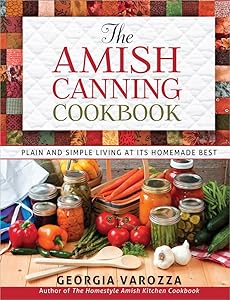
The Amish Canning Cookbook: Plain and Simple Living at Its Homemade Best
Check price on Amazon →We may earn a small commission, at no cost to you. We only list kit we'd use.
Written by
UK Homesteading Team
Editorial team
The UK Homesteading editorial team, offering UK-specific, evidence-led guidance on growing, keeping, preserving and the law.