If you keep a sourdough starter, you will end up with discard. It piles up in a jar at the back of the fridge and feels like a waste to bin, because it mostly is. The good news is that most of it can go straight into your cooking, and some of the best things you will make from your starter are the ones that never became a loaf.
What is sourdough discard, exactly?
Every time you feed a starter, you remove some of it first. That removed portion is the discard. King Arthur Baking describes it plainly as "the portion of starter that gets removed as part of its routine maintenance." You take some out to make room for fresh flour and water.
There is a practical reason for this. If you fed the whole thing every day without ever taking any away, your starter would double in size at each feed and quickly need a bucket rather than a jar. Removing a portion keeps the amount manageable, and it keeps the ratio of fresh flour to established culture high, which is what keeps the microorganisms lively. A well-fed starter is what gives you a good rise when you come to bake. If you are still getting your starter going, our guide to a sourdough starter with UK water covers the feeding routine that creates discard in the first place.
Discard is simply unfed starter. It is flour and water that has been fermenting, full of the same wild yeasts and lactic acid bacteria that raise your bread, just past its peak and not freshly refreshed. That tang is exactly what makes it useful in the kitchen.
Do you actually have to discard?
Not as much as you might think. Discarding keeps the culture healthy, but there are honest ways to produce far less of it.
The simplest is to keep a smaller starter. If you feed 20g of starter rather than 100g, you throw away far less at each feed. You can also store your starter in the fridge and feed it weekly instead of daily, which slows everything down and cuts the discard right back. And of course, the third option is the one this whole guide is about: stop treating discard as rubbish and start cooking with it.
The best things you make from a starter are often the ones that never became a loaf.
When is discard safe to use, and when do you bin it?
This is the part to get right, so here it is clearly.
Discard that has been kept in the fridge, smells pleasantly sour and looks normal is fine to cook with. A layer of greyish liquid on top (bakers call it hooch) is harmless. You can pour it off or stir it back in. Discard is always cooked, never eaten raw.
One small caveat worth knowing: if you feed with rye flour, your starter can take on a faint pinkish tinge naturally, which is different from the bright pink or orange streaks that signal a problem. The streaks to worry about are vivid and sit on or through the surface. Real mould is fuzzy. If you are unsure, err on the side of the bin.
As for how long it keeps, King Arthur says discard stored in a lidded jar in the fridge will last "several weeks." Most home bakers use theirs within a week or two, adding to the same jar each time they feed until there is enough to bake with. One habit worth keeping: do not tip old discard down the sink, because it can set and block drains. It goes in the compost or the bin.
The quick reference
| Sign | What it means | Do this |
|---|---|---|
| Pleasant sour smell, normal colour | Healthy discard | Cook with it |
| Grey liquid on top (hooch) | Normal, harmless | Stir in or pour off |
| Pink or orange streaks | Harmful bacteria | Bin it |
| Fuzzy or coloured mould | Contaminated | Bin it |
| Foul, rotten smell | Spoiled | Bin it |
What can you make with sourdough discard?
Here is where it earns its keep. Some recipes want a little bicarbonate of soda to give lift, because it reacts with the acidity in the discard. Others, like crackers and pizza bases, do not need it at all.
Sourdough crackers
Crackers are the classic first thing to make, because they are nearly impossible to get wrong and they use up a good amount of discard in one go. Thin, snappy and tangy, they are excellent with cheese.
- 1
Make the dough
In a bowl combine 125g sourdough discard, 120g plain flour, 30g olive oil (or soft butter), and half a teaspoon of salt. Add herbs if you like: rosemary, thyme or cracked black pepper all work well. Mix to a stiff dough and knead briefly until smooth.
- 2
Rest it
Wrap the dough and rest it for 20 to 30 minutes at room temperature. This makes it far easier to roll thin. A short rest in the fridge is fine too.
- 3
Roll thin
Roll the dough out on baking paper as thinly as you can, ideally a couple of millimetres. The thinner you roll, the crisper the cracker. Prick all over with a fork and cut into squares or shards. Sprinkle with flaky salt.
- 4
Bake
Bake at 180C (160C fan) for 20 to 25 minutes until golden and crisp at the edges. Watch the last few minutes, as thin crackers colour fast. Cool completely on a rack, where they crisp up further. They keep in a tin for a week.
Sourdough pancakes and drop scones
Discard makes wonderful pancakes and Scotch pancakes (drop scones), with a light tang that ordinary batter lacks. This is a breakfast that comes together in minutes.
- 1
Mix the batter
Whisk together 200g sourdough discard, 1 egg, 15g caster sugar (leave it out for savoury), and a pinch of salt. Loosen with a splash of milk until it drops easily from the spoon.
- 2
Add the raising agent
Just before cooking, stir in half a teaspoon of bicarbonate of soda. It will froth as it meets the acidity in the discard, and that fizz is what gives you a light, risen pancake. Cook straight away rather than letting it sit.
- 3
Cook
Heat a lightly greased frying pan or griddle over a medium heat. Drop in spoonfuls of batter. When bubbles rise and set on the surface, flip and cook the other side for a minute. Serve with butter and jam, or bacon and maple syrup.
Crumpets
A properly British use for discard. Loosen your discard with a little milk and a pinch of bicarbonate of soda and salt into a thick, pourable batter, then cook it in greased metal rings on a low heat until the tops set with those signature holes. They want patience and a gentle heat, but homemade crumpets are a world away from the shop version.
Banana bread or a discard loaf cake
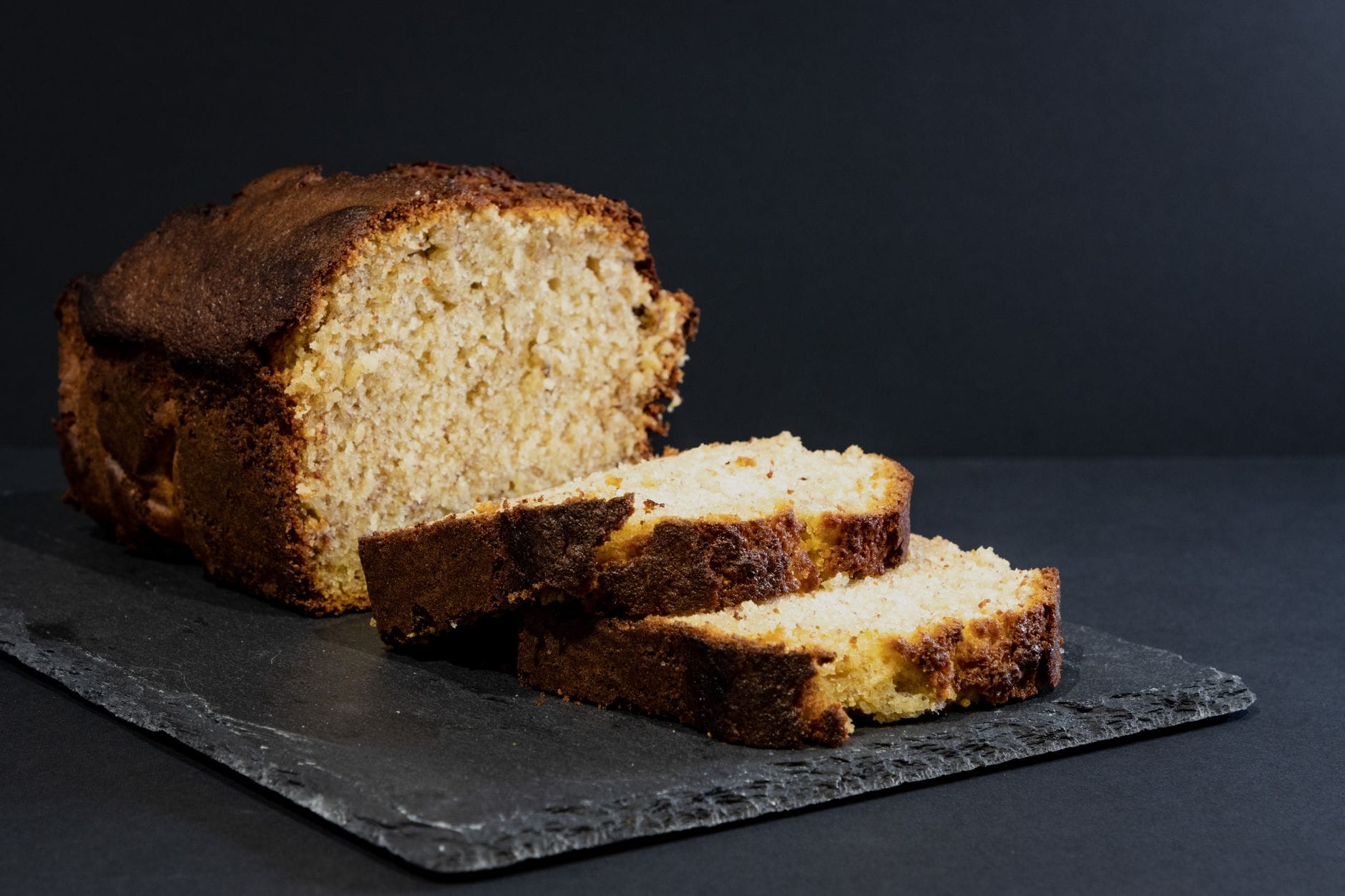
Discard slips easily into cakes and quick breads, adding moisture and a subtle depth without any sourness in the finished bake. For banana bread, add around 100g of discard to your usual recipe and slightly reduce the flour and liquid to compensate. It is a brilliant way to use up both a sad jar of discard and three black bananas in one afternoon.
Pizza base
For a quick weeknight base, mix roughly 200g discard with 150g plain flour, a tablespoon of olive oil and a good pinch of salt to a soft dough. This is not a slow-fermented pizza, so it will be flatter and more like a flatbread, but it is really good, cooks fast in a hot oven and carries plenty of flavour. For the full slow-rise version, work from your active starter using our sourdough bread recipe for UK kitchens.
A flavour boost in a yeasted loaf
You do not have to bake a full sourdough to get some of its character. Stir 100g to 150g of discard into an ordinary yeasted bread dough and reduce the flour and water slightly to keep the balance. The commercial yeast does the lifting, while the discard adds a mellow, tangy note and a better crust. It is a gentle halfway house on the way to full sourdough baking.
A note on not wasting it
The whole point of a starter, as the Real Bread Campaign describes it, is bread made with nothing but a live culture, flour, water and salt. That thriftiness runs both ways. The discard is not a failure of the process, it is a byproduct you can put to work. Keep a jar going, add to it through the week, and by the weekend you will have enough for a batch of crackers or a stack of pancakes. Free food from something you were about to throw away is a good habit for any kitchen.
Frequently asked questions
Sources
- What is sourdough discard? And what should I do with it? , King Arthur Baking
- Sourdough starter troubleshooting, part 2 , King Arthur Baking
- Sourdough , Real Bread Campaign (Sustain)
Kit for this job (Ad)

Clip Top Jar 1 Litre (1000ml) Airtight Glass Storage Jar for Preserving Fruits Vegetables Coffee Tea Rice Flour Nuts Pasta | Preserves fruits, vegetables, coffee, tea, rice, flour, nuts and pasta with a secure 1000ml airtight seal.
Check price on Amazon →
Kilner Preserve Jar 0.5L (500ml) Round Glass Screw Top Lid Preservation Storage Jar for Jams Chutneys Small Pickled Fruits
Check price on Amazon →
zunmial Sourdough Starter Jar 710ml, Glass Sourdough Starter Kit with Date Feeding Band, Thermometer, Cloth Cover & Metal Lid, Reusable Sourdough Bread Baking Supplies, Home Baking Supplies (1pcs)
Check price on Amazon →
Kilner Wide Mouth Preserve Jar 0.5L (500ml) Glass Storage Jar with Vacuum Seal Lid Ideal for Preserving Whole Fruits Vegetables Pickles Jams
Check price on Amazon →We may earn a small commission, at no cost to you. We only list kit we'd use.
Written by
UK Homesteading Team
Editorial team
The UK Homesteading editorial team, offering UK-specific, evidence-led guidance on growing, keeping, preserving and the law.