What are ex-battery hens, and why do they need rehoming?
The term "ex-battery" is a hangover from the old barren battery cage, which was banned across the EU and UK in 2012. Most hens rehomed today are more accurately ex-commercial or ex-caged birds, kept in enriched colony cages or in large barn systems. Whatever the housing, the economics are the same. A commercial laying hen starts laying at around 18 to 20 weeks, peaks for roughly a year, and by about 72 weeks of age her output has slipped to the point where the farm no longer makes money keeping her.
At that point she is considered "spent". She is not old, and she is not finished laying. She is simply less profitable than a fresh point-of-lay pullet. The routine outcome is slaughter, usually for low-grade meat products. This is legal and it is how the egg industry works at scale, but it means healthy hens with years of life left in them are killed at around 18 months old.
Rescue charities step into that gap. They arrange with farms to collect birds on the day they are due to be cleared out, and rehome them as pets and back-garden layers instead. A hen can go from cage to a grassy run in the space of a single morning.
She is not old, and she is not finished laying. She is simply less profitable than a fresh pullet.
Where can you get ex-battery hens in the UK?
Two national charities do the bulk of this work, and both are worth knowing.
The British Hen Welfare Trust (BHWT) is the biggest and best known. Founded in 2005, it has rehomed more than one million hens to date and rescues around 60,000 birds a year through a network of roughly 46 to 50 collection hubs across the country. You book onto a rehoming date in your area through their Adopt hens pages, make a donation, and collect your birds on the day. First-time adopters are usually asked to have a quick chat first. The BHWT does not keep hens in stock: they lift them from the farm early in the morning, health-check them at the hub, and hand them to adopters the same day, so all the stress is confined to a few hours.
Fresh Start for Hens (FSFH) is the other major operator, a volunteer-run Community Interest Company that rehomes roughly 70,000 hens a year (plus some ducks and cockerels) through collection points across England and Wales. They ask a minimum donation of around £2.75 per hen. Like the BHWT, they will not rehome to anyone planning to sell the birds or use them commercially, only to genuine pet homes.
Both charities usually rehome in small groups, and that suits the birds. Chickens are flock animals, and the RSPCA recommends keeping at least three hens together. If you have never kept chickens before, read our beginner's guide to keeping chickens in the UK and the wider chickens hub before collection day, because you want the coop set up and ready before the hens arrive, not after.
What do rescue hens arrive like?
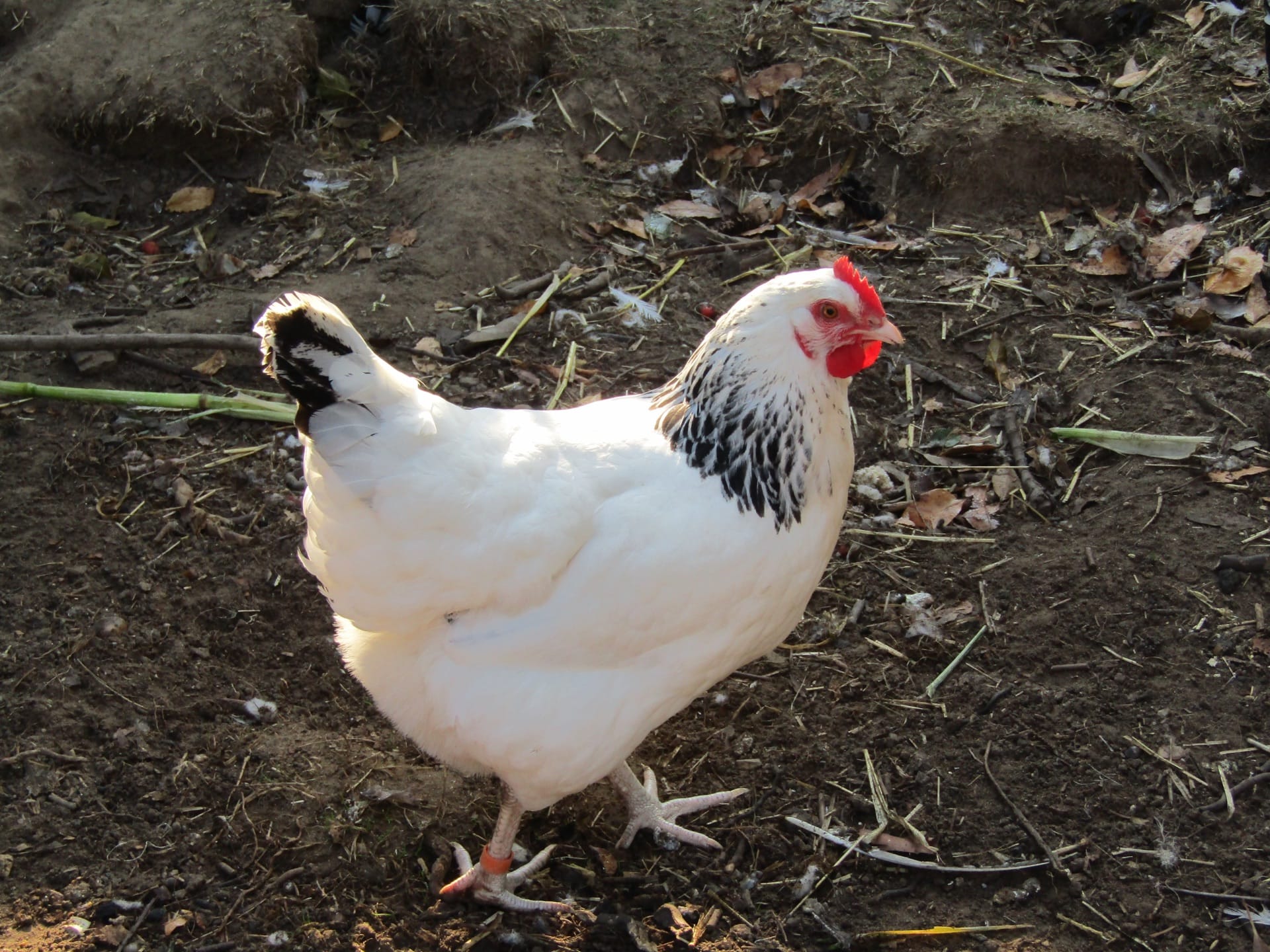
Prepare yourself, because the first sight can be a shock. Many ex-commercial hens arrive with significant feather loss, often bald patches across the back, breast and vent, from rubbing on cage fittings and from the natural feather wear of intensive laying. Their combs are frequently pale and floppy rather than a healthy bright red, and their legs and beaks can look worn. Some have overgrown claws or a trimmed beak.
More striking than the look is the behaviour. These hens have often never felt sunlight, never stood on soil, and never had room to stretch a wing. On day one they may huddle, freeze, or refuse to move far from where you put them down. Grass, worms, dust and open sky are completely new. It is genuinely moving to watch a hen take her first tentative scratch at the earth, or open her wings in the sun for the first time.
None of this is cause for panic. Feathers regrow, combs redden as the birds come into condition, and confidence builds week by week. What they need from you at the start is calm, warmth and time.
How do you settle ex-battery hens in for the first few weeks?
The first fortnight matters most. Keep things quiet, warm and predictable while the hens learn how to be chickens.
- 1
Give them warm, draught-free housing
Bald hens feel the cold badly. Provide a snug, dry, well-ventilated coop with plenty of clean bedding, and keep it out of the wind. Do not use a heat lamp, which is a fire risk and stops them acclimatising; good insulation and dry bedding are safer.
- 2
Keep food and water low and obvious
Caged hens are used to feed and water at beak height in front of them. Place feeders and drinkers where they cannot miss them, low to the ground, and check the birds are actually eating and drinking in the first day or two.
- 3
Teach perching and the pop-hole
They may not know how to perch or how to use the pop-hole. Offer a low, wide perch they can reach easily, and gently pop them onto it or through the hatch at dusk for the first few nights until they learn.
- 4
Restrict the space at first
A huge run can overwhelm a nervous hen. Keep them in a smaller, secure area for the first few days, then widen their world as their confidence grows.
- 5
Watch for bullying
Even within a rescue group a pecking order forms. Watch that weaker or balder birds are not being driven off food and water, and separate anyone who is being badly picked on.
Within a week or two you will usually see them scratching, dust-bathing and finding their voice. That is the turning point.
What health issues should you watch for?
Commercial hens have already been vaccinated as part of the flock, which is a real advantage, but they can arrive with the wear and tear of intensive laying. Keep an eye out for a few common things.
Feather loss is normal and regrows, but bald skin can get sunburnt in summer or chilled in winter, so shade and shelter matter. Watch for signs of respiratory infection (open-beak breathing, rattling, discharge), which stress can bring to the surface. Because they have laid so intensively, reproductive problems such as egg peritonitis or being egg-bound are more common in ex-commercial birds than in a young hybrid. And check for the ordinary parasites of any hen: red mite in the coop, and lice or worms on the bird.
The law: do you need to register your hens?
Yes, and this one is not optional.
On top of registration, remember that once these hens are yours, you carry a legal duty of care under the Animal Welfare Act 2006 to meet their needs: a suitable environment and diet, the ability to behave normally, appropriate company, and protection from pain, suffering, injury and disease.
How do you integrate rescue hens with an existing flock?
If you already keep chickens, do not just tip the newcomers in. Let the rescue hens settle and recover on their own for a couple of weeks first, both for their health and so any illness shows itself before it reaches your existing birds.
When you do integrate, go slowly. The reliable method is "see but don't touch": keep the two groups next to each other but separated by mesh for a week or so, so they get used to the sight and sound of each other before they can make contact. Then allow them to mix on neutral, spacious ground with plenty of feed and water stations so no one bird can guard them all. Expect some pecking and chasing while the pecking order re-sorts itself; that is normal. What you are watching for is relentless bullying that draws blood or stops a hen eating, in which case separate and try again more slowly. Recovering ex-battery hens often start near the bottom of the order, so give them escape routes and hiding spots.
The joy, and the realism
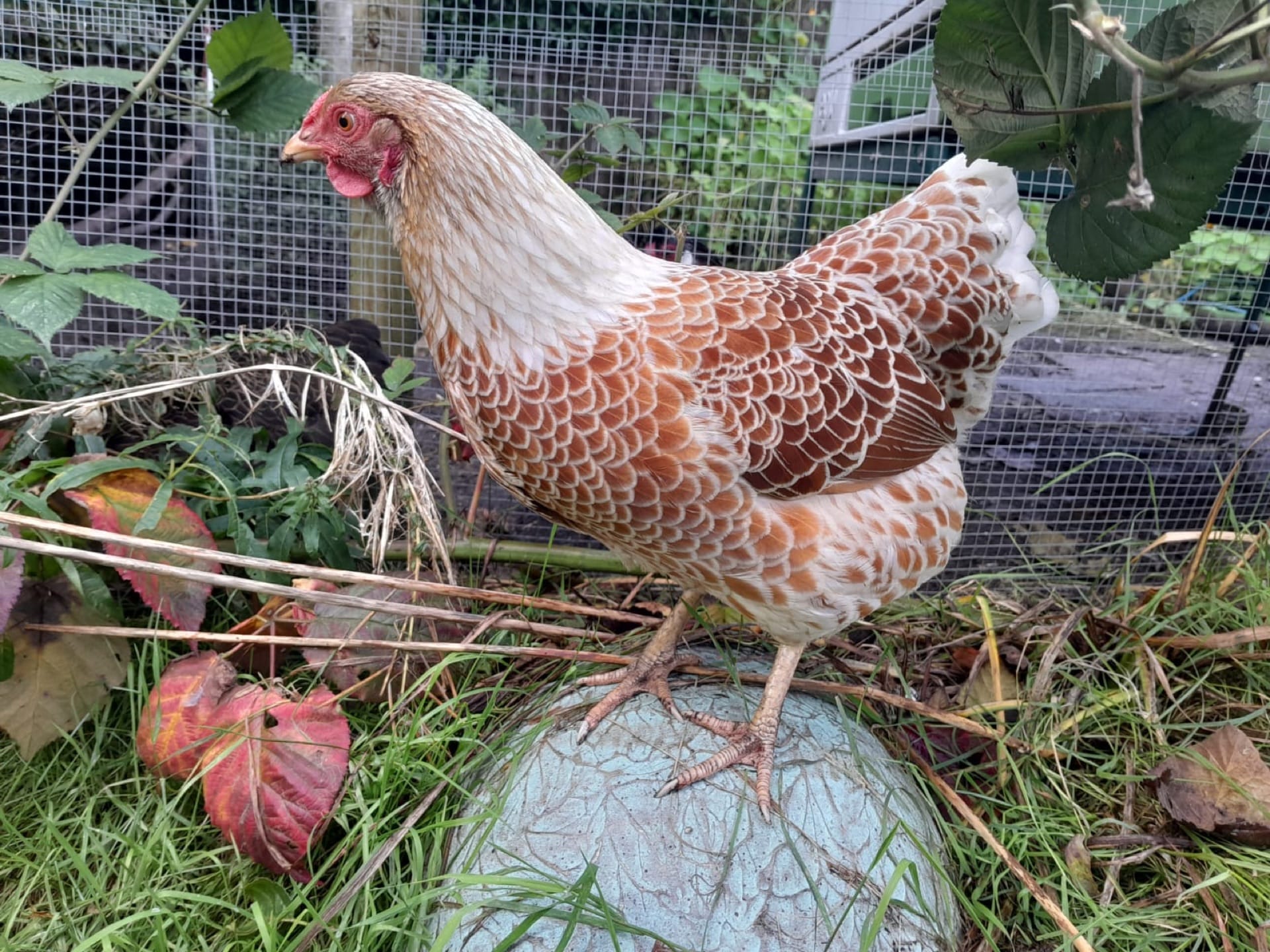
Here is the honest balance. Ex-battery hens are one of the most rewarding birds you can keep. They are friendly, comical, absurdly grateful for a handful of corn, and there is real pleasure in watching a bald, frightened bird turn into a glossy, bold character who comes running when you open the back door. They lay well too, often several eggs a week for a good while, before slowing naturally with age and through the winter.
The realism is this: a hen that has laid intensively for a commercial season may have a shorter or more health-troubled life than a robust hybrid raised gently from a chick. Some sail on for years. Others have problems that catch up with them. Go in with open eyes, enjoy every good day, and take the view that you are giving a hen a proper retirement she would never otherwise have had. That is the whole point, and it is more than enough.
Frequently asked questions
Sources
- Adopt hens , British Hen Welfare Trust
- British Hen Welfare Trust , British Hen Welfare Trust
- Rescue Hens for Adoption , Fresh Start for Hens
- Register as a keeper of less than 50 poultry or other captive birds , GOV.UK / APHA
- Keeping chickens as pets: how to care for backyard hens , RSPCA
Kit for this job (Ad)

How to Speak Chicken: Why Your Chickens Do What They Do & Say What They Say
Check price on Amazon →
The Chicken Chick's Guide to Backyard Chickens: Simple Steps for Healthy, Happy Hens
Check price on Amazon →
Johnsons Poultry Mite & Lice Powder,White
Check price on Amazon →
MULTI-MITE 10KG Bag Feed Grade Diatomaceous Earth DE Powder for Dogs Cats Poultry Animal Bedding & Housing Pet Areas, Stables, Gardens. 100% Natural Highly Absorbent & Desiccating DEFRA Registered
Check price on Amazon →We may earn a small commission, at no cost to you. We only list kit we'd use.
Written by
UK Homesteading Team
Editorial team
The UK Homesteading editorial team, offering UK-specific, evidence-led guidance on growing, keeping, preserving and the law.