The lights flicker, then everything goes quiet. The fridge stops humming, the router lights die, and suddenly the ordinary evening you were having is lit only by whatever glow is left on your phone. For most of us in the UK this is a short, minor event: a local fault, sorted within the hour. But storms are the great exception. When a big winter system comes through and brings down lines, a cut can stretch to many hours, and in the worst cases a few days, especially in rural and upland areas at the end of long feeders. The UK grid is resilient and widespread failures are genuinely rare, but "rare" is not "never", and the households that cope best are simply the ones that spent half an hour getting ready beforehand.
This guide is the calm, practical version. Nothing here is expensive or dramatic. It is mostly about knowing the one number to call, keeping a torch where you can find it in the dark, and understanding a couple of safety rules that really matter, above all the one about never burning fuel indoors. If you want to go further than "ride it out comfortably" towards keeping some of your home running, that is a bigger topic covered in our guides to home battery storage and backup generators. This page is about being ready, safe and unbothered when the power simply stops.
Why the power goes out, and how long it usually lasts
Power cuts have a few common causes. Severe weather is the big one: high winds bring branches and whole trees onto overhead lines, lightning trips protection equipment, and snow and ice load conductors until something gives. Then there are ordinary faults, a failed underground cable or a piece of substation kit, which can hit a street or a village out of a clear sky. Very occasionally the issue is the wider system being under strain, though widespread cuts for that reason are unusual and would normally be flagged in advance.
The reassuring part is that most cuts are short and local, and your network operator is working to restore them before you have found the torch. The part worth respecting is the tail of that distribution: when a serious storm damages the network in many places at once, crews work through a long list, and if you are near the end of a rural line you may be waiting the longest. That is exactly why a modest bit of preparation pays off, not because a blackout is likely tonight, but because when a bad one does come, you will be glad you are not rummaging in a dark drawer for dead batteries.
Call 105: the number to save right now
If you take one thing from this page, make it this. Across England, Scotland and Wales there is a single free number to report a power cut and get information about it: 105. It connects you straight to your local electricity network operator, the company that runs the wires and substations in your area, regardless of which supplier you pay your bill to. You can call it to report that your power is off, to report damage to power lines or a substation, and to ask what is happening and when supply is expected back. In Northern Ireland the equivalent number is 03457 643643.
Two caveats keep you safe and effective. First, if there is any danger, for example a power line down across a road or garden, treat it as an emergency and call 999 before anything else, and keep well away, because electricity at high voltage can jump a gap with no warning. Second, remember that a power cut may take your broadband and possibly your mobile with it, so saving 105 in your phone is good, but writing it on paper and keeping it with your torch is better. The network operators also run online power-cut maps and can text you updates, which is where the Priority Services Register comes in.
The Priority Services Register: free extra help
The Priority Services Register (PSR) is one of the most useful and least-known things in this whole area, and it is completely free. It is a UK-wide scheme run jointly by energy suppliers and networks to give extra support to people who would find a power cut harder than most. That includes older people, disabled people, anyone who depends on electric medical equipment such as a home oxygen concentrator or dialysis machine, people with a serious long-term illness, and households with a baby or young children. If any of that describes you or someone you care for, sign up.
Being on the register means your network operator knows you may need advance warning of planned work, priority updates during an unplanned cut, and extra help in an emergency, from a phone call to check on you to, in some areas, practical support. The one wrinkle is that you generally need to register in two places: with your energy supplier (who you pay) and with your regional network (who runs the cables). In England and Wales you can start at the Priority Services Register site, in Scotland there is a dedicated Scottish register, and in Northern Ireland the equivalent is the Customer Care Register. It takes a few minutes and it is the kind of thing that is far better done on a calm afternoon than in the middle of a February storm.
What to have ready
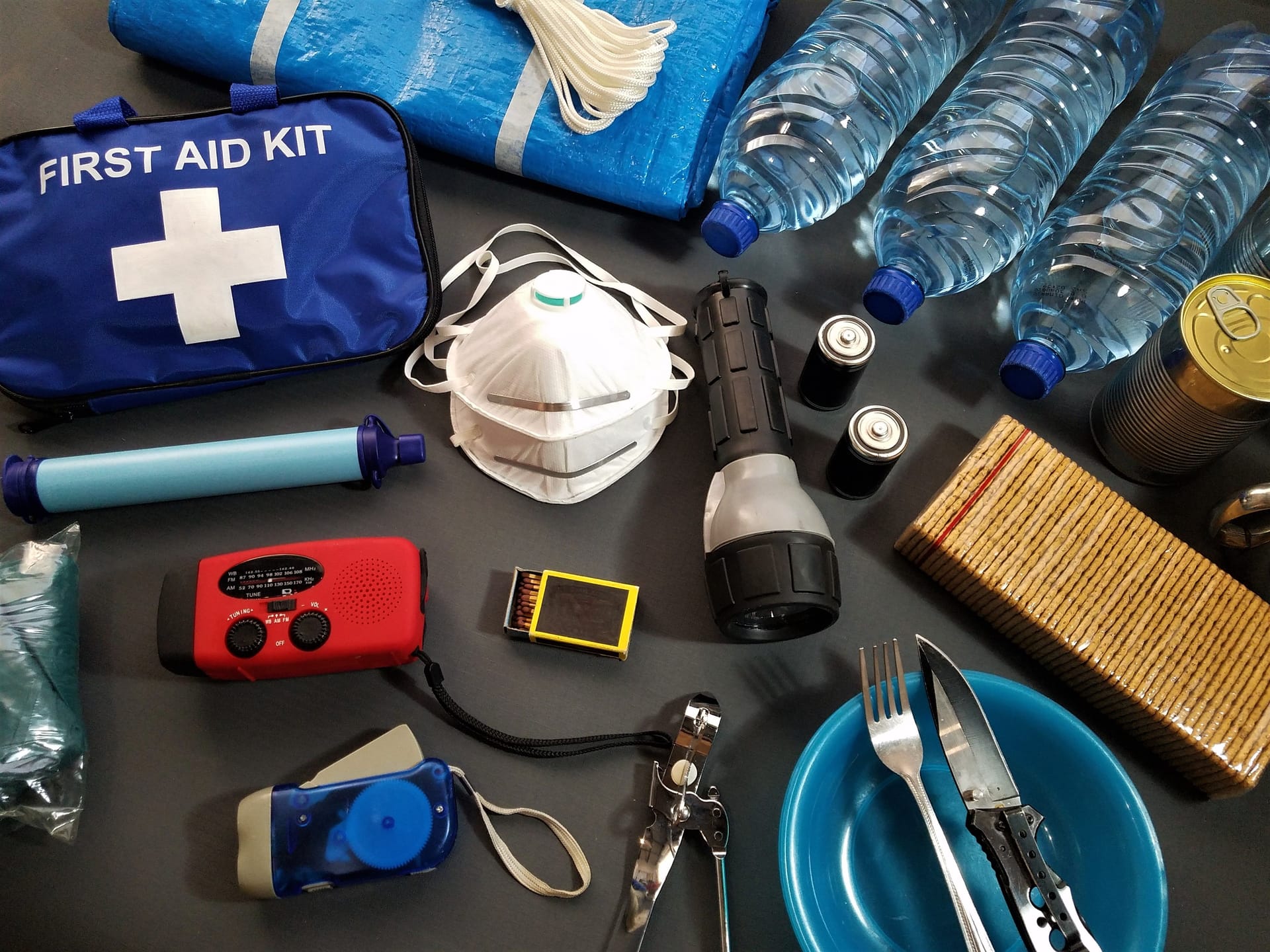
You do not need a bunker. A small, sensible kit kept somewhere you can reach in the dark covers almost every power cut. This overlaps with a wider home emergency kit, so if you are building one of those, treat the list below as the power-cut essentials within it.
Get ready before the lights go out
- 1
Torches, not candles
Keep a couple of battery or wind-up torches plus a head torch, with spare batteries stored alongside. Official UK advice is that torches are safer than candles, which are a real fire risk in the dark. Save your phone's battery for calls, not lighting.
- 2
A battery or wind-up radio
When broadband and TV are off, local and national radio may still carry updates. A wind-up or battery FM radio with spare batteries, or your car radio, keeps you informed. Jot down the frequencies of the stations you would use.
- 3
Charged power banks
Keep one or two power banks charged so you can top up a phone without mains power. Your phone is your lifeline for 105, updates and emergency calls, so protect its battery.
- 4
Warmth without power
Warm layers, spare blankets and a hot water bottle (filled from water boiled on a safe outdoor stove, or kept from a flask) go a long way. Pick one room to keep warm and close its door and curtains.
- 5
Food that needs no cooking
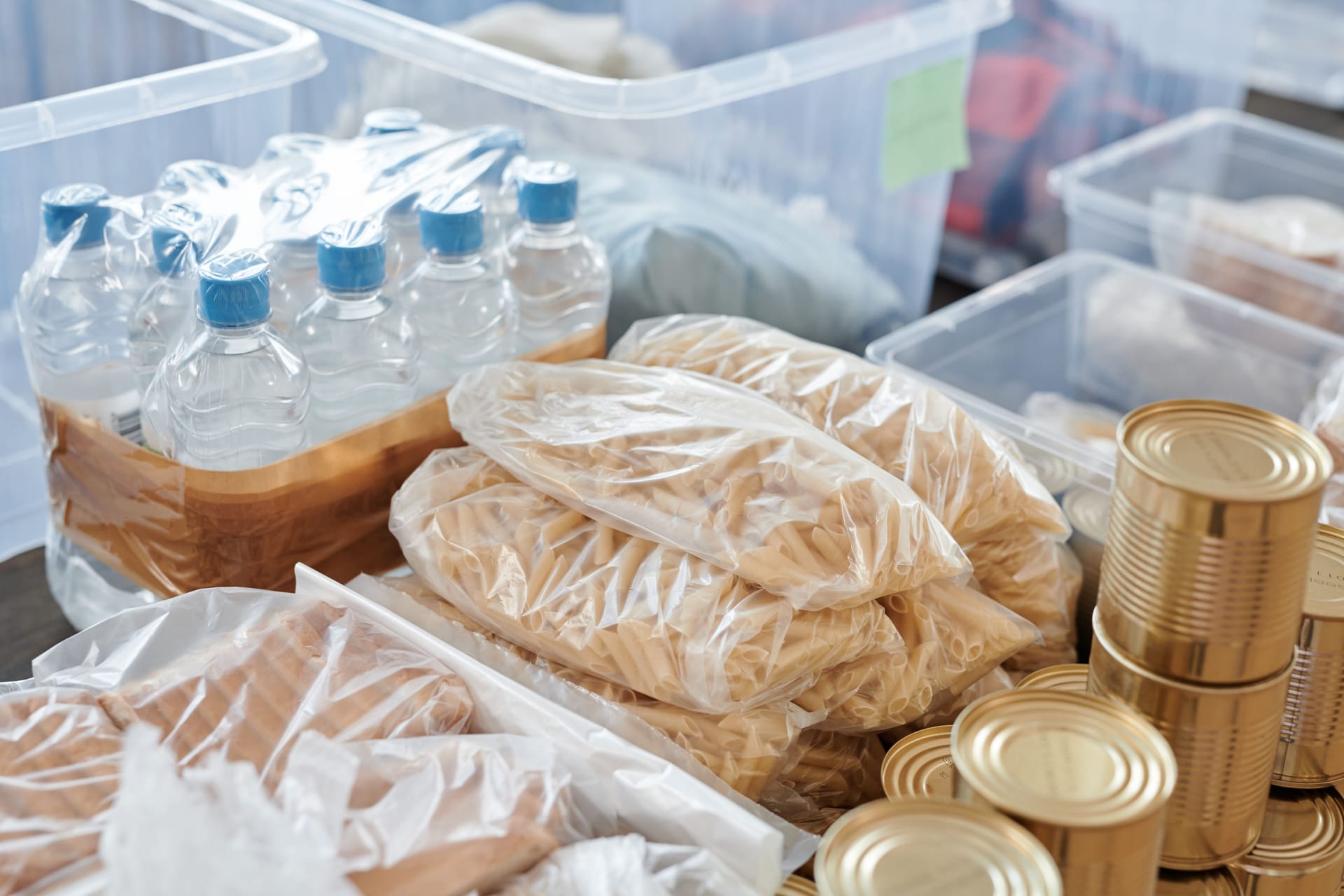
Keep some tinned or ready-to-eat food that does not need heating, plus a manual tin opener, and bottled water. Add ready-made baby formula and pet food if your household needs them. A gas camping stove is fine, but only used outdoors or with genuine ventilation.
- 6
The boring but vital bits
Some cash in case card machines are down, a paper list of key phone numbers, and 105 written down. If you rely on a landline, know whether it works without power (see below).
What to do during a cut
Once the power is actually off, a few simple habits keep you comfortable, keep your food safe, and protect your gadgets.
When the power is off
- 1
Report it and check the map
Call 105 (or 03457 643643 in Northern Ireland) or use your network operator's website to report the cut and see estimated restoration times. If a line is down or anyone is in danger, call 999.
- 2
Keep the fridge and freezer shut
Every time you open the door you lose cold air. Left closed, a full freezer keeps food frozen for around 48 hours (about 24 hours if half full), and a fridge stays cold for a few hours. Decide what is safe using Food Standards Agency advice once power returns.
- 3
Protect your electronics
Turn off and unplug sensitive kit such as the TV, computer and games console, because a surge when supply is restored can damage them. Leave one light switch turned on so you get an obvious signal the moment power comes back.
- 4
Keep warm, stay calm
Layer up, gather in one room, and close the door and curtains to hold the heat. Older adults, babies and anyone with a health condition feel the cold fastest, so prioritise them.
- 5
Check on the neighbours
A quick knock on an elderly or vulnerable neighbour's door costs nothing and can matter a great deal. Share any update you have on when power is expected back, and offer a spare blanket or a hot drink if you can.
Heating and cooking safely: the rule that keeps you alive
This is the part to read twice, because it is where power cuts turn from uncomfortable to dangerous. When it is cold and dark and you want heat and a hot meal, the temptation is to bring something that burns fuel indoors. Do not. Carbon monoxide is a colourless, odourless, tasteless gas produced whenever fuels like petrol, diesel, gas, charcoal and wood are burned, and it kills. You cannot rely on your senses to warn you, and the early symptoms, a headache, dizziness, feeling sick, are easy to mistake for simply being cold and tired.
So how do you actually stay warm and fed? Warmth first: layer your clothing, use blankets and a hot water bottle, gather everyone into one room and keep its door and curtains closed to trap heat. A pre-charged hot water bottle or a flask of hot water prepared before or early in a cut is worth having. For food, lean on things that need no cooking at all, and keep any gas camping stove strictly for outdoor or properly ventilated use. If you have a wood burner or a solid-fuel stove that is designed and installed for indoor use with a proper flue, that is a different thing entirely and can be a real asset in a cut, but it is not the same as dragging a barbecue inside. If you are thinking seriously about running essentials through an outage, that is where a proper backup generator, used strictly outdoors, or a home battery earns its keep.
Medical needs and the digital phone problem
Two modern issues deserve their own mention. The first is medical: if you or someone in the house relies on powered medical equipment, or on medicines that must be kept refrigerated, make a plan now with your care provider or clinical team about what to do in a cut, and make sure you understand how your equipment behaves when the power stops. Getting onto the Priority Services Register is part of that plan, not a substitute for it.
The second is the quiet death of the old landline. The traditional analogue phone that worked in a power cut is being switched off across the UK and replaced by digital and full-fibre lines, and those, along with most cordless home phones and your broadband router, simply stop working the instant the mains power goes. Your mobile may also lose signal if the local mast is affected. If you depend on a phone line for emergencies or use telecare equipment, contact your provider: vulnerable and telecare customers are entitled to a free back-up battery unit that keeps a digital line working for at least an hour. And remember that in a real emergency a mobile is your best bet even if your own network is down, because 999 calls automatically roam onto any available network. Keep a paper list of important numbers, because a dead phone has no contacts.
A calm plan beats a panicked scramble
None of this is about fear. Power cuts in the UK are usually short, your network operator is already on it, and the vast majority end before they have caused more than a mild inconvenience. The whole point of preparing is that it turns the rare bad one, the multi-day winter storm outage, into something you handle with a shrug and a head torch rather than a scramble. Save 105 now, sign up for the Priority Services Register if you or someone you love qualifies, keep a torch and a power bank where you can find them, and burn nothing indoors. Do that, and a blackout becomes a story you tell later rather than a night you dreaded.
This guide is general preparedness information for UK households, not medical, legal or safety-critical engineering advice. In an emergency, or if you suspect carbon monoxide poisoning, act on the advice of the emergency services and NHS 111/999. Details such as the 105 service, the Priority Services Register and the ongoing digital phone switchover can change, so check the current position with GOV.UK's Prepare campaign, your energy network operator and your phone provider. Last checked July 2026.
Frequently asked questions
Sources
- Power cuts (Prepare campaign) , UK Government / Cabinet Office (GOV.UK Prepare campaign)
- Phone and broadband outages (Prepare campaign) , UK Government / Cabinet Office (GOV.UK Prepare campaign)
- The 105 service , Energy Networks Association
- Power cut? Call 105 , Energy Networks Association (powercut105.com)
- Priority Services Register , UK energy networks and suppliers (Priority Services Register)
- Food safety in a power cut: advice for consumers , Food Standards Agency (GOV.UK)
- Carbon monoxide poisoning , NHS
- How to report a power cut , National Grid Electricity Distribution
Kit for this job (Ad)

Amazon Basics 8-Pack Rechargeable AA NiMH Batteries, 2000 mAh, 1.2V, Recharge up to 1000x Times, Pre-Charged
Check price on Amazon →
Blukar Head Torch Rechargeable, 2 Pack 2000L Super Bright Headlamp-8 Modes | Spotlight Floodlight Combination, Sensor Control& Red Lights, Waterproof, Long Battery Life Headlight for Running,Camping
Check price on Amazon →
Lepro Head Torch Rechargeable, 2 Pack 2000L Waterproof LED Headlamp with Red Warning Lights, 30Hrs Runtime, 6 Lighting Modes, for Running Fishing Camping, Super Lightweight Headlight for Kids & Adults
Check price on Amazon →
Wind Up Emergency Crank Radio with 4000mAh Solar & Flashlight, Motion Sensor Reading Lamp, Cell Phone Charger, SOS for Home and Outdoor
Check price on Amazon →We may earn a small commission, at no cost to you. We only list kit we'd use.
Written by
UK Homesteading Team
Editorial team
The UK Homesteading editorial team, offering UK-specific, evidence-led guidance on growing, keeping, preserving and the law.