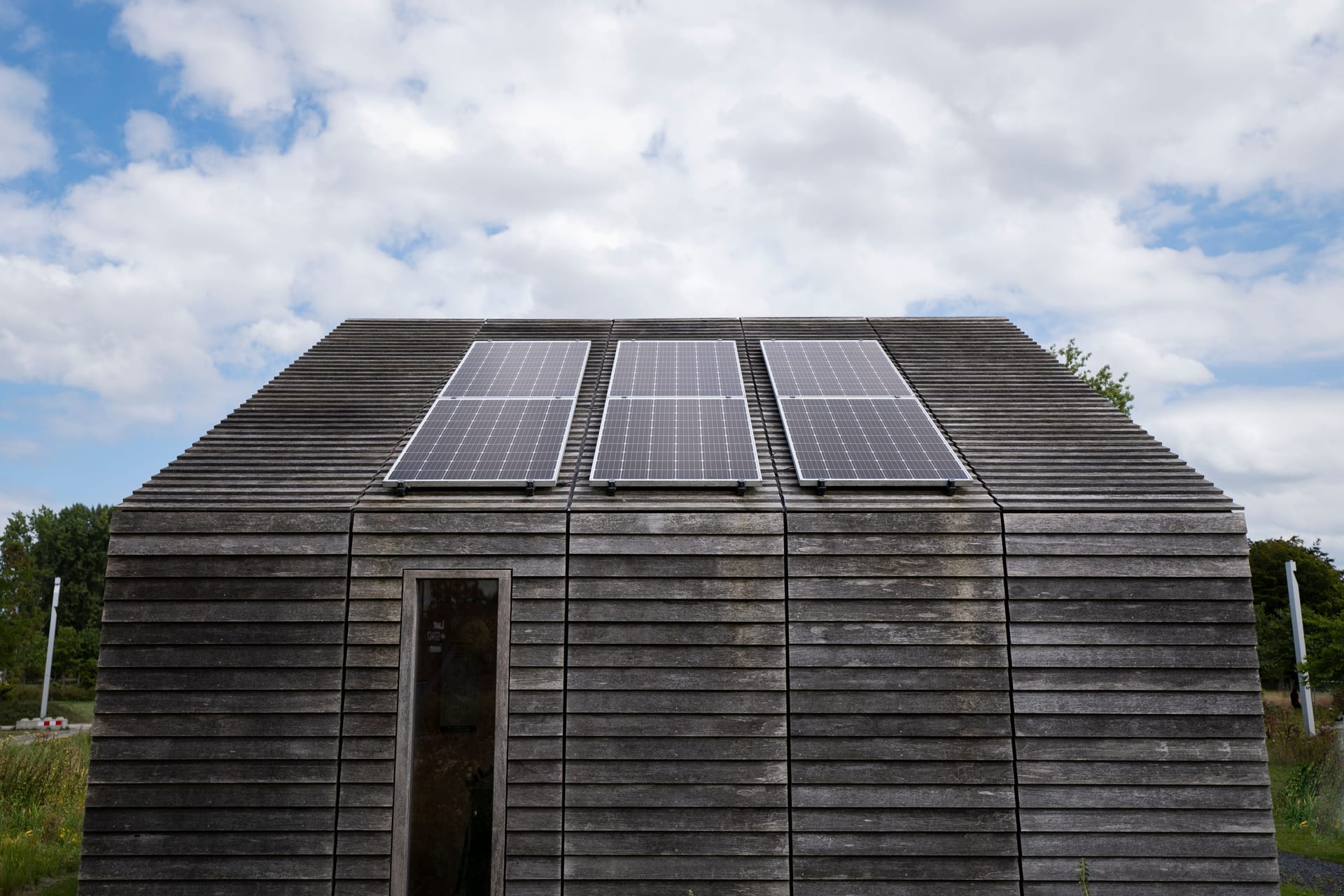
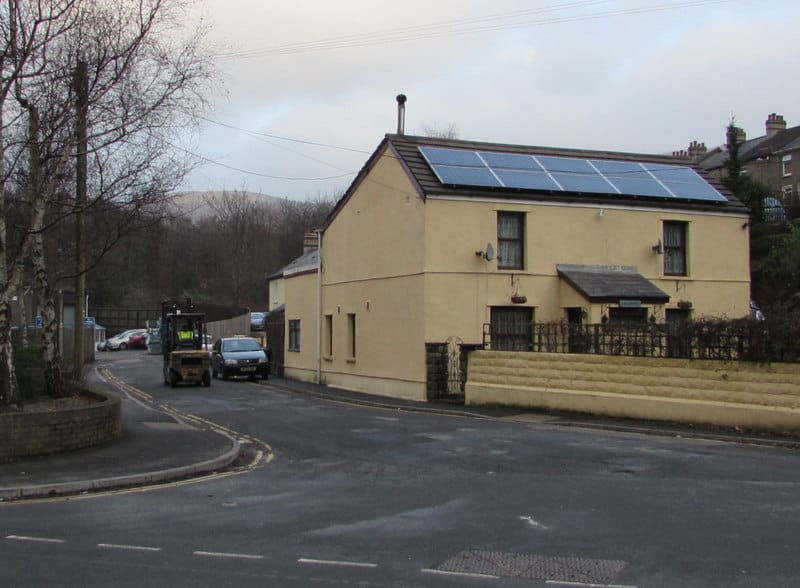
Almost everyone who lives off-grid in Britain, no matter how much solar they have on the roof or how big the battery bank in the utility room, keeps a generator tucked away somewhere. It is not a sign that the renewable setup has failed. It is the thing that makes going off-grid sensible in the first place. Solar and batteries do the everyday work brilliantly for most of the year, but the UK winter has a habit of serving up a week of short, grey, windless days, and no panel can make power out of that. The generator is your insurance against those weeks. Used well, it might run only a handful of times between November and February, and barely at all the rest of the year.
The trick is understanding what the generator is actually for, sizing it to the right thing, choosing a fuel that suits your site, and, above everything else, running it safely. Carbon monoxide from a badly-sited generator is the one hazard on this page that can genuinely kill you, so please read the safety section before you buy anything.
Why almost every UK off-grid home keeps a generator
The problem is seasonal, and it is specific to our latitude. A solar array that comfortably fills your battery on a June afternoon produces a small fraction of that in December, when the sun is low, the days are short and cloud sits over much of the country for weeks at a time. Add a still, cold spell with no wind for any turbine you have, and generation can fall well below what the household uses. The battery bank quietly drains, and there is nothing coming in to top it back up.
A generator solves this because, unlike the sun and wind, it works on demand in any weather. As one UK off-grid supplier puts it, including a generator gives you "insurance against losing power after extended periods of inclement weather" and "against excessive battery cycling which shortens the life of your expensive batteries". That second point is easy to overlook. Repeatedly running a battery bank down towards empty wears it out faster, and batteries are usually the most expensive part of an off-grid system. A generator that steps in during the worst spells protects that investment.
There is a third, more technical job too. Lead-acid battery banks need an occasional deliberate overcharge, called equalising, to stay healthy, and a winter solar array often cannot push the voltage high enough to do it. A generator can. If you run lithium batteries this does not apply, but if you have a traditional lead-acid bank it is another reason the generator earns its keep.
How a generator actually fits into an off-grid system
Here is the part people most often get wrong. In a modern off-grid setup, the generator does not run the house. It charges the battery bank, and the house carries on running off the battery through the inverter as it always does.
The heart of the system is an inverter-charger, a single unit that both turns battery power into mains electricity for your sockets and, when a generator is connected, turns generator power back into charge for the battery. When the battery gets low, the generator starts, the inverter-charger takes its output and pours it into the battery, and once the battery is full the generator stops. The house never notices; it has been running off the battery the whole time.
This matters because generators hate the job of running a house directly. A household load jumps around constantly, a light here, a kettle there, the fridge cycling on and off, and a generator forced to follow that spends much of its time lightly loaded, which is inefficient and, over time, bad for the engine. Charging a battery is a steady, predictable, fairly heavy load, which is exactly what a generator likes.
Automatic generator start
Most quality off-grid inverter-chargers can start and stop the generator by themselves. This is usually done with a simple "two-wire" control: the inverter-charger closes a contact to tell the generator to start, and opens it to tell it to stop. When the inverter-charger sees the battery drop to a set voltage or state of charge, it signals the generator, waits for it to warm up and reach speed, then accepts the power. Once the battery is charged, it drops the signal and the generator shuts down.
The practical advice from installers is blunt and worth following: if your system is designed to run the generator automatically, leave it to do so. The automation is better than you are at judging exactly when to start and stop for the health of the battery and the efficient running of the generator. For a simpler setup, where the generator is only an occasional manual booster, a plain on-off switch is perfectly fine.
Sizing: match it to the charger, not the house
The instinct is to size a generator to your house. For an off-grid battery system, that is the wrong starting point. Size it to your inverter-charger.
Work forward from how much power the inverter-charger draws when it is charging the batteries at full rate, then add any loads you expect to be running at the same time. A commonly used rule of thumb is that the generator should be around twice the continuous output of the inverter-charger. So a 4kW inverter-charger suggests a generator of roughly 8kW. The reason for the headroom is that the generator may need to charge the battery and carry some household load at the same moment, and it should do so without being pushed to its limit.
Two numbers guide the "how much" question. First, generators run most efficiently near, but not at, their maximum, with about 85 per cent of the nameplate rating a widely-quoted sweet spot. Second, they should not be left running for long periods on a very light load; aim for them to be delivering at least around 40 per cent of their capacity under normal use, unless the manufacturer says otherwise. Between those two figures sits the size you actually want.
A couple of ratings to understand. Generators are often quoted in both kW (real power) and kVA (apparent power); for a rough guide, kW is typically around 0.8 of the kVA figure. And you will see "starting" and "running" watts: motors in things like pumps and fridges draw a big surge as they start, several times their running draw, so the generator has to cope with that momentary spike as well as the steady load. If you plan to start large motors off the generator directly, allow for the surge. Finally, remember that altitude and heat reduce output: engines lose roughly 3 per cent of their power for every 300 metres above sea level, and a bit more in hot weather, which matters for exposed upland sites.
Fuel: petrol, diesel or LPG
The fuel you choose shapes cost, storage, reliability and how the generator behaves in the cold. Here is how the three common options compare.
| Petrol | Diesel | LPG / propane |
|---|---|---|
| Cheapest to buy; familiar and easy to handle | Higher purchase cost; long-lived and durable | Often mid-range; clean-burning, low engine wear |
| Occasional, light or portable use | Heavy, sustained or automatic backup duty | Homes that already have an LPG tank on site |
| Highly flammable; strict home storage limits | Less volatile, easier to store in bulk; can gel in hard frost | Almost unlimited storage life; starts reliably to around minus 10C |
| Hard to auto-start (manual choke) | Well suited to auto-start prime-power sets | Well suited to good-quality stationary auto-start sets |
Petrol is the cheapest and most familiar, and powers nearly all small portable units. It suits occasional use where someone is there to start it by hand. The downsides are that it is highly flammable, storage is tightly limited (see below), and it is awkward to automate because of the manual choke.
Diesel costs more upfront but is typically longer-lived and better suited to hard, sustained use, which is why serious off-grid backup sets tend to be diesel. It stores more easily in bulk than petrol. Its weaknesses are that it can gel in a hard frost, so cold sites may need a winter fuel additive or a heater, and it is a "dirtier" fuel with more to think about around spills. Many diesel sets will also run on biodiesel, which appeals if you want to lean further into renewable living.
LPG (propane) is a strong middle option, especially if you already keep an LPG tank for cooking or heating, so the fuel is already on site. It burns cleaner than petrol or diesel, so engine wear is lower, it has an almost unlimited storage life, and good sets start reliably down to around minus 10C. It is a common choice for quality stationary standby generators.
Inverter or conventional?
Beyond fuel, generators split into two types by how they make their electricity, and the difference matters for off-grid.
A conventional generator runs its engine at a fixed speed, 3000 or 1500 rpm for our 50Hz mains, regardless of how much power you are actually drawing. The better fixed-speed diesel "prime power" sets are built to run hard for long periods and to charge batteries and carry a house load at the same time, which makes them the durable choice for a system that leans on its generator through winter.
An inverter generator lets the engine speed rise and fall with the load, then electronically conditions the output. Because the engine can idle down when little power is needed, an inverter generator is quieter, uses less fuel at part load, and produces clean, stable power that is kinder to electronics and sensitive equipment. The trade-off is a higher price for a given size, and they are generally made in smaller ratings. For a modest backup that mostly tops up a battery occasionally, an inverter generator is often the nicer machine to live with; for a large system working the generator hard, a robust fixed-speed diesel may be the better tool.
Carbon monoxide: the rule that is not optional
Everything else on this page is about getting the best out of a generator. This part is about not being killed by one.
That warning is the most important thing on this page. Please do not treat it as boilerplate.
Noise, siting and neighbours
Generators are noisy, and a fixed-speed diesel under load is properly loud. On a remote holding that may not matter much, but if you have neighbours within earshot it will, and there are rules about noise nuisance. Site the generator away from your own bedrooms and from boundaries, on a level base, and consider a purpose-made acoustic enclosure. Liquid-cooled generators generally run quieter and more evenly than air-cooled ones. An inverter generator, able to throttle back when lightly loaded, is much quieter than a fixed-speed set for small jobs.
Siting also affects reliability. Stand the generator on a firm, level base, ideally a concrete plinth, and keep it out of dust, dirt and salt-laden air, all of which shorten the life of the alternator. A weatherproof enclosure protects it, but remember the carbon monoxide rule: any enclosure must be properly ventilated and the machine must never be run in a closed space.
Running cost and maintenance
Because the generator should only run during the winter solar gap, its fuel cost across a year is usually modest, that is rather the point of a good off-grid design. The real cost is in maintenance and reliability. As one supplier bluntly notes, the generator is "likely to be the single greatest source of maintenance and aggravation" in an off-grid system, because it is a mechanical device that needs regular servicing and will, eventually, break down, usually at the worst moment.
So maintain it. Follow the service schedule, change the oil and filters, and, crucially, run it under load every so often even in summer, a short exercise run monthly keeps the engine, seals and starter battery healthy and stops fuel going stale. If you rely on it for winter power, budget for the servicing and think hard about local repair support before you buy, because a top-quality generator you cannot get mended is worse than a humbler one you can.
Fitting it into the wider system
A backup generator is one piece of a considered off-grid power setup, and it works best when the rest is right. Get the solar array sized properly first, our guide to off-grid solar in the UK covers the winter shortfall in detail, and pair it with a battery bank sized for a few days of autonomy, covered in home battery storage. The generator then becomes the rarely-used backstop it should be, rather than a crutch for an undersized system. If you are weighing up the whole idea of going off-grid, start with our overview of living off-grid in the UK, which puts power alongside water, heat and the practicalities.
Before you buy: the short checklist
Choosing and using a backup generator safely
- 1
Size the renewables first
Get the solar and battery generously sized so the generator is a rare backstop, not a daily crutch.
- 2
Size the generator to the inverter-charger
Start from the charger's full charging draw plus any simultaneous loads; roughly twice the inverter-charger's continuous output is a common rule of thumb.
- 3
Pick the fuel for your site
Petrol for occasional manual use; diesel or LPG for heavy or automatic winter duty, especially if you already have an LPG tank.
- 4
Choose inverter or conventional to suit the duty
An inverter generator for a quiet, efficient occasional top-up; a robust fixed-speed diesel for sustained hard work.
- 5
Match auto-start components
If you want hands-off operation, buy an auto-start generator and a compatible inverter-charger together, and let the automation run it.
- 6
Plan safe fuel storage
Keep petrol within the 30-litre home limit in proper containers, outside living space and away from ignition sources.
- 7
Site it outside, always
Run it in the open air only, exhaust pointing away from the building, well clear of doors, windows and vents. Never in a garage or shed.
- 8
Fit a CO alarm and maintain the set
Install a BS EN 50291 carbon monoxide alarm nearby, service the generator on schedule, and run it under load monthly to keep it healthy.
This is general practical guidance to help you plan an off-grid backup generator, not electrical, engineering or legal advice. Generator installation, wiring to an inverter-charger and any connection to a fixed installation should be carried out by a competent person to current UK standards. Fuel storage limits, carbon monoxide safety and building rules can change, so always confirm the current position with the manufacturer and with tier-1 UK sources such as the Health and Safety Executive (hse.gov.uk) and the UK Health Security Agency before you buy or install. Last checked July 2026.
Frequently asked questions
Sources
- Choosing a generator for off-grid systems , Wind & Sun Ltd (UK renewable energy distributor)
- If you store petrol at home, or at a club/association or similar premises , Health and Safety Executive (HSE)
- Construction hazardous substances: Carbon monoxide , Health and Safety Executive (HSE)
- How to protect your home and family from the invisible danger of carbon monoxide , UK Health Security Agency (UKHSA)
- Carbon monoxide dangers from heating appliances and generators used indoors , Health and Safety Executive for Northern Ireland (HSENI)
Kit for this job (Ad)

maXpeedingrods 3300W Portable Inverter Generator Petrol Silent Pure Sine Wave Generator for Camping, RV Travel, Home, or Jobsites
Check price on Amazon →
AIVOLT 1200W Petrol Inverter Generator 4 Stroke Portable Silent Suitcase Generator for Camping, Home Use - True Sine Wave, Super Lightweight, Ultra Quiet
Check price on Amazon →
Green Cell Inverters, 24V
Check price on Amazon →
Renogy 2000W Pure Sine Wave Inverter, 4000W Peak 12V DC to 240V AC Power Converter with UK Sockets, UPS Function and Remote Controller for Off-grid, RV, Truck, Boat, Camping, and Home
Check price on Amazon →We may earn a small commission, at no cost to you. We only list kit we'd use.
Written by
UK Homesteading Team
Editorial team
The UK Homesteading editorial team, offering UK-specific, evidence-led guidance on growing, keeping, preserving and the law.