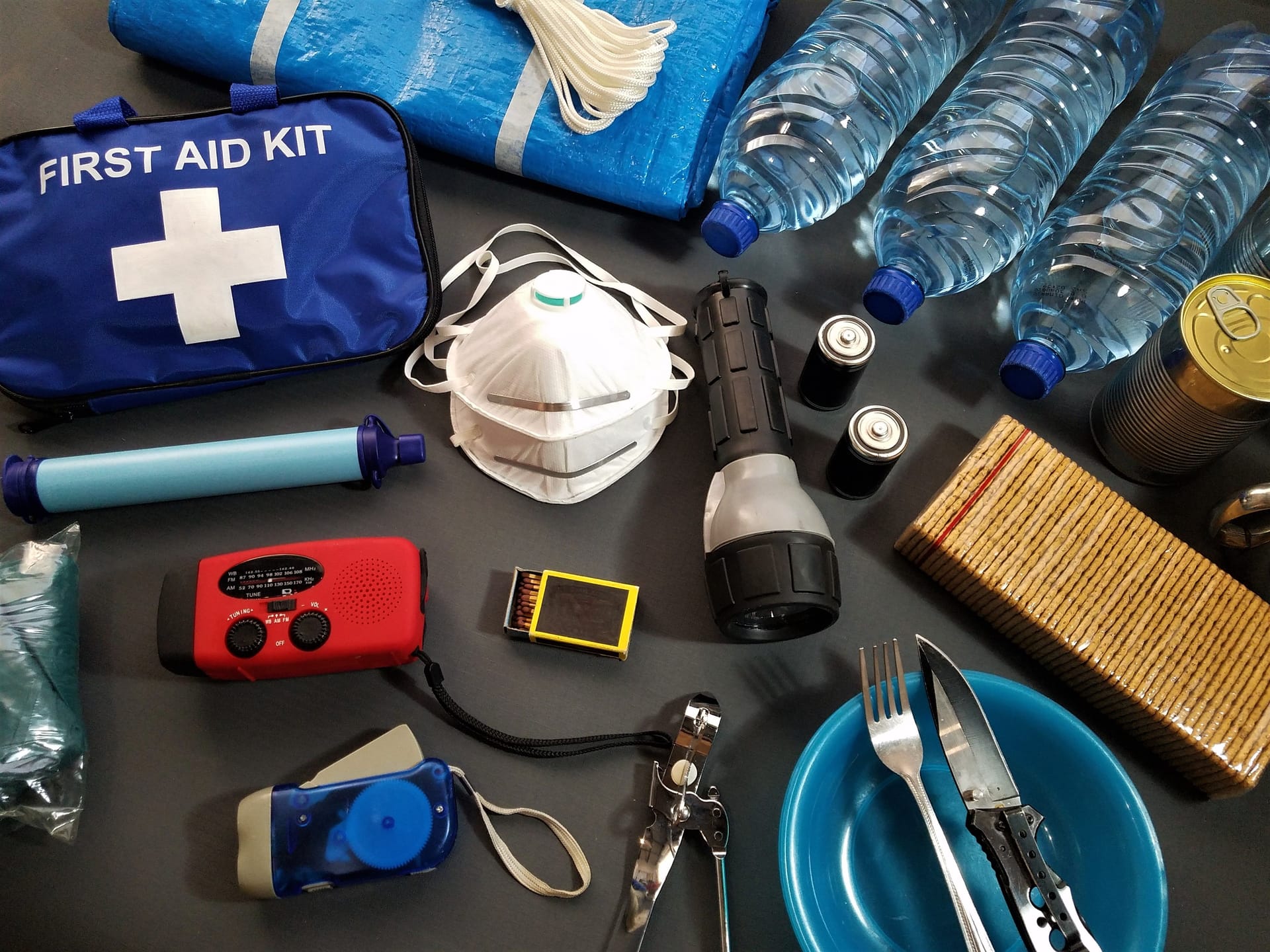
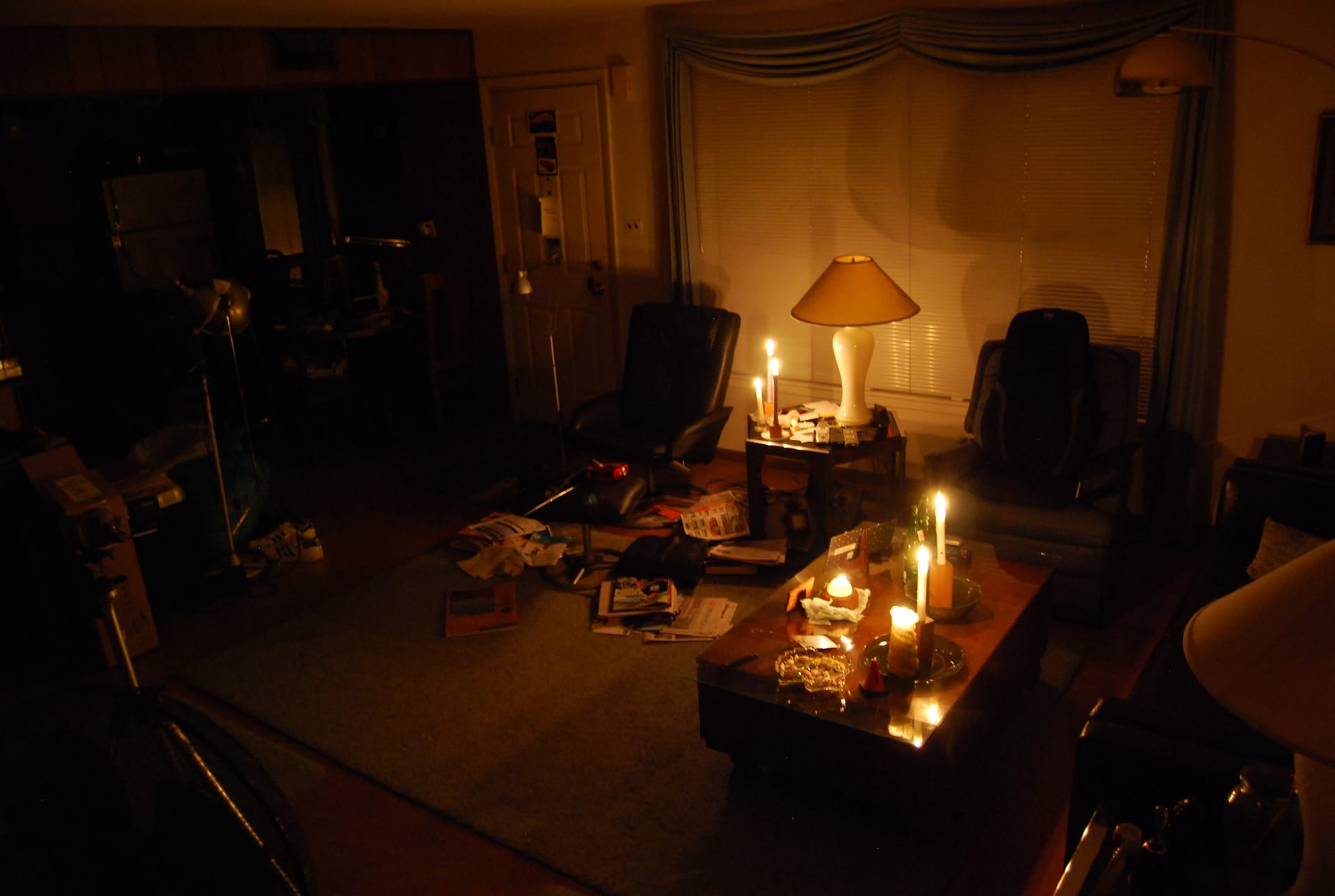
The word "prepping" tends to conjure bunkers, tinned rations by the pallet and a general air of doom. Forget all that. A home emergency store is a much calmer, more ordinary thing: enough food and water tucked away so that a few days without mains power, or a burst water main down the road, is an inconvenience rather than a crisis. The UK government's own Prepare campaign frames it exactly this way, and points out that most of it costs almost nothing and takes just a few minutes to do.
The trick is that you do not build it in one expensive, anxious shop. You build it slowly, from food you already eat, and you keep it moving so nothing goes to waste. This guide covers how much water and food to aim for, what actually keeps well in a British cupboard, how to grow the store on a budget, and how to store it and use it safely. It sits alongside our wider emergency kit for UK homes guide, which covers torches, radios, first aid and the rest.
How much water to store
Water is the priority, because you can go without food far longer than without it, and a mains water supply can be knocked out by anything from a burst main to a power cut affecting the pumps. The honest answer to "how much" is that there is no single right number. As gov.uk puts it, there is no standard figure because emergencies vary in duration and people use different amounts. What it does give you are two useful anchors.
The survival minimum, drawn from World Health Organisation guidance, is around 2.5 to 3 litres of drinking water per person per day. That is enough to keep you going, but not much more. The comfortable figure is around 10 litres per person per day, because that also covers basic cooking and hygiene such as washing hands and cleaning up. So for a household of two aiming at three days, you are looking at somewhere between roughly 15 litres (bare drinking minimum) and 60 litres (living properly). Treat the higher number as the goal and the lower one as the floor.
A few groups need more on top of that baseline: making up baby formula, running certain medical devices, and looking after pets all add to the total. Build those into your sums rather than treating the per-person figure as the whole story.
Stored water is your first line, but it is worth having a backup for treating other water if a supply runs long. Water purification tablets are cheap, light and last for years, and a decent filter handles larger volumes. Neither is a substitute for a proper stored supply, but both are sensible insurance. Our guide to off-grid water filtration and purification walks through the options and their limits. One thing to avoid: do not drink rainwater from a water butt, which can carry bacteria and is only fit for flushing toilets or watering plants.
What food to keep
The guiding principle for an emergency food store is food that needs little or no cooking and keeps for a long time, because in a power cut you may have no oven, kettle or hob. The British Red Cross sums up the core of it neatly: a few days' supply of long-life, ready-to-eat food, and a tin opener to go with it. Build around these:
- Tinned protein and meals such as tinned meat, fish, beans and pulses, and tinned or pouched ready meals that can be eaten cold if need be.
- Tinned and long-life fruit and vegetables, which add variety and some freshness to an otherwise dry menu.
- UHT (long-life) milk, which keeps unopened for months without a fridge.
- Dry stores that need no cooking: cereal, oats, biscuits, crackers, nuts, dried fruit and honey.
- Drinks and morale: tea, coffee, and squash or long-life juice, remembering these need water to make up.
- A manual tin opener, kept with the store. An electric one is dead weight in a power cut.
Dried pasta and rice deserve a special mention. They are cheap, store almost indefinitely and are the backbone of many store cupboards, but they need boiling water and therefore a cooking method. If your emergency cooking plan is sound, they earn their place; if you have no safe off-grid way to boil water, lean instead on food you can eat straight from the packet or tin. Pair this store with a safe way to cook off-grid, and read our guide to prepping for a power cut for how the food, water and lighting side all fit together when the electricity goes.
Build it cheaply, a little at a time
Here is the budget heart of the whole thing. You do not need to spend a lump sum. The cheapest and least wasteful way to build a store is to add a few extra long-life items to each normal food shop and let it grow over a few weeks or months. A couple of extra tins here, a bag of pasta there, and before long you have a fortnight's cushion that never showed up as a scary number on one receipt.
The second half of the trick is rotation, often summed up as "store what you eat, eat what you store". Only stock things your household actually likes and cooks with. Then use the store as a working larder: cook with the oldest items in your everyday meals and replace them with fresh ones. Keep the newest tins at the back and the oldest at the front so you always reach for the ones nearest their date first. This is the classic "first in, first out" rotation, and it is what stops an emergency store quietly turning into a shelf of out-of-date waste.
Build your store on a budget
- 1
Set a modest target
Start with three days of water and food per person, then grow towards a week or two as budget allows. Write down how many people (and pets) you are covering.
- 2
Add a few items to each shop
Every normal food shop, buy a handful of extra long-life items you already eat. Spread the cost over weeks instead of one big spend.
- 3
Store what you eat
Only stock food and drink your household actually likes, so it gets used and replaced naturally rather than forgotten.
- 4
Rotate oldest-first
Newest at the back, oldest at the front. Cook with the nearest-dated items in everyday meals and replace them, so nothing expires unused.
- 5
Check the dates regularly
Every month or two, glance over the store, use up anything approaching its date, and top back up. Note that best-before is about quality, use-by is about safety.
- 6
Keep the tin opener with it
Store a manual tin opener, and any off-grid cooking kit, alongside the food so everything is in one place you can find in the dark.
Storing it safely
Where and how you keep the store decides how long it lasts. The rules are simple: cool, dry, dark, off the floor, and pest-proof. Heat and damp shorten the life of tins and dry goods, sunlight degrades some foods, and a cupboard on a cold floor invites both moisture and mice. A raised shelf in a cool cupboard, larder or utility room is ideal. Keep dry goods in sealed tubs or containers to keep pests and damp out, and give the whole store a quick look-over every month or two.
Dates are the other half of safe storage, and the Food Standards Agency draws a line worth remembering. A best-before date is about quality: after it, food is generally still safe but may not be at its best. A use-by date is about safety: food should not be eaten after it, even if it looks fine. Most tinned and dried store-cupboard staples carry best-before dates, which is exactly why they suit a long-term store. Anything with a use-by date belongs in the fridge or freezer and to your normal shopping, not your emergency shelf.
| Best-before date | Use-by date |
|---|---|
| About quality, not safety | About safety |
| Usually still safe to eat after the date | Do not eat after the date, even if it looks and smells fine |
| Typical of tinned, dried and long-life store food | Typical of fresh meat, fish, dairy and ready-to-eat chilled food |
| Ideal for an emergency store | Keep in the fridge or freezer, not the long-term store |
Food safety when the power goes off
An emergency store is only half the picture: when the power actually cuts, the food already in your fridge and freezer needs handling properly too. The Food Standards Agency's advice here is clear and reassuring. A power cut of under four hours is unlikely to affect the safety of chilled or frozen food at all.
If it runs longer, the single most important thing is to keep the fridge and freezer doors shut. A closed fridge should stay cold for up to four hours, and a full freezer keeps food frozen for around 48 hours (roughly 24 hours if it is only half full). These are estimates and vary by appliance, so a fridge thermometer helps. In a power cut, food can sit safely in a fridge below 8 degrees C, but if it reaches 8 degrees C or above, eat anything that needs refrigeration within four hours or throw it out.
When the water supply is affected too, treat your stored bottled water as being for drinking, hand-washing, cooking and making up baby formula. Keep raw and cooked food separate as always, and if you are cooking on a camping stove or barbecue, use it outdoors and make sure food is steaming hot right through, since these take longer than a normal cooker. Take extra care with anyone more vulnerable to illness, including young children, older people, pregnant women and anyone with a health condition.
A sensible store, not a doomsday one
None of this needs to be dramatic or expensive. A few days of water, a shelf of long-life food you actually eat, a manual tin opener and a habit of rotating the oldest items first will carry most households comfortably through the far end of a bad storm, a power cut or a water outage. Start small, grow it with your normal shopping, keep it cool, dry and in date, and you have quietly turned a potential emergency into a manageable few days at home.
This is general guidance to help you prepare, not medical, food-safety or legal advice, and it is not a substitute for the official sources. Emergency and food-safety guidance is updated over time, so check the current advice on gov.uk (the Prepare campaign) and the Food Standards Agency before you rely on it. Last checked July 2026.
Frequently asked questions
Sources
- Get prepared for emergencies (emergency supplies, water and food) , Prepare campaign (Cabinet Office / GOV.UK)
- Power cuts (be informed about hazards) , Prepare campaign (Cabinet Office / GOV.UK)
- Water supply interruptions or outages , Prepare campaign (Cabinet Office / GOV.UK)
- Food safety in a power cut - advice for consumers , Food Standards Agency (GOV.UK)
- Best before and use-by dates , Food Standards Agency
- Prepare an emergency kit , British Red Cross
- Making up baby formula , NHS
Kit for this job (Ad)

Personal Water Filter, Blue, 1pc
Check price on Amazon →
Potable Aqua Water Treatment
Check price on Amazon →
Potable Aqua Germicidal Water Purification Tablets
Check price on Amazon →
Gamma Seal Lid - Pet Food Storage Container Lids - Fits 3.5, 5, 6, & 7 Gallon Buckets, Black
Check price on Amazon →We may earn a small commission, at no cost to you. We only list kit we'd use.
Written by
UK Homesteading Team
Editorial team
The UK Homesteading editorial team, offering UK-specific, evidence-led guidance on growing, keeping, preserving and the law.