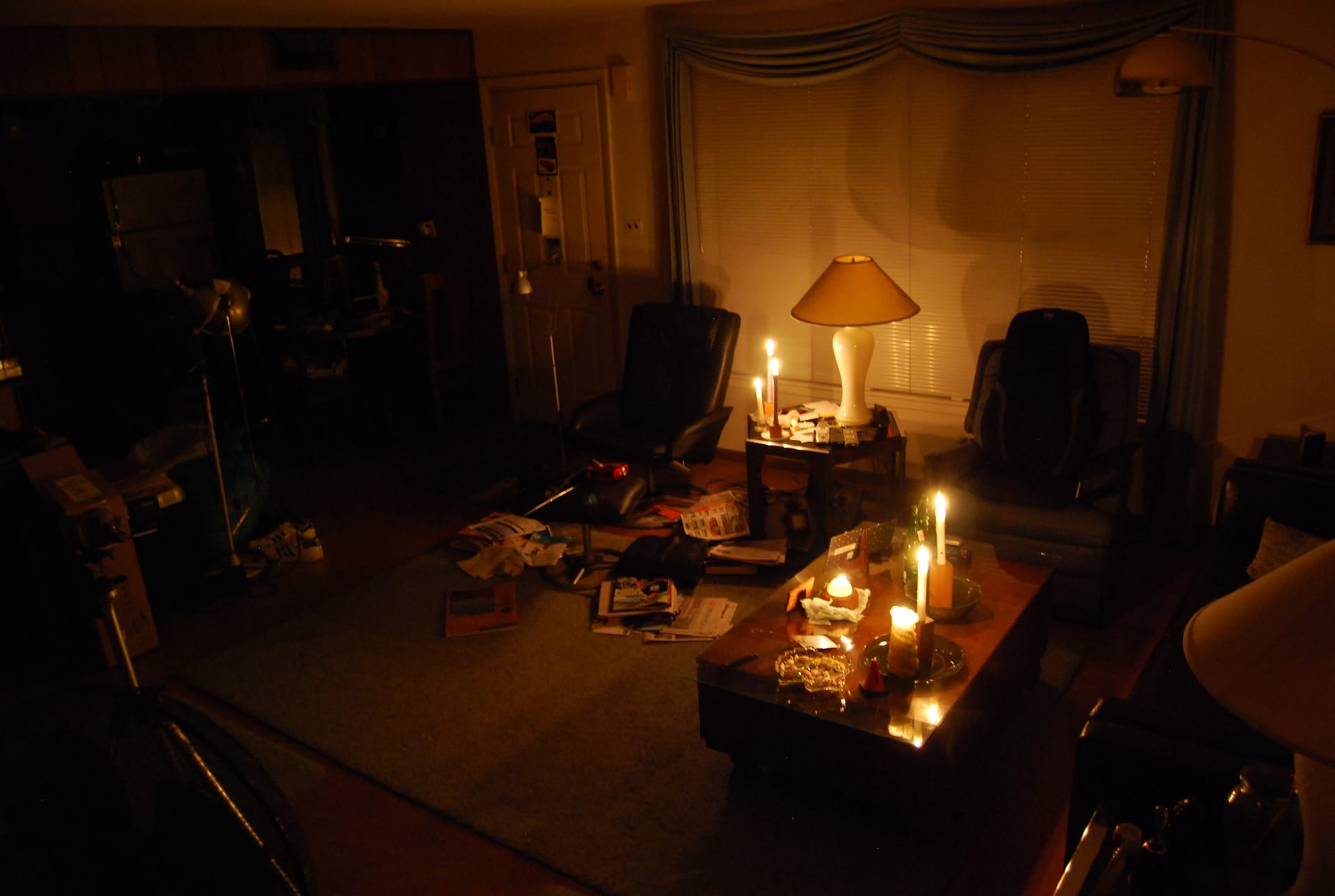
Ask most people in Britain what an "emergency kit" is for and they picture something dramatic: bunkers, gas masks, tinned food for a year. That version puts a lot of sensible people off entirely, which is a shame, because the emergencies that actually happen here are far more ordinary. A storm brings down a power line and the lights are off for two days. A river comes up and a street has to leave in a hurry. A pumping station fails and the taps run dry for an afternoon. None of it is the end of the world, but any of it is a good deal easier to sit out if you have a torch you can find in the dark, water you did not have to queue for, and a plan everyone in the house already knows.
This is the calm, government-backed approach. The UK Government's Prepare campaign and the British Red Cross both promote the same low-key idea: a simple home kit, a grab bag in case you have to leave, and a short household plan. It costs very little, most of it takes minutes, and you can build it up an item at a time rather than in one anxious spending spree. Think of it as the homesteader's instinct for self-reliance, pointed at a bad weekend rather than the apocalypse.
Why bother: the emergencies that actually hit UK homes
The point of this is not fear, it is convenience under pressure. The Prepare campaign is blunt that emergencies here are usually things like flooding, fires and power cuts, and that a few simple steps make them much easier to manage. Power cuts and storms knock out lights, heating, hot water, broadband and often card payments all at once. Flooding can force a quick evacuation. A burst main or a treatment fault can cut your water with little notice.
What these have in common is that they are short and local, and that the services you lean on every day, electricity, water, the internet, contactless payment, are exactly the ones that go down. A little redundancy at home means you are not suddenly dependent on shops and services that may be shut or offline too. If you already keep a wood store, a water butt and a full larder out of habit, you are halfway there. This just makes the rest deliberate.
The home emergency kit: a plain checklist
Keep these together in one box or bag, somewhere you can reach easily in the dark. The Prepare campaign and the British Red Cross broadly agree on the contents.
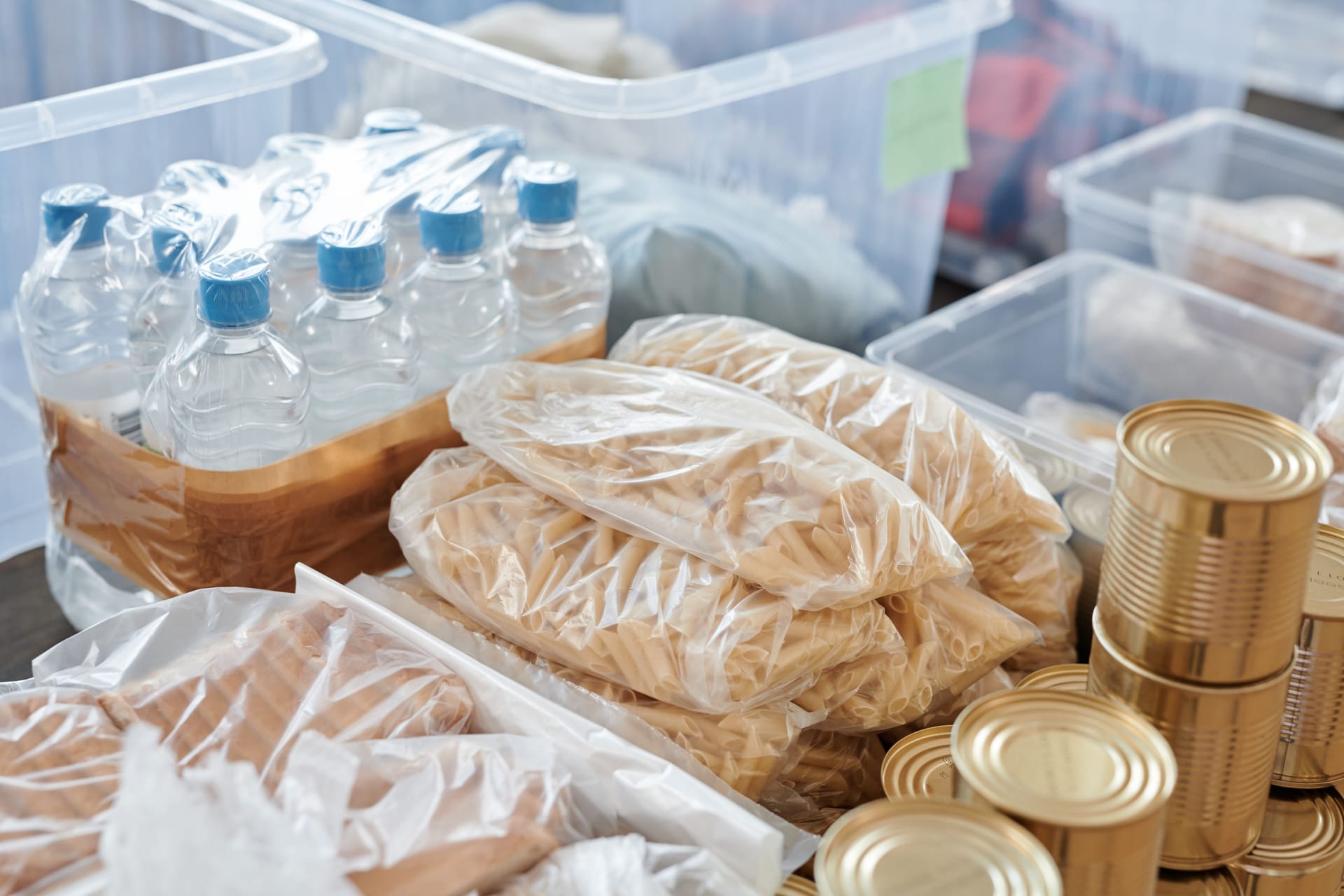
- Bottled water, and non-perishable food that needs little or no cooking, such as tinned meat, fish, fruit or vegetables. Include a manual tin opener, because an electric one is useless in a power cut.
- A battery or wind-up torch. Torches are safer than candles, which are a real fire risk, especially around children and pets. This is the one swap the campaign is most insistent about.
- A battery or wind-up radio. If the power and the internet are down, a radio is often the only way to get news and official updates. A car radio can work too, though in severe weather it may be safer to stay indoors.
- A power bank to keep a phone alive, plus spare batteries for the torch and radio, and a backup battery for any medical equipment you rely on.
- A first aid kit, or at least the basics: waterproof plasters, bandages, antiseptic, sterile dressings, gloves, a thermometer and tweezers.
- Essential medicines, enough to keep you going for several days, plus copies of your prescriptions and a note of doses.
- Warm clothing and blankets. In a winter power cut, keeping warm is the job that matters most.
- A whistle, to attract attention if you are ever trapped or need help.
- Hand sanitiser and wet wipes, for hygiene when the water is off.
- Cash, in small notes and coins. Card machines and cash points often fail in a power cut, so a little physical money buys food or fuel when nothing else will.
- Paper copies of important documents and emergency contact numbers. If your phone dies, the numbers on paper are the ones you can still use.
Do not buy it all in one go. Both the campaign and the Red Cross suggest adding a single item with each weekly shop and building the kit up over a few weeks. For the food-and-water side specifically, our guide to an emergency food and water store goes deeper on quantities, rotation and what actually keeps.
The grab bag: for when you have to leave
Sometimes staying put is not an option, flooding is the usual reason a UK household is told to leave quickly. For that, keep a grab bag: a lighter, smaller bag you can pick up and go with, holding a slimmed-down subset of the home kit plus the things you truly cannot replace on the way out.
The British Red Cross "on the move" list is a good model. Aim for:
- Important documents, ideally in a waterproof bag: passports, birth certificates, insurance details, and your written household plan.
- Essential medication, and spare glasses or contact lenses.
- Your phone and charger or a power bank.
- Cash and bank cards.
- Weather-appropriate clothing, and a flask you could fill with a hot drink.
- Ready-to-eat food and bottled water.
- Your keys, house and car, and the paper contacts list.
- Baby and pet supplies, if relevant. For a baby, ready-to-feed formula is best, since you may not be able to boil water or sterilise bottles.
Keep the grab bag where you can find it fast, and remember the one exception: if you are escaping a fire, take nothing at all, just get everyone out and call 999.
Build your kit and plan in a weekend (and top up over time)
- 1
Grab a box or bag
Pick one container for the home kit and put it somewhere easy to reach in the dark, such as under the stairs or in a hall cupboard.
- 2
Add water and no-cook food first
Start with a few days of bottled water and tinned or long-life food that needs no cooking, and drop a manual tin opener in the box straight away.
- 3
Add light, information and power
A wind-up or battery torch, a wind-up or battery radio, a power bank and a stock of spare batteries. Torch, not candles.
- 4
Add health and hygiene
A first aid kit, several days of any essential medicines with copies of prescriptions, hand sanitiser and wet wipes, plus warm layers and a blanket.
- 5
Add cash and paper
Some small-denomination cash, and printed copies of key documents and a contacts list, including 105 and your out-of-area contact.
- 6
Pack a grab bag
Put a lighter subset plus documents, medication, phone and charger, cash and keys into a separate bag you can carry out of the door in seconds.
- 7
Write the household plan
Fill in the free downloadable household emergency plan from the Prepare campaign, agree it with everyone you live with, and store it with the kit.
The household plan: know your risks and your people
Kit is only half of it. The other half is a short plan everyone in the house understands before anything goes wrong.
Know your risks. Check your local flood risk on gov.uk, check the long term flood risk for your area, and if you are at risk, sign up for flood warnings so you get advance notice. It is worth signing up for Met Office weather warnings too. Flood risk, water rules and some services differ across England, Scotland, Wales and Northern Ireland, so use the checker for your nation.
Agree how you will find each other. Decide on a meeting point in case you cannot get home, and, as the Red Cross suggests, choose someone who lives outside your local area to be a shared contact, since it is often easier to reach a distant relative than a neighbour when local lines are busy. Add emergency contacts and any medical information to your phone's ICE or Medical ID feature as well.
Learn your shut-off valves. Everyone in the house should know how to turn off the water, gas and electricity. You will need this if a pipe bursts, if there is a gas smell, or if you have to leave because of flooding. Find the stopcock, the gas lever and the consumer unit now, while it is calm, not by torchlight in a crisis.
Plan for the people and animals who need more. Think through babies, elderly or less mobile household members, anyone with a medical condition or equipment that needs power, and pets. Their needs, extra medication, formula, backup power, pet food and water, shape what your kit has to hold.
Know the numbers. Save 105 to report a power cut (it is free and works across England, Scotland and Wales; in Northern Ireland use 03457 643643), and remember 999, or 112, for any immediate danger. Our guide to prepping for a power cut walks through the specifics of losing electricity, from keeping the fridge cold to staying warm safely.
Keep it current
A kit you built once and forgot is a kit that lets you down. Set a yearly reminder, and when it comes round, rotate the food and water so nothing is out of date, test the torch and radio and replace tired batteries, top up any medicines that have expired, and check the documents and phone numbers are still right. It takes ten minutes a year, and it is the difference between a box of supplies and a box of disappointments. Do the same monthly nudge the campaign suggests for your smoke alarms while you are at it.
Done this way, resilience stops being a dramatic hobby and becomes what it should be: a quiet bit of good housekeeping that means a storm, a power cut or a flood warning is an inconvenience you are ready for, not a scramble.
This is general guidance to help you prepare, not emergency or medical advice, and it was last checked in July 2026. In any emergency, follow the instructions of the emergency services and official warnings. For the current, authoritative version, see the UK Government's Prepare campaign at prepare.campaign.gov.uk and the British Red Cross. Call 999 (or 112) if you or someone else is in immediate danger.
Frequently asked questions
Sources
- Get prepared for emergencies (emergency supplies and kit list) , UK Government Prepare campaign (Cabinet Office / GOV.UK)
- Prepare: how would you prepare for an emergency? , UK Government Prepare campaign (Cabinet Office / GOV.UK)
- Prepare an emergency kit , British Red Cross
- Five tips to plan for emergencies , British Red Cross
- Check the long term flood risk for an area in England , Environment Agency (GOV.UK)
- Sign up for flood warnings , Environment Agency (GOV.UK)
Kit for this job (Ad)

Personal Water Filter, Blue, 1pc
Check price on Amazon →
Potable Aqua Water Treatment
Check price on Amazon →
Potable Aqua Germicidal Water Purification Tablets
Check price on Amazon →
Blukar Head Torch Rechargeable, 2 Pack 2000L Super Bright Headlamp-8 Modes | Spotlight Floodlight Combination, Sensor Control& Red Lights, Waterproof, Long Battery Life Headlight for Running,Camping
Check price on Amazon →We may earn a small commission, at no cost to you. We only list kit we'd use.
Written by
UK Homesteading Team
Editorial team
The UK Homesteading editorial team, offering UK-specific, evidence-led guidance on growing, keeping, preserving and the law.