Cutting down on plastic at home sounds like it should be simple, and then you open a cupboard and realise it is everywhere: the cling film, the washing-up liquid bottle, the toothbrush, the bag the apples came in. It is easy to feel like you have to overhaul the whole house at once. You do not. This guide runs room by room through the swaps that genuinely work in a British home, with UK products and shops, and it is honest about which ones are worth it and which are more marketing than substance.
Before the lists, two principles that matter more than any single swap. First, the goal is to use less plastic, not to achieve a flawless plastic-free life. Nobody manages that, and chasing perfection is the fastest way to give up. Second, start with what you will actually stick to, and use up what you already own before buying anything. A drawer full of usable plastic tubs is not a failure; it is exactly what you should keep using.
The mindset: reduce, don't agonise
The most useful thing to understand up front is a rough order of priority. Reducing what you use comes first, reusing what you have comes second, and only then does swapping to a plastic-free product come in. A shiny "zero-waste" kit is near the bottom of that list, not the top.
- Use up what you own. Finish the cling film, the shower gel, the plastic-handled brush. Throwing out usable plastic to buy an eco replacement wastes everything that went into making it and creates rubbish that need not exist. As the UK sustainable-living writer behind Moral Fibres puts it, this is about progress over perfection, and there is no shame in a swap that does not suit you.
- Cheap wins beat expensive gadgets. Buying loose, refilling and using less save far more plastic, for far less money, than any clever gadget. If your budget is tight, do only these and ignore the rest.
- Be a little sceptical of the label. "Plastic-free", "eco" and "compostable" are loose marketing terms, not guarantees. A "compostable" wrapper often only breaks down in an industrial composter most of us cannot reach. Buying less, and favouring loose or refillable, beats trusting the buzzword on the front.
Kitchen swaps
The kitchen is where most household plastic hides, in packaging more than products. Friends of the Earth's own guide to the kitchen is realistically titled "how to go (almost) plastic-free", and that "almost" is the right expectation. Here are the swaps that carry their weight.
| Instead of | Try this | Worth knowing |
|---|---|---|
| Cling film | Beeswax wraps, a plate or silicone lid over a bowl, or reusable tubs you already own | Wraps mould to a bowl with the warmth of your hands and wash in cool water; a plate over a bowl is free. See our beeswax food wraps guide |
| Pre-bagged fruit and veg | Loose produce with a reusable cotton or mesh bag | One of the cheapest, highest-impact swaps; loose is often cheaper per kilo too |
| Bottled washing-up liquid | Refillable washing-up liquid or a solid washing-up bar | Take your empty bottle to a refill shop; bars last a long time and store dry |
| Standard teabags | Loose-leaf tea with a steel or bamboo infuser, or a checked plant-based bag | Many teabags are sealed with polypropylene; some brands have switched to PLA. More in our microplastics guide |
| Kitchen roll | Washable cloths, a stack of tea towels, "unpaper" towels | Keep a basket of cut-up old towels for the mucky jobs; kitchen roll only for the truly grim |
| Plastic washing-up brush and sponge | Wooden brush with a replaceable natural-bristle head, a loofah or a bamboo scrubber | Wooden brushes shed no microplastics and compost at the end of life |
| Plastic food tubs (when they finally break) | Glass jars (reuse jam and passata jars) and stainless-steel tins | No need to buy a matching set; washed-out jars do the same job for free |
Bathroom swaps
The bathroom is a sea of plastic bottles, and it is also where the bar-versus-bottle swaps really shine. A solid bar is mostly the active ingredient with the water removed, so it lasts longer and travels better, and a single shampoo bar can replace several bottles.
Work through the bathroom in order of what runs out first
- 1
Switch to bars as bottles empty
Replace shower gel and hand wash with a bar of soap, and shampoo and conditioner with solid bars, as each bottle runs out. Look for a pH-balanced shampoo bar (not just soap relabelled) so hair does not go waxy, and keep bars on a draining dish so they dry between uses and last longer.
- 2
Change your toothbrush
Swap to a bamboo toothbrush when your current one is due for replacement. Snap or cut off the nylon bristles for the bin and compost or bin the handle per your council's guidance.
- 3
Try toothpaste tablets or a tube alternative
Toothpaste tablets in a glass jar or tin remove the plastic tube. Choose a fluoride version if you want the same decay protection as standard toothpaste; chew, then brush as normal.
- 4
Move to a safety razor
A metal safety razor replaces a stream of disposable plastic razors and blade cartridges. The razor lasts for years and replacement blades are cheap and recyclable at some collection points. Go slowly at first: the technique is a little different.
- 5
Rethink the smaller extras
Refillable deodorant in a tin or paper tube, reusable cotton pads or a flannel instead of single-use wipes, and, for periods, a menstrual cup, period pants or reusable pads. Switch only when you are comfortable, and keep what already works for you.
Laundry and cleaning swaps
Laundry and cleaning are full of single-use plastic bottles and boxes, and they are also where a few cheap staples replace a shelf of specialist products. We have detailed guides on several of these; this is the plastic-focused summary.
| Instead of | Try this | Worth knowing |
|---|---|---|
| Plastic bottles of detergent | Refillable laundry liquid, or plastic-free laundry sheets or powder in cardboard | Refill at a zero-waste shop with your own bottle; sheets store flat with almost no packaging |
| Multiple specialist cleaners | Soda crystals, bicarbonate of soda (known as baking soda in the US) and white vinegar | A handful of cheap staples cover most jobs. See our guides to cleaning with white vinegar and cleaning with bicarbonate of soda |
| Plastic fabric conditioner bottles | White vinegar in the drawer and wool dryer balls in the tumble dryer | Covered fully in our fabric conditioner alternatives guide |
| Nothing (invisible microfibre loss) | A microfibre wash bag, or a filter that catches fibres shed by synthetic clothes | Every wash of synthetic fabric sheds tiny plastic fibres; a wash bag such as the Guppyfriend catches a good share of them |
| Tumble dryer sheets | Wool dryer balls | Reusable for a thousand-plus loads, they soften and cut static with no single-use waste |
On the go and around the house
A lot of everyday plastic comes from being caught out while you are away from home: a bought bottle of water, a takeaway coffee cup, a carrier bag at the till. A small reusable kit fixes most of it.
- A reusable water bottle. Refill it for free at cafes, pubs and public fountains listed on the Refill app rather than buying single-use bottles. Tap water in the UK is safe to drink.
- A reusable coffee cup. Most single-use cups are plastic-lined and hard to recycle. Many UK coffee shops give a small discount for bringing your own.
- Reusable shopping bags, kept where you will actually use them. By the front door, in the car, folded in a coat pocket. The bag you have with you beats the one at home.
- A packed lunch without the wrappers. A stainless-steel tin or a beeswax-wrapped sandwich replaces the daily cling film or plastic bag.
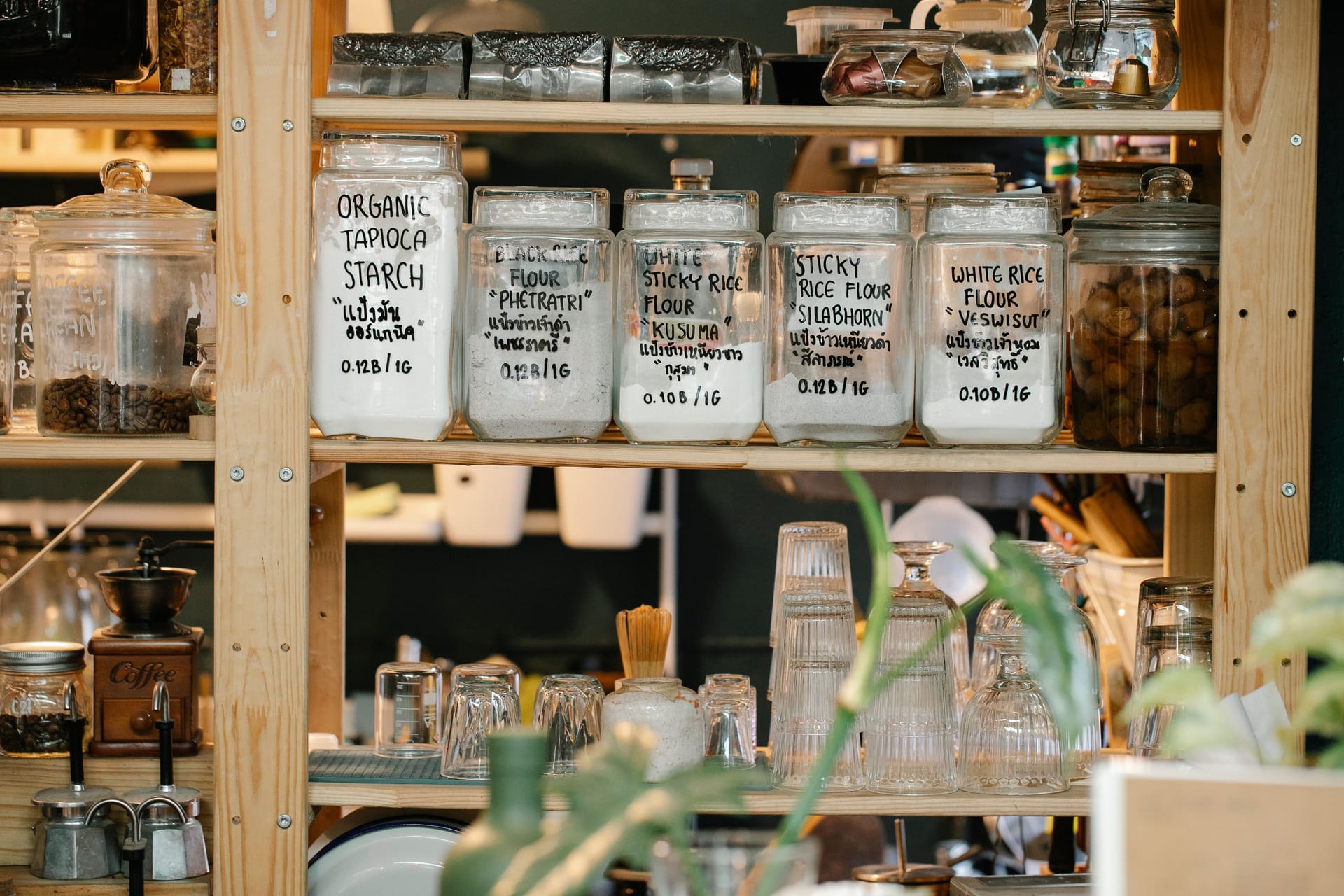
- Loose refills at a zero-waste shop. Where you have one nearby, refill dried goods and household products into your own containers.
What to prioritise, and what to skip
If you take nothing else from this, take the priority order. Buying less and reusing what you have will always beat buying a greener version of something. Loose fruit and veg, refills, cloths instead of kitchen roll, and a reusable bottle and bag are the swaps that save the most plastic for the least money, and they are the ones to do first.
The things to be relaxed about are the expensive, single-purpose gadgets and the matching "zero-waste" kits. They are pleasant to own but usually deliver small savings for a big outlay, and buying a cupboard of new eco products is not, in itself, an environmental win. Keep and use your existing plastic until it wears out, swap thoughtfully when it does, and let the cheap habits do the heavy lifting. That is a realistic, sustainable way to cut your plastic that you will actually keep up.
For the bigger picture on where plastic hides and how to set your home up from the start, see our guide to a plastic-free home in the UK. And if you want to understand the health and evidence side rather than the packaging side, our guide to microplastics in everyday items covers what the science actually says.
Product categories, shops and costs here are general steers for a typical UK household, not endorsements of specific brands; availability of refill shops varies a lot by area, so use the Refill app to check what is near you. Always follow the instructions on any product and the care label on garments. Last checked July 2026.
Frequently asked questions
Sources
- How to go (almost) plastic-free in the kitchen , Friends of the Earth
- Plastic-Free Bathroom Products: 15 Zero-Waste Swaps To Make , Moral Fibres
- Refill Return: the free app for refilling and shopping with less packaging , City to Sea (Refill)
- Refill shops: everything you need to know , Recycle Now (WRAP)
- Plastic-free tea bags: the brands that don't contain plastic , Country Living UK
- Guppyfriend Washing Bag (catches microfibres shed in the wash) , WWF UK
Kit for this job (Ad)

Insulated Water Bottle with Straw - 650/950/1200/1800 ml - Leakproof Double-Walled Stainless Steel Metal Drink Flask BPA-Free - Sports Travel Gym Camping Hiking Kids
Check price on Amazon →
Hydro Flask - Water Bottle 946 ml (32 oz) - Vacuum Insulated Stainless Steel Water Bottle with Leak Proof Flex Cap and Powder Coat - Wide Mouth - Black
Check price on Amazon →
Bamboo Toothbrush Set, 12 Pack | BPA-Free Soft Bristles, Natural Bamboo Handle, Charcoal Bristles, Compostable, Family Pack, Eco-Friendly, Biodegradable
Check price on Amazon →
Bamboo Charcoal Toothbrush 8 Pack, Medium Firm Bristles
Check price on Amazon →We may earn a small commission, at no cost to you. We only list kit we'd use.
Written by
UK Homesteading Team
Editorial team
The UK Homesteading editorial team, offering UK-specific, evidence-led guidance on growing, keeping, preserving and the law.