White vinegar is the quiet workhorse of a natural cleaning cupboard. It is cheap, you can buy it in any UK supermarket, and one bottle handles a surprising number of jobs: limescale on the taps, grease on the hob, a cloudy glass shower screen, a fusty-smelling drain. It is not magic, and as you will see below it is genuinely the wrong tool for a few surfaces, but used sensibly it does a lot of what the shelf of coloured spray bottles claims to do, for a fraction of the price.
This guide covers what white vinegar actually is, why it works, a room-by-room list of what to use it on, a couple of simple recipes, and, just as importantly, what to keep it well away from. Read the safety points before you start: there are two things you must never mix vinegar with, and a short list of surfaces the acid will damage.
What white vinegar actually is
The clear vinegar sold for cooking and cleaning is a dilute solution of acetic acid in water, usually around 5 to 6 per cent acid, made by fermenting a distilled alcohol. That is all "distilled white vinegar" means: a weak, food-grade acid. It is the plain, colourless bottle on the supermarket shelf, often the cheapest item in the aisle, and for cleaning that ordinary food-grade strength is all you need.
You can also buy stronger "cleaning vinegar" at higher acidity. It is more powerful on heavy limescale but also harsher on seals and skin, so for the everyday jobs in this guide, standard white vinegar is the sensible default. Steer clear of brown malt vinegar for cleaning: it does the same chemistry but leaves a tint and a distinct chip-shop smell you then have to clean away.
Why it works
Almost everything vinegar is good at comes down to it being a mild acid.
- Limescale. The chalky white scale on taps, kettles and shower heads is mostly calcium carbonate, which is alkaline. Acid dissolves it, which is why vinegar is such an effective, cheap descaler.
- Soap scum and hard-water film. The dull film on glass, tiles and shower screens is largely mineral deposits and soap residue. The acid breaks it down so it wipes away instead of smearing.
- Grease. Vinegar cuts through light grease and grime well enough for everyday kitchen surfaces, leaving them clean and streak-free.
- Odours. It neutralises many smells rather than just masking them, which is why a bowl of vinegar or a vinegar wipe-down helps with musty bins, fridges and drains.
What it is not is a strong disinfectant, and we come back to that honestly further down.
A room-by-room list of uses
Here is where a bottle of white vinegar earns its keep around the house. Unless a surface is on the "never" list later, a 1:1 vinegar-and-water spray is a safe starting point.
Kitchen
- Windows, glass and mirrors. A vinegar-and-water spray buffed off with a lint-free cloth or crumpled kitchen roll leaves glass streak-free.
- Taps and stainless steel. Wipe over to shift watermarks and light limescale, then buff dry to a shine. For crusted limescale around the base, wrap a vinegar-soaked cloth around it for an hour first.
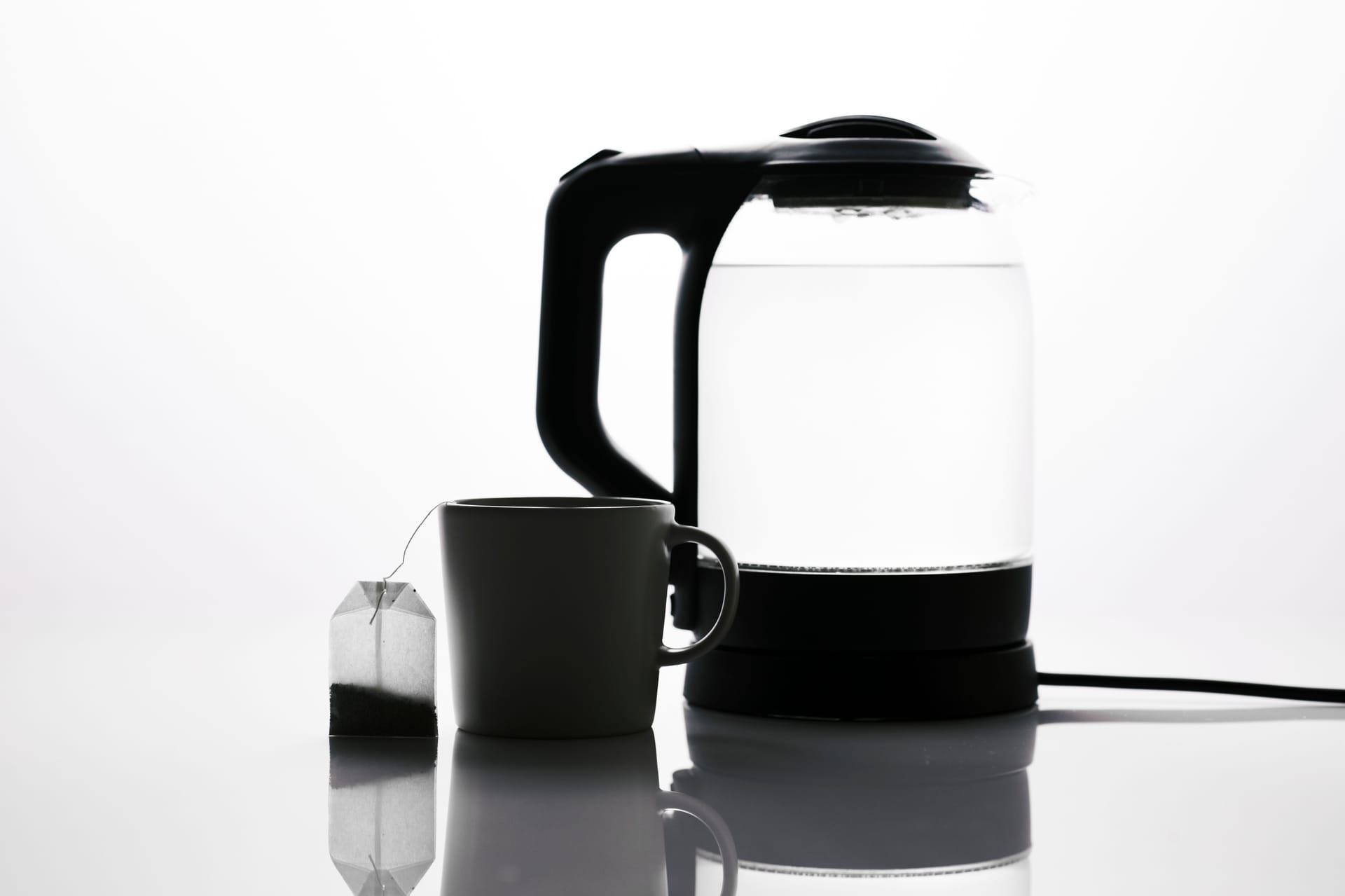
- Kettle. Vinegar is a classic limescale remover for kettles. Do it properly and rinse well: see our full method in how to descale a kettle.
- Microwave. Heat a bowl of half water, half vinegar for a couple of minutes until it steams, then wipe the softened food splatters straight off.
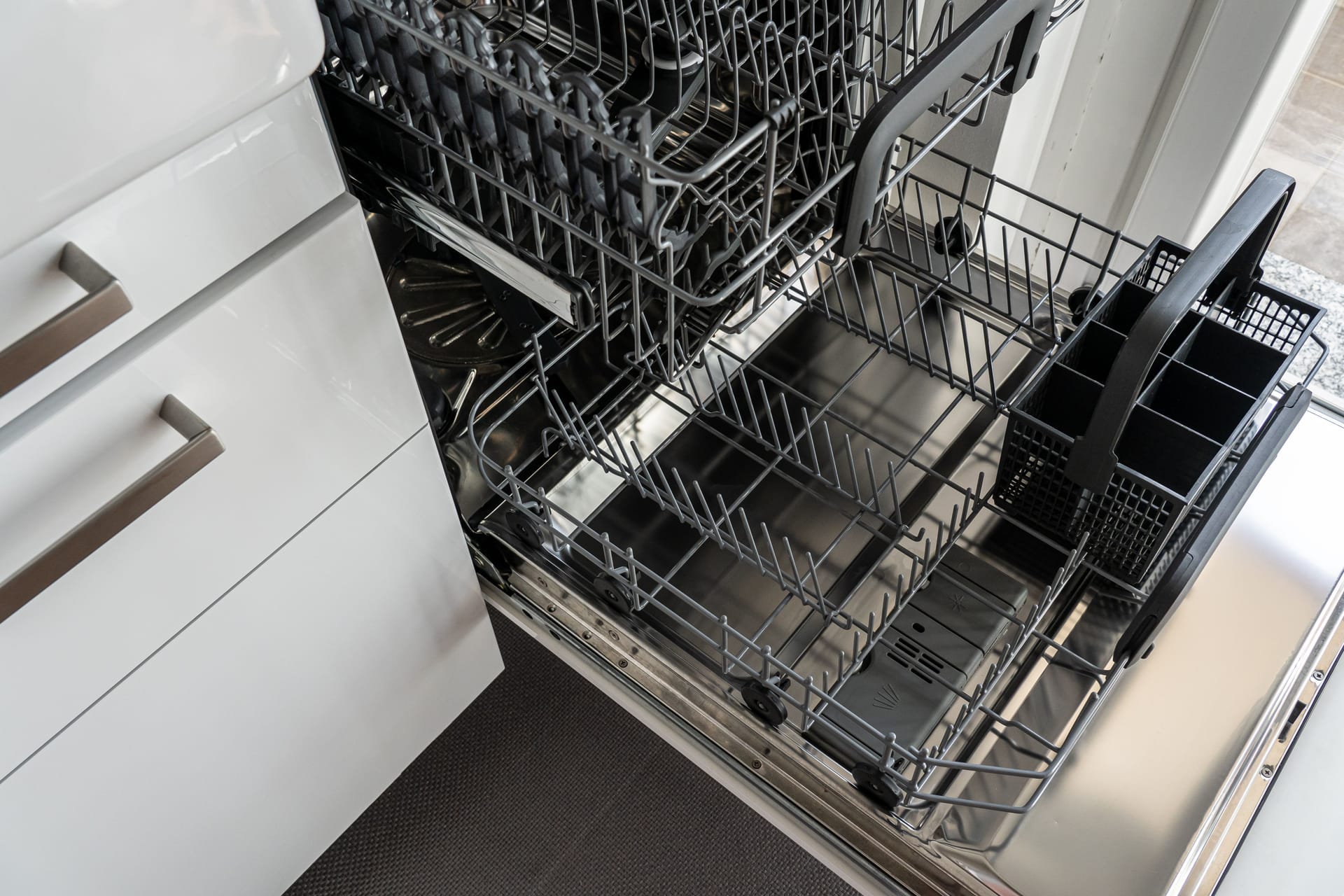
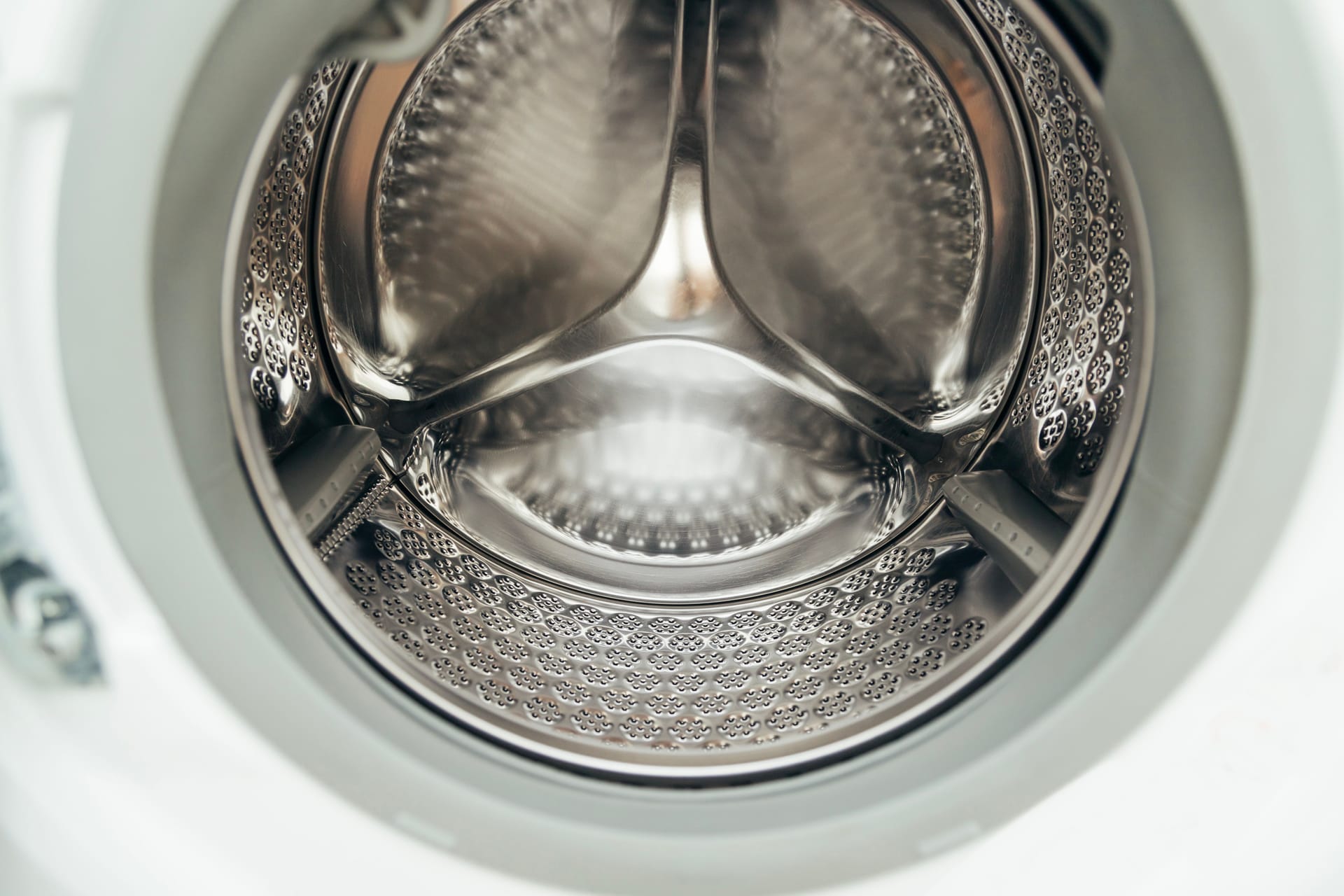
- Washing machine and dishwasher. Vinegar helps lift limescale and freshen a musty drum, and a splash in the dishwasher acts as a rinse aid for spot-free glasses. There are caveats about rubber seals, covered below and in our washing-machine guide.
- Drains and smells. A regular flush of vinegar, often paired with bicarbonate of soda (known as baking soda in the US), helps keep a plughole draining freely and smelling fresh.
Bathroom
- Shower head. Unscrew it, or bag it, and soak in neat vinegar to dissolve the limescale blocking the holes, then rinse and refit.
- Shower screens and tiles. Neat or strong vinegar cuts the cloudy soap-scum and hard-water film. Rinse afterwards, and keep it off any natural stone tiles or the grout if the grout is unsealed.
- Toilet. Vinegar helps shift limescale under the rim and around the waterline. Remember it freshens and descales rather than disinfecting.
Laundry and general
- Rinse aid and fabric-conditioner alternative. A small amount of white vinegar in the fabric-conditioner drawer softens water, helps rinse out detergent residue and leaves towels fluffier, without coating the fibres the way commercial fabric conditioner can. The vinegar smell rinses away and does not linger on dry laundry.
- Deodorising. A vinegar wipe-down freshens fridges, bins and chopping surfaces that are not wood.
If you would rather buy ready-made, or mix a small kit of staples, our guide to natural cleaning products covers what is genuinely worth having.
Simple recipes
You do not need much. These three cover most of the house.
Three white-vinegar cleaning mixes
- 1
All-purpose spray (1:1)
Mix 250 ml white vinegar with 250 ml water in a clean, labelled spray bottle. Use on glass, taps, hobs and worktops that are not natural stone. Buff off with a lint-free cloth.
- 2
Neat limescale soak
Use undiluted white vinegar on heavy limescale: soak a cloth and wrap it around the tap or shower head, or pour it in, and leave for 30 to 60 minutes before rinsing thoroughly.
- 3
Freshening rinse
For a lighter everyday wipe, use one part vinegar to three parts water. Add the vinegar to the fabric-conditioner drawer of the washing machine as a rinse aid rather than to clothes directly.
A few sensible habits: make small batches so they stay fresh, always label the bottle, never top it up with any other cleaner, and open a window while you work. If you want extra cleaning power, pair vinegar with bicarbonate of soda for scrubbing jobs rather than reaching for anything stronger.
What never to clean with vinegar
This is the part worth reading twice. Vinegar's acidity is exactly what makes it useful, and exactly what makes it the wrong choice on certain surfaces. On these, it can cause damage that is hard or impossible to undo.
| Safe to use vinegar on | Never use vinegar on |
|---|---|
| Glass, mirrors and windows | Natural stone: marble, granite, limestone, travertine (acid etches it) |
| Taps, chrome and stainless steel | Unsealed grout and natural-stone tiles |
| Kettles and shower heads (limescale) | Waxed, oiled or unsealed wood, worktops and furniture |
| Ceramic tiles and glazed surfaces | Cast-iron pans and their seasoning |
| Toilet bowls (descaling) | Phone, tablet, laptop and TV screens (damages the coating) |
| Fabric-conditioner drawer as a rinse aid | Rubber seals and gaskets, if wiped neat and often |
On appliances, the picture is genuinely mixed rather than alarming. Some washing-machine and kettle makers are perfectly happy for vinegar to be used to descale, while others advise against it because repeated contact can wear the rubber seals, and a few warn it may affect the warranty on a newer machine. A sensible middle ground is to descale occasionally with diluted food-grade vinegar rather than constantly with neat vinegar, and to avoid wiping the rubber door seal with it. Check your appliance manual, and see our dedicated washing-machine and kettle descaling guides for the detail.
Never mix vinegar with these
This is not fussiness, it is real chemistry, and it matters.
Is vinegar a disinfectant? An honest answer
It is worth being straight about this, because a lot of online advice overstates it. Vinegar is a cleaner, not a registered disinfectant. Cleaning physically lifts dirt, grease and some germs off a surface; disinfecting is meant to kill germs to a defined standard. Vinegar's acetic acid can reduce some bacteria, and research has looked at this seriously, but the evidence shows it does not kill all germs and is inconsistent against many of them.
So for the everyday reality of a home, greasy hobs, limescale, general grime, dust, smells, vinegar cleans perfectly well. Where genuine disinfection matters, after raw-meat spills, during and after illness, or in nappy-change areas, do not rely on vinegar. Use a product that is actually approved and sold as a disinfectant and follow its contact-time instructions. Treating vinegar as a great cleaner but a poor disinfectant is the accurate way to think about it.
Prices and product availability mentioned in general terms can change, and appliance makers vary in what they advise, so check your own manual before descaling. Last checked July 2026.
Frequently asked questions
Sources
- 7 places you should never clean with vinegar , Good Housekeeping UK
- Is it safe to use vinegar in your washing machine? , Moral Fibres
- Did granny know best? Evaluating the antibacterial, antifungal and antiviral efficacy of acetic acid for home care procedures , BMC Microbiology (PMC, National Library of Medicine)
- Is vinegar a disinfectant? Can it kill bacteria and viruses? , Healthline
- The two ingredients you should never combine for homemade cleaning solutions , The Spruce
Kit for this job (Ad)

Hexeal White Vinegar 5L - Food Grade, Cooking & Cleaning | Pickling & Baking. Cleans Surfaces, Deodorises & Removes Grime
Check price on Amazon →
Hexeal White Vinegar 10L - Food Grade, Cooking & Cleaning | 2 x 5L - For Pickling & Baking. Cleans Surfaces, Deodorises & Removes Grime
Check price on Amazon →We may earn a small commission, at no cost to you. We only list kit we'd use.
Written by
UK Homesteading Team
Editorial team
The UK Homesteading editorial team, offering UK-specific, evidence-led guidance on growing, keeping, preserving and the law.