If your kettle has developed a chalky white crust round the element, or your tea has started to taste faintly metallic with little bits floating in it, you have limescale. It is one of the most common gripes in British kitchens, and the good news is that it costs pennies to fix with things you very likely already have in the cupboard. No special descaling sachets required.
Why kettles fur up
The white, crumbly deposit is limescale: mostly calcium carbonate, with a little magnesium, left behind when hard water is heated and evaporates. Hard water simply means water that has picked up a lot of dissolved calcium and magnesium as it passed through chalk and limestone underground. Much of the UK has hard or very hard water, particularly across the South and the East of England, so if you live in those areas you will be descaling more often than someone in, say, the softer-water parts of Scotland, Wales or the North West.
First, the reassuring bit: limescale is not bad for you. Those minerals are the same ones found in food and mineral water, and drinking them does no harm. The reasons to get rid of it are practical:
- It wastes energy. Scale coats the heating element and acts like an insulating blanket, so the kettle takes longer to boil and uses more electricity.
- It taints your tea. A scaled-up kettle can give water a slightly metallic edge, and loose flakes end up bobbing in your brew.
- It shortens the kettle's life. Left long enough, a thick coat of scale can make the element run hot and eventually burn out.
Because limescale is alkaline, a mild acid breaks it down into soluble compounds that simply rinse away. That is exactly how shop-bought descalers work too, most of which are citric acid anyway. So the two natural methods below are not a compromise: they are the same chemistry, gentler on your wallet. If you want the wider picture on tackling scale around taps, showerheads and tiles as well, see our full guide to removing limescale naturally around the home.
| White vinegar | Citric acid |
|---|---|
| Already in most cupboards | Cheap, sold in supermarkets and hardware shops |
| Strong vinegary smell while it works | Odourless and food-safe |
| Rinse and boil twice to clear the smell | Rinses away clean, little aftertaste |
| Equal parts vinegar and water | About 1-2 tbsp (30 g) powder in water |
| Can irritate sensitive skin neat | Mild, but keep it out of your eyes |
Method 1: white vinegar
Plain distilled white vinegar is the classic. Nothing fancy: not cider vinegar, not balsamic, just the cheap clear stuff. It is our go-to for a kettle you already have to hand, and the same bottle earns its keep all over the kitchen (there is a whole list of jobs in our guide to cleaning with white vinegar).
Descaling a kettle with white vinegar
- 1
Empty and part-fill
Tip out any old water. Fill the kettle with equal parts water and white vinegar, enough to cover the limescale, which is usually about 250-500 ml of each for a standard 1.5-litre kettle.
- 2
Bring to the boil, then switch off
Bring the mixture to the boil and switch the kettle off (or stop it just before a full boil). Do not walk away and let it boil hard: a strong vinegar solution can froth and spit.
- 3
Leave to soak
Let it sit for 20-30 minutes. For a heavily scaled kettle, leave it to soak overnight. You may see flakes lifting off on their own.
- 4
Tip out and wipe
Pour the solution away. Most of the scale will come with it. A soft cloth or brush shifts any stubborn patches; never scrape a metal element with anything sharp.
- 5
Rinse thoroughly
Rinse the inside two or three times under the tap, and rinse the filter in the spout if your kettle has one.
- 6
Boil away the smell
Fill with fresh water, boil, and tip it away. Repeat once more. This clears any lingering vinegar taste so your next cup of tea is not a pickled one.
Open a window or switch on the extractor fan while you do this, as the boiled vinegar gives off a steamy, sharp-smelling vapour. Neat vinegar can also sting sensitive skin, so pop on a pair of rubber gloves if you are reaching in to wipe the spout.
Method 2: citric acid (often the nicer option)
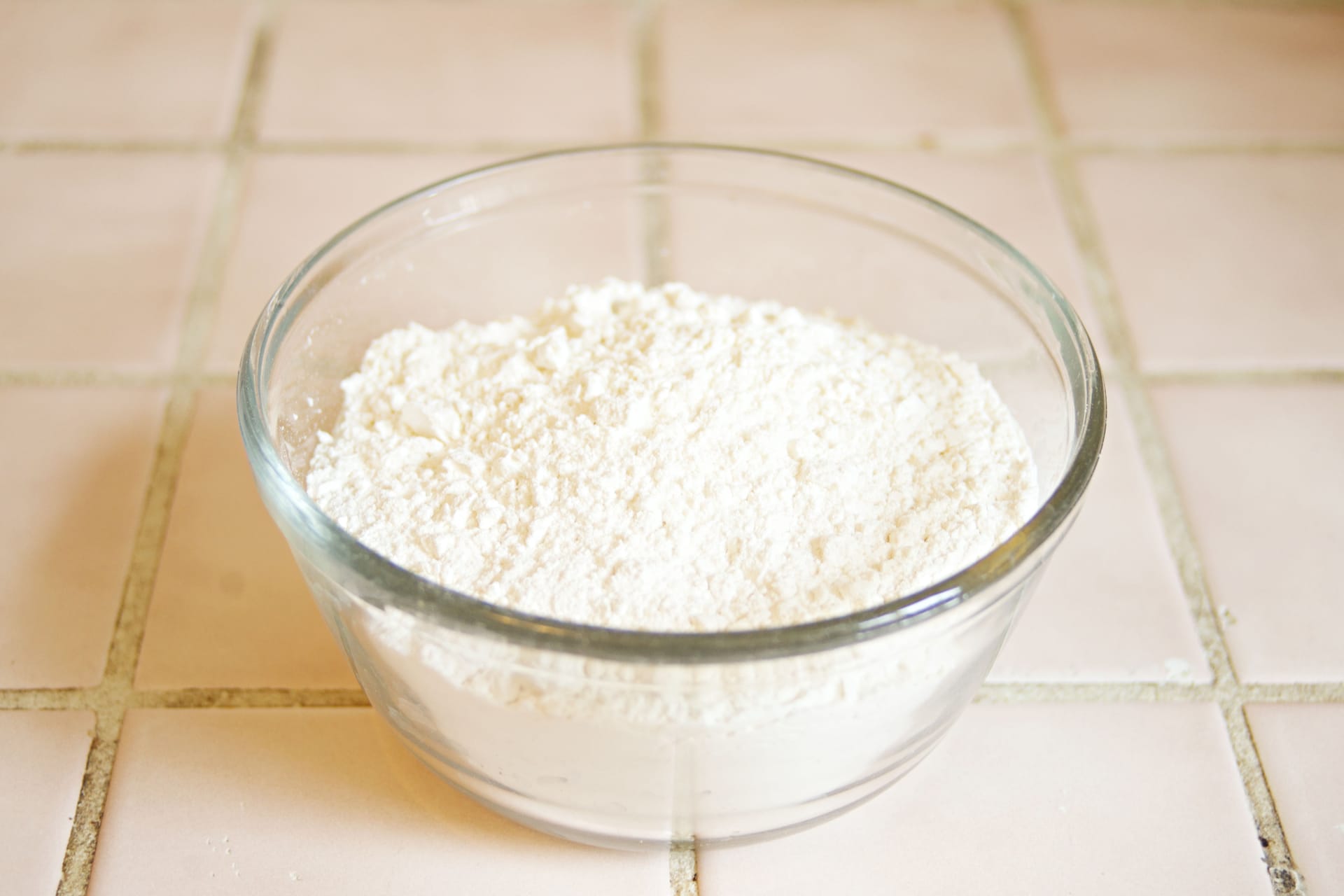
Citric acid is the naturally occurring acid found in lemons, sold as a cheap white powder. Many people prefer it for kettles because it is odourless and food-safe, so there is no vinegary fug to rinse away afterwards. If you are unsure which to reach for, this is usually the tidier choice. (We cover its many other household uses in our guide to cleaning with citric acid.)
Descaling a kettle with citric acid
- 1
Add water and powder
Part-fill the kettle with enough water to cover the scale, then stir in about 1-2 tablespoons (roughly 30 g) of citric acid powder.
- 2
Boil, then switch off
Bring it to the boil and switch the kettle off. As with vinegar, do not let it boil hard and unattended.
- 3
Soak for 15-20 minutes
Leave it to work for 15 to 20 minutes. The scale breaks down with no scrubbing needed.
- 4
Tip out and rinse
Pour it away, then rinse the kettle well two or three times, along with the filter.
- 5
One fresh boil
Boil a full kettle of clean water and tip it away, just to be sure nothing is left behind before you make a drink.
If a really thick crust does not shift first time with either method, simply repeat it. There is no need to reach for anything harsher.
How to keep limescale at bay
You cannot stop scale forming altogether in a hard-water area, but a few habits slow it right down and mean you descale far less often:
- Only boil what you need. Standing water left in a warm kettle is where scale forms fastest, so fill the mug not the kettle.
- Empty it after use and leave the lid open so any last drops evaporate rather than sitting on the element.
- Give the inside a quick wipe now and then with a damp cloth before scale gets a foothold.
- Try a kettle protector. A stainless-steel mesh ball or coil (sometimes sold as a descaling ball) sits in the kettle and attracts scale onto itself instead of the element. It is a gentle helper rather than a cure, but it cuts down on how often you reach for the vinegar.
- A water filter jug reduces the minerals going in, which slows build-up (though it will not stop it entirely).
Descaling really is a five-minute job once you are in the habit. In a hard-water area, put it on a loose rota of every couple of weeks and your kettle will boil faster, last longer and give you a cleaner-tasting cuppa.
A note on rinsing: the single most common complaint about the vinegar method is tea that tastes faintly of vinegar afterwards. That is always down to rinsing, not the method. Give the kettle two or three good rinses and at least one throwaway boil with fresh water and you will not taste a thing. Citric acid sidesteps this almost entirely, which is why many people keep a tub of it by the kettle.
Guidance last checked July 2026. Always follow your kettle manufacturer's own care instructions, as a few models (certain enamel or copper stovetop kettles) advise against acidic descalers.
Frequently asked questions
Sources
- How to descale a kettle , BBC Good Food
- How to descale a kettle the smart way, no special products needed , Coffee Friend
- How to descale a kettle , KitchenAid UK
Kit for this job (Ad)

Citric Acid 1kg - 100% Pure Food Grade Fine Crystals
Check price on Amazon →
Aksoy Citric Acid Food Grade 4KG JAR|| Non-GMO, Anhydrous, Make Your Own BathBomb, No Additives, Sour Drinks, Household Cleaning with Citric Acid Powder
Check price on Amazon →
Sadaf Citric Acid Food Grade - Citric Acid Granulated for Cooking and Baking - 100% Pure Citric Acid - Salt Substitute - Kosher - PET Bottle with Shaker Top - 2.6 oz
Check price on Amazon →We may earn a small commission, at no cost to you. We only list kit we'd use.
Written by
UK Homesteading Team
Editorial team
The UK Homesteading editorial team, offering UK-specific, evidence-led guidance on growing, keeping, preserving and the law.