There is a satisfying bit of folklore that says every blocked sink can be fixed by tipping bicarbonate of soda and vinegar down it and watching the volcano fizz. It looks like something is happening, and sometimes it even helps. But if you have ever done it, waited hopefully, and found the water still sitting there, you are not doing it wrong: the fizz is simply not the miracle it is sold as. The good news is that clearing a drain naturally is genuinely easy once you know which method suits which blockage, and almost none of it needs a caustic bottle from under the sink.
This guide walks through what actually blocks household drains, the natural methods in the order worth trying them, and the honest truth about where the famous bicarb-and-vinegar trick shines and where it falls flat.
What actually blocks a drain
Most household blockages come down to four culprits, and knowing which one you have tells you which method to reach for.
- Grease, fat and oil are the big one in kitchen sinks. Warm cooking fat pours away as a liquid, then cools and sets solid inside the pipe, catching everything else that comes past.
- Hair is the main offender in bathroom sinks, baths and showers, especially once it knits together with soap.
- Soap scum builds a sticky film on the inside of pipes that narrows them over time and gives hair and grease something to cling to.
- Food scraps, tea leaves, coffee grounds and the like collect in the trap and slowly choke the flow.
A slow-draining sink is the early warning. Standing water means the blockage has largely closed the pipe. Either way, the methods below work from gentlest to most hands-on.
Method 1: Hot water (the first thing to try)
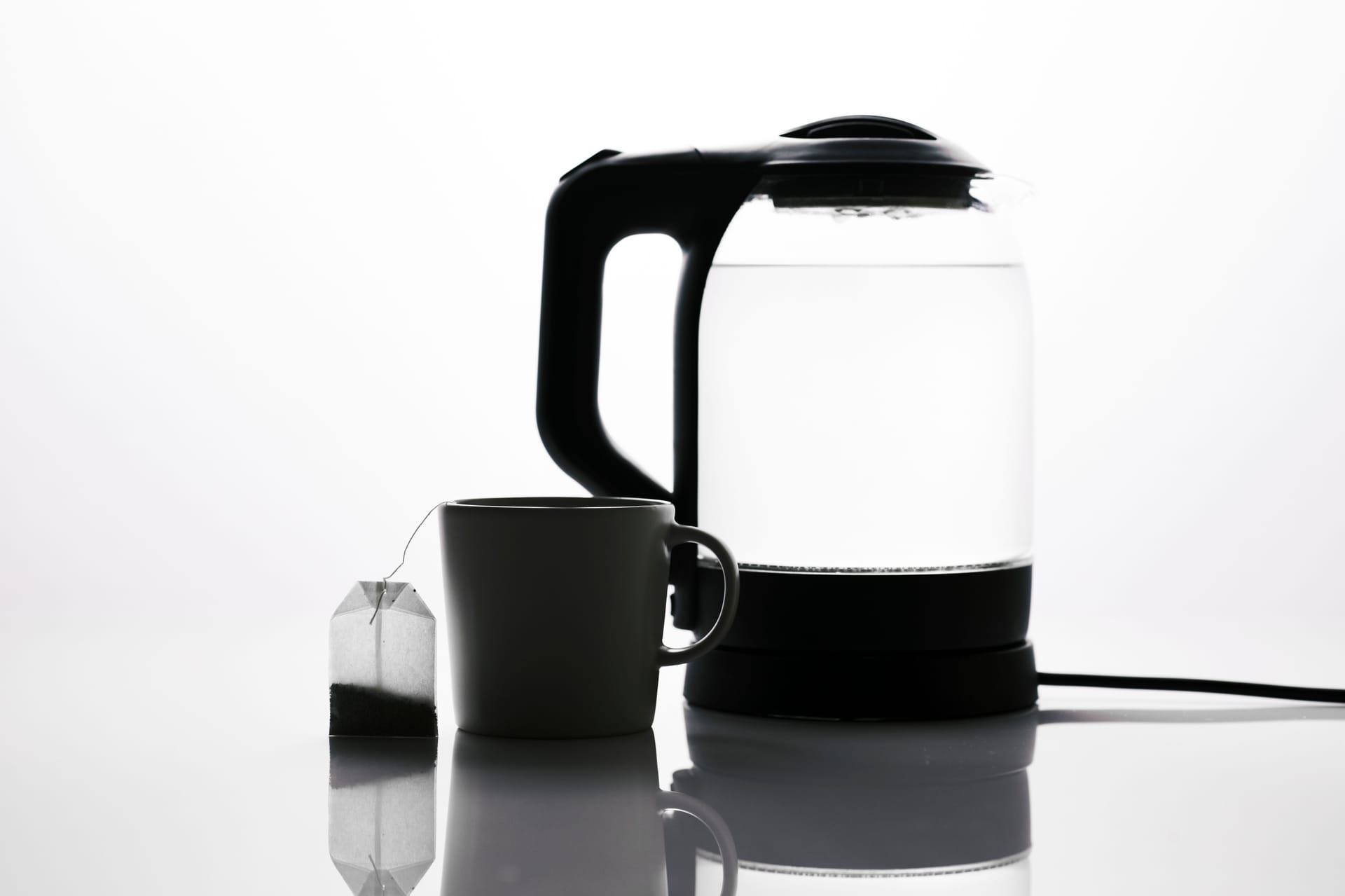
Before anything else, reach for the kettle. Hot water on its own softens and loosens the fat and soap that cause most slow drains, and it costs nothing.
Flush the drain with hot water
- 1
Boil a full kettle.
- 2
Let it stand for about a minute so it is very hot rather than violently boiling, which is kinder to plastic and PVC waste pipes.
- 3
Pour it slowly and steadily down the plughole in two or three goes, letting each lot drain away before the next.
- 4
Run the tap afterwards to check the flow.
Method 2: Bicarbonate of soda and white vinegar (be honest about this one)
This is the internet's favourite, so it deserves a straight answer. The classic recipe is to pour bicarbonate of soda down the drain, follow it with white vinegar, cover the plughole, leave it to work, then flush with hot water.
The bicarb and vinegar method
- 1
Pour roughly 150g (about a large cup) of bicarbonate of soda down the plughole.
- 2
Follow it with around 250ml of white vinegar. It will fizz enthusiastically.
- 3
Cover the plughole with a cloth or plug to keep the reaction pointing down the pipe.
- 4
Leave it for 15 to 30 minutes.
- 5
Flush through with a kettle of hot water.
Here is the honest part. Bicarbonate of soda (known as baking soda in the US) is an alkali, and white vinegar is an acid. When you combine them they largely neutralise each other, and what you are left with is mostly salty water and a puff of carbon dioxide gas. That is chemistry, not marketing: the same acid-and-base neutralisation you met in school science. Salty water does not dissolve set grease or a knot of hair, which is why so many people try this on a properly blocked sink and get nowhere.
So what is it good for? Quite a lot, actually, just not solid clogs. It is a genuinely useful bit of routine maintenance and a good natural deodoriser for a smelly-but-flowing drain, and it can nudge along light, greasy film before it hardens. Think of it as upkeep rather than rescue. If you want to get more out of these two staples elsewhere in the house, we cover them properly in our guides to cleaning with bicarbonate of soda and cleaning with white vinegar. For a real grease blockage, though, skip ahead to soda crystals.
Method 3: A plunger
If hot water has not shifted it, a plunger uses simple physical pressure to break the blockage up, and it works on both kitchen and bathroom sinks.
Plunge a blocked sink
- 1
If the sink has an overflow hole near the rim, block it with a damp cloth so the pressure is not lost through it.
- 2
Run enough water to cover the rubber cup of the plunger.
- 3
Place the plunger squarely over the plughole and push down and pull up firmly and repeatedly for 20 to 30 seconds.
- 4
Lift it away and see whether the water drains. Repeat a few times before giving up.
- 5
Finish with a hot-water flush.
A cup plunger is fine for sinks. Toilets need a larger flanged plunger designed for the shape of the bowl.
Method 4: The U-bend and a drain snake
When a plunger will not do it, the blockage is often sitting right where you can reach it: the U-bend (also called the trap), the curved section of pipe directly under the sink. Clearing it by hand is the most reliable natural fix of the lot.
Clear the U-bend
- 1
Put a bucket or bowl under the trap to catch the water, and pull on rubber gloves.
- 2
Unscrew the two connectors either side of the U-bend by hand, or with slip-joint pliers if they are tight.
- 3
Lower the trap into the bucket and pull out whatever has collected inside: usually a grim plug of grease, hair and food.
- 4
Rinse the trap out thoroughly under another tap or outside.
- 5
Screw it back on, making sure the seals seat properly, and run the tap to check for leaks.
For a blockage further along than the trap, a drain snake (a flexible auger you feed into the pipe and twist) or even a straightened wire coat hook can hook out a hair clog. Push it in, twist to catch the debris, and draw it back out.
Method 5: Soda crystals for grease
For a fat-clogged kitchen drain, soda crystals are the natural workhorse and the method most UK plumbers and cleaning specialists actually recommend. Soda crystals (washing soda, sodium carbonate) are a naturally occurring mineral salt that is strongly alkaline and has genuine detergent properties, which is exactly what dissolves oils and fats. Unlike the bicarb-and-vinegar fizz, there is no acid here to neutralise them.
Clear grease with soda crystals
- 1
Boil a full kettle and pour it slowly down the drain to soften the fat.
- 2
Once it has drained, tip a large cup (roughly 150g) of soda crystals straight down the plughole.
- 3
Leave them to work on the grease for five to ten minutes.
- 4
Boil the kettle again and flush the drain through with more hot water.
- 5
Repeat the whole cycle if the drain is still sluggish. It often improves with each go.
A dissolved-and-poured version works too: stir a cup of soda crystals into a bowl of hot water until they dissolve, then pour the solution down. Soda crystals are cheap, sold in most UK supermarkets and hardware shops, and double as a weekly preventive treatment.
Prevention: stop the blockage before it starts
Clearing a drain is a chore you can mostly design out of your life. A few habits make repeat blockages rare.
- Fit a strainer over every plughole to catch food scraps and hair before they go down.
- Never pour fat or oil down the sink. Let it cool, then scrape or pour it into an old jar or container and put it in the bin. This single habit prevents most kitchen blockages.
- Brush long hair before a bath or shower, and lift the hair out of the plughole strainer regularly.
- Flush with hot water weekly, and once a month send a cup of soda crystals down the kitchen drain as a preventive treatment.
- Keep food waste, coffee grounds and tea leaves out of the sink entirely: they belong in the caddy or compost.
When to call a professional
Natural methods handle the blockage you can reach. Some signs mean the problem is deeper in the pipework and worth handing over.
The one thing never to do
Last checked July 2026. Methods and amounts are drawn from UK drainage and cleaning specialists (Dyno-Rod, Dri-Pak, Good Housekeeping UK, Wickes, Moral Fibres) and the basic acid-base chemistry behind the bicarbonate-of-soda and vinegar reaction. Quantities are a sensible starting point, not a precise formula: adjust to the size of your drain and repeat as needed.
Frequently asked questions
Sources
- How to maintain and clean your drains , Dyno-Rod (UK drainage specialists)
- How To Naturally Unblock A Drain With Soda Crystals , Moral Fibres (UK eco-cleaning)
- Frequently asked questions about traditional cleaning and laundry , Dri-Pak (UK soda crystals manufacturer)
- 14 clever ways to clean with soda crystals , Good Housekeeping UK
- How to Unclog a Drain , Wickes (UK home improvement)
- What you need to know about chemical drain unblockers , Aspect (UK property maintenance)
- Acids and bases (neutralisation) , BBC Bitesize
Kit for this job (Ad)

Church & Dwight Co 03020 Arm & Hammer Super Washing Soda 55 oz. by Arm & Hammer
Check price on Amazon →
Luigi's Plunger for Sinks and Drains - Sink Plunger for Bathrooms Kitchens Sinks Baths and Showers Unblocker - Shower Plungers for Unblocking - with Large Bellows
Check price on Amazon →
Baking Soda, Sodium Bicarbonate (1KG Bucket) UK MADE Pure Baking Soda for Cleaning, Cooking, Bath Bombs, Odours and Teeth Cleaning. Eco Friendly Bicarbonate of Soda.
Check price on Amazon →We may earn a small commission, at no cost to you. We only list kit we'd use.
Written by
UK Homesteading Team
Editorial team
The UK Homesteading editorial team, offering UK-specific, evidence-led guidance on growing, keeping, preserving and the law.