Are pigs actually the right animal for you?
Let's be honest up front. Pigs are not a gateway animal like hens. They're a proper commitment, and they'll test your fencing, your budget and your patience in equal measure.
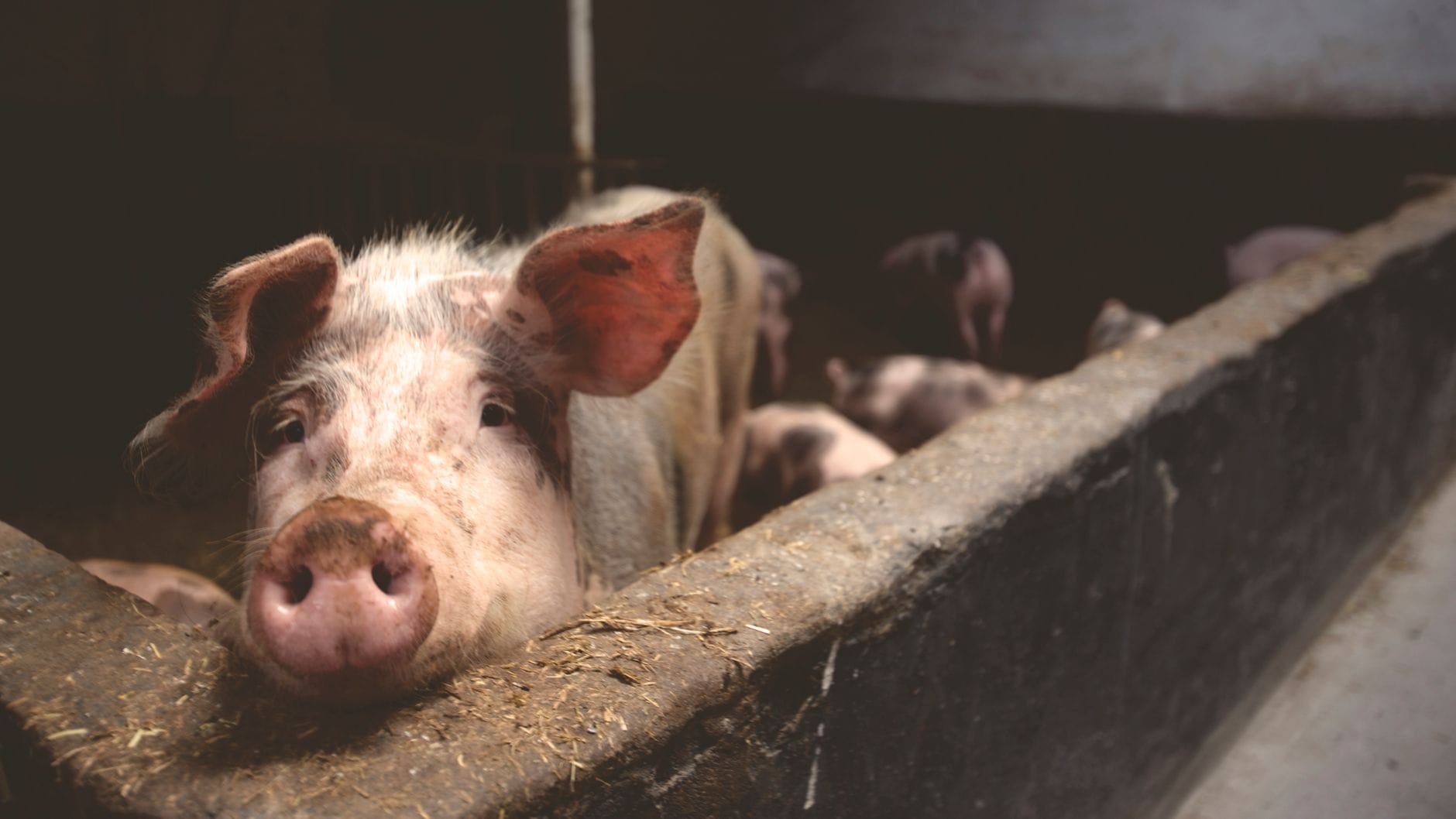
The good news is they're a joy. Pigs are genuinely intelligent, roughly on par with a dog, and they'll learn your voice, come when called, and greet you at the gate for a scratch. Put a couple on a scrubby, bramble-choked corner and by autumn they'll have cleared, rootled and manured it into something you can plant. There's a reason smallholders keep coming back to them.
The catch is that everything about a pig is bigger than you expect. They're immensely strong, they lean on things until those things give way, and a bored pig is an escape artist. They need daily care, come rain or snow, twice a day for feed and water and a proper eye kept on their health. They need dry shelter, room to root, and somewhere to wallow in summer because pigs can't sweat.
For most beginners the smart starting point is two weaners in spring, raised through the summer, and off to slaughter in autumn. You learn the ropes over one grass season, you're not locked into years of winter mud, and you end up with a freezer full of pork you actually understand the provenance of. If you're set on pigs as long-term pets instead, go in knowing it's often a 15-year relationship with an animal that can top 100kg.
Pigs are the animal that most rewards doing your homework first, and most punishes winging it.
Which breed should a beginner choose?
Breed choice really comes down to one question: pets or pork?
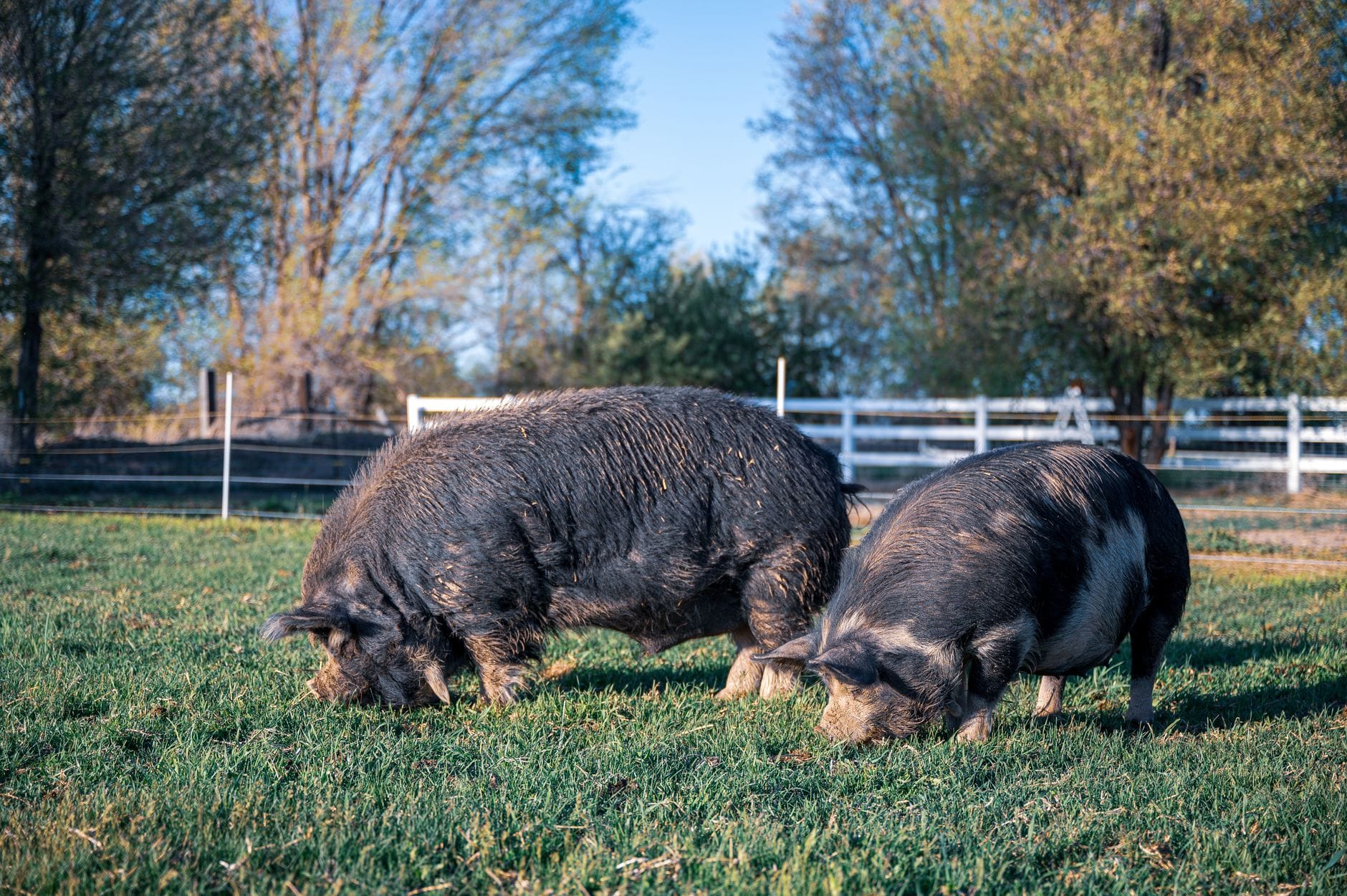
If you want pets or lawn-mowers with personality, the small breeds are your friends. Kunekunes are the classic pet pig, grazers rather than heavy rooters, mellow-natured and happy on grass. So-called pygmy or "micro" pigs also fall here, though be warned, there's no such thing as a pig that stays teacup-sized. They all grow.
If you're raising for meat, the traditional native breeds are hard to beat and they suit outdoor smallholding life beautifully:
- Gloucestershire Old Spots. The classic orchard pig, docile, hardy and a brilliant first meat pig. Lovely marbled pork.
- Tamworth. Ginger, active and a champion rooter. Great for clearing ground, though they like to keep busy, so mind your fences.
- Berkshire. Compact, black, and prized for exceptional meat quality. A calm, manageable pig.
- Saddleback (British and Wessex). Hardy, good mothers, excellent outdoor pigs that handle a British winter well.
For a first go at weaners, an Old Spot or a Saddleback cross is about as forgiving as it gets. Buy from a decent local breeder, see the parents if you can, and ask plenty of questions. A good breeder is worth their weight and will happily talk you through the first few weeks.
What housing, fencing and space do pigs need?
Three things keep a pig content: a dry bed, a secure boundary, and ground to root in.
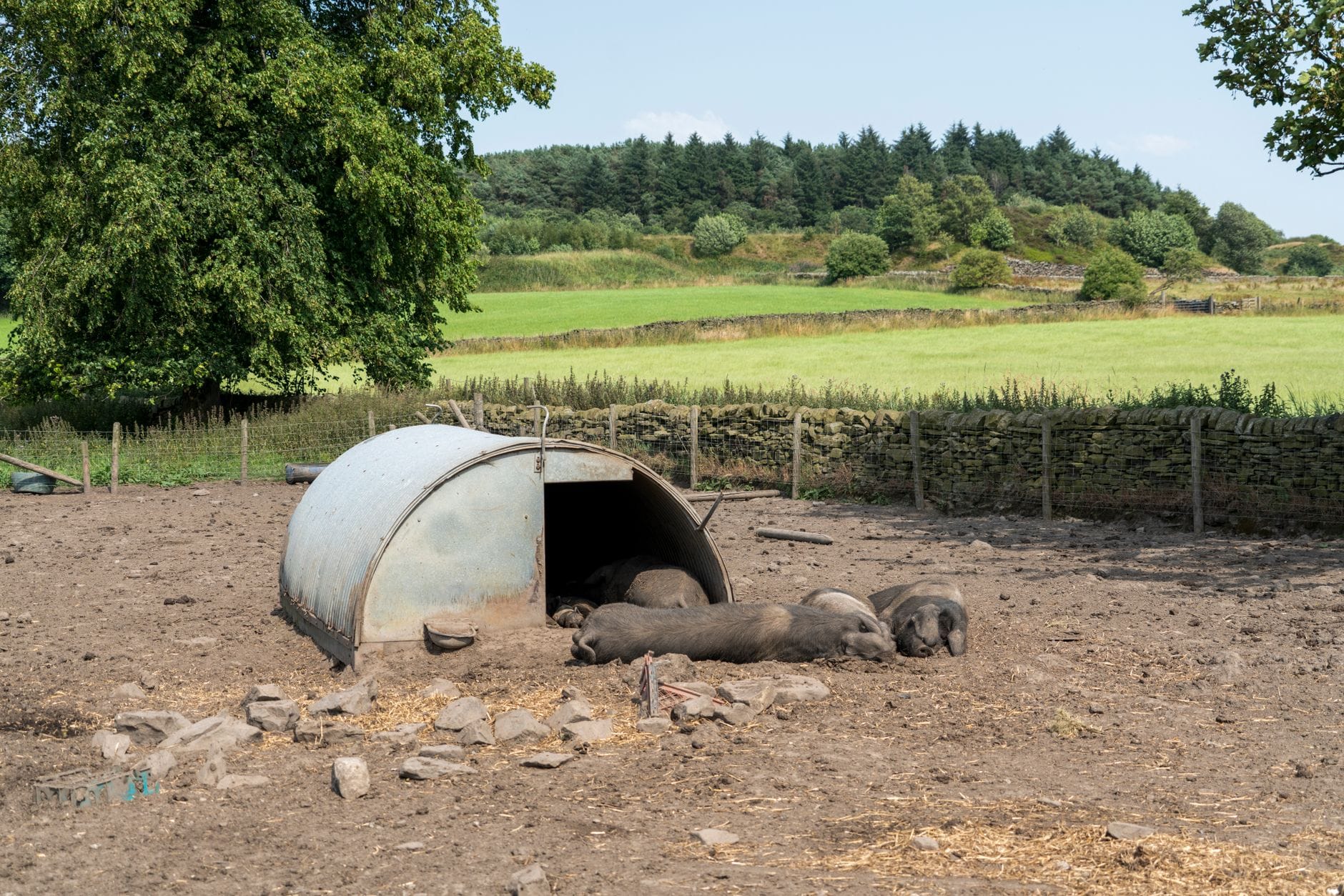
Shelter. A pig ark, essentially a sturdy arched hut with a deep bed of straw, is the standard. It needs to be dry, draught-free and heavy enough that a leaning pig can't shift it. In summer the priority flips to shade and cooling, which is where the wallow comes in. A shallow scrape you can top up with water lets pigs coat themselves in mud, which is how they manage heat and see off sunburn. It isn't them being filthy, it's them being sensible.
Fencing. This is where beginners come unstuck. A pig will find every weak point you didn't know you had. Proper stock fencing (pig netting) with a strand of electric run along the inside at snout height is the reliable combination. Many keepers use electric fencing on its own for paddock rotation, but you have to train the pigs to it first, in a securely fenced pen, so they learn to respect the click before they're relying on it near an open boundary.
Space. Two growing pigs need a decent paddock, not a pen, and you'll want to rotate them onto fresh ground before they reduce the first patch to bare mud. Rest and reseed the used ground and it recovers well. Overstock a small area and you'll have a mud bath, unhappy pigs and unhappy neighbours.
What can you feed pigs, and what's banned?
Feed pigs a proper, formulated pig feed suited to their age (weaner, grower, then finisher rations), keep clean water in front of them at all times, and you can supplement sensibly with things grown for them like fodder crops. That's the simple version.
The part you absolutely cannot get wrong is what's forbidden.
It feels counterintuitive, because pigs are famous for eating anything and older generations fed them the household scraps. But the law changed for hard-won reasons. The 2001 foot-and-mouth outbreak was most likely started by pigs fed undercooked waste. Stick to bought-in pig feed and you stay on the right side of the law and the far more important side of biosecurity.
What's the law on registering and moving pigs?
Here's the bit that scares people off, and it needn't. It's mostly free, it's mostly a matter of filling in forms, and once you understand the shape of it, it's very manageable. But it is not optional, and you sort it before the pigs arrive, not after.
- 1
Get a CPH number
Register the land where you'll keep pigs with the Rural Payments Agency to get your County Parish Holding number. You need it for ordering ID tags and reporting movements. It's free.
- 2
Register as a pig keeper with APHA
Tell the Animal and Plant Health Agency you're keeping pigs. They'll issue your herd mark, which is one or two letters followed by four digits (for example A1234). Do this before the pigs arrive.
- 3
Sort your ID kit
Get the ear tags, tattoo pliers or slapmarker carrying your herd mark. Every pig must show this mark before it leaves your holding, even if it already has another mark.
- 4
Set up movement reporting
In England and Wales, pig movements are reported through the online movement service (eAML2); Scotland uses ScotEID and Northern Ireland uses NIFAIS. Get familiar with it before you collect your pigs, so reporting the move on is straightforward.
- 5
Plan around the standstill
Once pigs land on your holding, you can't move pigs off for 20 days (for any cattle, sheep or goats you keep it is 6 days in England and Wales, 13 in Scotland). Moving pigs direct to slaughter is an exception. Build this into your timings.
Two more legal points sit over all of it. First, the Animal Welfare Act 2006 places a duty of care on you: the pigs' need for a suitable environment, a proper diet, the ability to behave normally, and protection from pain and disease is your legal responsibility, every single day. Second, the details above describe England. Outside England the bodies change: your CPH comes from the Rural Payments and Inspections Division in Scotland, Rural Payments Wales in Wales or DAERA in Northern Ireland, and movements go to ScotEID, eAML2 and NIFAIS respectively. Confirm the exact process for your nation before you start. The principles are the same, the paperwork and service names differ.
You can read the wider picture of your responsibilities in our overview of animal-keeping law, and browse the rest of our livestock guides on the Keep hub.
How do you keep pigs healthy and happy?
Day to day, healthy pigs are refreshingly straightforward. Check them at least twice daily. You're looking for a pig that's bright, up on its feet, eating well and interested in you. Learn what normal looks and sounds like early, because you'll spot "off" long before it becomes serious.
Watch for the common issues: lameness, scouring (diarrhoea), coughing, or a pig that's dull and hanging back at feed time. Keep them wormed on a sensible schedule, keep the ark bedding dry, and don't let a wet, poached paddock go unaddressed through winter. Register with a local farm vet before you need one, ideally one who actually sees pigs, and don't be shy about ringing them. And keep your biosecurity tight: clean boots, no visitors tramping through from other pig units, and that feed ban treated as gospel.
Get the basics right, keep the paperwork square, and pigs will give you some of the best months you'll spend on a smallholding. They're hard work. They're also brilliant company, and there's nothing quite like the pork.
This guide is general information, not formal legal, financial, medical or veterinary advice. UK rules, prices and best practice change, and some rules differ across England, Scotland, Wales and Northern Ireland, so always check the current position with the relevant official source (such as gov.uk, the NHS, the FSA, DEFRA or APHA, or the RHS) or a qualified professional before acting. Last checked September 2026.
Frequently asked questions
Sources
- Apply for a county parish holding (CPH) number , GOV.UK / Rural Payments Agency
- Pig keepers: register your holding and animals , GOV.UK / APHA
- Moving pigs: what keepers need to know , GOV.UK / APHA
- Pig keepers warned not to feed kitchen scraps to pigs , GOV.UK / APHA
Kit for this job (Ad)

12 Volt Battery Powered Electric Fence Energiser XSTOP BA80 10Km Range, 0.6 Joule Output, Weatherproof Kit Includes Leads and Earth Stake. For Horses and Other Animals
Check price on Amazon →
2 Black Gros Trough 55cm
Check price on Amazon →
XSTOP 230v Mains Powered Electric Fence Energiser EL90 10Km Range, 0.5 Joule Output, Weatherproof Kit Includes Leads and Earth Stake. For Horses and Other Animals. 2 Year Warranty*.
Check price on Amazon →
Goovilla Large Feed Trough, Hanging or Screw-in Fence Feeder with Clips, 2 Pack 9 Quart Goat Feeder Supplies, Dog Horse Hog Pig Livestock Poultry Plastic Feeder Trough Bucket for Large Animal, Black
Check price on Amazon →We may earn a small commission, at no cost to you. We only list kit we'd use.
Written by
UK Homesteading Team
Editorial team
The UK Homesteading editorial team, offering UK-specific, evidence-led guidance on growing, keeping, preserving and the law.