Before you fall for a pair of wobbly kids at a farm sale, here's what goats actually ask of you. They're wonderful. They're also more work, more escape-prone and more legally regulated than most people expect. Get the setup right and they're one of the most rewarding animals on a smallholding. Get it wrong and you'll spend your weekends chasing them out of the neighbour's veg patch.
Are goats actually right for you?
Goats are herd animals, full stop. In the wild they live in groups, and a goat kept alone gets stressed, loud and depressed. So the first rule is the simplest: you keep two, at least, or you keep none. That isn't just good practice, it's tied to your legal duty of care, which we'll come to.
Then there's the small matter of them being professional escape artists. Goats are curious, athletic and genuinely clever. They'll test a fence with their nose, their horns and their full body weight, find the one loose post, and be gone. People who've kept everything from hens to pigs are still humbled by their first goat.
They also need proper space and the right kind of it. Not a manicured lawn, but rough grazing and browse, room to move, and dry ground to rest on. They'll strip a small paddock to mud faster than you'd believe, so you need enough land to rest and rotate it. This is a years-long commitment too. Goats can live to fifteen or more, and they need care every single day, holidays included.
Which breed should a beginner choose?
Start with the honest question: milk, or company? Your answer points you at a very different animal.
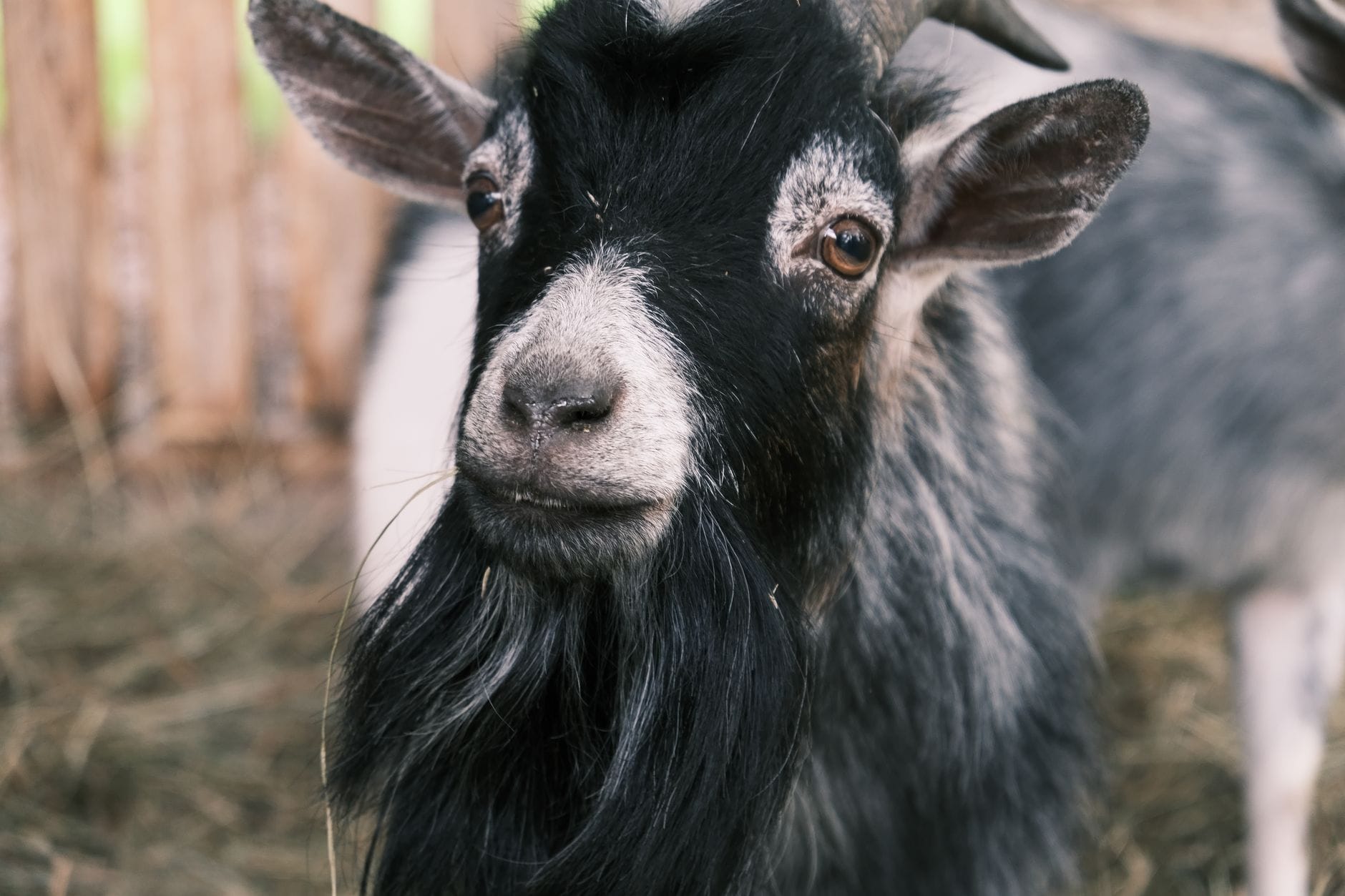
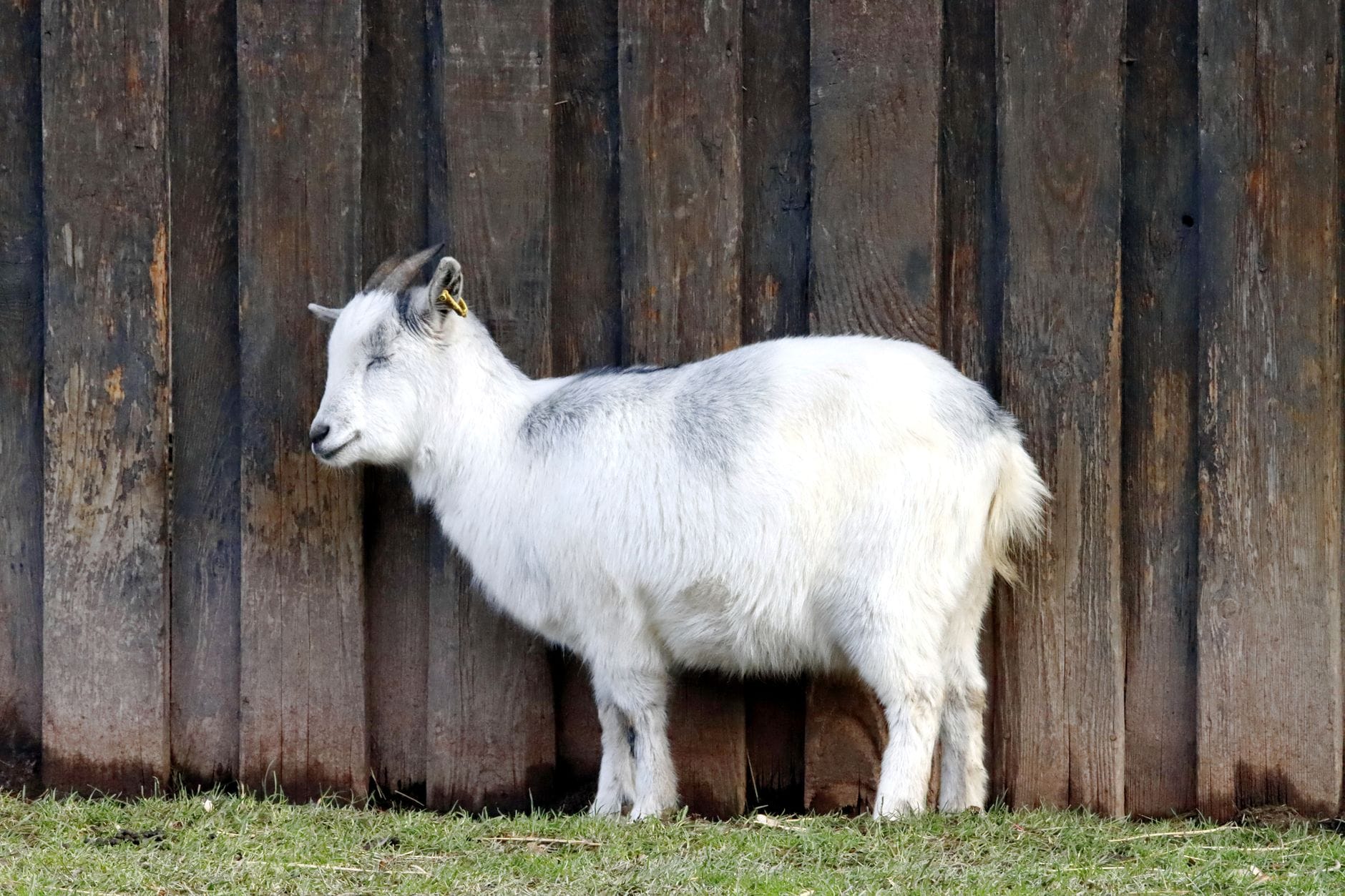
If you want friendly, manageable pets or grazers, look at the small breeds. Pygmy and other dwarf goats are compact, hardy and full of personality, which is exactly why they're so popular in gardens and paddocks. They still need company, fencing and the full legal setup, but they take up less room and eat less than their big cousins. Just don't mistake small for low-effort. A pygmy goat is every bit as determined as a large one.
If you're after milk, you're into the dairy breeds, and a bigger job. Anglo-Nubians are the characterful, long-eared ones known for rich, creamy milk. Saanens are the big white workhorses, calm and reliably heavy milkers. British Toggenburgs and Golden Guernseys are popular too, the Guernsey being a gentler, smaller option for a first dairy goat. Milking ties you to a routine twice a day, so go in with your eyes open.
If your fence would hold water, it might just hold a goat. Anything less, and they'll be next door eating the roses.
What housing and fencing do goats need?
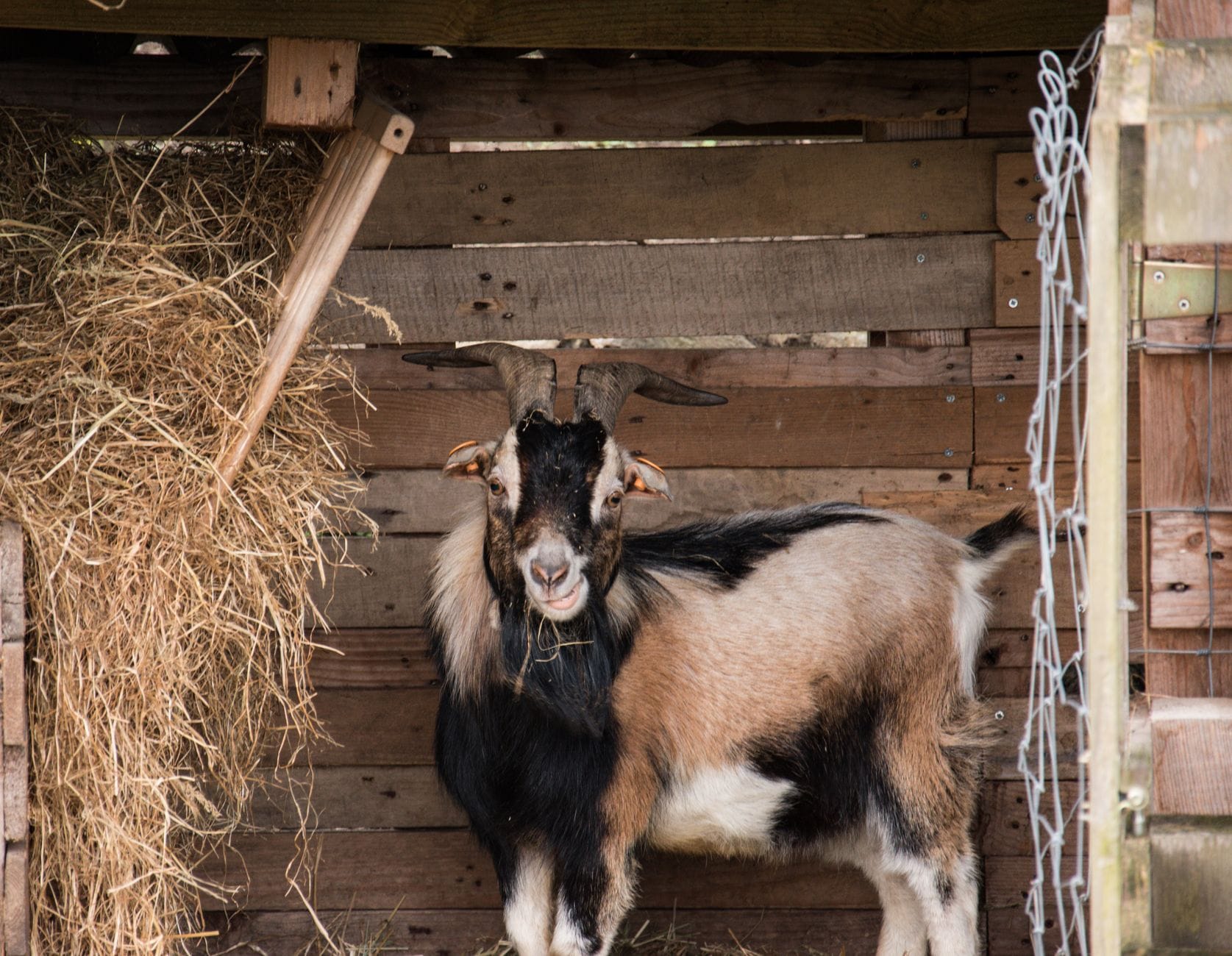
Goats cope with British weather better than people assume, with one firm exception. They hate being wet and cold, and they loathe draughts. So they need a dry, draught-free shelter they can get into whenever they like, with clean bedding and good airflow that isn't a wind tunnel. A converted stable, a sturdy field shelter or a well-built shed all work, as long as it stays dry inside.
Fencing is where most beginners come unstuck. Standard stock fencing that holds sheep will not reliably hold a goat. They climb, they lean, they rub, they use anything nearby as a launch pad. Post-and-wire needs to be tight, tall and well-strained, often with a strand of electric to teach manners. Check it constantly. And here's the bit people forget: goats will happily stand on a water trough, a straw bale or a low wall to get themselves over an otherwise fine fence. Site everything with escape in mind.
What do goats eat, and what will poison them?
Forget the tin-can-eating cartoon. Goats are browsers, not lawnmowers. Left to choose, they'd rather reach up for hedgerow, brambles, twigs and leaves than graze grass like a sheep. That browsing instinct makes them brilliant for clearing scrub, and it's also exactly why poisonous plants are such a danger.
The everyday diet is mostly forage. Good grazing and browse in the growing season, and plenty of clean, dust-free hay through winter and whenever grass is short. Milkers and pregnant does usually need some hard feed, a formulated goat mix, but introduce any change slowly. A goat's rumen hates sudden switches, and lush grass or a bag of the wrong feed can cause serious, sometimes fatal, digestive upsets. Always give constant access to fresh water and a goat-safe mineral lick.
Now the part to take seriously. A number of common British plants are poisonous to goats, and some kill quickly. Yew is the big one, so toxic that a small mouthful can cause sudden death. Rhododendron and laurel are dangerous too, along with laburnum, ragwort, foxglove, bracken and the nightshades. Before you let goats onto any ground, walk it and clear or fence off anything risky, and never throw hedge clippings or garden waste over the fence "as a treat". That well-meant pile of prunings is one of the classic ways goats get poisoned.
How do you keep goats healthy?
Day to day, healthy goats are alert, bright-eyed and nosy. Learn what normal looks like for yours, because a goat that's gone quiet, off its feed or hunched up needs attention quickly.
The routine jobs are hooves and worms. Goat hooves grow like fingernails and need regular trimming, roughly every couple of months, or they go lame. Internal parasites are a constant background threat on grazing, so you'll need a worming plan, ideally worked out with your vet using dung samples rather than guesswork, to avoid resistance. Add in seasonal risks like fly strike, and the value of a good goat-savvy vet becomes obvious. Line one up before you need them, not during an emergency.
A quick word on getting stock in the first place. Buy from a reputable keeper, see the animals in their home setup, and ask about health status and any recent movements. Cheap goats from an unknown source can bring disease onto your holding that costs you dearly.
What are the legal requirements for keeping goats?
This is the bit that surprises people, so let's make it simple. Keeping goats in Great Britain is properly regulated, and the paperwork has to be done before you get them, not after. It sounds daunting. It isn't, once you know the order, and most of it is free.
- 1
Get a CPH number
Apply for a County Parish Holding (CPH) number for the land where you'll keep goats: to the Rural Payments Agency in England, the Rural Payments and Inspections Division in Scotland, the Welsh Government in Wales, or DAERA in Northern Ireland. In England you can apply up to 6 weeks before the animals arrive, and it usually comes by email within about 10 working days. You'll need the National Grid field numbers for the land.
- 2
Register with APHA for a herd mark
Once you have your CPH, register with the Animal and Plant Health Agency (APHA) to get your unique herd mark. You need this to order ear tags. You must have a CPH number before you can register.
- 3
Identify your goats
Goats must be identified. Kids must be tagged on their birth holding within 6 months if reared indoors, or 9 months if reared outdoors, or before they leave the holding, whichever comes first. Adults carry two identifiers (ear tags, a pastern band or a bolus, in an approved combination).
- 4
Keep records and follow standstill
Record every goat and every movement on and off your holding, updating your holding register within 36 hours and reporting movements as required. When you bring goats onto your land, a standstill applies: for 6 days afterwards in England and Wales, or 13 days in Scotland, you can't move cattle, sheep, goats or pigs off the holding.
On top of all that sits the big one, the Animal Welfare Act 2006. It places a legal duty of care on you to meet your goats' welfare needs, including a suitable diet and environment, the ability to behave normally, and, yes, the company of their own kind. This is the legal backbone behind "never keep a single goat".
A quick note on nations, because the detail differs. England and Wales run broadly similar systems. Scotland uses the Rural Payments and Inspections Division plus ScotEID for recording, and Northern Ireland is administered by DAERA. The core idea is the same everywhere: register, identify, record. Always confirm the exact process for your part of the UK before you apply.
For the full legal picture, including movement licences, records and what happens at an inspection, read our detailed guide to the sheep and goat rules every smallholder needs to know. Get the paperwork sorted first, build the fencing you think is overkill, find your two goats, and you're away.
This guide is general information, not formal legal, financial, medical or veterinary advice. UK rules, prices and best practice change, and some rules differ across England, Scotland, Wales and Northern Ireland, so always check the current position with the relevant official source (such as gov.uk, the NHS, the FSA, DEFRA or APHA, or the RHS) or a qualified professional before acting. Last checked September 2026.
Frequently asked questions
Sources
- Sheep and goat keepers: register your holding and flock or herd , GOV.UK (Defra / APHA)
- Tag goats with ear tags, pastern bands and boluses , GOV.UK (APHA)
- Moving sheep and goats: what keepers need to know , GOV.UK (APHA)
- Animal Welfare Act 2006 , legislation.gov.uk
Kit for this job (Ad)

Guggenhein® Professional Shears & Scissors Collection (5" Little Giant (II))
Check price on Amazon →
Premier 1 Supplies ARS 140DXR Japanese Anvil Trimmer, Red, 1.75 Inch Round Point Blade, Ambidextrous, Goat & Sheep Hooves
Check price on Amazon →
12 Volt Battery Powered Electric Fence Energiser XSTOP BA80 10Km Range, 0.6 Joule Output, Weatherproof Kit Includes Leads and Earth Stake. For Horses and Other Animals
Check price on Amazon →
XSTOP 230v Mains Powered Electric Fence Energiser EL90 10Km Range, 0.5 Joule Output, Weatherproof Kit Includes Leads and Earth Stake. For Horses and Other Animals. 2 Year Warranty*.
Check price on Amazon →We may earn a small commission, at no cost to you. We only list kit we'd use.
Written by
UK Homesteading Team
Editorial team
The UK Homesteading editorial team, offering UK-specific, evidence-led guidance on growing, keeping, preserving and the law.