Why do most UK outdoor tomato attempts fail?
Two reasons, and both are fixable. First, the wrong variety: gardeners reach for a beefsteak like 'Brandywine' because the seed catalogue makes it sound irresistible, then watch the fruit sit stubbornly green into October. Popular cherries such as 'Sungold' are a different story: they crop early and heavily outdoors, but they carry no blight resistance, so a wet July can still cut a plant down mid-season. Second, blight: a humid week in late July can collapse every leaf within ten days, ending the crop before the fruit's had a chance to ripen.
Both problems disappear once you switch to a modern blight-tolerant cultivar bred for our climate. These varieties exist, they work, and they're quietly changing what an outdoor tomato season can look like in Britain.
The varieties worth growing
'Crimson Crush'. Full-size slicing tomato, F1 hybrid, strong blight resistance, indeterminate (cordon, needs pinching). The benchmark outdoor variety for the past decade. Reliably 4 to 5kg per plant.
'Mountain Magic', 80g cocktail tomato, indeterminate, excellent flavour, very high blight tolerance. The best-flavoured of the resistant lines.
'Latah'. Small early bush variety. Ripens 55 to 60 days from transplanting (against 75 to 85 for normal cordon types). Brilliant for northern UK or shadier plots. The earliest reliable ripener outdoors.
'Losetto' F1. True bush cherry, no pinching, hanging-basket suitable, moderate blight tolerance. Best for patio containers.
'Ferline'. Older blight-tolerant medium tomato. Less vigorous than 'Crimson Crush', but a proven choice if you can't get hold of the newer cultivars.
Position and soil
A south or south-west facing wall is the single biggest lever on outdoor performance. Stored daytime heat can extend ripening by 2 to 3 weeks into September. The next best spot is the sunniest open ground you have, sheltered from the prevailing wind.
Soil wants to be deep, free-draining and previously enriched. An autumn muck dig, or a 5cm topdress of compost in March. Tomatoes are hungry but hate waterlogging, so on heavy clay, use a raised bed or plant on a mound.
The growing year
- 1
Sow indoors late March
9cm pots on a warm windowsill or in a heated propagator. Pot on to 13cm once the first true leaves form.
- 2
Harden off mid-May
Move pots outside daily for a week, bringing them in at night, to let them acclimatise. Skip this and the first cold night will burn the foliage.
- 3
Plant out late May
Once frost risk has passed. Bury the stem deep. Half the leggy stem can go below soil, and roots will form along it, giving you a sturdier plant.
- 4
Stake & pinch
Cordon varieties: 1.5m cane per plant, tie loosely, pinch shoots in the leaf axils weekly. Bush varieties: no pinching needed.
- 5
Water and feed
Once a week, deeply, at soil level. Start a high-potash tomato feed (liquid seaweed or comfrey tea, say) every 7 days from the first flower.
- 6
Harvest from late July
Pick as soon as the fruit colours. Ripen any end-of-season green fruit indoors in a paper bag with an apple.
Variety choice is 70% of an outdoor tomato season. Technique is 30%. Most gardeners obsess over the 30 and ignore the 70.
Managing blight
Even resistant varieties slow down under severe blight pressure. Three habits cut the risk:
- Mulch heavily. A 5cm straw mulch stops rain splashing soil-borne spores onto the lower leaves.
- Strip lower foliage. Remove every leaf below the first ripening truss. Better airflow, fewer infection points.
- Never water from above. A morning hose to the soil, not the leaves. Wet foliage overnight is the perfect blight nursery.
When the season ends
Late September brings cold, wet nights that stop ripening in its tracks. Strip every remaining green tomato, lay them on a tray indoors with one apple (the ethylene helps), and most will redden over 2 to 3 weeks. The truly stubborn ones become green-tomato chutney. Every honest UK tomato year ends with a jar of it on the shelf.
Frequently asked questions
Sources
- Blightwatch UK , AHDB, 1 June 2025
- Garden Organic. Outdoor tomatoes , Garden Organic, 12 August 2024
Kit for this job (Ad)

Levington Tomorite Liquid Tomato Food, Concentrate, 1L, Red
Check price on Amazon →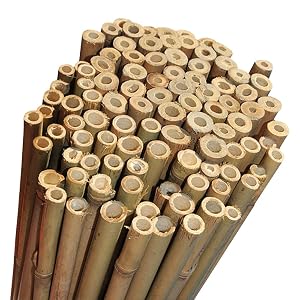
Elixir Gardens Strong Heavy Duty Professional Bamboo Plant Support Garden Canes | All lengths in stock 2, 3, 4, 5, 6, 7 & 8ft | Choose from a range of pack sizes from 10 to 250 | 3ft x 10
Check price on Amazon →
Miracle-Gro Pour and Feed Liquid Plant Food, 1L (Pack of 2)
Check price on Amazon →
VonHaus Walk In Greenhouse – Compact Green House with 6 Shelves and Weatherproof PVC Plastic Cover – Plant House for Garden and Outdoor – Roll up Zip Panel Door – Easy No Tool Assembly
Check price on Amazon →We may earn a small commission, at no cost to you. We only list kit we'd use.
Written by
UK Homesteading Team
Editorial team
The UK Homesteading editorial team, offering UK-specific, evidence-led guidance on growing, keeping, preserving and the law.