Here is the short version. Farming your land rarely needs planning permission. Building on it usually does. And living on it almost always does, whatever the person selling you the field might imply.
That is the split that trips people up. A smallholding is three different things to a planner: a use of land, some buildings, and (if you want to live there) a home. Each is treated differently. This guide walks through all three for England, then sets out how Scotland, Wales and Northern Ireland differ, because planning is devolved and the detail is not the same across the UK.
Using the land for farming is usually fine
Most day-to-day smallholding activity is a use of land for agriculture, and using land for agriculture is not normally "development" at all. So you do not generally need planning permission to graze animals, keep and breed farm livestock, or grow crops and vegetables.
That is anchored in the legal definition. The Town and Country Planning Act 1990 says that "agriculture" includes "horticulture, fruit growing, seed growing, dairy farming, the breeding and keeping of livestock (including any creature kept for the production of food, wool, skins or fur, or for the purpose of its use in the farming of land), the use of land as grazing land, meadow land, osier land, market gardens and nursery grounds". If what you are doing sits inside that definition, the use itself is not the problem.
The catch is that the moment you build something, or change what the land is used for, you have moved out of "just farming" and into territory where permission may be needed.
Buildings and structures are a different matter
Putting up a barn, a livestock shed or similar is development. The good news is that agriculture comes with permitted development (PD) rights, which let you do a fair amount without a full planning application, as long as you stay inside the limits. In England those rights sit in Part 6 of the General Permitted Development Order 2015, and they are split by the size of your holding:
- 5 hectares or more (Class A): you can put up, extend or alter agricultural buildings, subject to a prior approval step and limits. A new building is capped at 1,500 square metres, and works or structures for housing livestock or for plant and machinery are capped at 1,000 square metres.
- 0.4 to under 5 hectares (Class B): more limited. You can extend or alter an existing agricultural building, but you cannot put up a brand new one under PD, and an extended building is capped at 1,250 square metres.
- Under 0.4 hectares: no agricultural permitted development rights at all, so you are into a full planning application for buildings.
Exceed any of those limits, or fail the conditions, and you need to apply for planning permission in the normal way. It is worth reading the detail before you order a building. We have a separate guide to agricultural permitted development that goes through the size limits and the prior approval process.
The big trap: you cannot just live on the land
This is the one that catches the most people, so it gets its own callout.
The legal machinery behind this is "material change of use". Moving land or a building from farming to residential is a material change, and that needs planning permission. There is no neat statutory definition of what counts as material. As the government's own guidance puts it, "whether a material change of use has taken place is a matter of fact and degree and this will be determined on the individual merits of a case". So it is rarely a simple yes or no, which is exactly why you should ask your local planning authority rather than a forum.
A few specific traps worth naming:
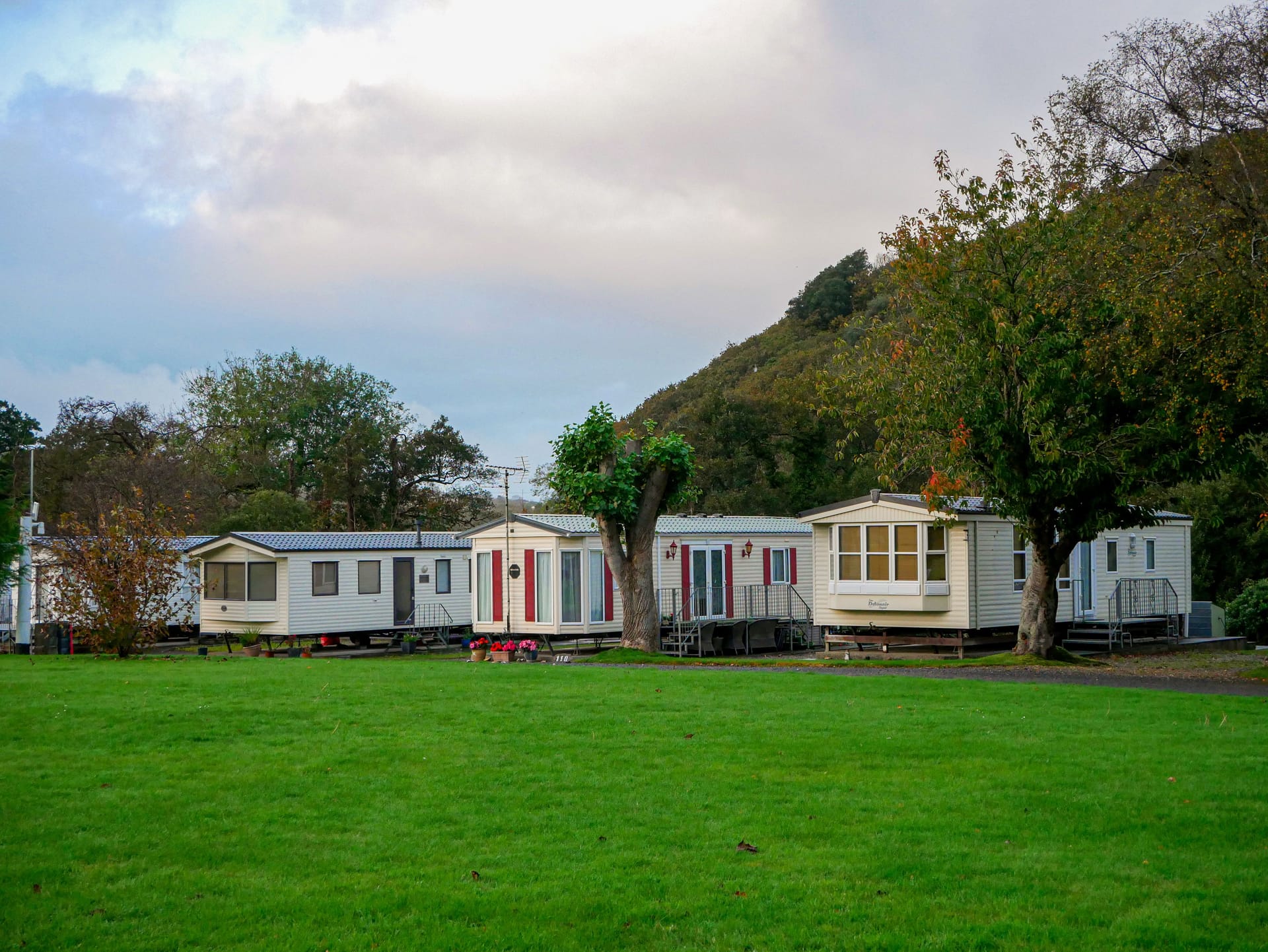
- The caravan myth. People assume they can park a caravan and live in it while they "get set up". They usually cannot. The exemption for something incidental to a house needs an existing dwelling, and bare land has none.
- The 28 day rule does not rescue this. In England you can use open land for a temporary purpose for up to 28 days in total in any calendar year without permission (14 days for a market or motor racing). But the rule specifically excludes siting a caravan and excludes camping, so you cannot use it to live on the land or to run an overnight let.
- The "56 day rule" is not the current allowance. You may see a 56 day figure quoted online, but the current permanent limit is 28 days, so work to 28. Separately, since 2023 there is a temporary recreational campsite right in England allowing up to 60 days a year with no more than 50 pitches, with facilities and prior notification to the council, but it does not permit static caravans and is not a route to living on the land.
Is there ever a way to live on your smallholding?
Sometimes, but treat it as a serious planning project, not a formality.
The main route in England is a rural worker's dwelling under the National Planning Policy Framework. The December 2024 Framework, at paragraph 84, allows an isolated home in the countryside where "there is an essential need for a rural worker, including those taking majority control of a farm business, to live permanently at or near their place of work in the countryside". In plain terms, you have to show the enterprise genuinely needs someone living on site, for example because livestock need round-the-clock attention.
Two things to know before you pin your hopes on it:
- It usually comes with an agricultural occupancy condition (an "ag tie"), which restricts who can live in the dwelling to someone working, or last working, in agriculture or forestry locally. That condition sticks with the property and affects its value and resale.
- Removing an ag tie later is hard. It generally needs evidence that there is no longer any need for the tie, including genuine, sustained but unsuccessful attempts to sell or let the property at a price that reflects the restriction. Take planning advice, and do not buy a tied cottage assuming the tie is easy to lift.
Because so much rides on the facts and figures of your specific business, get proper planning advice before you buy land or a tied dwelling on the strength of a rural worker application.
Changing what you do with the land
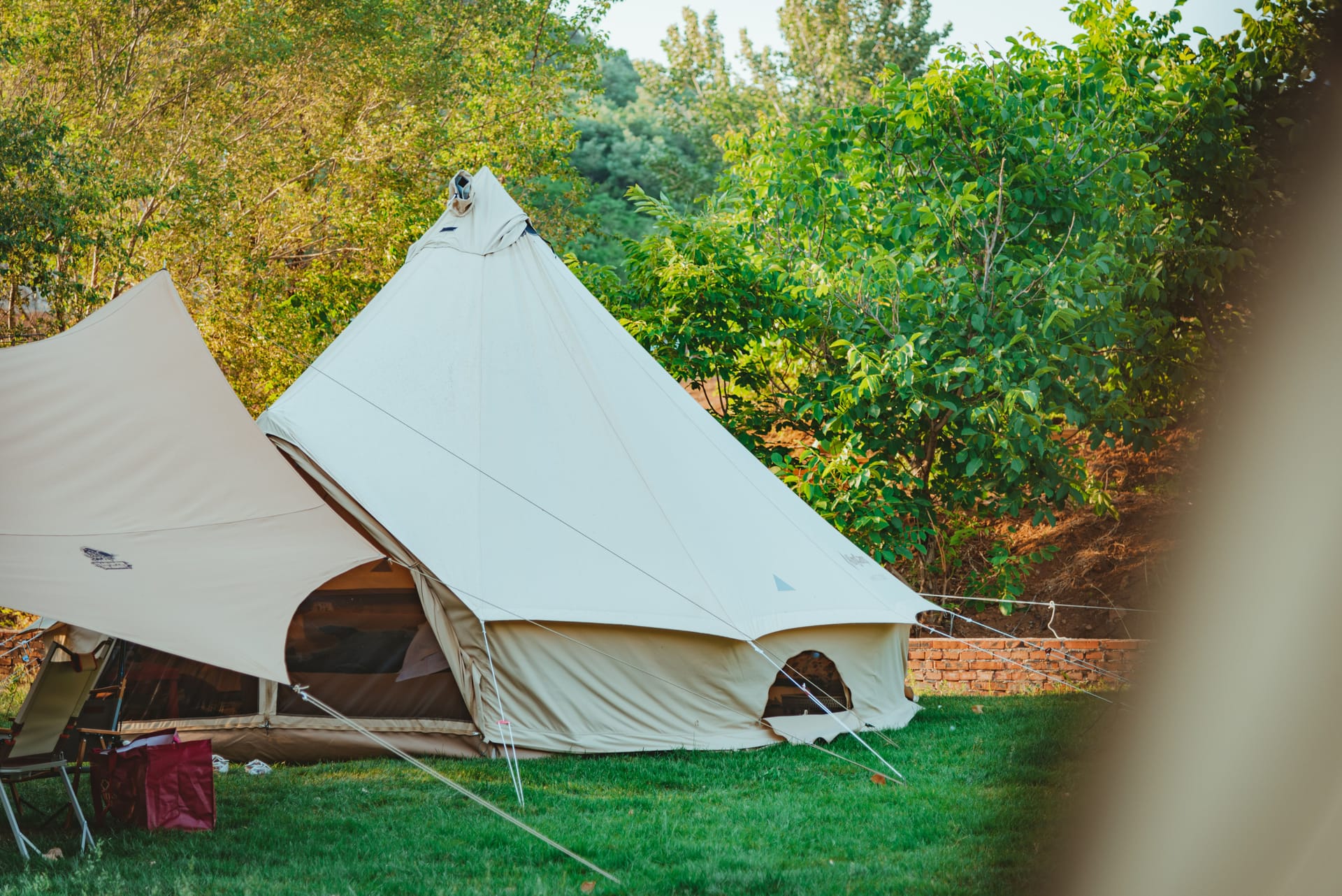
Beyond living on it, the other permission trigger is changing the use of the land to something that is not agriculture. Turning a field into a glamping site, a commercial equestrian yard, a car park or a business use can all be a material change of use that needs permission. Again, it is fact and degree, so the honest answer is often "it may, check with your local planning authority".
Horses are the classic grey area. Grazing horses on the land is generally treated as agriculture and does not need permission. But keeping, schooling, exercising or jumping them, or running a livery or riding business, is often not agriculture, and can be a change of use. Whether you have crossed that line depends on the scale and character of what you are doing, so it is a conversation to have with your local planning authority rather than a bright line you can read off a page.
Nation by nation
Planning is devolved. The principles above (farming use is usually fine, buildings and change of use may need permission) hold broadly across the UK, but the permitted development limits and the routes to living on the land differ. Always check the rules for the nation your land is in.
England. Agricultural permitted development under Part 6 of the GPDO 2015, split at 5 hectares (Class A, new buildings with prior approval) and 0.4 to under 5 hectares (Class B, extensions only, no new build). Building caps of 1,500 square metres, or 1,000 square metres for livestock and plant. Rural worker dwellings under NPPF paragraph 84.
Scotland. Permitted development for agricultural buildings sits in Class 18 of the Town and Country Planning (General Permitted Development) (Scotland) Order 1992. Buildings are allowed up to 1,000 square metres (reduced to 465 square metres within certain designated areas), the land must be at least 0.4 hectares, and there is a 400 metre "cordon sanitaire" keeping buildings for pigs, poultry and the like, and slurry stores, away from occupied buildings. See the Scottish Government's Circular 2/2024.
Wales. Wales has its own permitted development regime, and crucially its own One Planet Development policy. This is the one UK planning route that positively allows people to live in the open countryside, but it is demanding. A One Planet Development must "initially achieve an ecological footprint of 2.4 global hectares per person or less" with clear potential to move towards 1.88 global hectares over time, must meet the residents' minimum needs (food, income, energy and waste) from the land within no more than five years, with the site producing at least 65% of basic food needs (or a minimum of 30% grown or reared on site with the rest funded from other site produce), must use very low or zero carbon buildings, and must be tied to a binding management plan reviewed every five years. In short, it is a genuine route to a smallholding home, but only for a genuinely low-impact, land-based way of life.
Northern Ireland. Agricultural permitted development sits in Part 7 of the Planning (General Permitted Development) Order (NI) 2015. It excludes land under 0.5 hectares, caps buildings at 500 square metres, and requires new agricultural buildings to be within 75 metres of the main group of farm buildings and at least 75 metres from a dwelling (other than the farmer's own).
Before you build or sell: check these
- Are you just using the land for agriculture, or building something? Buildings and works are development.
- If building, does your holding meet the size threshold for agricultural permitted development, and are you inside the square-metre caps?
- Is any part of your plan a change of use (living on the land, glamping, commercial equestrian, a business)? If so, treat it as needing permission until your local planning authority tells you otherwise.
- Is the land designated (National Park, National Landscape, SSSI, conservation area, near a listed building)? Permitted development is often restricted.
- Planning on living there? Do not rely on a caravan or the 28 day rule. Take planning advice on a rural worker's dwelling, and understand the ag tie before you buy.
- Buying a property with an agricultural occupancy condition? Factor in that it limits who can live there and is hard to remove.
When it matters, check the current source for your nation and talk to your local planning authority or council planning department before you spend anything. They can give you a formal answer for your exact site, which a general guide never can.
This guide is general information, not formal legal, financial, medical or veterinary advice. UK rules, prices and best practice change, and some rules differ across England, Scotland, Wales and Northern Ireland, so always check the current position with the relevant official source (such as gov.uk, the NHS, the FSA, DEFRA or APHA, or the RHS) or a qualified professional before acting. Last checked July 2026.
Frequently asked questions
Sources
- Planning permission for farms: when you need it , GOV.UK
- General Permitted Development Order 2015, Schedule 2 Part 6 (agricultural buildings and operations) , legislation.gov.uk
- General Permitted Development Order 2015, Schedule 2 Part 4 (temporary uses of land) , legislation.gov.uk
- Town and Country Planning Act 1990, section 336 (definition of agriculture) , legislation.gov.uk
- When is permission required? (change of use guidance) , GOV.UK (Planning Practice Guidance)
- Housing needs of different groups (rural workers) , GOV.UK (Planning Practice Guidance)
- National Planning Policy Framework, December 2024, paragraph 84 , GOV.UK (Ministry of Housing, Communities & Local Government)
- Circular 2/2024: non-domestic permitted development rights (Class 18 agricultural buildings) , Scottish Government
- Planning permission: one planet developments in open countryside , Welsh Government
- Planning (General Permitted Development) Order (NI) 2015, Schedule Part 7 (agricultural buildings and operations) , legislation.gov.uk
Written by
UK Homesteading Team
Editorial team
The UK Homesteading editorial team, offering UK-specific, evidence-led guidance on growing, keeping, preserving and the law.