People ask this one hopefully, and the honest answer disappoints most of them. You have bought a lovely bit of land, you own a perfectly good caravan, so surely you can just live in it while you get set up? Almost always, no. Not as of right, and not because someone is being awkward. It is how the planning system treats what you are doing.
The key idea is simple once it clicks. Planning does not really care about the caravan itself. It cares about what you are using the land for. Turn a field into somewhere you live, and you have changed the use of that land, and changing the use is the thing that needs permission. This guide goes deep on caravans and mobile homes specifically: the change-of-use rule, what actually counts as a caravan, the three narrow exceptions people cling to, and the trap where a caravan quietly becomes a "building". For the wider picture on building and living on a smallholding, see our companion guide, do you need planning permission for a smallholding.
The short answer: no, not as of right
Living in a caravan as your home on land that is not already residential, a field used for agriculture or forestry, say, is a material change of use of that land to residential. Under the Town and Country Planning Act 1990, development includes "the making of any material change in the use of any buildings or other land", and a material change of use needs planning permission. Planning Aid England puts the caravan case plainly: living in a caravan on non-residential land "for more than 28 days any calendar year is considered a change of use of the land and therefore requires planning permission".
So the caravan is a red herring. It is the switch from "field" to "somewhere a person lives" that trips the rule. That is why buying the land does not help you, why "but it is only a static" does not help you, and why the 28 day rule does not help you either. Each of those is a common misunderstanding, and we will take them in turn.
First, what actually counts as a caravan?
This matters because the law has a precise definition, and stepping outside it changes everything.
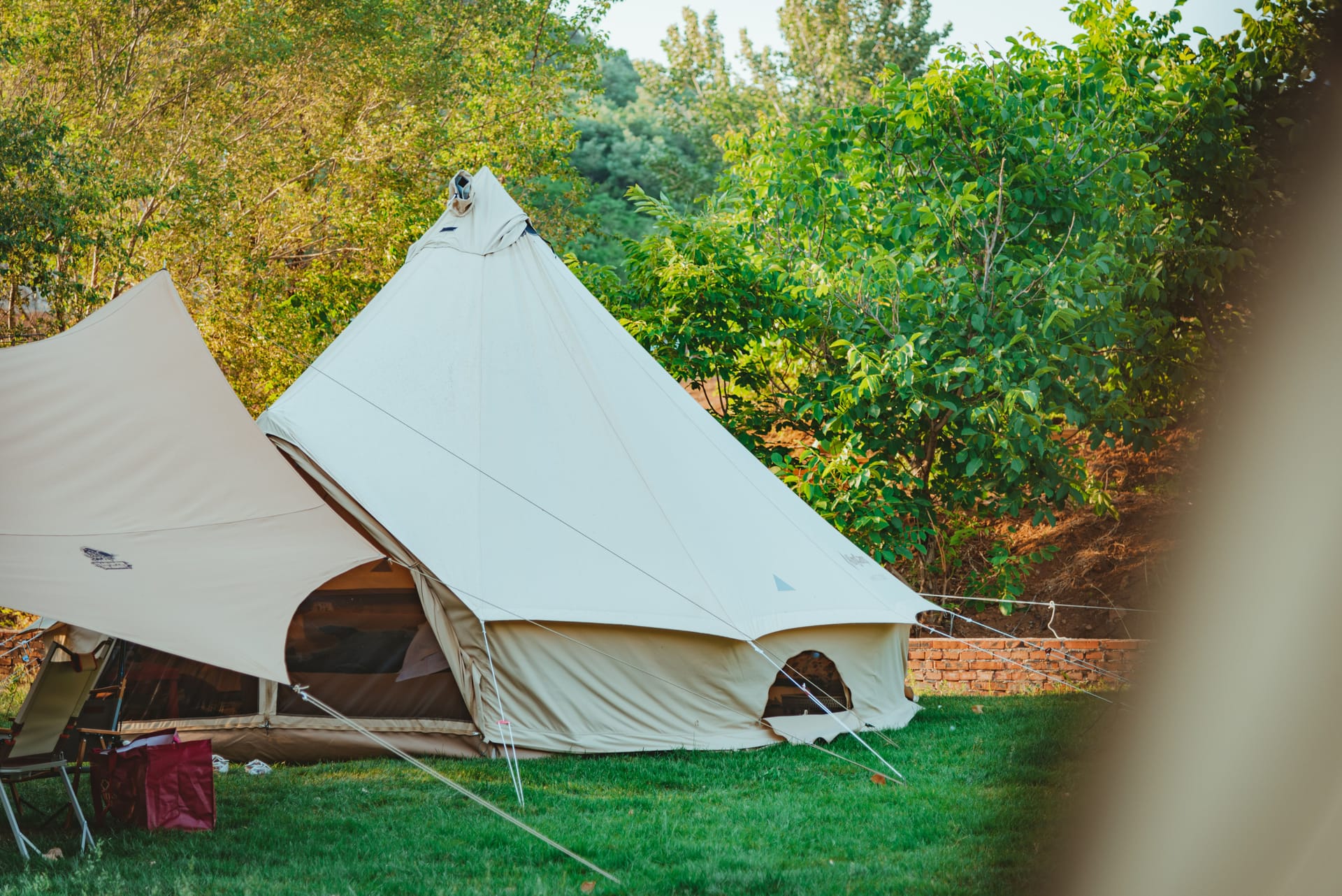
A single caravan is defined in section 29 of the Caravan Sites and Control of Development Act 1960 as "any structure designed or adapted for human habitation which is capable of being moved from one place to another (whether by being towed, or by being transported on a motor vehicle or trailer)". The Act expressly excludes railway rolling stock on rails, and any tent. Notably, a single caravan has no maximum size in law. It just has to be a habitable structure that is capable of being moved.
Bigger "twin-unit" caravans, the ones that look like small bungalows, are covered by section 13 of the Caravan Sites Act 1968. A twin-unit stays a caravan as long as it is built in no more than two sections, "designed to be assembled on a site by means of bolts, clamps or other devices", and is "when assembled, physically capable of being moved by road from one place to another". Helpfully, it does not stop being a caravan just because it needs an escort or cannot lawfully travel the public road once assembled. But it must stay within all three of these size limits (in England and Wales):
- Length: 20 metres (excluding any drawbar)
- Width: 6.8 metres
- Internal height of the living accommodation: 3.05 metres
Exceed any one of those, and the structure is no longer a caravan in law. It becomes a building, which is a different and harder planning question. Those figures are the England and Wales limits. Scotland's numbers were smaller until 2019, and Northern Ireland runs its own system, so see the nation-by-nation section below and never assume a single UK figure.
The trap: a caravan can still be a "building"
Here is the subtle one, and it catches careful people. Meeting the caravan definition does not protect you from a second, separate question: is the thing also a building? "Building" in planning law is judged on its own, and putting up a building is operational development that needs permission whatever the use of the land.
As Planning Geek summarises the case law, a structure "can satisfy every limb of the caravan definition and still amount to a building". The courts weigh three factors, following the Court of Appeal in Skerritts of Nottingham Ltd v Secretary of State (drawing on the older Barvis case): size, permanence, and the degree of physical attachment to the land. It is "a question of fact and degree every time".
In practice, the more you dig a caravan in to stay, the more it looks like a building. Structural brick or block skirting, bolting the unit to a poured raft or permanent foundations, underpinning it so that removing it would mean demolition: those tip it over into a building. Simply connecting mains services, water, drainage or electricity, does not by itself make it a building. But do enough of the "here forever" works and you can end up needing permission on two counts, the change of use and the operational development, even though you started with a perfectly lawful caravan.
The three narrow exceptions (and why most do not help bare land)
There are only a few lawful routes to a caravan you can actually live in. It is worth being clear-eyed about each, because online forums tend to oversell them.
1. Incidental to an existing house, in its curtilage
A caravan kept within the curtilage (the garden or grounds) of an existing lawful dwelling, and used for purposes incidental to enjoying that house by the household, is usually permitted development and needs no separate permission. Think an extra bedroom for visiting family, or a hobby room. Planning Aid confirms it "must however be used by family members and guests for uses in connection with the main house" and "cannot be rented out for holiday use".
The catch is right there in the word "existing". This exception needs a lawful house already on the land for the caravan to be incidental to. On a bare field there is no dwelling, so there is nothing for the caravan to be incidental to, and this route simply does not apply. It is the single most misapplied exception in the caravan world.
2. A temporary caravan for a rural worker
Where a genuine farming or forestry business needs a worker living on site, a council may grant a temporary permission for a caravan while the case for a permanent dwelling is built up. This is an application, not a right, and it is not easy. Drawing on the Farmers Weekly guidance, you would typically need to show:
- a functional need for a full-time worker to be on site (for example, livestock needing round-the-clock attention), such that the business would be threatened if no one could live there;
- that the business is on a sound financial basis. Assessors often look for it to have been profitable at least once in the past three years, supported by a full analysis of three years' accounts. This "financial test" comes from Annex A of the now-withdrawn PPS7, so it is no longer national policy, but planners and inspectors still commonly refer to it;
- that no other suitable accommodation is available nearby.
Where a business is not yet three years established, the usual advice is to "apply for permission for a temporary dwelling such as a static caravan or cabin", which buys time to prove the enterprise before applying for a permanent home later. Many hobby or lifestyle smallholdings will not clear the functional-need and financial tests, so get proper planning advice before you buy land on the strength of this.
3. A temporary or personal permission
A council can grant a time-limited permission (for example three years) or a permission personal to a named applicant. These are discretionary and case-specific, often used to test whether a use is acceptable before anything permanent is allowed. Useful in the right circumstances, but not something you can assume.
The 28 day rule does not let you live in a caravan
This is worth its own heading because so many people pin their hopes on it.
The 28 day rule (Part 4, Class B of the General Permitted Development Order) lets you use land for a temporary purpose for up to 28 days in total in any calendar year without permission. It is genuinely handy for a one-off event or a seasonal sale. But it fails for living in a caravan on two counts. First, the right is "expressly not available where the use of the land is for a caravan site", so the one use everyone wants it for is carved out. Second, it only authorises a temporary use of land, not somewhere to live. As Planning Geek puts it, living in a caravan "is not a 28-day activity that stops and restarts... it is a continuing residential use, and that needs planning permission in the ordinary way".
A couple of details people miss: the 28 days are an aggregate across the whole year for the planning unit, not 28 consecutive days per activity, and set-up and clear-up days count towards the total. You may also see a "56 day rule" quoted online. That is not the permanent allowance, which is 28 days. None of it is a route to living on the land.
Supporting works usually need permission too
Even if you cracked the caravan question, living somewhere brings works, and works have their own planning life. Planning Aid is clear that the things that make land liveable, "the construction of an access or parking area, decking and outbuildings, laying of hardstanding/permanent foundations, installation of utilities/services connections", will also typically need planning permission. So a plan that quietly assumes a driveway, a hardstanding, a septic tank and a services connection is really several planning questions stacked together, not one.
Keep two more systems in mind. A caravan site can need a site licence under the 1960 Act, which is separate from planning permission and cannot stand in for it (you need the planning use to exist first). And building regulations are a different regime again. Do not treat any one green light as the whole answer.
Nation by nation
Planning is devolved. The core rule, that living in a caravan on non-residential land is a change of use needing permission, holds across the UK. But the caravan size limits and the positive routes differ, so check the rules for your nation.
England. The change-of-use rule applies as above. Twin-unit caravans follow the England and Wales limits of 20 m length, 6.8 m width and 3.05 m internal height under section 13 of the 1968 Act. The main lawful route to living on a working holding is a rural worker's dwelling, covered in our smallholding planning guide.
Wales. The same change-of-use principle applies, and the twin-unit dimensions match England. Wales also has a distinctive positive route: One Planet Development (OPD), which can allow a truly low-impact home, including a caravan, in the open countryside. It is demanding, not a loophole. Under the Welsh guidance an OPD "should initially achieve an ecological footprint of 2.4 global hectares per person or less" with clear potential to move towards 1.88 global hectares over time, must meet residents' minimum needs for food, income, energy and waste from the site within no more than five years (realistically producing "at least 65% of basic food needs"), must use very low carbon buildings, and must be tied to a binding management plan reviewed every five years. Welsh proposals are "closely scrutinised". A note of caution: the Welsh definition of a caravan is subject to a pending legislative change, so confirm the current position with the Welsh Government before relying on the detail.
Scotland. The same principle applies: residential use of the land is a change of use, and caravans do not carry the permitted development rights a dwellinghouse would. The twin-unit size limits were raised in 2019 to align with England and Wales, to 20 m length, 6.8 m width and 3.05 m internal height. Before the 2019 Order, the Scottish limits were smaller, at 18.288 m length, 6.096 m width and 3.048 m internal height. So an older source may quote the smaller figures.
Northern Ireland. Northern Ireland runs a separate planning system, with applications made to the local council, and it has its own caravans legislation. The change-of-use principle applies, but we have not verified the current Northern Ireland twin-unit dimensions for this guide, so we are not stating them. Check with your council and the current NI legislation.
The traps people fall into
- "It is a static, so it is fine." A dangerous myth. Whether it is static or touring is beside the point. What matters is the change of use of the land, and whether the unit has become a building.
- "I own it, so I can live on it." Ownership is not planning permission. The two are separate.
- "The 28 day rule covers me." It does not. Caravan sites are carved out of it, and it is a temporary use of land, not permission to live.
- "I will pop a caravan next to nothing and call it incidental." The incidental exception needs an existing house. Bare land has none.
- "The farm caravan is automatic." It is an application with real functional-need and financial tests that many hobby holdings fail.
- "I will just concrete it in properly." That is exactly what turns a caravan into a building and adds a second permission you now also lack.
- Forgetting the extras. Access, hardstanding, drainage and services typically need their own permission, and a site licence and building regulations are separate again.
Before you move a caravan on: check these
- Is the land already residential, or is it a field? If it is not residential, living in a caravan on it is a change of use that needs permission.
- Is your unit within the legal caravan definition, and within the twin-unit size limits for your nation? Step outside them and it is a building.
- Are you relying on the "incidental to a house" exception? Then there must be an existing lawful dwelling on the land. Bare land does not qualify.
- Is there a genuine, provable business case for a rural worker's caravan, with the accounts to back it? If not, do not count on it.
- Have you factored in the supporting works (access, hardstanding, drainage, services), each of which usually needs its own permission?
- Is the land designated (Green Belt, National Park, National Landscape, conservation area)? The rules tighten further.
- In Wales, is One Planet Development a realistic fit, given how demanding it is? In Scotland, are you using the post-2019 dimensions?
When it matters, and here it really does, check the current legislation.gov.uk or gov.uk source for your nation and speak to your local planning authority or council planning department before you move anything on. A pre-application enquiry gives you a formal answer for your exact site, which a general guide never can, and it is far cheaper than an enforcement notice on a home you have already moved into.
This guide is general information, not formal legal, financial, medical or veterinary advice. UK rules, prices and best practice change, and some rules differ across England, Scotland, Wales and Northern Ireland, so always check the current position with the relevant official source (such as gov.uk, the NHS, the FSA, DEFRA or APHA, or the RHS) or a qualified professional before acting. Last checked July 2026.
Frequently asked questions
Sources
- Caravan Sites and Control of Development Act 1960, section 29 (definition of 'caravan') , legislation.gov.uk
- Caravan Sites Act 1968, section 13 (twin-unit caravans and dimensions) , legislation.gov.uk
- Town and Country Planning Act 1990, section 55 (meaning of 'development' and change of use) , legislation.gov.uk
- Living in a caravan or other moveable structure , Planning Aid England (RTPI)
- Can I keep a static caravan on my property? , Planning Portal (MHCLG / TerraQuest)
- The 28 day rule: why it does not let you live in a caravan (Part 4, Class B GPDO) , Planning Geek
- When is a caravan a building? (fact and degree) , Planning Geek
- General Permitted Development Order 2015, Schedule 2, Part 4 (temporary buildings and uses) , legislation.gov.uk
- Farmworker dwelling permission: what you need to know , Farmers Weekly (FWi)
- One Planet Development: Practice Guidance (companion to Technical Advice Note 6) , Welsh Government
- The Caravan Sites Act 1968 (Amendment of Definition of Caravan) (Scotland) Order 2019: BRIA , Scottish Government
Written by
UK Homesteading Team
Editorial team
The UK Homesteading editorial team, offering UK-specific, evidence-led guidance on growing, keeping, preserving and the law.