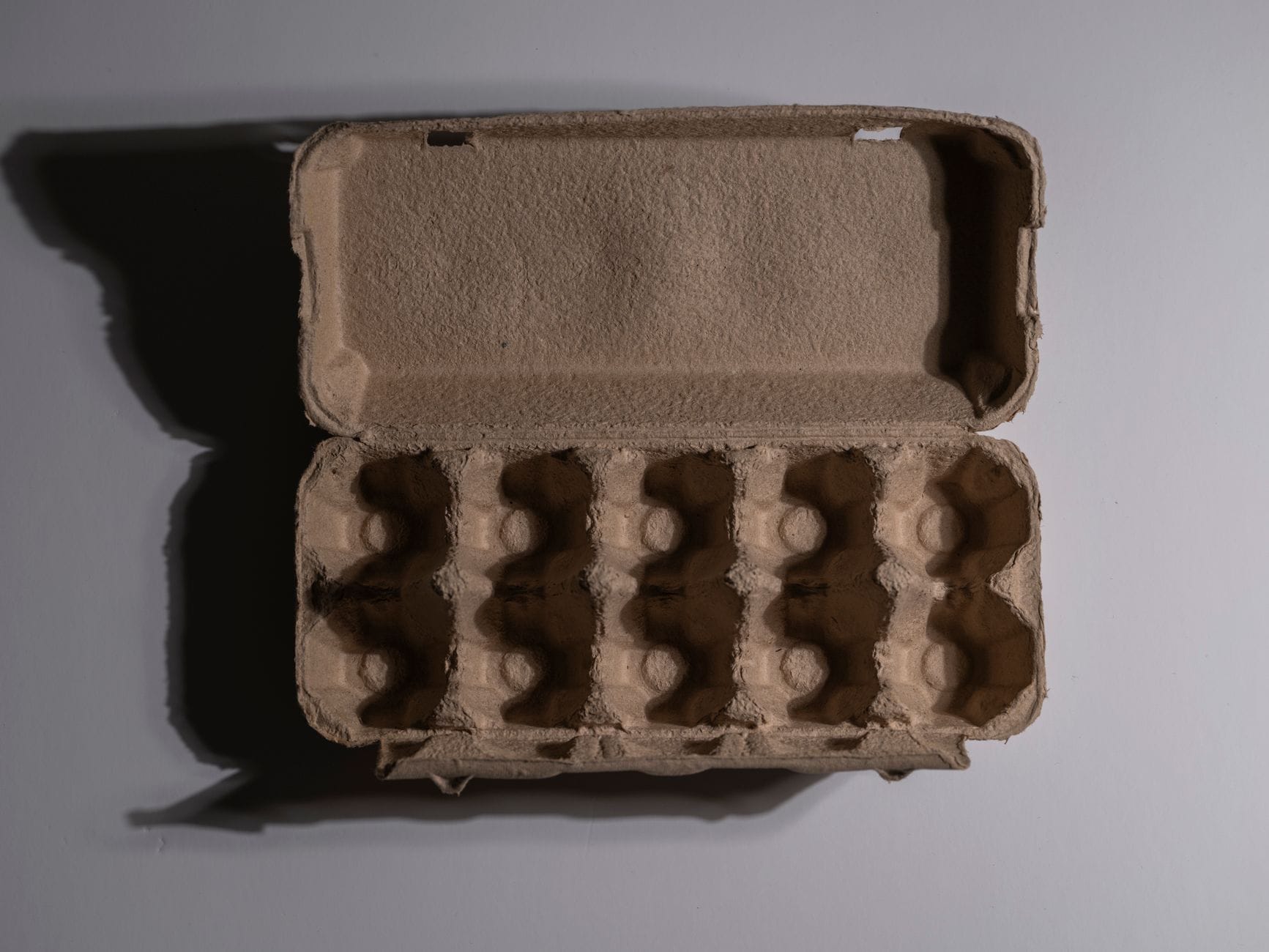
You started with a few hens for your own eggs, and now the fridge door will not shut. Six good layers can produce around 200 eggs each a year, so even a small flock produces around 30 eggs a week, more than most families can get through, and it all arrives in a glut. Selling the extras is the obvious move. The trick is to go in with the right expectations: this is not a business that will pay you a wage, it is a neat way to make your hens close to self-funding and, quietly, to pull paying customers up your drive.
This page is about the money and the method: where to sell, how to price, how to present your eggs, and how big you can get before casual selling turns into a regulated poultry business. A separate law page handles the labelling detail, and there is a short "Keep it legal" box at the end that points you to it.
The honest economics: eggs pay the feed, rarely a wage
Be clear-eyed about the money before you paint a sign. As the poultry writer Andy Cawthray puts it on Poultry Keeper, selling surplus eggs "is not a get rich quick scheme, but it's certainly a way of helping fund the hens' upkeep." That is exactly the right frame. The point of selling is to stop the eggs going to waste and to make a contribution to the cost of keeping the hens, not to turn a profit you could live on.
The commercial numbers prove why. The British Free Range Egg Producers Association, through its ADAS costings, tracks the real economics of the sector, and in a rare good month those costings showed a profit of just £0.36 per bird, or 1.30p per dozen, described as "a first in 7 years" because the sector had been running at a loss for years before it. Feed alone was around 70p a dozen. If a producer with thousands of birds and every economy of scale is scrapping over pennies a dozen, a smallholder buying pellets by the bag has no route to a wage from eggs. Your feed costs more per dozen than theirs, and your hens lay less predictably.
So set the target where it belongs: cover the feed, empty the fridge, and treat any surplus cash as a bonus. The real prize is not the egg money at all. It is that a box of eggs at the gate is the cheapest advertising you will ever run, and the customer who stops for eggs is the one who will later buy your jam, your surplus veg, your bedding plants or your point-of-lay pullets. Eggs are the loss-leader that builds the footfall.
Where to sell: start at the gate
You have more options than you think, and they are not equal. The best first channel for almost everyone is your own gate, because it has no travel time, no pitch fee and it brings buyers to you.
| Channel | What it suits | The catch |
|---|---|---|
| Gate honesty box | A gate with passing cars or footfall; low-effort weekly sales | Relies on trust; occasional non-payment; needs a tidy, dated display |
| Egg vending machine | Steady demand and enough birds to keep it stocked 24/7 | Real upfront cost; only pays off with volume and a busy roadside spot |
| Workplace / standing order | A quiet lane but a busy workplace, or friends and neighbours | You carry the eggs to them; keep a simple order list |
| Local market stall | Shifting a bigger surplus and meeting customers face to face | Pitch fee, travel, early start; 50-bird rule bites for market sales |
| Farm shop / restaurant | A serious, regular volume you can guarantee | Needs graded eggs from a registered packing centre - a big step up |
| Alongside other produce | Any of the above, once eggs bring the footfall | Nothing much - this is where the real margin lives |
The honesty box is the classic starting point, and it genuinely works. On the Horse & Hound forums, smallholders selling this way describe a box outside the house that "holds 7 dozen, some days we have to refill it a couple of times," with only the odd problem: one seller found someone dropping in foreign or old coins and reported that "I put a very abrupt note in the box and it stopped." Losses are usually small and most buyers are scrupulous, so do not let the fear of the odd pinched box put you off. If your lane is quiet, the same forum sellers point to the answer: skip the box and build a regular order round instead.
At the other end, some farms have scaled the gate model into 24/7 egg vending machines. The Roadside Stall directory lists real UK examples, from Ivinghoe Egg Store in Buckinghamshire and The Nest Box run by Haddon Hens in Somerset to Watergo Farm near Derby, which sells its eggs alongside its own farm ice cream. A vending machine sells around the clock without anyone manning it, but it is a real capital outlay that only makes sense once you have the birds and the passing trade to keep it filled. Do not buy one to sell three dozen a week. Our guides on farm-gate stalls and farm shops and the roadside honesty box cover the practicalities of each.
Pricing: above the supermarket, below the premium
Pricing surplus eggs is mostly about confidence. Because you carry none of a supermarket's shop, packing and haulage overheads, you can easily undercut them, which is exactly why you should not. Your eggs are fresher, often laid that day, from hens that actually range, and they are worth more than a value box.
Andy Cawthray's advice on Poultry Keeper is to "research prices locally" and to price so "the income makes a contribution to the cost of keeping the hens," while staying an attractive alternative to the shops. That gives you a simple corridor. The floor is your feed cost: with commercial free-range feed at roughly 70p a dozen and backyard feed usually dearer per dozen, anything below about that mark is selling at a loss. The ceiling is what local premium and farm-shop eggs fetch. Sit in between, pick a round, easy number per half-dozen or dozen, and hold it steady. If you are selling out within an hour of filling the box, you are too cheap, so nudge it up.
Where you can genuinely charge more is the eggs a supermarket cannot sell. Rare-breed eggs, and mixed boxes of blue, green, olive and dark-brown shells from breeds like Cream Legbar, Marans and Araucana, are a premium product precisely because they are unavailable in the shops. A "rainbow" half-dozen photographs beautifully, sells itself, and justifies a higher price. If you are choosing which hens to add to the flock, coloured layers earn their keep at the gate.
Presentation and keeping customers coming back
A little care turns a casual buyer into a weekly regular. Keep the eggs clean but unwashed: washing strips the natural "bloom" that protects the egg, so wipe off any muck, set aside anything cracked or dirty for your own kitchen, and only box the good ones. Give every box a best-before date - eggs keep around 28 days from lay if stored cool - so customers know they are getting eggs days old, not the fortnight-old shop alternative, which is your single biggest selling point.
Boxes can be reused to keep costs down, and asking regulars to bring theirs back gives you a free, steady supply. The one rule: if a reused box carries another producer's branding or date, cover or remove it so you are not selling under a false label. Plain new boxes look smarter for a market stall or a premium coloured-egg line, but honest reused boxes are fine at the gate.
Then make the sign do some work. A clear, friendly board with your price, "laid daily" or the day's date, and a line of character sells better than a scrap of cardboard. This is also how a gate box graduates into something steadier. Horse & Hound sellers describe exactly that path: one "built up some customers who have a regular order so have now dispensed with the box," having grown from seven hens to around forty as demand grew. Take names and numbers, offer to hold a box back, and a message when you have a glut turns spare eggs into guaranteed sales. That regular list is worth far more than the passing trade.
Know your ceiling: the 50-bird and packing-centre limits
Casual egg selling has a natural cap, and it is worth knowing before your flock quietly grows into a problem. In broad terms, as summarised by Business Companion and gov.uk's egg marketing standards, selling only direct to consumers with fewer than 350 hens keeps you out of the main egg-marketing producer registration. But two lower thresholds bite sooner for a smallholder.
The first is the 50-bird line for markets: sell ungraded eggs at a local public market with 50 or more hens and you tip into registering as a producer. Below 50 hens you can sell at markets under lighter rules. The second is the packing centre. To grade eggs as Class A - which you must do to supply shops, bakeries or restaurants - you have to be an approved, registered packing centre, which is a formal, inspected operation most smallholders will never take on. That is why you cannot simply drop a few dozen into the village shop or the local pub without crossing into the commercial rules.
The upshot is a clear ceiling. Relaxed gate-and-door selling realistically tops out at a flock in the low dozens. Push past that, or start chasing shops and markets, and you are no longer selling a surplus, you are running a regulated poultry business with the registration, grading and record-keeping that brings. For most smallholders, the sweet spot is a flock small enough to stay simple and eggs good enough that the gate never runs dry.
This page is general business information for smallholders, not financial, tax or legal advice. Egg-selling rules and thresholds change and are enforced locally, so confirm the current position with your local authority and the sources linked above before you sell, and speak to an accountant about tax on any income. Last checked July 2026.
Frequently asked questions
Sources
- Selling Eggs Off the Gate: What are the rules? , Poultry Keeper (Andy Cawthray)
- The Ultimate Map of Fresh Farm Eggs: Vending Machines and Honesty Boxes , Roadside Stall
- Does anyone have an honesty box for eggs? , Horse & Hound Forums
- A first in 7 years: ADAS costings show profit for free range egg producers , Farmers Guide (BFREPA / ADAS costings)
- Egg producers selling directly to consumers , Business Companion (Chartered Trading Standards Institute)
- Egg marketing standards , Department for Environment, Food & Rural Affairs (GOV.UK)
- Poultry - Selling your own Eggs , Farm Advisory Service (Scotland)
- The Accidental Smallholder forum: selling eggs discussions , The Accidental Smallholder
Kit for this job (Ad)

Nicewell Food Scale Digital Weight Grams and oz, 22lb Kitchen Scale for Cooking Baking, 1g/0.1oz Precise Graduation, Sleek Tempered Glass Platform | 1g/0.1oz Precise, Backlit LCD, Tare Function, Easy Clean,Weight Grams and Ounce
Check price on Amazon →
Nicewell Food Scale, 22lbs Digital Kitchen Grey Stainless Steel Scale Weight Grams and oz for Cooking Baking, 1g/0.1oz Precise Graduation,Tempered Glass (Dark Gray) | Stainless Steel, 1g/0.1oz Precise, Backlit LCD, Tare Function, Easy Clean,Weight Grams and Ounce
Check price on Amazon →
Supa Half Dozen Egg Boxes x 24-Pieces, Traditional Fibre Egg Box, 100% Recyclable and Biodegradable. Packs are Designed to Take Chicken Eggs from Small to Extra Large.
Check price on Amazon →
30 1/2 dozen new grey egg boxes - includes sheet of 24 Labels
Check price on Amazon →We may earn a small commission, at no cost to you. We only list kit we'd use.
Written by
UK Homesteading Team
Editorial team
The UK Homesteading editorial team, offering UK-specific, evidence-led guidance on growing, keeping, preserving and the law.