Selling a few jars of jam or a dozen eggs from the gate feels like it should be simple, and mostly it is. The form sounds official, but registering as a food business is free, quick, and no one can turn you down. The part that trips people up isn't the paperwork. It's working out whether you need to fill it in at all, and here the answer turns on one thing: whether your food is still raw, or you've done something to it.
This guide is general information, not legal advice. Food law is broadly the same across the UK but is guided by different bodies, and the rules change. Always check the current gov.uk or Food Standards page and speak to your own local authority before you start.
Do you actually count as a food business?
The test is regularity and organisation, not profit. You might think of it as a hobby or a bit of pocket money, but food law looks at how you operate, not what you call it.
That has three consequences worth spelling out:
- Profit doesn't decide it. Supplying food for free, at a charity or fundraising event for example, can still count. The council looks at regularity and organisation, not your margin.
- There is no magic number. FSA guidance sets no pound value and no number-of-sales threshold below which you are automatically exempt. Anyone who tells you "under X you don't need to register" is inventing a line that isn't in the guidance.
- Where you sell doesn't matter. Registration applies whether you trade from a shop, your own home kitchen, a stall, a van, a market, or only online through a website or social media. If you sell to people at a distance without meeting them, you still register.
The person responsible is the food business operator (FBO): the individual, charity or company that makes the decisions about what the business serves and how it runs.
There is one soft edge. For a truly one-off event, gov.uk says that "if the food activity is very limited and infrequent, the local authority may decide that registration is not needed." That is the council's discretion, not a rule you can rely on, and the food must still be safe to eat.
Primary vs processed: the line that decides it
This is the single most misunderstood point, so it's worth getting exactly right. Food law splits what you sell into primary (unprocessed) products and everything you've processed. The exemption from registration only ever touches the first group.
Primary products are the raw outputs of growing and keeping animals: fruit and vegetables, and eggs. Under the food hygiene rules, small quantities of these, supplied direct, can sit outside the registration requirement.
The catch is in the word primary. The guidance is blunt: "Any further processing of these products is not considered primary production." Turn your fruit into jam, your milk into cheese, your flour into bread, or cook anything, and it stops being a primary product. At that point the exemption falls away and you must register.
| What you sell | Registration |
|---|---|
| Raw eggs, direct to local buyers, small quantities | May be exempt (confirm with your council) |
| Uncut fruit and veg you grew, sold at the gate | May be exempt (confirm with your council) |
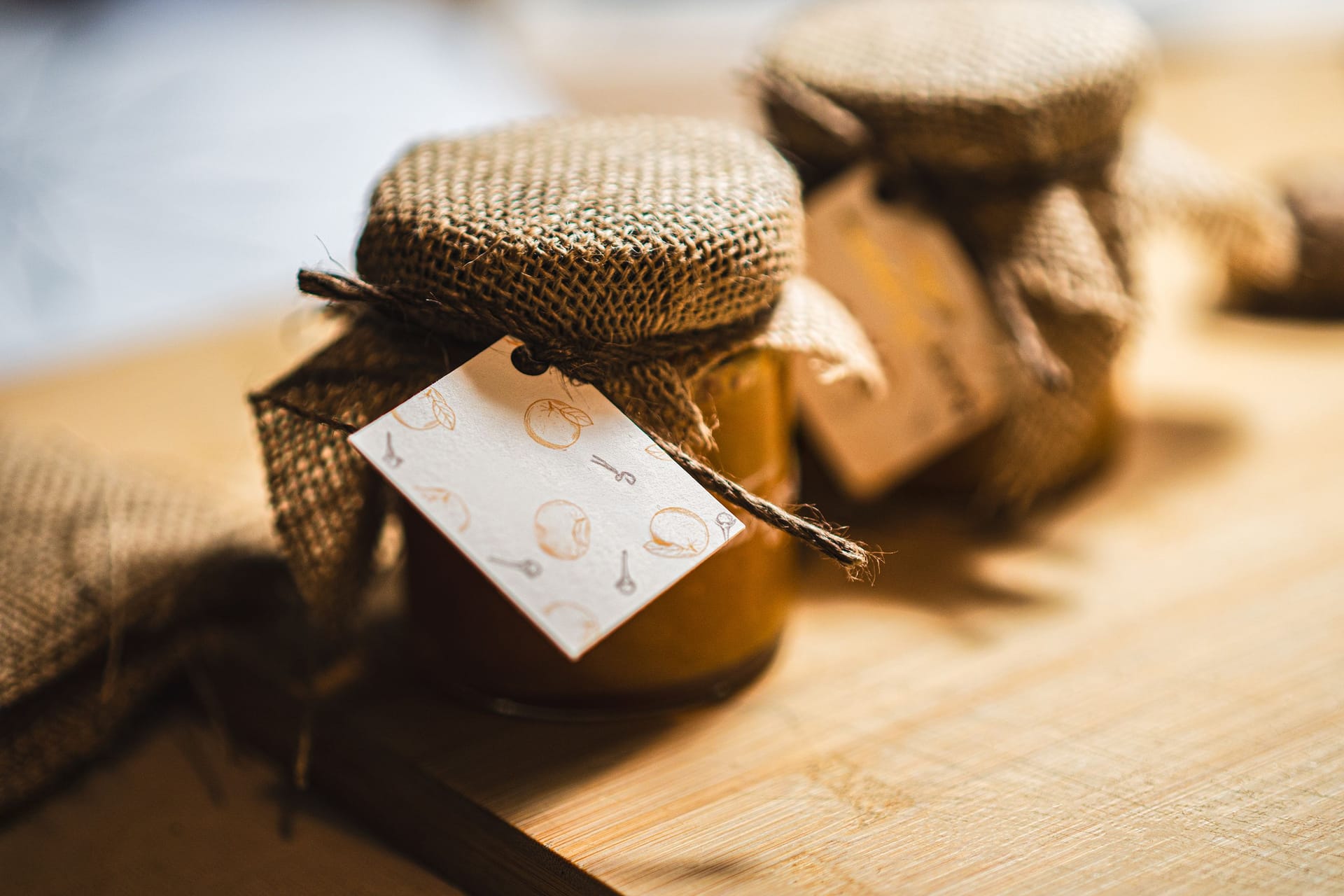
| Jam, marmalade, chutney or preserves | Required |
| Bread, cakes, biscuits, pastries | Required |
| Cooked or hot food, ready meals, sauces | Required |
| Cheese, yoghurt or other dairy you made | Required (and possibly approval) |
And even when you are exempt, you are not off the hook entirely. Regulation 178/2002, the foundation of food law, still applies. That means two things: the food you supply must be safe for people to eat, and you must keep traceability records, a simple "one step back, one step forward" note of who supplied you and who you supplied. As Food Standards Scotland puts it, being exempt from the hygiene registration "does not necessarily mean you are exempt" from these general duties.
What counts as "small quantities" and "local" is left to your environmental health officer's judgement. Food Standards Scotland defines local supply as within the same local authority, immediately neighbouring authorities, or no more than 30 miles / 50 km from your authority's boundary, whichever is greater, and never beyond the UK (with a narrow exception for Northern Ireland supplying the Republic of Ireland). Treat those as a guide and confirm the detail with your own council.
How to register, and when
Registering is deliberately easy, because the point is to have you on the council's radar, not to vet you.
Registering, step by step
- 1
Don't register too early
Wait until about 28 days before you are actually ready to start. If you are already trading and haven't registered, register now, because it is a legal requirement.
- 2
Use the right route for your nation
In England, Wales and Northern Ireland, register online at register.food.gov.uk/new. In Scotland, register with the environmental health service at your local authority.
- 3
Register every site
If you operate from more than one location, register each one with the authority where it sits.
- 4
Expect an inspection
Once you register, the local authority will inspect your food business and rate it. In England, Wales and Northern Ireland that is a score from 0 to 5 under the Food Hygiene Rating Scheme; Scotland uses the Food Hygiene Information Scheme instead, which gives a Pass or an Improvement Required result. Working from home is fine, but your kitchen becomes subject to the same checks.
A few things people forget:
- A food hygiene certificate is not compulsory, but training is strongly recommended and helps you pass inspection.
- Allergen rules apply to every registered food business. You must give customers accurate information about the 14 major allergens in your food, and follow labelling law. If your activity is exempt and unregistered you are not legally required to, but the Food Standards Agency still recommends you do.
- Tax is separate. Registering as a food business does not tell the taxman anything. If you start earning, you also need to tell HMRC you are self-employed. There is a tax-free trading allowance for small amounts of income; check the current figure on gov.uk.
Eggs: two separate registrations, sometimes three
Eggs cause more confusion than anything else, because two different systems apply and people mix them up.
- Food business registration with your council. If you sell eggs for people to eat, you are a food business and this page applies to you.
- APHA egg production site registration. This is a separate marketing registration that only kicks in above certain sizes. You must register your premises as an egg production site with APHA if you send eggs for grading at a packing centre, have 50 or more hens and sell ungraded eggs at a local public market, or have 350 or more hens. If instead you sell your eggs directly to consumers from your own farm or door to door in your local area, you do not need to stamp a producer code on them, whatever your flock size, and you sit outside egg production site registration as long as you stay below those market and 350-hen thresholds. Where the eggs are unstamped, show your name and address on a notice.
There is also a third, unrelated duty. All keepers of poultry must register their flock, whatever the size, even a single hen: with APHA in England and Wales, on the Scottish Kept Bird Register in Scotland, and with DAERA in Northern Ireland. That is a bird-health register, separate again from both the council registration and the egg marketing registration. Check the current gov.uk poultry registration page.
Honey: register to be safe
Honey sits in an awkward gap. Some guidance treats honey as a primary product, which would point towards the small-quantities exemption, but there is no single, definitive UK source that settles it, and local authorities commonly advise honey producers to register anyway.
Our steer: treat yourself as a food business, register (it is free and can't be refused), and ask your local authority directly whether the small-quantities exemption applies to your set-up. You lose nothing by registering, and honey labelling rules apply regardless of the answer.
Nation by nation
The core law is shared across the UK, because it comes from the same assimilated regulations (registration sits in Article 6 of assimilated Regulation 852/2004; the key definitions are in Regulation 178/2002). What differs is the guidance body and the admin route.
- England, Wales and Northern Ireland: guided by the Food Standards Agency. Register online at register.food.gov.uk/new, free, at least 28 days before trading.
- Scotland: guided by Food Standards Scotland. You register with the environmental health service at your local authority, at least 28 days before opening. Registration is still free. Some businesses handling meat, fish, egg or dairy products for supply to others may need approval rather than registration.
- Northern Ireland note: the "local supply" definition allows supply from Northern Ireland to the Republic of Ireland, unlike the rest of the UK where local never extends beyond UK borders.
If you are unsure which side of a line you fall, your local authority's environmental health team is the right first call in every nation.
The traps people fall into
- "It's only a hobby, I don't make a profit." Profit isn't the test. Regular and organised supply is, and free food can count.
- "The egg and veg exemption covers my jam too." It doesn't. Processing removes the exemption, every time.
- Registering months in advance. Wait until roughly 28 days before you start. Registering too early is discouraged.
- Assuming honey is automatically exempt. It isn't settled. Confirm with your council.
- Forgetting the extras. Allergen labelling applies once you are a registered food business, and telling HMRC you are self-employed is a separate job from registering the food business.
Before you build or sell: check these
- Are you supplying food on a regular, organised basis? If yes, assume you are a food business.
- Is what you sell raw (primary) produce, or have you processed it? Processed means register.
- If you might be exempt, can you still show safe food and traceability records? You must.
- Selling eggs? Check council registration, APHA egg rules and flock registration separately.
- Selling honey? Register to be safe and confirm the exemption with your council.
- Have you sorted allergen labelling and told HMRC you are self-employed?
- Have you registered at least 28 days before you plan to start, and not too early?
When you are ready, register through the current gov.uk food business registration page (or your local authority in Scotland), and if anything about your set-up is borderline, call your local authority's environmental health team before you trade. They would far rather advise you now than inspect a surprise later.
This guide is general information, not formal legal, financial, medical or veterinary advice. UK rules, prices and best practice change, and some rules differ across England, Scotland, Wales and Northern Ireland, so always check the current position with the relevant official source (such as gov.uk, the NHS, the FSA, DEFRA or APHA, or the RHS) or a qualified professional before acting. Last checked September 2026.
Frequently asked questions
Sources
- Food business registration , Food Standards Agency
- Register a food business (online service) , Food Standards Agency
- Starting a food business , Food Standards Agency
- Providing food at community and charity events , Food Standards Agency
- Registering a food business (Scotland) , Food Standards Scotland
- Small producers, direct supply and the food hygiene regulations (Scotland) , Food Standards Scotland
- Regulation (EC) No 852/2004 on the hygiene of foodstuffs (assimilated law) , legislation.gov.uk
- Regulation (EC) No 178/2002 general principles of food law (assimilated law) , legislation.gov.uk
- Egg marketing standards , Department for Environment, Food & Rural Affairs
- Register as a keeper of fewer than 50 poultry or other captive birds , Animal and Plant Health Agency
Written by
UK Homesteading Team
Editorial team
The UK Homesteading editorial team, offering UK-specific, evidence-led guidance on growing, keeping, preserving and the law.