Turn on a tap in Britain and you get something most of the world would envy: clean, disinfected water that won't give you cholera. That's a genuine triumph, and it's worth saying plainly before anything else. But the official line, that UK tap water is "safe and tightly regulated", does a lot of quiet work. Safe against the things that once killed people, yes. Free of anything you might not want to drink over a lifetime, no. "Meets the legal limits" and "pure" are two very different claims, and the gap between them is where an informed person starts asking questions. Here's the honest picture of what's actually in your glass, and what genuinely removes it.
"Safe" and "pure" are not the same thing
Let's be fair to the tap first, because our case only holds if we're honest. Public water in England and Wales is overseen by the Drinking Water Inspectorate, an independent regulator, and companies must meet the legal limits in the Water Supply (Water Quality) Regulations. Testing is relentless, and over 99.9% of the millions of tests each year meet the standards. Chlorinating drinking water, brought in across the decades after John Snow traced a cholera outbreak to a Soho water pump in 1854, near-eliminated cholera and typhoid in this country and is rightly listed among the great public-health achievements of the last century. None of that is marketing. It's real, and we are firmly not telling anyone the mains supply is poison or that disinfection is pointless.
Here's the "but". A legal limit is a risk-managed threshold, not zero. Nitrate is permitted up to 50 mg per litre. Lead is permitted up to 10 micrograms per litre, yet the World Health Organization says there is no known safe level of lead at all. "Meeting the limit" can mean sitting just under a number that still isn't nothing.
And there's a second gap the reassurance skates over: the last few metres of pipe are yours, not the water company's. Water can leave the treatment works spotless and still pick up lead from your own plumbing. Compliance measured at the works is not the same as what comes out of your kitchen tap.
What's actually in UK tap water
Here's the honest run-down, each graded by how strong the evidence really is, so you can decide what matters to you. This is a health topic, so we've kept the strong claims strong and flagged the uncertain ones as uncertain.
- Chlorine and chloramine (added on purpose). The disinfectant that keeps the network safe leaves a residual you can taste and smell. Not a toxicity worry at tap levels; the honest reason to remove it is taste, and carbon does that easily. Evidence for filtering: taste, strong; direct health harm, weak.
- Trihalomethanes (THMs) and disinfection by-products. When chlorine meets natural organic matter in the water, it forms by-products, capped at 100 micrograms per litre total. A 2020 study in Environmental Health Perspectives estimated that around 1 in 20 bladder cancer cases across the EU could be attributable to long-term THM exposure, with the UK among the higher-exposure countries. Evidence: moderate to strong, and one of the better reasons to fit a carbon filter.
- PFAS, the "forever chemicals". From non-stick coatings, firefighting foam and packaging, they don't break down and conventional treatment barely removes them. In 2023 the International Agency for Research on Cancer classified PFOA as carcinogenic to humans, and PFAS are linked to raised cholesterol, immune effects and more. This is the flagship concern, and the one where UK regulation is weakest. Evidence: strong and live.
- Lead. Not from the works, but from old lead pipes in pre-1970 homes. No known safe level, and a serious developmental risk for young children. A real, fixable, point-of-use issue if you're in an older property. Evidence: strong, but targeted at older housing.
- Nitrates. From farm fertiliser run-off, highest in arable groundwater areas (the reason the government designates Nitrate Vulnerable Zones), capped at 50 mg per litre. Beyond the classic "blue baby" risk to infants, ingested nitrate is classed by IARC as probably carcinogenic under conditions that form nitrosamines, and a large Danish study linked drinking-water nitrate to colorectal cancer even below the legal limit. Worth noting most people get more nitrate from vegetables than water. Evidence: moderate and geographically targeted.
- Microplastics. No legal limit and not routinely monitored. They're in tap water, and, importantly, usually in bottled water at higher levels. Found now in human blood and even artery plaque, though whether drinking-water levels cause harm is not established. Evidence: emerging; filter as a precaution, not a proven danger.
- Pharmaceutical residues and hormones. Traces of painkillers, antidepressants and contraceptive-pill hormones pass through sewage into rivers at nanogram levels. The strong, under-told evidence is ecological: hormone pollution has feminised wild fish in English rivers. Regulators judge the human drinking-water risk low given the tiny doses. Evidence: strong for wildlife, uncertain for people.
- Fluoride (only if you're in a fluoridated area). Only about 10% of England has artificially fluoridated water, at around 1 mg per litre; most of the UK has none. The US National Toxicology Program concluded in 2024 with "moderate confidence" that higher fluoride exposure, above 1.5 mg per litre, is associated with lower IQ in children, but found the data below that level insufficient. So the concern is real and rising, but mostly at exposures above UK levels. Evidence: genuinely contested; we present both sides.
So should you filter? Match the method to the concern
None of this means panic-buying a filter. It means making an informed choice instead of a fearful or a complacent one. Two quick steps first: look up your water company's annual quality report for your postcode, and work out whether your home is likely to have lead pipework. Then match the tool to what you actually want gone.
| Your concern | The right tool | What won't work |
|---|---|---|
| Chlorine taste and smell | A carbon jug does the job cheaply; a carbon block does it better | A water softener (wrong job) |
| THMs, pesticides, organic contaminants | Activated carbon block / under-sink carbon (look for NSF 53 and 401) | A basic jug does little here |
| Lead (older home) | Carbon block certified to NSF 53 for lead, or reverse osmosis | A standard jug; a softener |
| PFAS, nitrates, fluoride | Reverse osmosis (NSF 58), or a media certified for that contaminant | Carbon jugs; softeners; copper |
| Limescale and appliance protection | A water softener (whole-house) | It is not a health filter and adds a little sodium |
The workhorse recommendation for most people who want more than taste is a certified activated carbon block, under-sink or countertop. It handles chlorine, THMs, many organics and, when certified, lead and a good share of PFAS, at a sensible cost. Reverse osmosis is the thorough step up when your concern is a dissolved contaminant like nitrate, fluoride or PFAS, accepting that it wastes some water and strips the minerals (many systems add them back).
What copper and softeners don't do
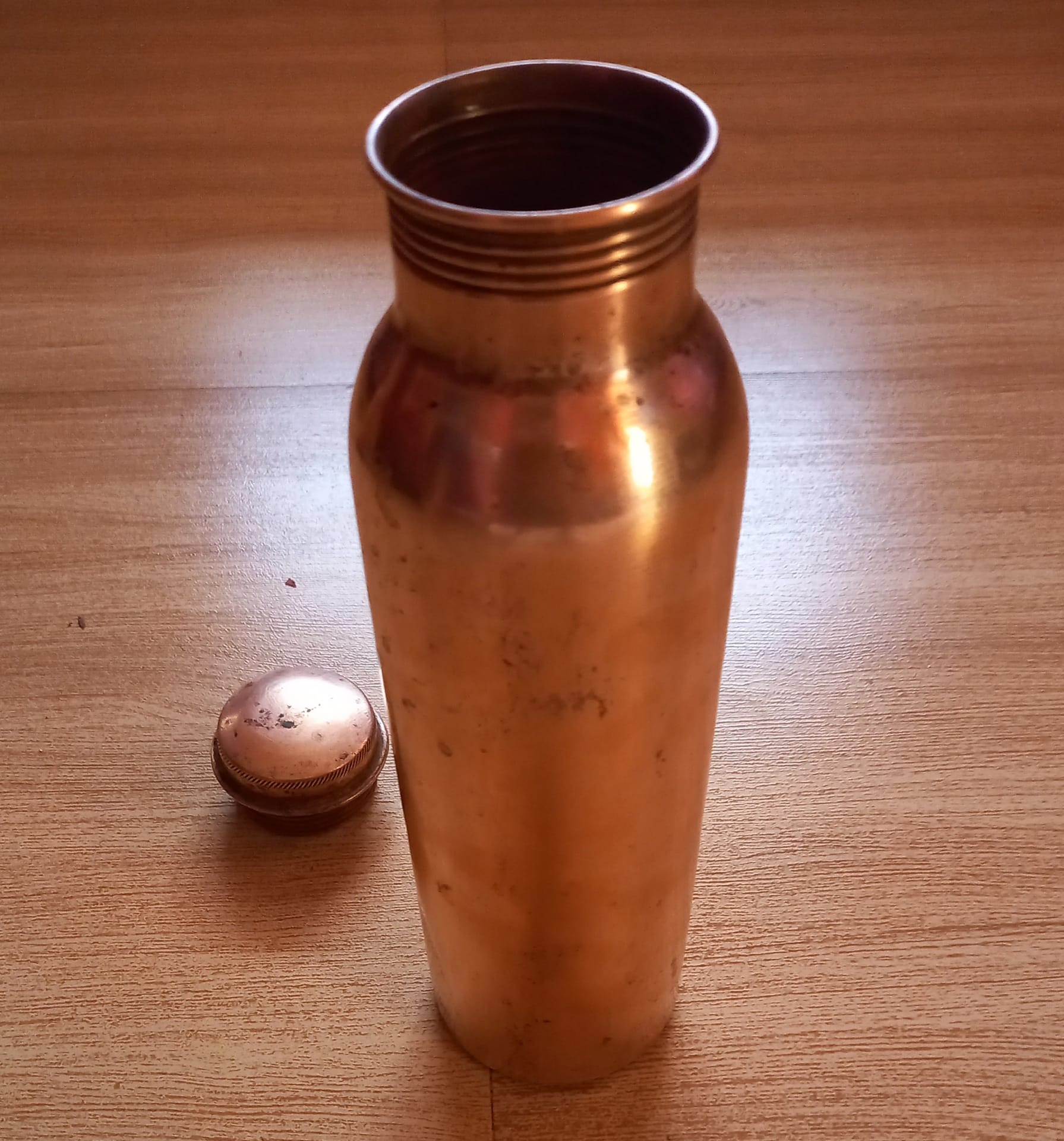
Two honest clarifications, because both get oversold. A water softener is a plumbing and appliance product, not a health filter: it swaps out the calcium and magnesium that cause limescale, but it does nothing for lead, nitrates, PFAS or microbes, and it adds a little sodium. And a copper vessel is storage, not filtration. Copper genuinely has an antimicrobial effect on already-clean water, but it does not remove chlorine, PFAS, nitrates or lead. If you like the tradition, enjoy it, and read our honest guide to copper water bottles and jugs, but reach for a proper carbon or reverse osmosis filter for any chemical concern.
Private, spring and off-grid supplies are a different game
Everything above assumes a treated mains supply. If you're on a borehole, spring or private supply, the rules change completely. There's no water company treating and testing it for you, so contamination from farm run-off, bacteria or metals is genuinely your responsibility. Get the water professionally tested, treat it properly, and retest, rather than trusting that it looks and tastes clean.
The honest bottom line: UK tap water is a genuine public-health success and safe to drink. It's also not pure, some of its limits are arguably behind the science, and filtering the residuals at the point you drink is a reasonable, low-cost choice once you know what you're targeting. Informed, not afraid.
This guide is general information, not medical advice, and it is not a claim that UK mains water is unsafe: water disinfection prevents serious disease and UK tap water meets strict legal standards. It is about informed point-of-use filtering. Contaminant limits, PFAS guidance and compliance figures are periodically revised, so check your own water company's current quality report for your area, and the Drinking Water Inspectorate, for the latest position. Evidence here draws on the DWI, WHO, IARC, the US EPA, the Royal Society of Chemistry and the peer-reviewed studies listed above. Last checked July 2026.
Frequently asked questions
Sources
- Drinking water quality in England (Chief Inspector's report) , Drinking Water Inspectorate (DWI)
- PFAS and 'forever chemicals' in drinking water , Drinking Water Inspectorate (DWI)
- Cleaning up UK drinking water (call for a tighter 10 ng/L PFAS limit) , Royal Society of Chemistry
- Lead poisoning and health (no known safe level) , World Health Organization
- Trihalomethanes in drinking water and estimated bladder cancer burden in the EU (Evlampidou et al., 2020) , Environmental Health Perspectives
- Water treatment: NSF/ANSI 42, 53 and 401 filtration standards , NSF
Kit for this job (Ad)

Personal Water Filter, Blue, 1pc
Check price on Amazon →
BRITA MAXTRA+ Water Filter Cartridges - Pack of 6 (EU Version)
Check price on Amazon →
BRITA Marella fridge water filter jug, 2.4L - Graphite. Half year pack, Includes 6 x MAXTRA+ filter cartridges for reduction of chlorine,limescale and impurities-now in sustainable Smart Box packaging
Check price on Amazon →
BRITA Marella XL water filter jug for reduction of chlorine, limescale and impurities, Includes 1 x MAXTRA+ filter cartridges, 3.5L - Blue
Check price on Amazon →We may earn a small commission, at no cost to you. We only list kit we'd use.
Written by
UK Homesteading Team
Editorial team
The UK Homesteading editorial team, offering UK-specific, evidence-led guidance on growing, keeping, preserving and the law.