Choosing your first sheep is one of the nicest jobs in smallholding, and one of the easiest to get slightly wrong. It is tempting to pick on looks, or to buy whatever is cheap at the local market, and end up with big commercial ewes that are hard for one person to handle, or a fleece breed when you never wanted to shear. The better way round is to start from what you actually want the sheep to do, and let that point you at a breed. Do you want low-input conservation grazers for a rough paddock? A friendly little breed the children can help with? Wool for spinning? A bit of meat for the freezer? Or simply the least possible faff, with no shearing at all?
The good news is that Britain has more native sheep breeds than almost anywhere on earth, and several of them are ideal for small flocks. This guide runs through the breeds smallholders genuinely choose, grouped by what they offer, with honest notes on size, temperament, wool and how much work they are. It sits alongside our beginner's guide to keeping sheep, which covers the year-round routine, so treat this as the "which breed" piece and that as the "how to keep them" piece. Whatever you choose, sort the legal side first: see the callout near the end.
First, choose by what you want
Before any breed name, be honest about four things: your ground, your time, your handling confidence, and your goal. Small, hardy breeds are gentle on wet pasture, cheap to feed and easy for one person to catch. Docile breeds forgive a beginner. Shedding breeds save you the yearly shearing job. Woolled breeds tie you into shearing whether or not the fleece pays. And a "pet" flock, a "wool" flock, a "meat" flock and a "keep the field down" flock can point at quite different breeds. Almost every breed below is a good-natured, manageable choice for a small flock, so the question is less "which is best" and more "which is best for you".
Easy-care primitive natives: small, hardy and thrifty
The primitive native breeds are Britain's ancient, unimproved sheep, and they are superb for low-input smallholding. They are small, extremely hardy, good mothers that lamb easily on their own, and they hold condition on rough grazing that would leave a commercial ewe hungry. Most are on the RBST watchlist, so keeping them helps conserve a rare breed. The trade-offs are size and, sometimes, agility: small carcasses, small fleeces, and a few of them can jump, so good fencing pays.
The Shetland is the classic smallholder's primitive. It is one of Britain's smallest and most ancient breeds, fine-boned and elegant, and the RBST calls it prized for its fine, soft wool, thriftiness and adaptability to harsh climates. Ewes lamb easily and mother well with little help. The wool is exceptional, some of the finest and softest of any native breed, and it comes in a wonderful range of natural colours with old dialect names, which makes Shetlands a favourite of handspinners. Small, hardy, gentle and useful for conservation grazing too, the Shetland is a genuine all-rounder for a small flock.
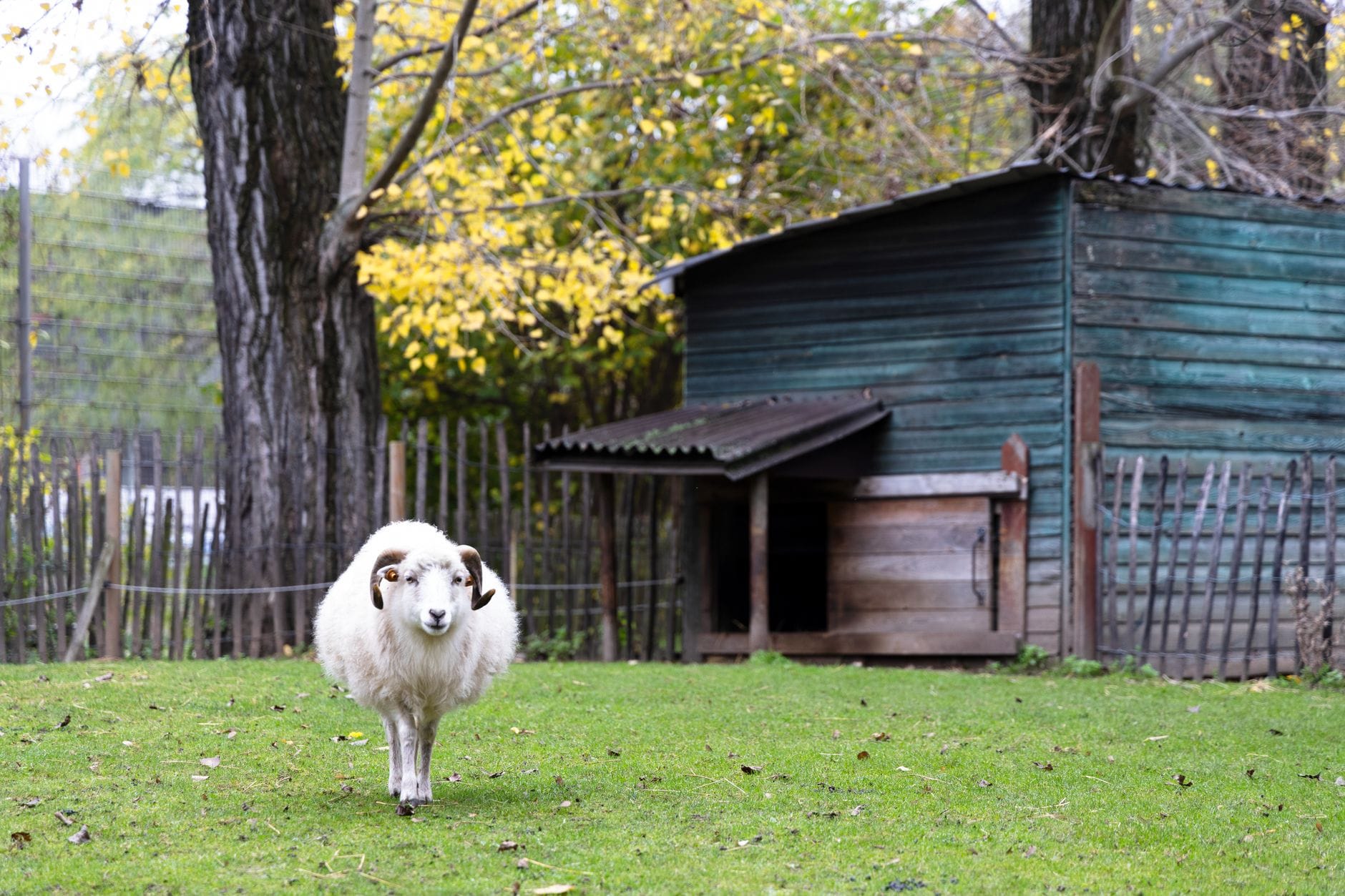
The Hebridean is the dramatic-looking one: a small, black primitive from the Scottish Western Isles, often with two or even four horns, and a calm nature. It is increasingly used for conservation grazing because it browses scrub, brambles and coarse grasses that other sheep avoid, and its small size and hard black hooves do little damage to soft ground. The meat is lean, dark and full-flavoured, and the naturally coloured fleece is prized by niche wool markets. If your aim is to manage rough ground or a wildlife area while keeping a striking, low-input flock, the Hebridean is hard to beat.
The Soay is the most primitive of the lot, almost a wild sheep. Ewes weigh only around 25 kilograms and rams around 40, and the breed is nimble and graceful, brown in colour with lighter patches. Soays are exceptionally thrifty and self-sufficient, with natural resistance to footrot and flystrike, and, unusually, they shed their fleece naturally and were traditionally plucked rather than shorn. They are very much a low-input, conservation and hobby breed rather than a meat producer, and being athletic they need stock fencing that respects a sheep that can jump. For sheer hardiness and a taste of Britain's oldest sheep, nothing else is quite like a Soay.
The Jacob is the popular "good starter" primitive, and the one many people picture first: a medium-sized, always-horned breed with striking white fleece marked in bold black or brown patches, and commonly two or four horns. The RBST notes it is popular with smallholders and fibre enthusiasts, with reliable ewes that lamb easily and rear twins or triplets, and it produces lean, flavoursome meat. The naturally coloured fleece spins beautifully. A little bigger and more substantial than a Shetland or Soay, the Jacob is a characterful, hardy, dual-purpose sheep that suits someone wanting a bit more size while keeping the hardiness of a native.
No-shearing breeds: sheep that shed their own wool
For a lot of smallholders, the single most off-putting job in the sheep year is shearing, and here is the honest economics behind it: British wool has been worth very little for years, and a small flock's fleeces will often sell for less than it costs to bring a shearer in to remove them. You still have to shear woolled sheep every year for welfare, so with most breeds the wool is a cost, not a crop. Self-shedding breeds solve that at a stroke by casting their fleece naturally each spring.
The Wiltshire Horn is the original no-shearing sheep. Its society describes it exactly that way: a native lowland breed that grows a short fleece for winter protection and then sheds it naturally in spring, leaving a short hair coat, so there is no need to gather the flock for shearing, dagging or dipping. The ewes are large-framed, good milky mothers, and the lambs are vigorous and finish well off grass. It is horned, hardy and low-input, and for a smallholder who wants a proper meat sheep without the shearing, it is a leading choice.
The Easycare is the modern take on the same idea. Bred in the UK since the 1960s specifically for low-input, low-labour shepherding, it is a hornless wool-shedding breed selected for easy lambing, strong mothering and good meat, and it is marketed frankly as the "ultimate fleece shedding, low maintenance, prime lamb sheep breed". Easycares suit anyone who wants a productive, no-shear commercial-style flock with minimal intervention. Between them, the Wiltshire Horn and Easycare are the two breeds to look at first if "I really do not want to shear" is at the top of your list.
Friendly and small: the down breeds for beginners
If temperament and easy handling top your list, the small lowland down breeds are made for nervous beginners and families. They are docile, compact and calm, and they produce excellent meat off grass.
The Southdown is the archetypal gentle beginner's sheep, so rounded and woolly-faced it is often called the "teddy bear" breed. It is compact, hornless and famously docile, the foundation of the whole Down group of breeds, and prized above all for premium, fine-grained meat from lambs that grow and finish quickly and evenly. Its calm nature and moderate size make it genuinely easy to keep and handle, which is exactly what you want when you are learning. A small paddock, a few Southdown ewes and their lambs is about as manageable as sheep-keeping gets.
The Ryeland is the other great beginner's breed, and one of the oldest English breeds, from the Herefordshire and Welsh borders. The RBST describes it as gentle, docile and compact, with a teddy-bear look, and says plainly that its docile nature makes it ideal for novice shepherds and smallholders. It is genuinely dual-purpose: sweet, tender lamb sought after by rare-breed butchers, and one of the finest native fleeces, soft and dense at roughly 26 to 32 microns and a joy for handspinners. Ryelands do well on grass alone, have sound feet and resist footrot, and there are coloured as well as white registries. Docile, useful for both wool and meat, and easy to keep, the Ryeland is one of the best all-round starter breeds in the country.
Coloured and characterful: wool and personality
Some breeds earn their place on a smallholding for looks, fleece and character as much as for meat. If you want sheep that are a pleasure to have about, and wool worth keeping, these are worth a look.
The Zwartbles is the friendly giant of this group: an elegant, tall Dutch breed, deep black or brown with a distinctive white blaze down the face and white socks (the name means "black blaze"). Imported to the UK in the early 1990s, it has become a smallholder favourite for its amenable, people-loving nature, its outstanding maternal ability and milkiness, and its lively character. Ewes are excellent, prolific mothers that rear lambs well, and the breed does well in the show ring thanks to its striking looks and calm temperament. It is a bigger sheep than the natives above, so factor in handling, but for a friendly, characterful, family-and-show flock with good mothering, the Zwartbles is a lovely choice.
For wool specifically, the Shetland deserves a second mention. If handspinning or knitting is part of why you want sheep, its fine, crimpy, naturally multi-coloured fleece is among the very best any British breed produces, historically spun fine enough for lace that could pass through a wedding ring. A small flock of Shetlands gives you fleece worth working with, conservation grazing and easy management all in one small, hardy package, which is why they turn up so often on craft-minded smallholdings.
Compare the popular smallholder breeds
Every one of these is a sound small-flock sheep. The differences are about size, whether you shear, and what you get out of them.
| Breed | Group | Size | Shearing | Best for |
|---|---|---|---|---|
| Shetland | Primitive native | Very small | Yes (fine wool) | Wool, conservation grazing, easy keeping |
| Hebridean | Primitive native | Small | Yes (coloured) | Conservation grazing, hardiness |
| Soay | Primitive native | Very small | No (sheds/plucked) | Low-input, conservation, hobby |
| Jacob | Primitive native | Medium | Yes (coloured) | A hardy, characterful all-round starter |
| Wiltshire Horn | Self-shedding | Large | No (sheds) | No-shear meat flock |
| Easycare | Self-shedding | Medium | No (sheds) | Low-input, no-shear prime lamb |
| Southdown | Down breed | Small | Yes (short) | Docile beginners, quality meat |
| Ryeland | Down breed | Small to medium | Yes (fine wool) | Docile all-rounder, wool and meat |
| Zwartbles | Coloured | Large | Yes | Friendly, milky mothers, character |
Matching breed to goal
Pull it together by starting from your aim rather than the prettiest photo.
- Easiest for a nervous beginner: a Ryeland or a Southdown, docile, small and forgiving; a Shetland if you want a hardy native.
- No shearing, ever: a Wiltshire Horn or an Easycare, which shed their own fleece; a Soay among the primitives.
- Conservation grazing and rough ground: Hebrideans, Shetlands or Soays, which thrive on poor forage and browse scrub.
- Wool for spinning: Shetland above all, or a Ryeland or Jacob for coloured fleece.
- Meat for the freezer: a Southdown, Ryeland or Wiltshire Horn finish well off grass; an Easycare for a no-shear meat flock.
- Friendly, characterful pets that still earn their keep: a Zwartbles for size and personality, or a small group of Shetlands.
- Supporting a rare breed: most of the natives here, including the Shetland, Hebridean, Soay, Jacob and Ryeland, are RBST watchlist breeds.
You do not have to keep a single breed, and many smallholders end up with a small mixed flock, but they all need the same core care: safe grazing, clean water, the right minerals, and shelter. Get the feeding and the housing and fencing right and almost any of these breeds will thrive; skimp on fencing especially and the more athletic natives will teach you an expensive lesson.
A sensible first flock
If you are still torn, a good default for a new UK keeper is a small group, three or four, of one docile breed bought from a nearby breeder. A few Ryelands or Southdowns if you want gentle, easy sheep and some meat; a few Shetlands if you want hardiness and wool; a Wiltshire Horn or Easycare if the thought of shearing puts you off entirely. Start with ewes or wethers rather than a ram, get your fencing and shelter sorted before they arrive, register for your CPH and flock number, and let the flock and your confidence grow together. Sheep are among the most rewarding animals a smallholder can keep, and choosing a breed that fits your ground and your temperament is more than half the battle.
Breed characteristics and typical sizes in this guide are consensus figures drawn from RBST breed profiles and the relevant breed societies; individual sheep vary with strain, management and feeding, so treat them as a guide rather than a guarantee. The CPH and flock-number registration requirement is a genuine legal duty and is accurate as of the last check in July 2026, but rules and the wool market change, so confirm the current position on gov.uk and with your breed society before you rely on it.
Frequently asked questions
Sources
- Shetland , Rare Breeds Survival Trust (with the Shetland Sheep Society)
- Hebridean , Rare Breeds Survival Trust
- Soay , Rare Breeds Survival Trust
- Jacob , Rare Breeds Survival Trust (with the Jacob Sheep Breed Society)
- Ryeland , Rare Breeds Survival Trust (with the Ryeland Flock Book Society)
- Southdown , Rare Breeds Survival Trust (with the Southdown Sheep Society)
- About The Breed (Wiltshire Horn) , Wiltshire Horn Sheep Society
- The EasyCare Sheep Society , EasyCare Sheep Society
- Zwartbles Sheep Association , Zwartbles Sheep Association
- Apply for a county parish holding (CPH) number , Rural Payments Agency / APHA (GOV.UK)
- Register livestock to get a flock or herd mark , Animal and Plant Health Agency (GOV.UK)
Kit for this job (Ad)

50Pcs 1ml Plastic Syringes With Caps No Needle Colostrum Syringe for Refilling and Measuring Liquids, Scientific Labs, Plant Watering, Pet Feeding ,Glue Applicator
Check price on Amazon →
Premier 1 Supplies ARS 140DXR Japanese Anvil Trimmer, Red, 1.75 Inch Round Point Blade, Ambidextrous, Goat & Sheep Hooves
Check price on Amazon →
Other BURGON & BALL FOOTROT SHEARS SUPERSHARP, Clear, 350 ml, BBL0038
Check price on Amazon →
2 Pieces Goat Syringe with 4 Drench Nozzle Adjustable Dosage ,Reusable Drench Syringe for Sheep ,Dog,Goat,Pig, Cat Feeding Supplies(20ML)
Check price on Amazon →We may earn a small commission, at no cost to you. We only list kit we'd use.
Written by
UK Homesteading Team
Editorial team
The UK Homesteading editorial team, offering UK-specific, evidence-led guidance on growing, keeping, preserving and the law.