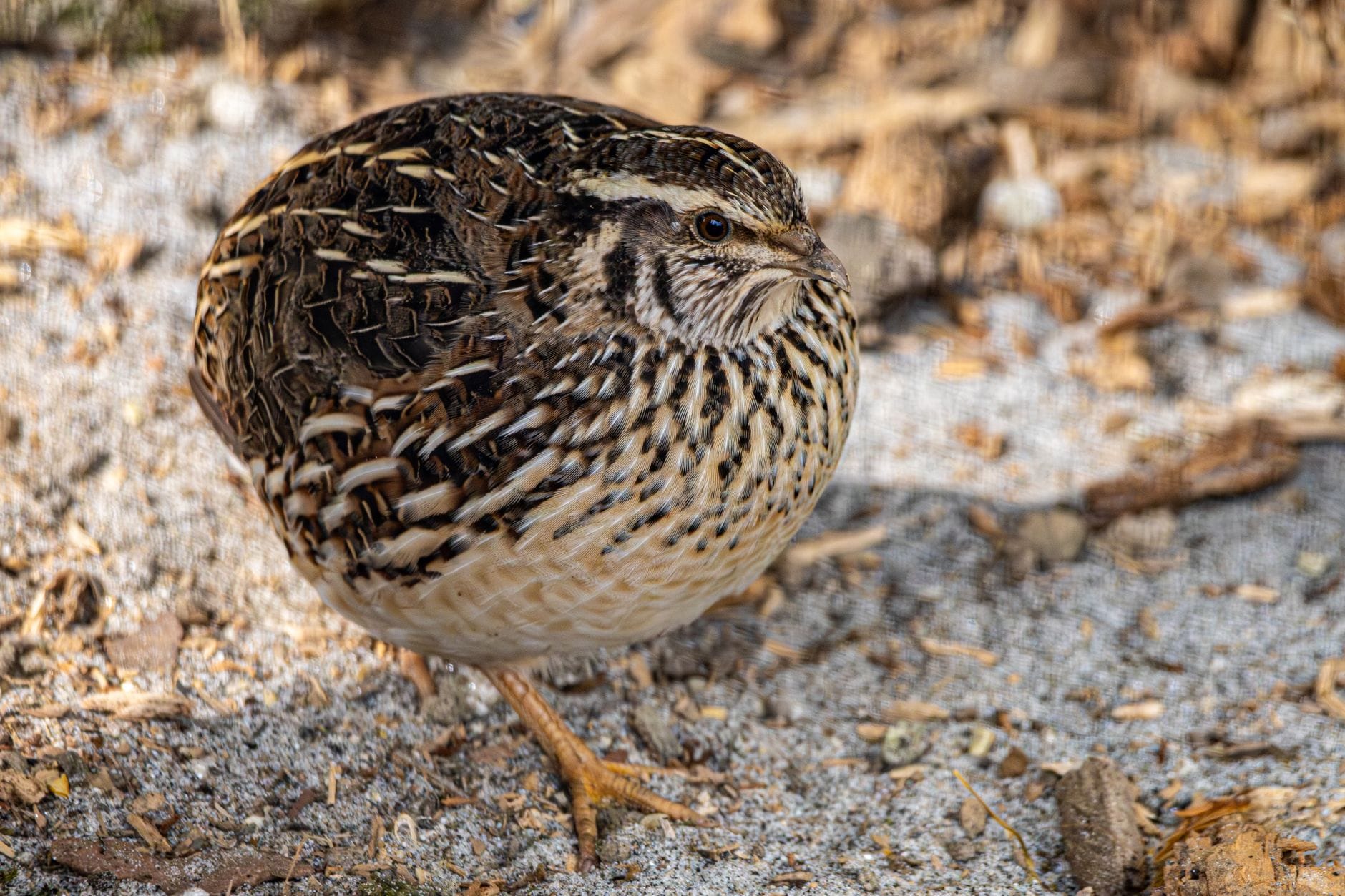
The single most useful thing to understand before you build or buy anything is that a quail is not a tiny chicken. Coturnix, or Japanese, quail are the usual backyard quail in the UK, and almost everything that makes them awkward to house comes down to two facts about how they are built. They live their whole lives on the ground, so perches, ramps and lofty nest boxes are wasted on them. And when something frightens them they explode vertically upwards in a burst of flight, which is brilliant for escaping a fox in a cereal field and disastrous inside a hard-roofed box. Get the floor low and soft and the ceiling safe, and most of the rest is straightforward.
This guide is about the housing itself: what kind of home, how much room, what goes on the floor, and how to keep it dry, safe and legal. If you are still deciding whether quail are for you, start with our beginner's guide to keeping quail, and see feeding quail and hatching quail eggs for the neighbouring jobs.
Floor pen or raised hutch: pick your trade-off
There are two broad ways to house quail, and neither is wrong. The choice is mostly about welfare space versus ease of cleaning and dryness.
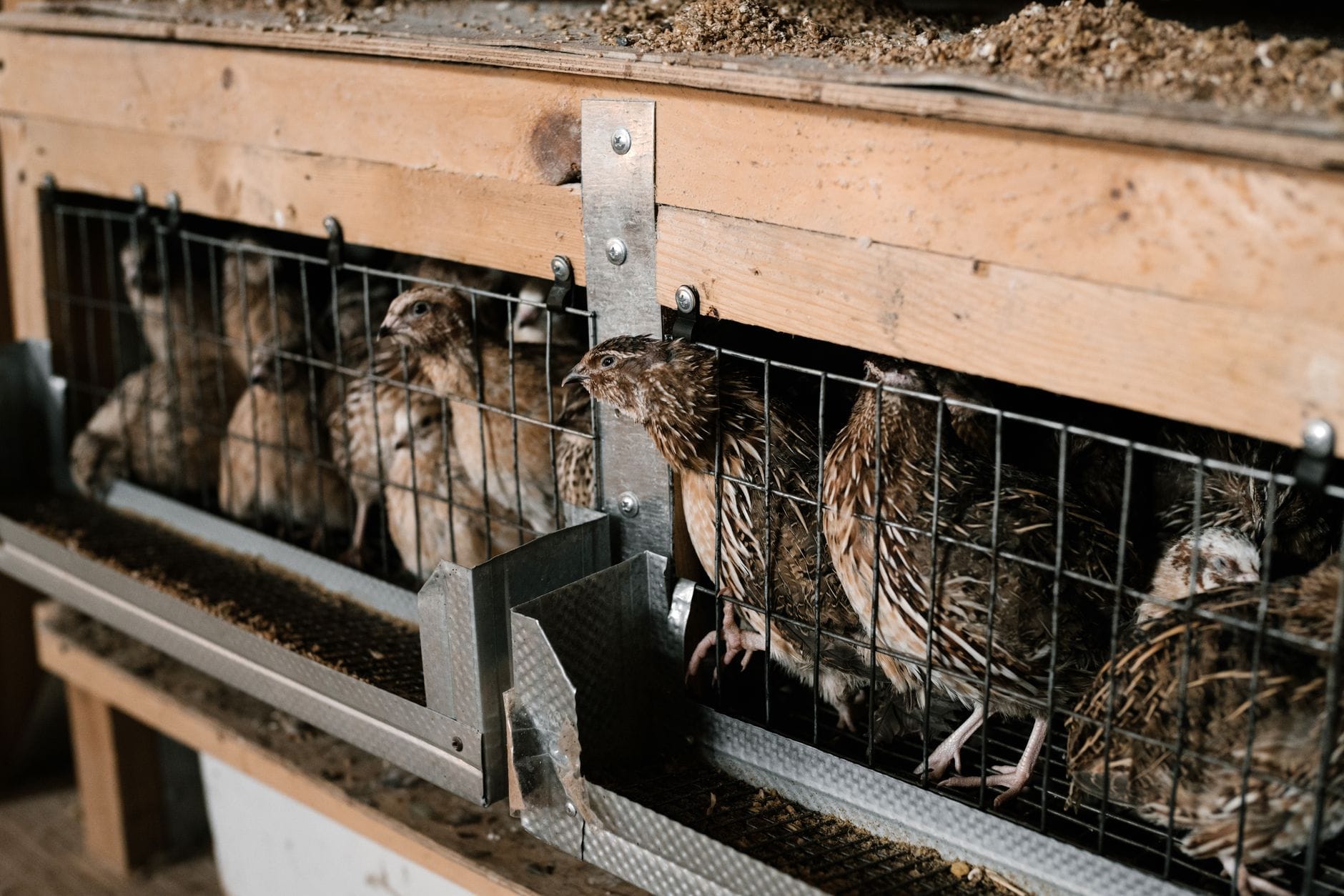
A ground-level floor pen or aviary is what the welfare science points to. It gives the birds room to walk, run and forage on a proper litter floor, with cover to hide under, which is how quail want to live. The RSPCA guidance says plainly that the case for keeping quail in cages should always be questioned, and that birds should be housed in pens or aviaries wherever possible. The downside is that a large ground-level pen takes more space, needs solid predator-proofing at ground level, and can get damp if the base is not managed.
A raised hutch or cage (a converted rabbit hutch is the classic starting point) is easier to keep clean and dry, keeps the birds up away from ground damp and burrowing rats, and suits a small garden. The trade-off is less room and a hard roof close overhead, so the boinking risk needs designing out and you must not let a small cage become a cramped one. If you use a cage, make it bigger than you think and soften the roof.
| Ground-level floor pen or aviary | Raised hutch or cage |
|---|---|
| Most space to walk, run and forage (welfare-preferred) | Compact, good for small gardens and a few birds |
| Litter floor and cover are easy to provide | Easy to clean out and keep dry |
| Bigger footprint; ground-level predator-proofing essential | Less room; hard roof close overhead needs softening |
| Can get damp without a managed base | Keeps birds up off damp ground and away from burrowing rats |
Whichever you choose, the house or shelter part must sit at or very near ground level. Quail dislike climbing and will not reliably use a ramp, so a raised coop with a steep pop-hole ramp, the sort chickens are happy with, simply strands them. If you do raise the house a little to beat the damp and the rats, use a wide, shallow step or ramp only a few centimetres high.
How much room, and how many birds
Space is the cheapest medicine in quail keeping. Most of the aggression, feather-pulling and injury that new keepers panic about traces back to crowding. As a working minimum, allow roughly a square foot, about 0.1 square metres, of floor per adult bird, and give more if you possibly can. A traditional rabbit hutch will hold around half a dozen quail on that basis. When you plan the feeder, the RSPCA figure is about 7 cm of feeder length per bird, so they can all eat at the same time rather than squabbling over one dish.
Sex ratios matter as much as raw space. Cocks pester hens, and too many cocks in a pen leads to over-mating injuries on the hens' backs and heads. Keep the ratio of males to females no higher than one to four, and remember you do not need a male at all if you only want eggs: a group of hens will lay perfectly well on their own, and will be quieter for it.
What goes on the floor
Quail spend their days scratching, foraging and dust-bathing, so the floor is where their welfare is made or lost. Give them a solid floor with a litter layer of a soft, absorbent material: dry sand, softwood shavings, straw or hay all work, and many keepers use a base of sand topped with a little hay for cover. Avoid a bare wire or mesh floor. It is easier to hose down, but the birds cannot forage on it, they are prone to painful foot problems on wire, and welfare guidance treats solid litter as the strong preference. If you ever must use a grid area, keep at least a third of the floor solid with litter and provide a solid resting spot.
On top of the litter, add the things that let quail behave like quail:
- A dust bath. Dust-bathing keeps their feathers in good order, and without a bath they will go through the motions on bare ground anyway. A shallow tray of fine, dry sand or dry soil does the job.
- Cover to hide under. Quail are nervous and calmer, and boink far less, when they can dart under something. Cut conifer branches, a couple of small logs propped on bricks, upturned pots or a low hide all work.
- Somewhere quiet and dark to lay. No nest box is needed. Hens drop their eggs on the floor, usually in a sheltered corner, so a shady end of the pen is enough.
Litter needs changing before it turns damp and smelly, which brings us to the air.
Keeping them dry, out of the wind, but well ventilated
Quail droppings give off noticeably more ammonia than other poultry for their size, so ventilation is not optional. A sealed, stuffy box lets ammonia build up and brings on the respiratory infections quail are prone to. At the same time, the enemies of a quail are damp and draughts, not cold air itself. The trick is a shelter that breathes without blowing a draught across the birds: air moving above and around them, not a gale at floor level.
Setting up a quail home, step by step
- 1
Choose the type and site it low
Pick a floor pen, an aviary or a converted hutch, and set the sheltered part at or near ground level in a spot protected from the prevailing wind. Skip perches, ramps and nest boxes.
- 2
Make the roof safe
Keep the ceiling at least 30 cm high with a soft top, using taut netting or a fruit net slung just beneath a wire roof, or use a tall aviary of 1.8 m or more, so a boinking bird is not hurt.
- 3
Lay a solid litter floor
Cover a solid floor with dry sand, softwood shavings, straw or hay. No bare wire. Add a shallow tray of fine dry sand as a dust bath.
- 4
Add cover and a laying corner
Prop in conifer branches, logs or a low hide for them to shelter under, and leave a quiet, shaded corner where hens can lay on the floor.
- 5
Ventilate without draughts
Provide airflow high up to clear ammonia, but block low-level draughts and driving rain. Aim for fresh but still air at bird level.
- 6
Predator- and rat-proof it
Enclose runs in small-gauge weld mesh (not flimsy netting a fox or rat will breach), run solid boards around the base, cover the top, and stop rats burrowing underneath.
- 7
Feed and water at floor level
Give about 7 cm of feeder length per bird and shallow water they cannot foul or drown chicks in, both low enough for ground birds to use easily.
Biosecurity, predators and rats
Rats are the classic quail problem in the UK. They will burrow under a house standing on soil, take eggs and chicks, and gnaw through weak netting. A house raised a few centimetres, or standing on a hard surface such as a slab or concrete, denies them the burrow, while a wide low step lets the quail still get in. Enclose everything in small-gauge welded mesh rather than large-hole chicken wire or soft plastic netting, which a determined fox, cat, stoat or rat will get through. Run solid boards around the bottom edge of a run, about 15 cm high, which both blocks draughts and gives startled birds a solid wall to skitter along instead of launching into wire.
Biosecurity is the same discipline that protects them from disease. Keep feed in rodent-proof bins so you are not feeding the rats, keep wild birds off the food and water where you can, clean and disinfect between batches, and watch new pets like dogs and cats carefully at first, as it is the sudden fright as much as the teeth that harms quail. During an avian influenza housing order, you may be legally required to keep the birds under cover, which is far easier if their home already has a solid, netted roof.
Registering your quail: a legal duty since 2024
None of this is meant to put you off. Quail are one of the most rewarding small-garden birds you can keep, productive, characterful and undemanding once their home is right. Almost every quail welfare problem is a housing problem in disguise: too little room, a hard roof at boinking height, a wire floor, a damp draughty corner, or a gap a rat found first. Fix the house, and the birds mostly look after themselves. When you are ready for the day-to-day, read our beginner's guide to keeping quail, then feeding quail and hatching quail eggs.
Guidance last checked July 2026. Housing and welfare points follow the RSPCA's quail care guidance and established UK keepers; the registration duty is set out on gov.uk and gov.scot. Bird-registration and avian-influenza rules change, and differ by nation, so always confirm the current position with gov.uk (England and Wales) or gov.scot (Scotland) before you start.
Frequently asked questions
Sources
- Quail: Good practice for housing and care (4th edition, April 2011) , RSPCA (Research Animals Department)
- Beginners Guide to Keeping Quail , Poultrykeeper (Tim Daniels)
- Register as a keeper of less than 50 poultry or other captive birds , Animal and Plant Health Agency / Defra (GOV.UK)
- Avian influenza (bird flu): register your birds (Scottish Kept Bird Register) , Scottish Government (GOV.SCOT)
- Quails: complete care and housing guide , Omlet UK
Kit for this job (Ad)

P&T Poultry 1Kg Feeder & 1.5Ltr Drinker For Chickens/Hens/Ducks/Chicks
Check price on Amazon →
Orpington Inside-Outside Fully Assembled Hutch with Natural Finish (3ft Double)
Check price on Amazon →
P&T Poultry 6ltr Drinker For Chicks / Chickens / Duck / Geese / Quail / Poultry
Check price on Amazon →We may earn a small commission, at no cost to you. We only list kit we'd use.
Written by
UK Homesteading Team
Editorial team
The UK Homesteading editorial team, offering UK-specific, evidence-led guidance on growing, keeping, preserving and the law.