Pigs are one of the most rewarding animals you can keep outdoors on British ground. Give them a dry bed, room to root, shade in summer and a fence they respect, and a couple of weaners will grow into contented, characterful pigs while turning over and enriching a corner of your land. The trouble people run into is nearly always one of four things: a shelter that lets the wet in, no shade or wallow when the sun comes out, fencing a pig walks straight through, or land that gets wrecked because there was nowhere to move the pigs on to. Get those four right and the rest is straightforward.
This guide covers the physical side of keeping pigs outdoors: shelter, land, fencing, water, space and company. It sits alongside our beginner's overview at /keep/pigs/keeping-pigs-uk, our guide to the best pig breeds for UK smallholders, and feeding pigs in the UK. Before any of it, though, there is paperwork the law requires you to sort out before a pig ever sets foot on your land, so read the legal section near the end first.
Shelter: a dry, draught-free ark
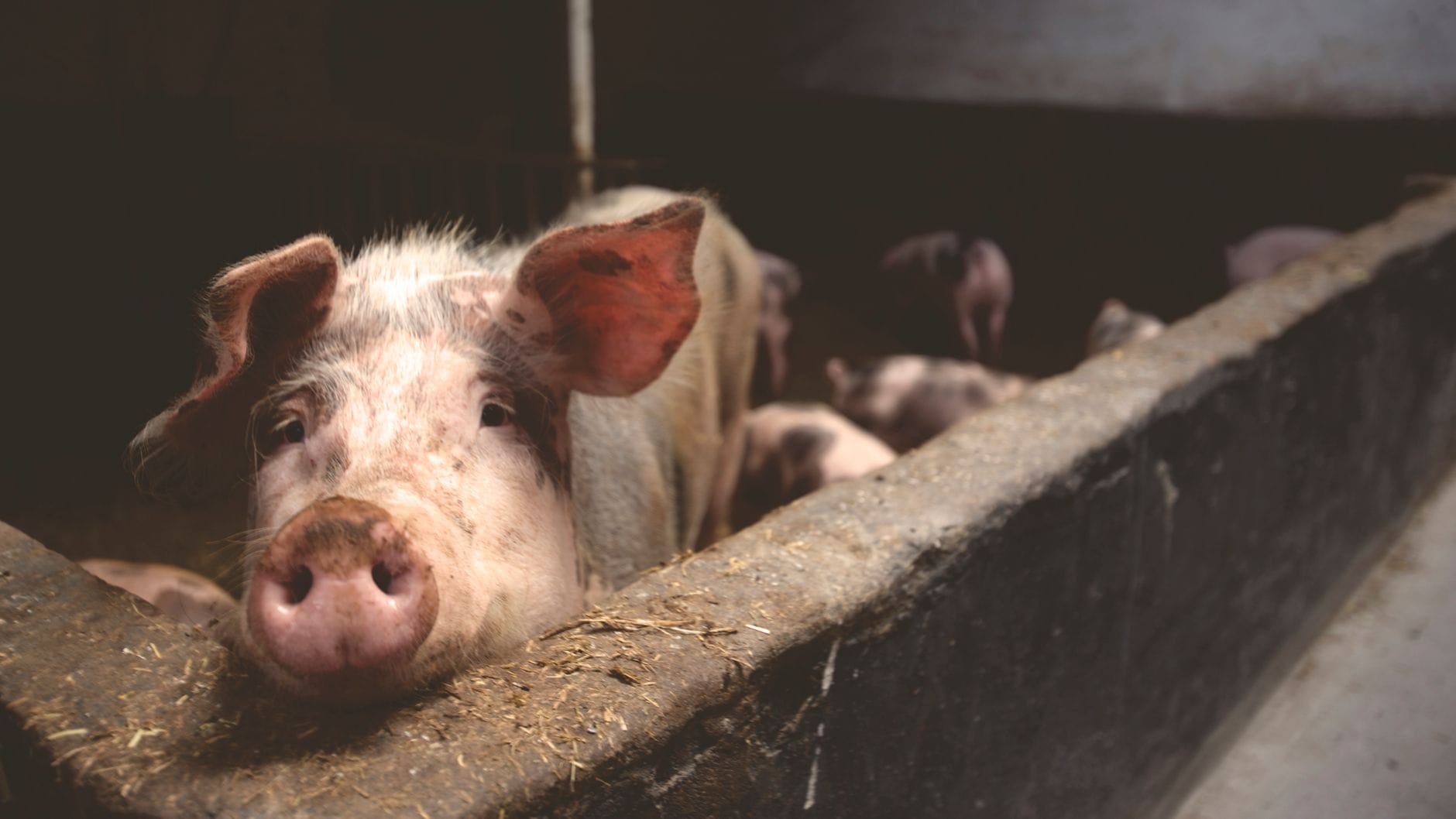
Pigs are surprisingly hardy in the cold, but they hate wet and they hate draughts. That is the whole design brief for pig housing. The classic solution is a pig ark, a curved corrugated or insulated shelter, or a simple field house, sited with its back to the prevailing wind and its opening away from the weather. The RSPCA's guidance is to give pigs warm, dry, draught-free, straw-bedded housing that is well ventilated, because pigs chill easily if they get damp and cold.
Bed it deep with clean barley or wheat straw. Pigs love to burrow into a thick bed and will build themselves a snug nest, and a good depth of dry straw does more to keep them warm than any amount of insulation on a bare floor. Top it up regularly and muck it out before it turns sour. Give them enough room inside to separate their sleeping area from where they dung, because pigs are naturally clean animals and will keep their bed clean if the house is big enough to let them.
The heat problem: sunburn, shade and the wallow
This is the point new keepers most often underestimate, so it gets its own section. Pigs cannot sweat. They have very few working sweat glands, which means that on a hot day they cannot cool themselves the way we do, and they overheat quickly. On top of that, pig skin burns in strong sunlight, especially on pale-skinned and thin-coated breeds, and especially in May and June when pigs meet their first strong sun after winter.
Sunburn in pigs is not trivial. AHDB's guidance for outdoor herds notes that severe sunburn, where the skin actually blisters, causes real pain and stress and can even cause pregnancy failure in breeding sows. The two things that protect a pig are shade and a wallow, and you need both.
A wallow is a shallow pool of muddy water the pig lies in to cool down. It works in two ways: water evaporating off the skin carries heat away, and the coating of mud that dries on the pig acts as a physical sunscreen. AHDB's practical advice is that a wallow should be more liquid than mud, about the consistency of emulsion paint, that you should make it big enough for roughly twice the number of pigs using it so shyer animals get a turn, and that in dry spells you top it up with water daily so it does not dry out or go stagnant. Crucially, the wallow is for cooling, not drinking, so you must always provide separate clean drinking water as well.
Land: expect them to turn it to mud
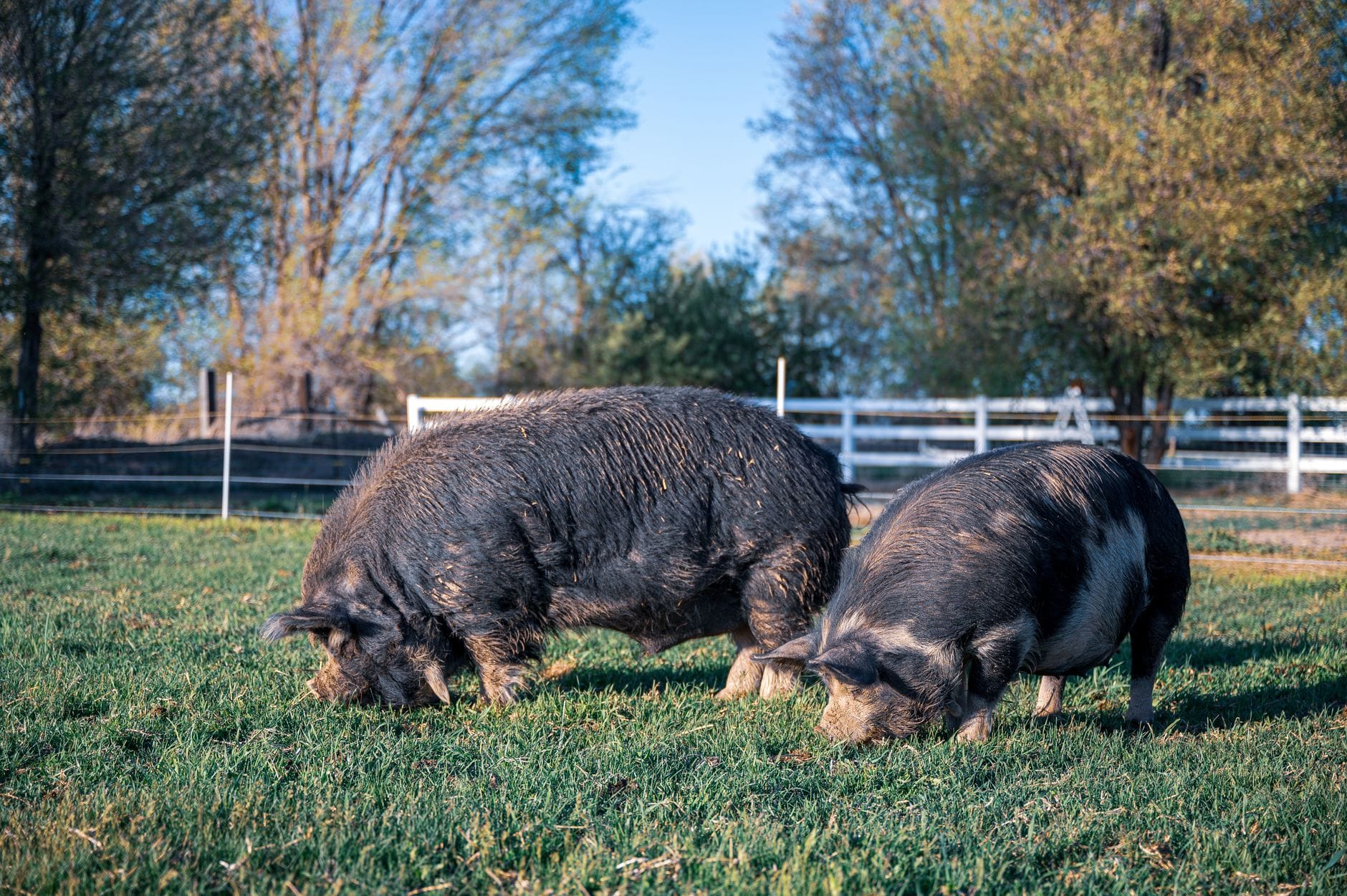
There is no getting around it: pigs root. They spend much of the day nose-down, turning over the soil to find roots, worms and grubs, and a couple of pigs will strip a patch of pasture to bare earth remarkably fast. That is not a fault, it is what pigs are for, and used deliberately it is genuinely useful, as pigs will clear rough ground, break up compacted soil and cultivate a bed for you. But it means you cannot keep pigs on the same fixed patch indefinitely and expect it to stay green.
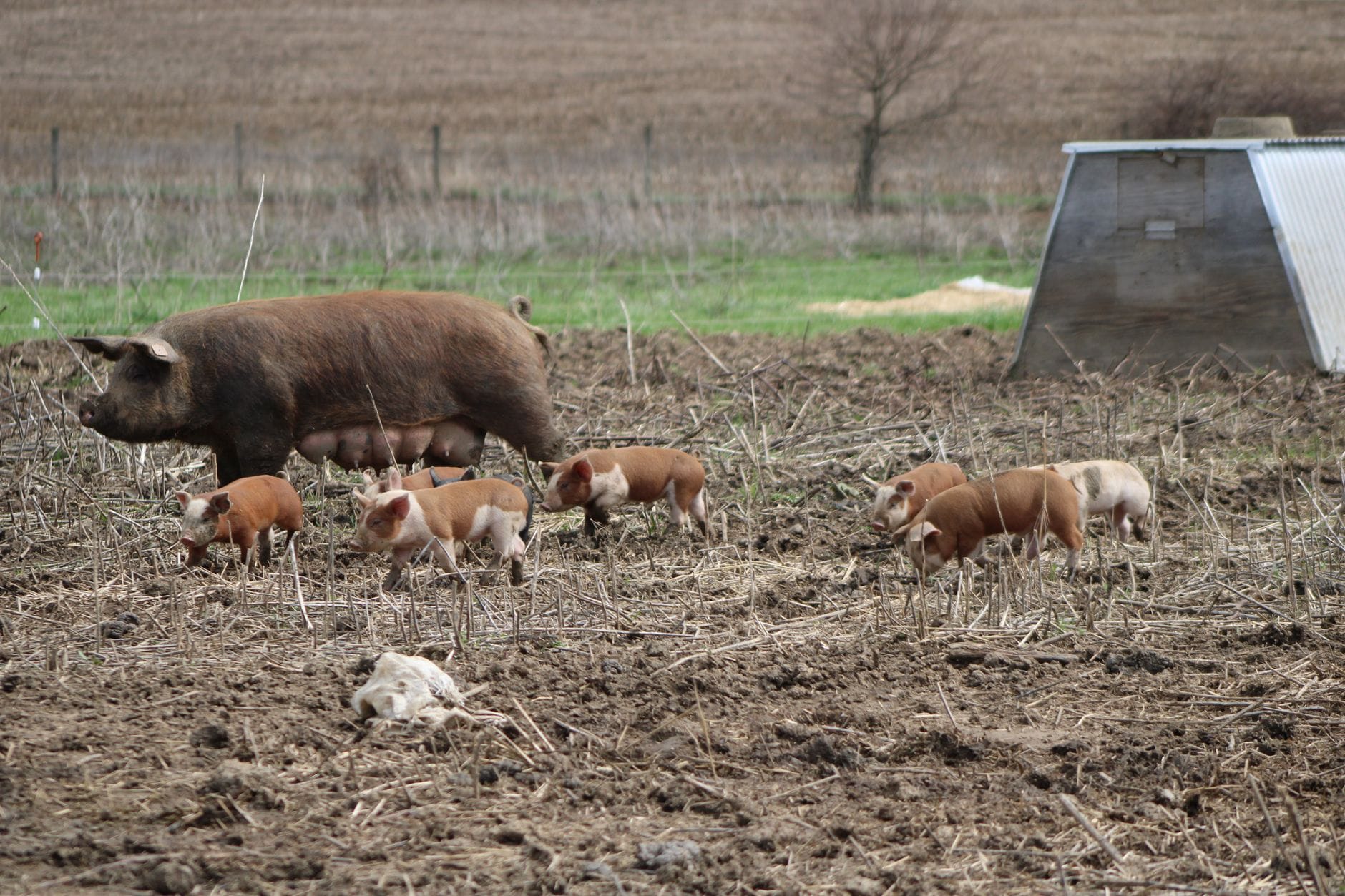
The answer is rotation. Divide your available ground into at least two paddocks and move the pigs on before they have destroyed one, giving the vacated ground time to rest, recover and regrow before the pigs come back. How much land you need depends on how many pigs, the breed, and how long you keep them, but the principle is the same at any scale: enough ground that you can always be resting part of it. Two weaners raised for the freezer over a summer need far less than a breeding group kept year-round.
Winter is when land takes the real punishment. Wet ground plus heavy pigs equals poaching, where the surface is churned into deep, sticky mud that damages soil structure and takes a long time to recover. If you keep pigs through winter, put them on your best-draining ground, use plenty of straw around the shelter and gateways, and accept that some ground will be sacrificed. Rotating onto fresh ground in spring gives the poached area a chance to recover.
Fencing: electric wire pigs respect
Pigs are strong, low-slung, curious and persistent, and a determined pig will find the weak point in any fence. The UK standard for keeping pigs, and by far the most practical for a smallholder, is electric fencing. It works not because it physically stops a pig, a pig could walk through it, but because a trained pig learns to respect the wire and chooses not to test it.
The catch is that word "trained". A pig that has never met an electric fence does not know to fear it, and if it barges through before it has learned, it may decide the fence means nothing. So you train every pig to the fence on day one, in a small, strongly backed pen, before you ever trust it in an open paddock.
Setting up and training pigs to an electric paddock
- 1
Set the wire at pig height
Run two live strands, roughly one at snout height and one at shoulder height for the size of pig you have (lower for weaners, higher as they grow). Two strands catch both the nose that investigates low down and the body that leans in.
- 2
Power it properly
Use a mains or good battery energiser sized for your fence length, with a solid earth stake. A weak or poorly earthed fence gives a feeble shock, and a pig that gets only a mild tingle learns the wrong lesson. Check with a fence tester that it is genuinely live.
- 3
Train in a secure pen first
For the first day or two, run the electric wire inside a small pen that also has a solid physical barrier (stock fencing or hurdles) just behind it. The pig meets the wire, gets a memorable shock, and learns to keep away, but if it panics forward it hits the backstop rather than escaping.
- 4
Let them learn before trusting them
Give each pig time to touch the wire and back off a few times. Once it clearly avoids the fence, you can rely on the electric alone in a larger paddock. Never put an untrained pig straight into a paddock fenced with electric only.
- 5
Keep a physical backstop where you can
Many keepers run electric as the everyday working fence with stock fencing, pig netting or a thick hedge around the perimeter as a backup, so a pig that ever does get through the wire is still contained on the holding.
- 6
Check the fence every day
Walk the line, clear vegetation shorting the wire, confirm it is still live, and look for spots a pig has been testing. Five minutes a day prevents the escape that costs you an afternoon and your neighbours' goodwill.
Water: plenty, and hard to tip over
Pigs drink a lot, and they will tip over anything light. A pig will happily upend a small bowl or bucket, both to drink and to play, and then stand in the muddy patch it has made. So give water in something a pig cannot knock over: a heavy trough weighted or staked in place, or better still a nipple or bite drinker plumbed to a header tank or supply, which pigs quickly learn to operate and which keeps the water clean. Whatever you use, the RSPCA is clear that pigs need a constant supply of clean, fresh drinking water, kept separate from the wallow. In winter, check it daily and break or remove ice, never using any chemical to stop it freezing. In summer, water demand climbs steeply, so check more than once a day in hot weather.
Space and company: never keep just one
Pigs are social herd animals. The RSPCA is explicit that you should keep at least two pigs that get on well together, and a lone pig is a lonely, bored and often badly behaved pig. Two is the sensible minimum, and weaners are usually sold in pairs for exactly this reason. As for space, the RSPCA suggests a minimum of around 36 square metres (about 6 by 6 metres) of dry living and lying area per pig for pet pigs, and ideally more, on top of the rooting ground they range over. Give them room and company and you get calm, healthy pigs; skimp on either and you get stress, squabbling and escape attempts.
Boredom is worth designing out too. Pigs are intelligent and need something to do, so scattering feed to encourage foraging, and giving them ground to root and objects to investigate, keeps them occupied and out of mischief.
The legal side: register before the pigs arrive
Keeping pigs, even one pet pig, comes with legal duties that exist to help trace and control disease, and you must deal with them before the pigs arrive. This is England-first; Scotland, Wales and Northern Ireland have their own equivalent guidance, linked from the gov.uk pages below, and the detail differs, so check the rules for your nation.
One more that catches pet-pig keepers out: if you want to walk a pet pig off your own land, you need a walking licence from APHA, which you apply for with a map of your route and must renew every year. Walking under that licence does not count as a reportable movement, but taking a pig anywhere else does. There is more on the day-to-day legal routine in our overview at /keep/pigs/keeping-pigs-uk.
Before you bring pigs home: a quick checklist
- Have you got your CPH number from the RPA and registered with APHA for a herd mark, before the pigs arrive?
- Is the ark dry, draught-free, deeply strawed and sited on well-draining ground with its back to the wind?
- Is there shade and a wallow ready for warm weather, with separate clean drinking water?
- Is the electric fence up, live, well earthed and tested, with a physical backstop where possible, and do you have a small pen to train the pigs to it?
- Is there a tip-proof trough or a nipple drinker giving a constant supply of clean water?
- Have you got at least two pigs, and enough land to rest and rotate as they root it up?
- Do you know how you will report the movement on eAML2 when they arrive, and that a 20-day standstill starts the day after?
Get pigs set up well and they are among the most enjoyable and genuinely useful animals on a smallholding. Almost every problem people have with outdoor pigs traces back to one of the basics on this page, so spend the time on shelter, shade, fencing and land before the pigs come home, and sort the registration first.
This guide is general husbandry information for UK smallholders, not legal or veterinary advice. Registration, movement and welfare rules change and differ by nation, so always confirm the current position with the gov.uk and APHA sources linked above, and speak to your own vet about health and welfare decisions such as ringing. Legal position checked against gov.uk and APHA guidance in July 2026; England-first, with Scotland, Wales and Northern Ireland flagged where they differ.
Frequently asked questions
Sources
- Keeping a pet pig or 'micropig' , Department for Environment, Food & Rural Affairs (GOV.UK)
- Apply for a county parish holding (CPH) number , Rural Payments Agency (GOV.UK)
- Register livestock to get a flock or herd mark , Animal and Plant Health Agency (GOV.UK)
- Moving pigs: what keepers need to know , Department for Environment, Food & Rural Affairs (GOV.UK)
- Keeping pigs in England , Department for Environment, Food & Rural Affairs (GOV.UK)
- Avoiding heat stress in pigs: outdoor herds , AHDB (Agriculture and Horticulture Development Board)
- Caring for pet pigs , RSPCA
- Environment for pigs kept as pets , RSPCA
- Electric fencing for livestock , AHDB (Agriculture and Horticulture Development Board)
Kit for this job (Ad)

12 Volt Battery Powered Electric Fence Energiser XSTOP BA80 10Km Range, 0.6 Joule Output, Weatherproof Kit Includes Leads and Earth Stake. For Horses and Other Animals
Check price on Amazon →
2 Black Gros Trough 55cm
Check price on Amazon →
XSTOP 230v Mains Powered Electric Fence Energiser EL90 10Km Range, 0.5 Joule Output, Weatherproof Kit Includes Leads and Earth Stake. For Horses and Other Animals. 2 Year Warranty*.
Check price on Amazon →
Goovilla Large Feed Trough, Hanging or Screw-in Fence Feeder with Clips, 2 Pack 9 Quart Goat Feeder Supplies, Dog Horse Hog Pig Livestock Poultry Plastic Feeder Trough Bucket for Large Animal, Black
Check price on Amazon →We may earn a small commission, at no cost to you. We only list kit we'd use.
Written by
UK Homesteading Team
Editorial team
The UK Homesteading editorial team, offering UK-specific, evidence-led guidance on growing, keeping, preserving and the law.