Pigs are cheerful, greedy omnivores. Give them the chance and they will eat almost anything you put in front of them, root up half a field looking for more, and let you know loudly when they think a meal is late. That appetite is a big part of the fun of keeping pigs, but it is also exactly why the UK has strict rules about what you may and may not feed them. Get the food right and a pig is one of the most rewarding and productive animals on a smallholding. Get it wrong, in one particular way, and you could break the law and put the whole national pig herd at risk.
This guide covers the two things that matter most: what to feed pigs to keep them healthy and growing well, and the one rule you must never break. If you are new to pigs, read our beginner guide to keeping pigs in the UK alongside this, and think about which breed suits you and your land and housing before the first weaners arrive. Read the legal callout below first, because it is the part people most often get wrong.
The swill ban: what you may not feed
For centuries, pigs were the household waste-disposal system, fed on kitchen scraps and collected "swill". That practice is now illegal in the UK, and for good reason. The 2001 foot-and-mouth epidemic, which led to the slaughter of millions of animals, is thought to have started with pigs fed undercooked catering waste containing the virus. The rules that followed are still in force and still being tightened.
The Animal and Plant Health Agency puts the ban in plain words: "It remains illegal to feed catering waste, kitchen scraps, meat or meat products to farmed animals." Crucially, "farmed animal" includes pigs kept purely as pets, so there is no hobby exemption. And the definition of catering waste is deliberately wide. As gov.uk explains, "catering waste means all waste food originating in restaurants, catering facilities and household kitchens", and because of cross contamination "this includes vegetarian kitchens, where products of animal origin such as milk are used in food preparation".
So the banned list is broad. You must never feed pigs:
- Scraps, leftovers or peelings from your own kitchen, even if no meat was involved.
- Waste or scraps from any restaurant, cafe, shop or commercial kitchen, including vegan ones.
- Meat, bones, blood, offal or anything containing them, raw or cooked.
- Used cooking oil, fat or dripping.
- Any food that has been through, or come into contact with food in, a kitchen or catering premises.
What you can feed: garden produce straight from the plot
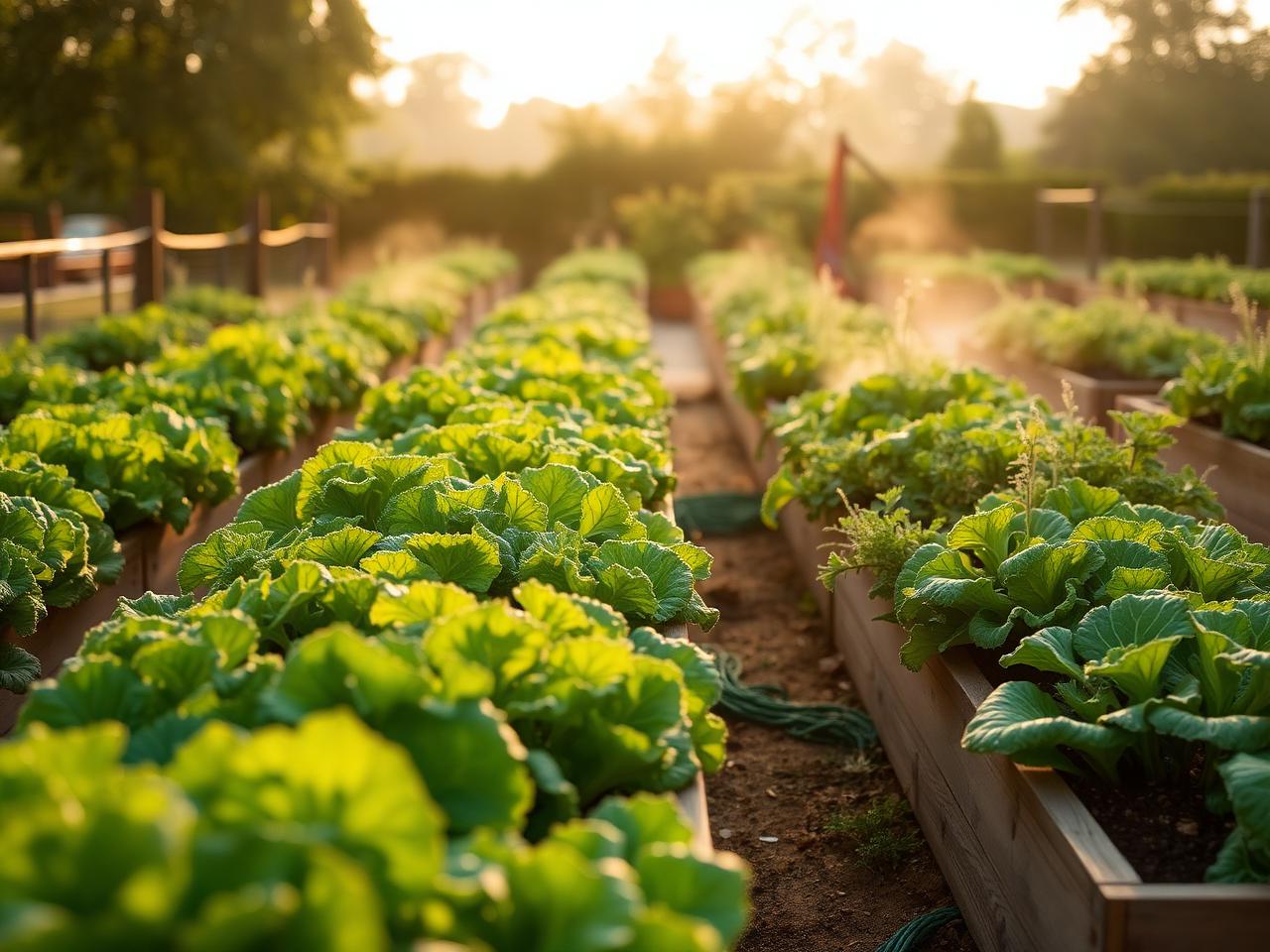
The ban is about the kitchen, not about vegetables. Home-grown produce is allowed, provided it goes straight from the ground to the pigs and has never been indoors. Gov.uk is explicit: "Fruit and vegetable material that originated outside the kitchen, which has never entered the kitchen and which has not come into contact with material of animal origin can be fed, such as vegetables grown in domestic gardens."
In practice that means windfall apples and pears, glut courgettes and marrows, bolted lettuces, surplus brassicas, pea and bean haulm, pulled roots and unsold veg from the plot are all fair game, picked and taken straight to the pen. The rule of thumb from experienced keepers is simple: if it has been in your kitchen, the fridge, or on a worktop where other food is handled, it is now kitchen waste and must not be fed. Keep a bucket in the garden or polytunnel for pig produce so it never crosses the threshold.
What pigs should actually eat: compound feed by life stage
The backbone of a pig's diet should be a proper compound pig feed, sold as pig nuts or pellets and formulated to be nutritionally complete. You buy it from an agricultural merchant, and it will be your single biggest cost in keeping pigs, so it is worth getting the right ration. Compound feeds are made for different life stages, with protein highest for the youngest, fastest-growing pigs and tapering down as they mature.
| Life stage | Typical ration | Roughly how much |
|---|---|---|
| Piglet / creep | Creep or starter feed, highest protein (about 18 to 22%) | Small amounts from a couple of weeks old, offered ad lib alongside the sow |
| Weaner | Weaner or grower nuts (about 18 to 20% protein) | Fed to appetite when young, then move onto a measured grower ration |
| Grower | Grower nuts (about 16 to 18% protein) | Around 1 to 1.5kg a day at 25kg, rising with age |
| Finisher (pork/bacon) | Finisher nuts, leaner (about 16 to 18% protein) | Rising to roughly 2.5kg a day, restricted near bacon weight to avoid fat |
| Dry / pregnant sow | Sow rolls or nuts (about 16% protein) | About 2 to 3kg a day, adjusted to condition |
| Lactating sow | Sow rolls, fed generously | About 2kg a day plus roughly 0.5kg for each suckling piglet |
Those protein figures are typical UK ranges from feed merchants and are a guide, not gospel; always follow the feeding instructions on the specific bag you buy, and change between feeds gradually over 10 to 14 days so you do not upset digestion. Store feed somewhere dry and vermin-proof, and check the best-before date, because the vitamin and mineral content declines even when the protein and fibre are still fine.
How much to feed: enough, not too much
Pigs are prone to laying down fat, and overfeeding is one of the commonest mistakes new keepers make. The bag is a starting point, but your eyes and hands are the real guide. There are two well-known rules of thumb that get you close.
Working out a daily ration
- 1
Start from age or weight
A simple rule is about 450g (1lb) of feed per day for each month of age. Feed merchants offer a parallel guide: roughly 1 to 1.5kg a day at 25kg bodyweight, rising by about 0.5kg for each further month.
- 2
Cap it sensibly
For a growing pig, keep the ceiling to around 2.5 to 2.75kg a day. Only a lactating sow needs more than this. Weigh the feed at first, because the right amount is usually less than it looks.
- 3
Split into at least two meals
Feed little and often, at the same times each day. Pigs love routine, and scattering nuts on dry ground makes the meal last and encourages natural foraging.
- 4
Apply the 20-minute rule
Offer only what your pigs clear up in about 20 to 30 minutes. If food is left, cut the amount back and build up gradually as appetite grows.
- 5
Check body condition weekly
Run a hand along the backbone. If you can feel the spine easily the pig is a little thin; with firm pressure it is about right; if you cannot feel it at all, the pig is too fat and the ration needs trimming.
Feeding for pork or bacon
If you are raising pigs for the freezer, the feeding plan flexes a little with your goal. Pork pigs are taken to a lighter finished weight, broadly 45 to 90kg liveweight, and on a slower outdoor system reach it at around 6.5 to 8 months. They can be grown fairly steadily to that point. Bacon pigs are kept on longer, to a heavier weight commonly around 72 to 90kg or more, and here the aim is firm, lean meat rather than deep back fat. That usually means holding them on a slightly restricted finisher ration in the final stretch, roughly from five months on, rather than feeding to full appetite. Whichever you are after, condition-score regularly, because an over-fat carcass is a disappointment however you planned to use it.
Forage, pasture and rooting
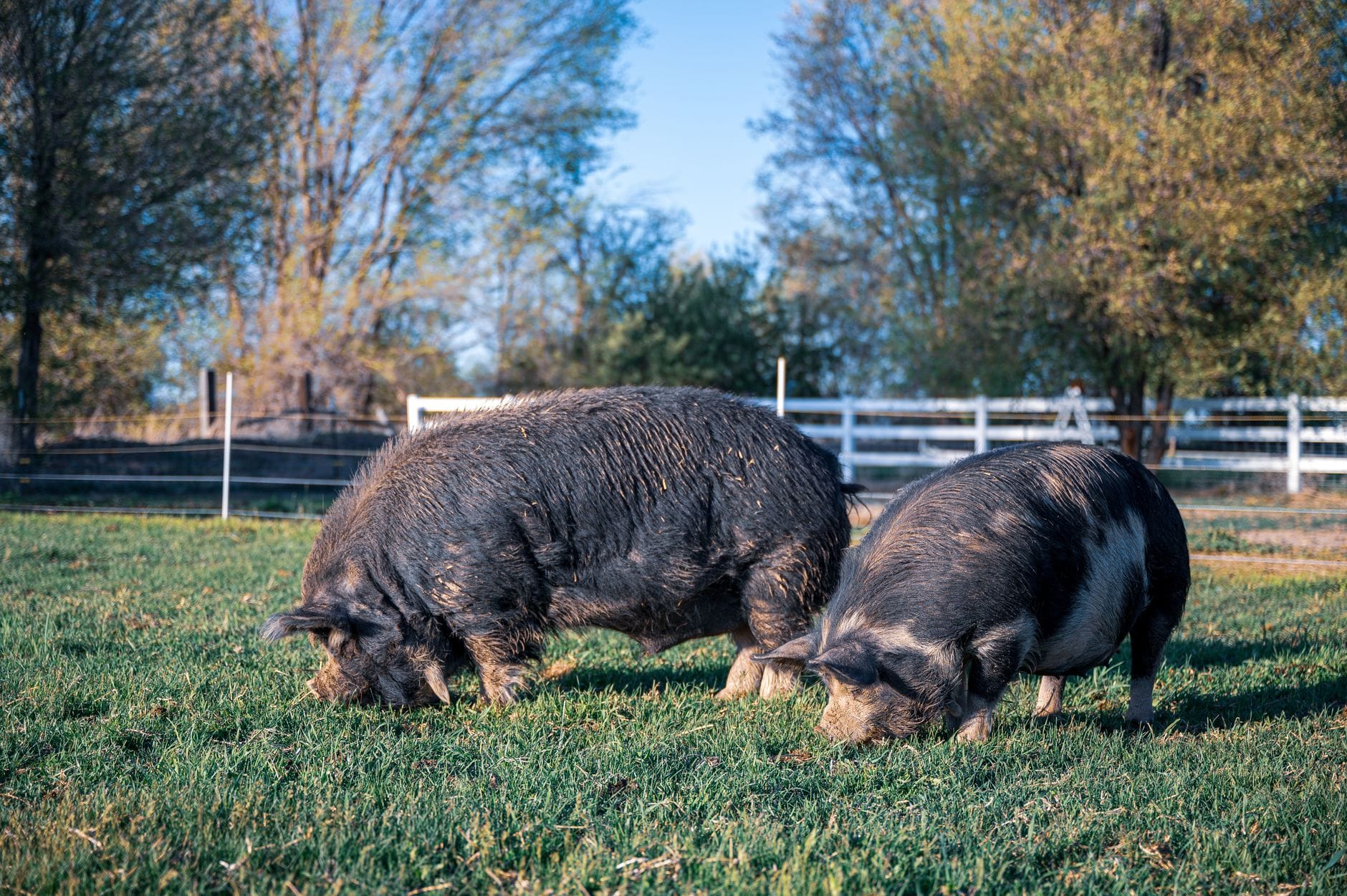
A pig is not just a bucket to be filled. Given the ground, pigs graze grass, root for shoots and tubers with that remarkable snout, and hoover up windfalls, and all of this is good for them and for their welfare. Good summer grazing or woodland genuinely reduces how much bagged feed a pig needs, and hardy traditional breeds in particular can do very well on grass plus a modest ration in the warmer months, needing more supplementary feed only as the grazing fails in winter.
Rooting is natural and healthy, but it is destructive by design, so rotate pigs around your land and be ready to move or rest ground before it turns to a mud bath. Windfall fruit and surplus garden crops make excellent, welfare-friendly extras, as long as you remember the golden rule: straight from the garden, never through the kitchen.
Fresh water, always
It is easy to focus on feed and forget that water matters just as much. Pigs must have constant access to clean, fresh drinking water. They cannot sweat, so water is central to how they regulate their temperature, and a pig that runs short in hot weather is in real trouble. Pigs also love to tip troughs to make a wallow and will stand in and dirty their drinking water, so check and refill it daily. In winter, break and clear any ice, but never add chemicals or antifreeze to stop it freezing. A robust galvanised trough or a purpose-made drinker, secured against tipping, is well worth the money.
Feed pigs well within the law, watch their condition rather than the bag, keep the water clean, and you will have healthy, contented animals and, if that is your aim, excellent meat. For the wider picture of getting started, keep our keeping pigs guide to hand.
This guide is general information for UK pig keepers, not legal or veterinary advice. Feed-safety law is enforced and the disease picture can change, so always confirm the current rules with the gov.uk guidance linked above before feeding anything you are unsure about, and speak to your vet or the Animal and Plant Health Agency if you have concerns. Rations here are typical UK figures and starting points; follow the instructions on your specific feed and feed to your pigs' condition. Last checked July 2026.
Frequently asked questions
Sources
- Supplying and using animal by-products as farm animal feed , Animal and Plant Health Agency / Defra (GOV.UK)
- APHA warns not to feed kitchen scraps to farm animals because of disease risk , Animal and Plant Health Agency (GOV.UK)
- Pig keepers warned not to feed kitchen scraps to pigs due to African swine fever risk , Animal and Plant Health Agency / Defra (GOV.UK)
- Pigs: caring for your pigs (what to feed your pigs) , RSPCA
- Feeding growing and finishing pigs , Agriculture and Horticulture Development Board (AHDB)
- Feeding pigs , The Accidental Smallholder
- Feeding your livestock — what you need to know , Oxford Sandy and Black Pig Group
Kit for this job (Ad)

2 Black Gros Trough 55cm
Check price on Amazon →
Goovilla Large Feed Trough, Hanging or Screw-in Fence Feeder with Clips, 2 Pack 9 Quart Goat Feeder Supplies, Dog Horse Hog Pig Livestock Poultry Plastic Feeder Trough Bucket for Large Animal, Black
Check price on Amazon →
Pigs & Pork: River Cottage Handbook No.14
Check price on Amazon →
Get Started In Pig Keeping: How to raise happy pigs in your outdoor space
Check price on Amazon →We may earn a small commission, at no cost to you. We only list kit we'd use.
Written by
UK Homesteading Team
Editorial team
The UK Homesteading editorial team, offering UK-specific, evidence-led guidance on growing, keeping, preserving and the law.