Ask ten smallholders which pig to keep and you will get ten answers, usually delivered with real affection, because most people fall for the breed they started with. That is worth knowing up front: there is no single "best" pig, only the best pig for your land, your appetite and how much time you want to spend. The good news is that Britain has a wonderful spread of traditional native breeds to choose from, and almost all of them are better suited to a smallholding than the lean commercial hybrids you will never actually meet at a farm gate.
This guide is about choosing between those native breeds. If you are still weighing up whether to keep pigs at all, start with our beginner's guide to keeping pigs in the UK, then come back here to pick a breed. One rule applies before you choose anything: never buy a single pig. Pigs are intensely sociable and need company of their own kind, so you are choosing at least a pair.
Why native breeds suit smallholders
Supermarket pork comes from pigs bred for one job: to grow fast and lean on a controlled diet indoors. Those commercial lines, mostly Large White, Landrace and Duroc crosses, are brilliant at that job and hopeless at the smallholding life. They are not built to weather a British winter outdoors, they are bred for uniformity rather than flavour, and much of their value depends on the intensive system around them.
The traditional British breeds are the opposite. They were developed over centuries to live outdoors on modest ground, foraging for a good part of their keep, which is exactly what a smallholder wants. The trade-off is honest and easy to live with: native breeds grow more slowly and carry more fat, so they take longer to reach killing weight and eat a little more per kilo of meat produced. In return you get pork and bacon with real depth of flavour, animals that thrive outside, and stock that is generally calm and easy to handle. For most people that is no contest.
The native breeds, side by side
Here is how the breeds smallholders most often keep compare on the things that actually matter day to day. Treat weights as a guide to relative size, not a target, since most pigs are slaughtered at pork or bacon weight long before they reach full adult size.
| Breed | Best meat use | Temperament | Outdoor hardiness | Size & growth |
|---|---|---|---|---|
| Gloucestershire Old Spot | All-rounder, pork and bacon | Very docile, great mothers | Hardy, easy to handle | Large, steady growth |
| Tamworth | Fine bacon, leaner meat | Placid but active and busy | Very hardy, loves woodland | Long-bodied, slower to finish |
| Berkshire | Prized, well-marbled pork | Docile, good mothers | Hardy outdoors | Medium, moderate growth |
| British Saddleback | Pork and bacon | Docile, calm | Very hardy, thrives outside | Large, steady growth |
| Large Black | Rich, dark pork | Very docile, placid | Extremely hardy, good grazer | Very large, slower to finish |
| Oxford Sandy & Black | All-rounder, strong-flavoured | Docile, good-natured | Hardy outdoors | Medium to large |
| Kunekune | Small joints, red-tinged pork | Exceptionally gentle, pet-like | Hardy, grazes not roots | Small, very slow-growing |
Gloucestershire Old Spot
The classic smallholder's pig, and a superb first choice. White with distinctive black spots, the "orchard pig" earned its nickname grazing the apple and pear orchards of the west of England. It is known for a very gentle nature, excellent mothering and genuine hardiness, and it is easy to handle even for a beginner. As an all-rounder it gives good pork and bacon, and it copes happily with outdoor life. If you want one breed that forgives a learning curve, this is it.
Tamworth
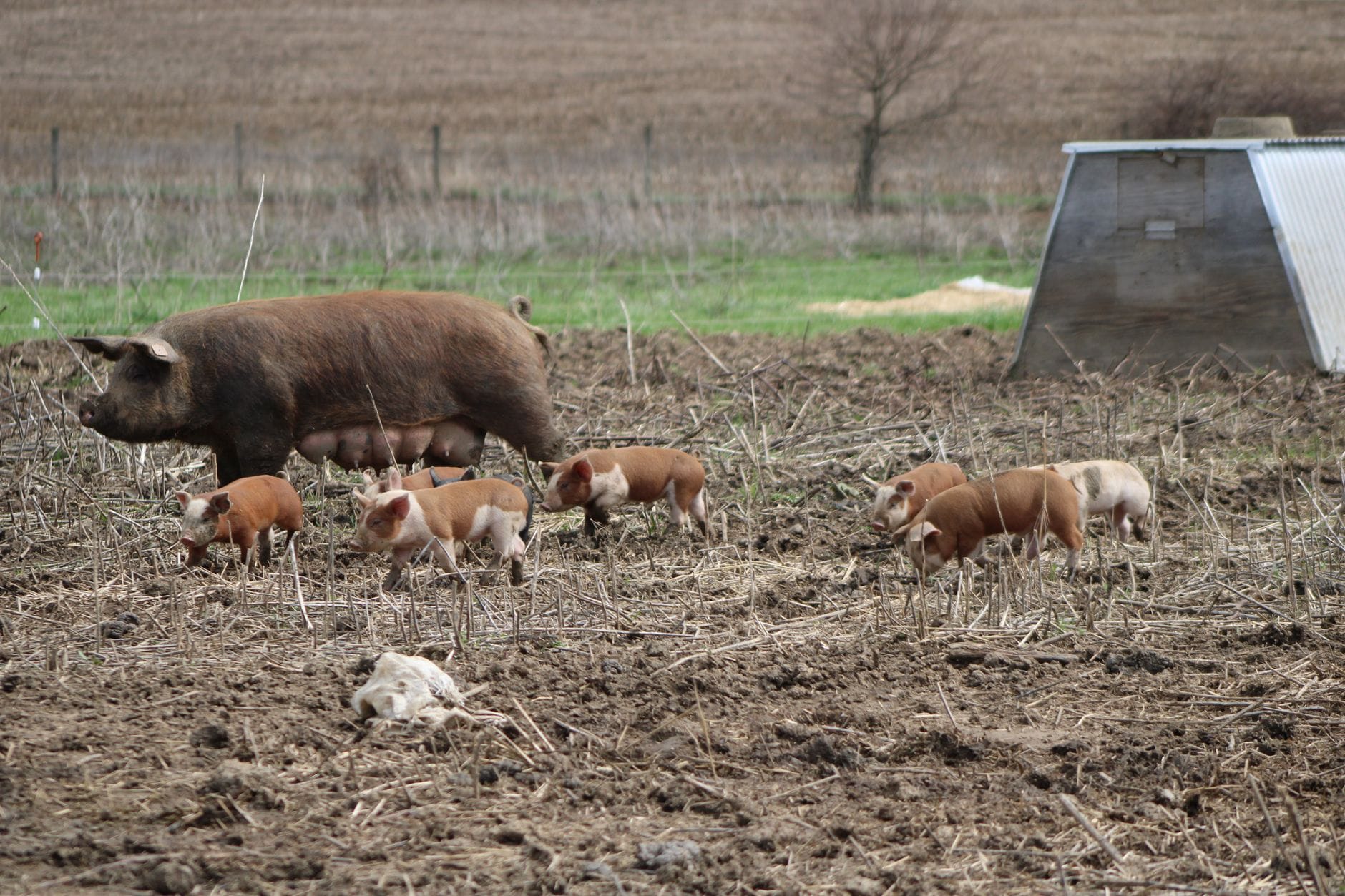
One of Britain's oldest breeds and instantly recognisable: a ginger-red coat, a long snout and long legs. The Tamworth is the forager's pig, superb in woodland and rough ground, with a placid temperament wrapped around a busy, active character, so it needs good fencing and something to do. It is longer and leaner than the black breeds and has a long reputation for fine bacon. It is currently a Priority breed on the Rare Breeds Survival Trust's watchlist, so keeping one directly supports the breed.
Berkshire
The oldest recorded breed in Britain, black with white points on the face, feet and tail. Berkshires are docile, good-natured and reliable mothers, with litters often around ten piglets. Their real claim to fame is the meat: well-marbled, tender pork that is prized by chefs and often sold under its Japanese name, Kurobuta. A medium-sized, manageable pig that rewards you at the table.
British Saddleback
A big black pig with a white band over the shoulders and front legs, created in the twentieth century from older saddleback lines. It is prized for exactly the traits a smallholder wants: hardiness, a calm docile temperament and the ability to thrive outdoors in a British climate. It gives good pork and bacon and, like the Old Spot, makes an excellent, unflappable starter breed.
Large Black
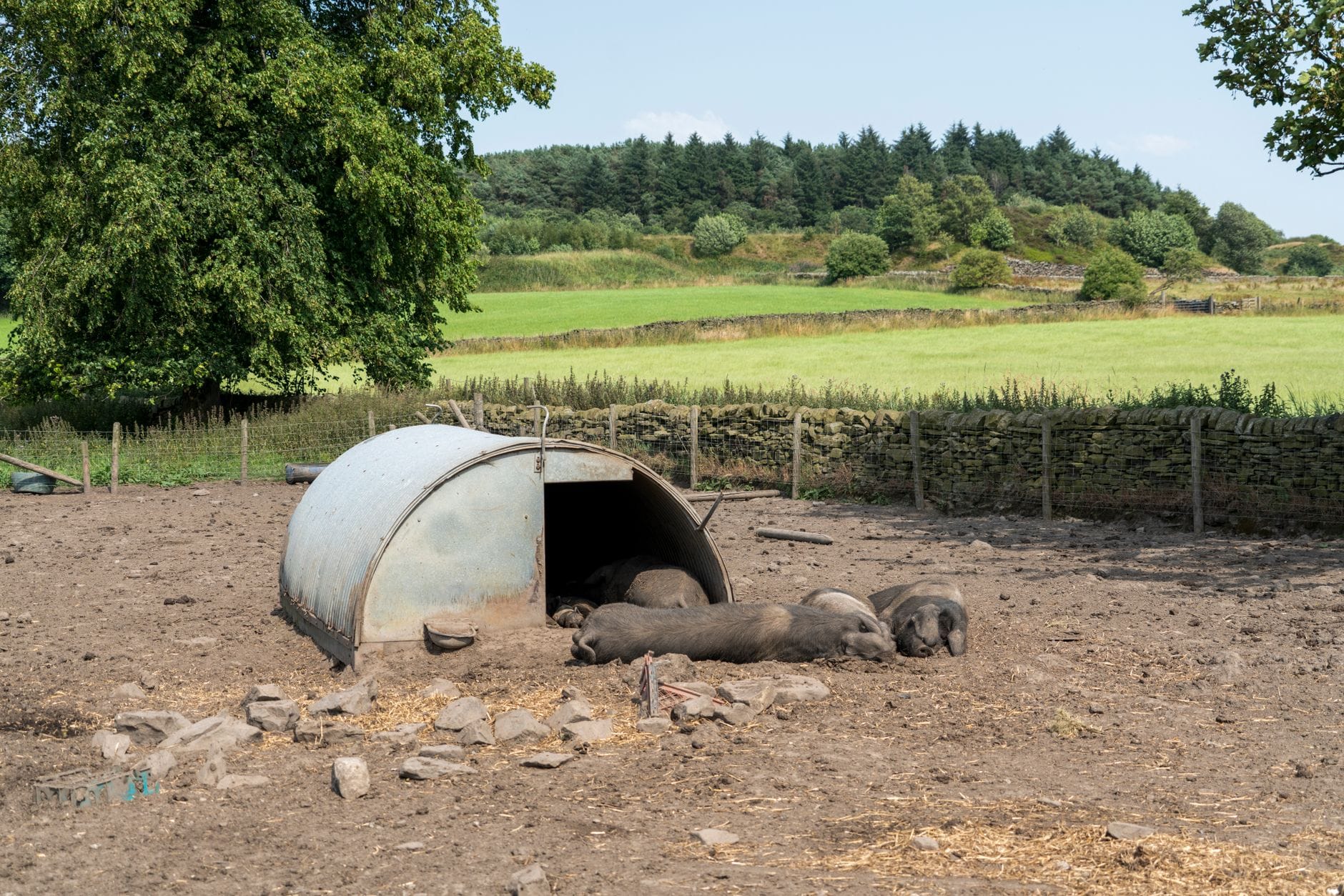
Britain's only entirely black pig, and one of the largest, with sows around 300 kg and boars reaching roughly 350 kg. Despite the size it is famously docile and placid, and it is one of the best grazers among the native breeds, doing very well on grass and rough grazing. The meat is rich, dark and succulent. Its lop ears fall forward over its eyes, which keeps it calm and easy to contain, though it means you should not sneak up on one.
Oxford Sandy & Black
Sometimes called the "plum pudding pig", this handsome breed has a sandy or rust-coloured base with black patches. It is a good-natured, docile all-rounder that came back from the very edge of extinction thanks to dedicated breeders. The meat has a strong, distinctive flavour and works well for pork, bacon and hams. A lovely middle-ground breed for a keeper who wants something a bit less common than an Old Spot.
Kunekune
The odd one out, and increasingly popular for good reason. Originally from New Zealand, the Kunekune is small, exceptionally gentle and almost pet-like, which makes it a favourite with families and first-timers. Its party trick is that it grazes grass rather than digging, so it roots far less than other pigs and can live on pasture you want to keep reasonably intact. The catch is growth: Kunekunes are very slow to finish, often taking around 18 months to reach killing weight, and they stay small. Think of them as the gentle, grass-friendly starter pig, not the efficient meat producer.
How to actually choose
Rather than picking a favourite from a photo, work through what matters for your situation.
Match the breed to your smallholding
- 1
Decide what you want off the pig
Well-marbled roasting pork points you to Berkshire or Large Black; traditional dry-cured bacon points to Tamworth or a longer-bodied breed; an easy all-rounder points to Gloucestershire Old Spot, Saddleback or Oxford Sandy & Black.
- 2
Be honest about your experience
If this is your first time, favour the calmest, most forgiving breeds: Gloucestershire Old Spot, British Saddleback or, for something smaller and gentler, a Kunekune.
- 3
Look at your land
Rough ground you want cleared suits a strong rooter like a Tamworth; grass you want to keep suits a grazing Kunekune. For everything in between, plan to rotate pigs and protect your best pasture.
- 4
Think about rooting and damage
Almost all traditional breeds will plough up a field fast. If that is a problem, choose a Kunekune, or plan to nose-ring and rotate the others. Our land guide covers this.
- 5
Factor in size and growth rate
A Large Black finishes slowly and grows huge; a commercial hybrid finishes fast and lean; a Kunekune grows slowest of all. Match the timeline and adult size to your space and patience.
- 6
Buy the best weaners you can
Source from a registered breeder or breed society, buy at least two, and pick healthy, lively weaners over a bargain at a livestock market where health is hard to judge.
What about commercial hybrids?
You will occasionally be offered "commercial" or "improved" weaners, usually crosses based on Large White, Landrace and Duroc. They grow faster, finish leaner and convert feed more efficiently, so if your only goal is the cheapest possible pork per kilo, they win on paper. For a smallholding, though, they are rarely the better buy: they are less suited to living outdoors, bred for uniformity over flavour, and they carry none of the conservation value. If you are simply raising a couple of pigs for your own freezer, a native breed or even a native crossbreed will serve you far better, and taste far better.
One thing to sort before any pig arrives
Whichever breed you fall for, you cannot legally bring a pig home until the paperwork is in place. Every pig keeper in the UK, even someone with a single pet pig, must register the land with a County Parish Holding (CPH) number and register as a pig keeper with the Animal and Plant Health Agency to get a herd mark. It is quick, free and done well before the pig moves in. We cover exactly how, along with fencing, shelter and space, on our pig housing and land guide, and once your pigs are home our guide to feeding pigs will help you grow them on well.
Pick the breed that fits your land and your table, buy a healthy pair from a good breeder, and you will not only get better meat than any shop can sell you, you will be helping keep one of Britain's oldest breeds going. That is a rare thing to be able to say about a freezer full of pork.
This guide focuses on breed choice; the legal, housing and feeding detail lives on the linked pages in this section. Breed facts and rare-breed status were drawn from the Rare Breeds Survival Trust, BBC Countryfile, The Accidental Smallholder and the British Kunekune Pig Society. Rare-breed watchlist categories are reviewed by the RBST each year, so check the current status of your chosen breed before you buy. Last checked July 2026.
Frequently asked questions
Sources
- Pigs (Watchlist) , Rare Breeds Survival Trust
- Native British pig breeds and how to recognise them , BBC Countryfile Magazine
- Choosing Your Pigs , The Accidental Smallholder
- Raising for meat , The British Kunekune Pig Society
- Keeping pigs in England , Animal and Plant Health Agency / Defra (GOV.UK)
- Register livestock to get a flock or herd mark , Animal and Plant Health Agency (GOV.UK)
Kit for this job (Ad)

Pigs & Pork: River Cottage Handbook No.14
Check price on Amazon →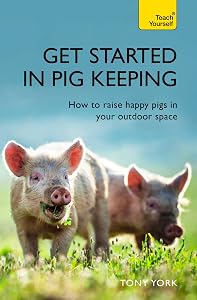
Get Started In Pig Keeping: How to raise happy pigs in your outdoor space
Check price on Amazon →We may earn a small commission, at no cost to you. We only list kit we'd use.
Written by
UK Homesteading Team
Editorial team
The UK Homesteading editorial team, offering UK-specific, evidence-led guidance on growing, keeping, preserving and the law.