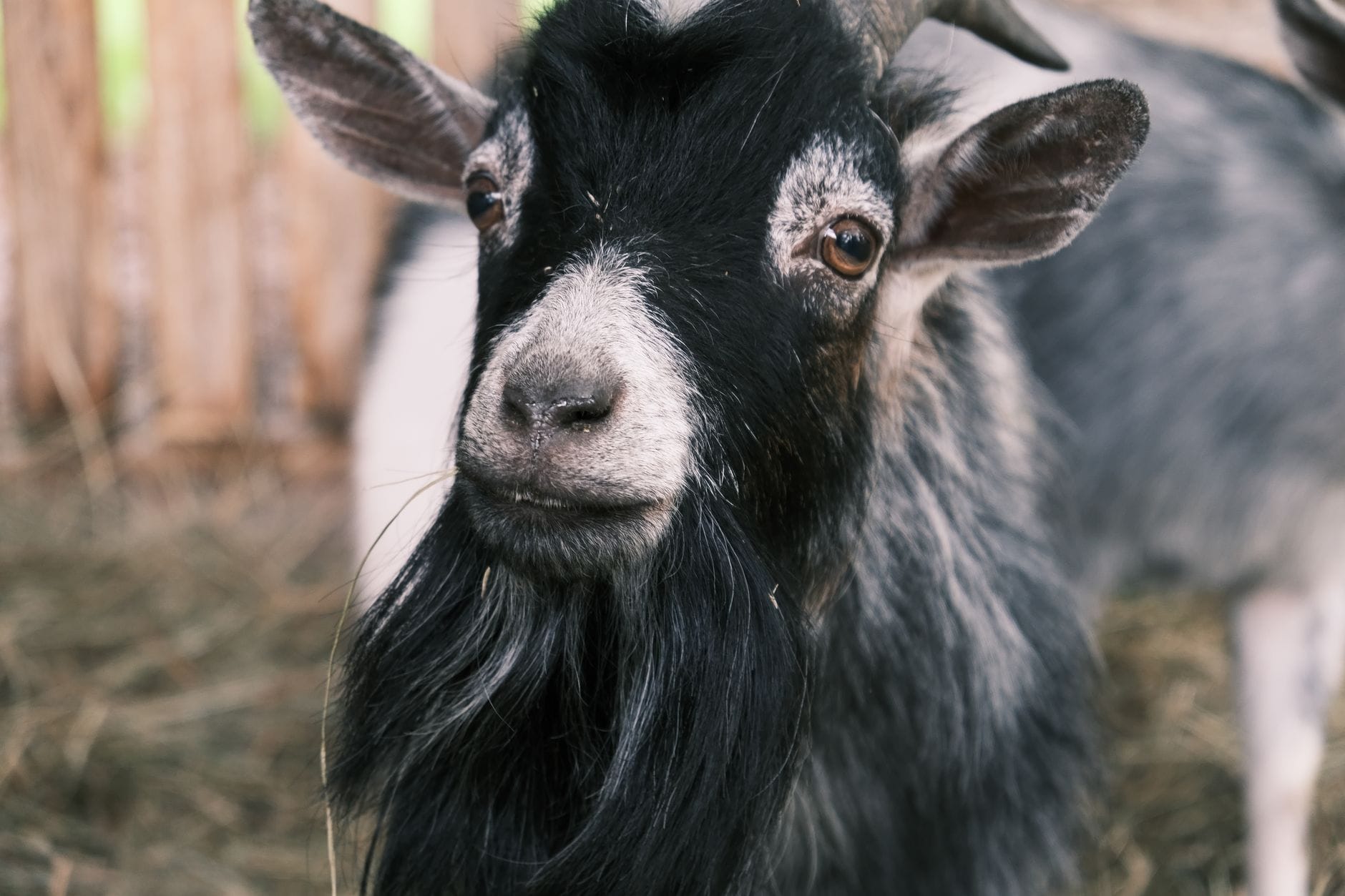
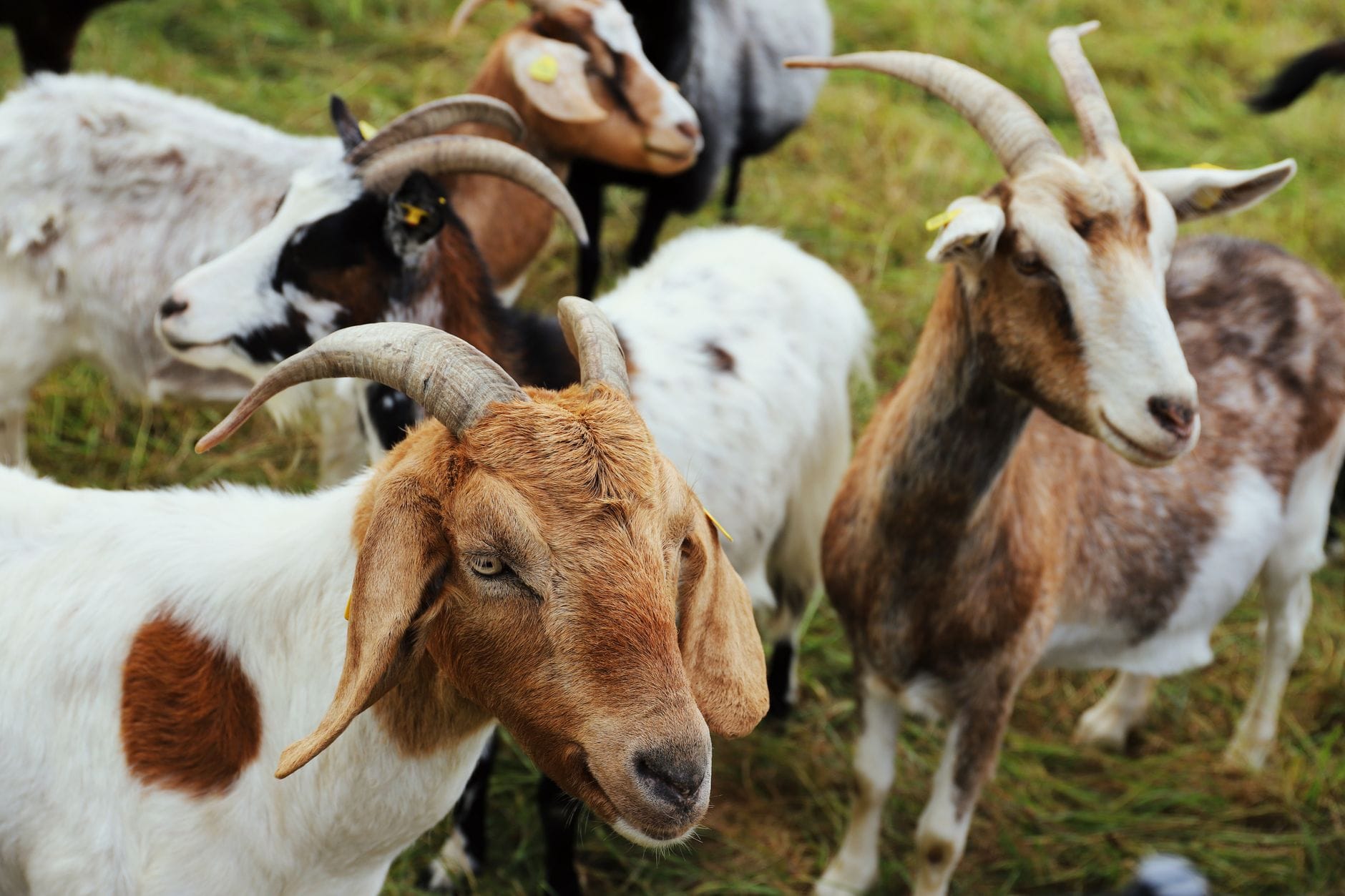
Two facts shape almost every practical decision about keeping goats, and both surprise people who assume goats are just hardy little sheep. The first is that goats hate being wet. They are far less weatherproof than sheep or cattle, they will not tolerate standing out in the rain, and a soaked goat on muddy ground is a goat heading for illness. The second is that goats are extraordinary escape artists: they climb, they jump, they squeeze through gaps, and they lean on and test every fence you build until they find the weak spot. Get the shelter and the fence right and goat keeping is a joy. Get them wrong and you will spend your evenings retrieving goats from the neighbour's roses.
This guide covers housing and fencing together, because in practice they are two halves of the same job: a dry place to retreat to, and a boundary that actually holds. If you are still deciding whether goats are for you, start with our beginner's guide to keeping goats in the UK and our rundown of the best goat breeds for UK smallholders. Before you do anything else, though, read the legal panel below, because there is registration you must complete before a single goat sets foot on your land.
Why housing matters more for goats than for sheep
It is worth saying plainly, because it drives everything: goats cannot cope with being wet and cold the way sheep can. A sheep's fleece sheds rain; a goat's coat does not. Goats also suffer in strong wind and, at the other extreme, in hot sun with flies. The RSPCA puts it directly: goats "can't tolerate wet conditions and will always try to look for dry shelter in bad weather", and "they need access to housing 24 hours a day, whatever the season". That last point is the one to hold on to. The shelter is not just for overnight or for winter. The door has to be open and reachable whenever the weather turns, which in the UK can be any month of the year.
So the working picture is a securely fenced paddock with plenty to browse, plus a main goat house the goats can get into at will. Many keepers bring goats in overnight, or keep them in during genuinely foul spells, but even goats living out by day must always be able to walk into somewhere dry.
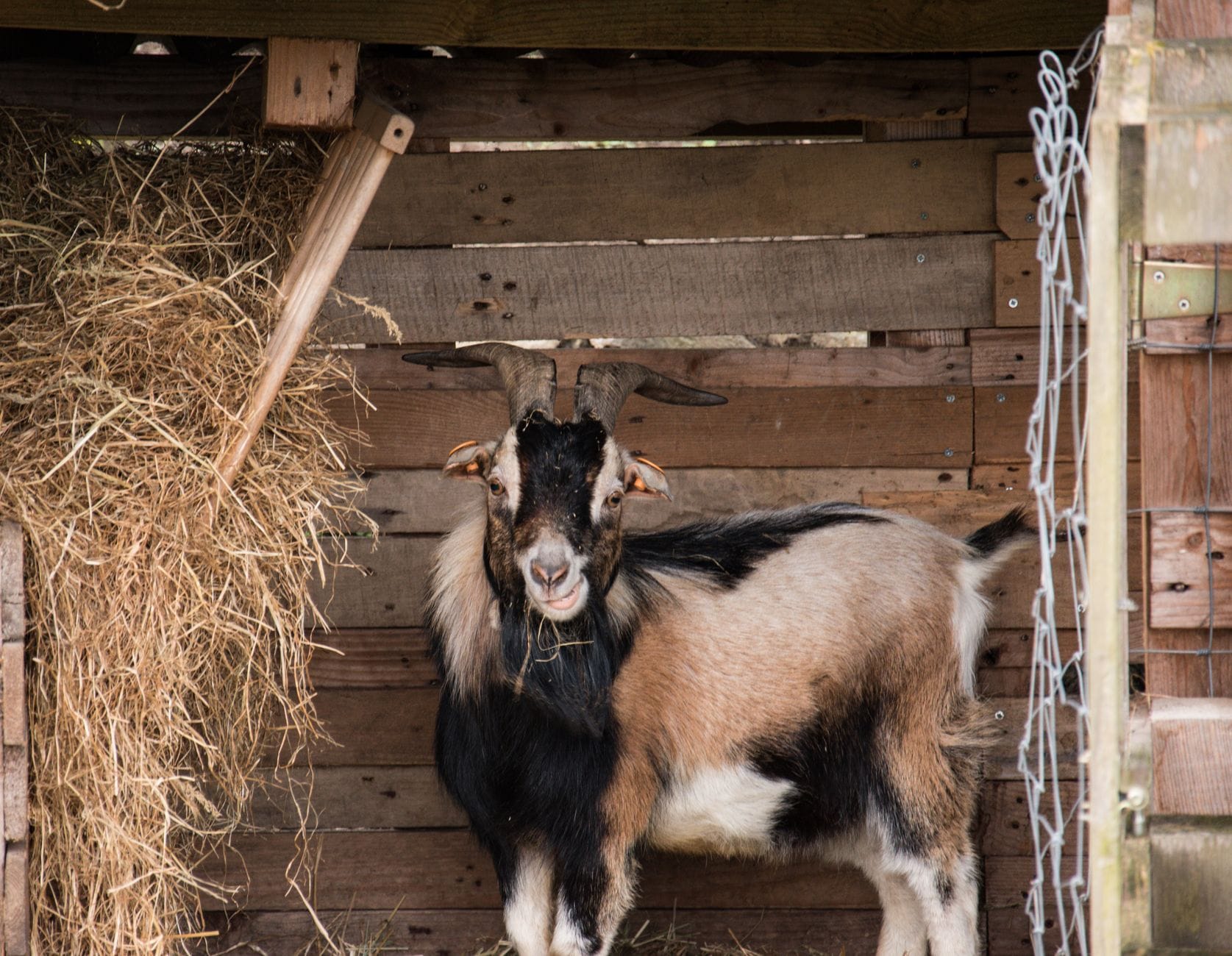
What a good goat house looks like
You do not need anything fancy. A sound outbuilding, a stable, or a purpose-built field shelter all work, in wood, stone, concrete or a mix. What matters is that it hits a short list of requirements that the British Goat Society and RSPCA broadly agree on:
- Dry. Good drainage, ideally a concrete floor that can be washed down and topped with bedding, or a well-drained earth floor. A gentle slope helps water and urine run away from the goats' bed.
- Draught-free at goat level. Ventilation up high is essential to clear damp and ammonia, but there must be no cold draught blowing across the floor where the goats lie.
- Well-ventilated and reasonably light. Stale, humid air causes respiratory trouble. Aim for good airflow near the roof plus some natural light.
- Enough headroom. The British Goat Society describes the basic need as a dry, draught-free building "with sufficient headroom for the goat to stand upright on its hind legs with neck outstretched". Goats rear up, so build for it.
- A dry, bedded lying area. Straw or wood shavings, kept topped up and mucked out regularly so the bed stays dry and fresh. A raised, dry area to lie on keeps goats off any damp.
Space per goat
Allow at least 2 to 2.5 square metres of indoor floor per goat, as the RSPCA advises, and treat that as a floor, not a ceiling. Cramped housing means damp bedding, more parasites and more bullying, particularly if you keep horned and hornless goats together, which is best avoided because a horned goat can badly injure a hornless one. Young kids and small breeds such as pygmies need less, but do not use that as an excuse to under-build for adults.
Give them something to climb
Goats are natural climbers and they get bored easily. A couple of sturdy, stable platforms, a large stump, a wide step or a low bench turns a plain pen into somewhere they actually want to be, and climbing keeps them fitter and calmer. It also, usefully, wears their hooves a little. Keep any climbing furniture well away from the fence line, though, or you have just built them a launch pad over the top.
Setting up a goat pen, step by step
Setting up a goat pen and shelter
- 1
Sort the paperwork first
Get your CPH number from the RPA and your herd mark from APHA before the goats arrive, and buy tags carrying your herd mark ready to identify them.
- 2
Pick well-drained ground
Site the shelter and pen on the driest ground you have. Goats do not tolerate mud, so avoid low, wet, churned spots and give yourself a dry standing area for foot care.
- 3
Build or adapt a dry, airy shelter
Make it dry, draught-free at floor level, ventilated up high, with headroom to rear up and at least 2 to 2.5 square metres of bedded floor per goat. Keep the door reachable at all times.
- 4
Add a raised dry bed and climbing platforms
Deep-bed with straw or shavings, add a raised dry lying area, and give them a stable platform or two to climb, sited well away from the fence.
- 5
Fence the paddock tall and tight
Erect stock fencing or goat netting at 105 to 120 centimetres, tight to the ground with no footholds, and plan for an electric line to back it up.
- 6
Fit goat-proof gates and latches
Hang gates that close flush with no climbable gaps, and use latches a goat cannot nose or lever open. Snap clips or double catches beat simple slide bolts.
- 7
Bring the goats and train them to the fence
Introduce at least two goats together, and when you use electric fencing, let them learn its boundary under supervision before you rely on it. Report the move to the Livestock Information Service.
Fencing: if it won't hold water, it won't hold a goat
There is an old smallholding saying that if a fence will not hold water, it will not hold a goat. It is an exaggeration, but not by much. Goats do not merely stand behind a fence the way sheep tend to; they actively work at it. They stand on their hind legs and lean over it, wedge their heads through gaps, climb anything climbable, and lean their full weight on weak sections until posts loosen and wire sags. And once one goat is out, the rest follow. Fencing a goat is less about marking a boundary and more about defeating a determined, intelligent animal with time on its hooves.
For a permanent grazing area, the baseline most UK suppliers and keepers recommend is strong woven wire or purpose-made goat netting at a minimum height of 105 to 120 centimetres, higher for lively breeds or on sloping ground. It needs tight mesh low to the ground so kids cannot squeeze under or through, closely spaced sturdy posts so nothing sags when a goat leans, and no footholds, low corners or wobbly rails that give them a leg up. Watch mesh size if your goats are horned, because they will push their heads through a square mesh and get stuck.
Two more details catch people out. Gates are the classic weak point: hang them so they close flush with no climbable gap and no foothold, and fit a latch a goat cannot work open. Goats are genuinely good at nosing and levering simple slide bolts and lift catches, so use a snap clip, a double catch or a spring-loaded latch, and check it every time. And when you first put goats behind a new electric fence, train them to it: let them approach and touch it under supervision so they learn where the boundary is and that it means business, rather than discovering the hard way at 2am. If you want to go deeper on the physical build, see our guide to stock fencing.
Company, browse and staying off wet ground
Housing and fencing are the structure, but three welfare points sit alongside them and change how you plan the space.
The first is not negotiable: goats must not be kept alone. They are social herd animals, and the RSPCA advises keeping "at least two goats who get on well". A single goat becomes stressed, noisy and, tellingly, far more likely to escape in search of company, which loops straight back to your fencing headaches. Plan for two from the outset, and size the housing and paddock accordingly.
The second is browse and enrichment. Goats are browsers more than grazers: they would rather strip a hedge, a bramble or the lower branches of a tree than crop grass, and a paddock with plenty of safe foliage keeps them occupied and content. Add interest to their space, from climbing platforms to safe branches and different levels, so they can behave naturally. A bored goat is an escaping goat. Our guide to feeding goats covers browse and forage in detail.
The third is keeping them off wet, poached ground. Give the paddock enough size that it does not turn into churned mud, rest sections where you can, and make sure there is always dry ground and dry shelter, especially through the UK winter. Standing in the wet is hard on goats' feet in particular, which is why that dry standing area for foot trimming earns its place. And do not forget clean, fresh water available at all times, in every pen, sited so it cannot be fouled or knocked over.
Movements, standstill and the devolved nations
Once your goats are home, the legal thread continues. Any time a goat moves on or off your holding you must record and report it, and after you bring cattle, sheep or goats onto your land there is a 6-day standstill in England and Wales, or a 13-day standstill in Scotland, during which you must not move goats off again, a rule designed to slow the spread of disease. Movements in England are reported to the Livestock Information Service.
The registration and identification framework is similar across the UK but not identical, so do not assume the English detail travels. Northern Ireland, for example, has its own tagging timescales under DAERA, requiring goats to be identified with two matching tags before a set age. Scotland issues CPH numbers through the Rural Payments and Inspections Division and takes movement reports through ScotEID; Wales issues them through the Welsh Government and reports through EIDCymru. Wherever you are, the principle is the same: register the land and yourself, tag the animals, keep records, and report moves. Confirm the current rules for your nation with the relevant authority before you buy your goats, not after.
This guide is general information for UK goat keepers, not legal or veterinary advice. Registration, identification and movement rules are legal duties that differ by nation and are updated from time to time, so always confirm the current position with GOV.UK, the Rural Payments Agency, APHA, or the equivalent body in Scotland, Wales or Northern Ireland before you act. Last checked September 2026.
Frequently asked questions
Sources
- Pet goats: environment (housing and outdoor areas) , RSPCA
- Pet goats need company , RSPCA
- Housing (basic accommodation requirements for goats) , British Goat Society
- Goat Housing , The Accidental Smallholder
- Goat Netting Buyer's Guide (electric fencing for goats) , Electric Fence Online
- Apply for a county parish holding (CPH) number , Rural Payments Agency (GOV.UK)
- Register livestock to get a flock or herd mark , Animal and Plant Health Agency (GOV.UK)
- Tag goats with ear tags, pastern bands and boluses , Animal and Plant Health Agency (GOV.UK)
- Moving sheep and goats: what keepers need to know , Rural Payments Agency (GOV.UK)
- Report sheep and goat movements (Livestock Information Service) , Livestock Information Service (GOV.UK)
- Identification, registration and movement of sheep and goats , Department of Agriculture, Environment and Rural Affairs (Northern Ireland)
Kit for this job (Ad)

12 Volt Battery Powered Electric Fence Energiser XSTOP BA80 10Km Range, 0.6 Joule Output, Weatherproof Kit Includes Leads and Earth Stake. For Horses and Other Animals
Check price on Amazon →
XSTOP 230v Mains Powered Electric Fence Energiser EL90 10Km Range, 0.5 Joule Output, Weatherproof Kit Includes Leads and Earth Stake. For Horses and Other Animals. 2 Year Warranty*.
Check price on Amazon →
Gemi Elettronica ELECTRIC FENCE PolyWire 500 mt 4 mm² for electric fences electric fencing for animals dogs cows hens Horses Cattle Sheep Goats Pigs
Check price on Amazon →
156cm Poly Post Extra Tall 5FT Plastic Fencing Stake | Reinforced Mobile Electric Fence Poles Ideal for Horse Paddocks Equestrian (Green, Pack of 20)
Check price on Amazon →We may earn a small commission, at no cost to you. We only list kit we'd use.
Written by
UK Homesteading Team
Editorial team
The UK Homesteading editorial team, offering UK-specific, evidence-led guidance on growing, keeping, preserving and the law.