Ducks suit Britain. While hens sulk in cold rain, a flock of ducks will be out in the drizzle having the time of their lives, and they will keep laying through weather that puts many chickens off. If you have ever fancied poultry but worried about the grey, wet reality of a UK garden, ducks are worth a serious look.
They are not a soft option, though. They are messier than chickens, wetter, and they have a real talent for turning a tidy patch of grass into a mud bath. This guide covers what that really means, alongside the good bits, so you can decide with your eyes open.
Ducks vs chickens: what is actually different?
If you already keep hens, or have read our guide to keeping chickens, a lot will feel familiar. Ducks are poultry, they need feeding and shutting up at night, and foxes want them just as badly. But the day-to-day is different in a few important ways.
Ducks are wetter. They drink by scooping water and tipping their heads back, and they love to splash, so any water source becomes a puddle and any puddle becomes mud. Their droppings are looser and more frequent than a hen's. In return, they are tougher: a well-feathered duck is close to waterproof and shrugs off cold, wet British days that leave chickens miserable.
They are also brilliant in the garden. Ducks are devoted slug and snail hunters, working through beds and borders with real enthusiasm, and unlike chickens they tend not to scratch everything to bits (though they will happily trample seedlings, so young plants still need protection). Many keepers get ducks as much for pest control as for eggs.
While hens sulk in cold rain, ducks will be out in the drizzle having the time of their lives.
On eggs, ducks more than hold their own. The best laying breeds out-produce most hens, and duck eggs are larger, richer and prized for baking. If you want a steady supply of eggs through a British winter, ducks are one of the most reliable birds you can keep.
Which duck breeds are best for UK beginners?
There is no single "best" duck, but a handful of breeds are forgiving, productive and easy to find in the UK.
For eggs, the Khaki Campbell is the classic starting point. It is calm, hardy, a superb forager and capable of laying 250 to 300 eggs a year, often continuing through cold weather when hens have stopped. If your main goal is a full egg basket, this is the breed to beat.
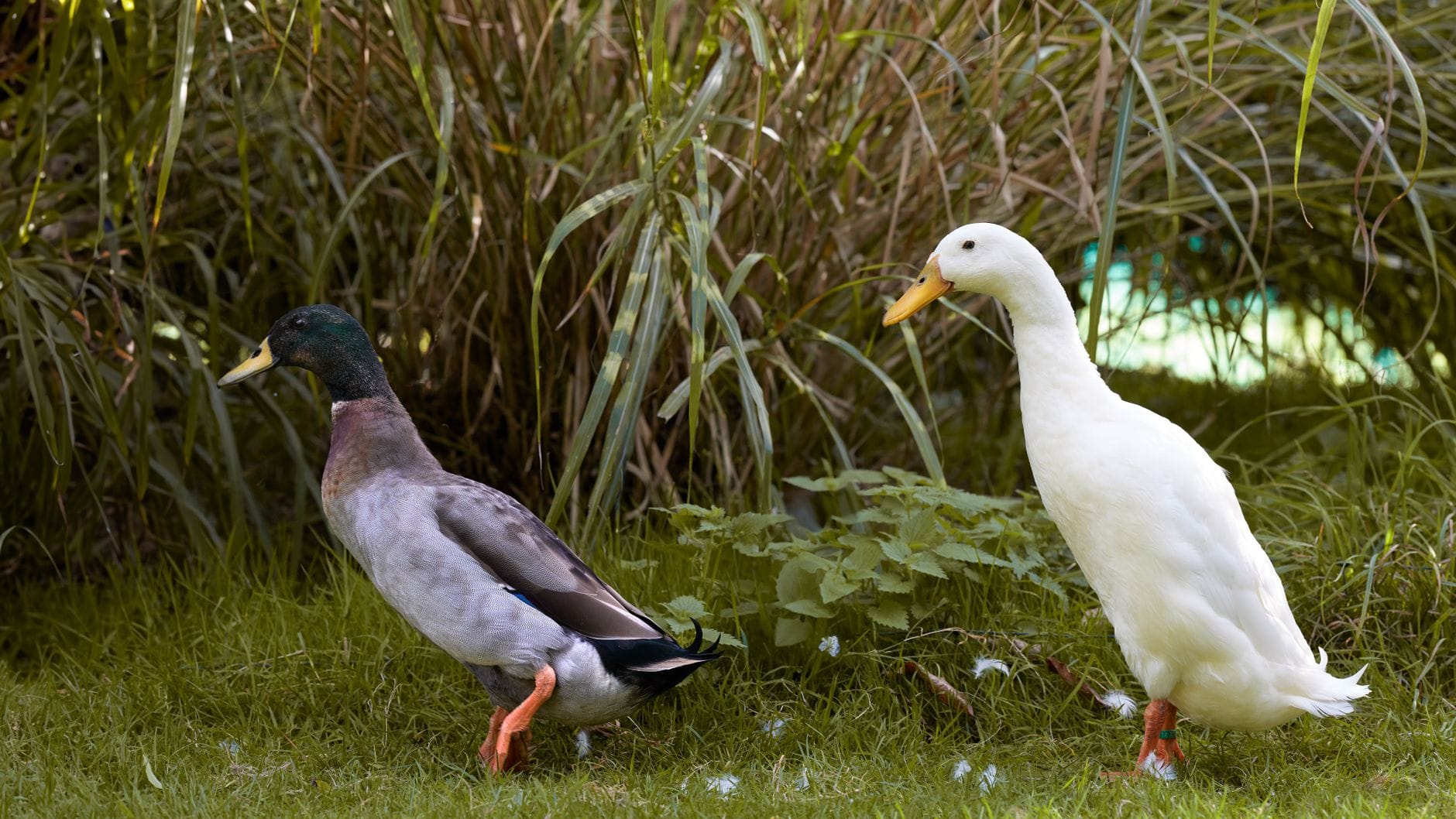
Indian Runners are the other great beginner layer, and probably the most recognisable ducks going: they stand almost upright, like feathered skittles, and run rather than waddle. They are excellent layers, active, entertaining and light on their feet, which makes them a little easier on wet ground.
If you want a heavier, more traditional bird, the Aylesbury and the Pekin are the classic table breeds, calm and substantial, though pure Aylesburys are now quite rare. And for a pet rather than a producer, Call ducks are tiny, tame and endearing, but be warned: they are famously loud, so check how close your neighbours are before you fall for one.
Do you need to register your ducks?
Yes, and this is the one rule you must not skip. Registering your birds is a legal requirement across the UK. In England and Wales that is the Animal and Plant Health Agency (APHA), in Scotland the Scottish Kept Bird Register, and in Northern Ireland DAERA. This applies to everyone who keeps poultry or captive birds, with no minimum flock size: even if you keep a single pet duck, you must register.
You need to register within one month of getting your birds. The online service is free and takes around ten minutes, and there is a phone line if you cannot get online. The register exists so that the authorities can contact keepers quickly during a disease outbreak, which matters enormously for avian influenza.
How much water do ducks need?
Less than you might think for their health, and more than you might think for the mess.
The non-negotiable is water deep enough for a duck to submerge its whole head. Ducks use water to keep their eyes and nostrils clean, and without it they can develop eye and nostril problems. A bucket, trug, deep bowl or a shallow child's paddling pool all work fine. They do not need a pond to be healthy and happy.
A pond is a bonus, not a requirement. If you have the space and want to provide one, ducks will adore it, but it needs to be kept clean or filtered, which is a real job. Most beginners do perfectly well with tubs and pools that can be tipped out and refilled.
The flip side is mud. Ducks will splash their drinking water everywhere, and the area around any water source turns to slop remarkably fast. Site water containers over an area you do not mind sacrificing, ideally on hardstanding, slabs or a deep layer of bark or gravel, and expect to move things around to give the ground a rest.
Housing: what do ducks need to sleep in?
The single most important job of a duck house is to keep the fox out. Ducks are ground birds and utterly vulnerable at night, and a fox will take a whole flock given the chance. The house must be solid, with secure catches (foxes are clever with simple latches), and the run or house must be properly enclosed. Shut your ducks in every night without fail.
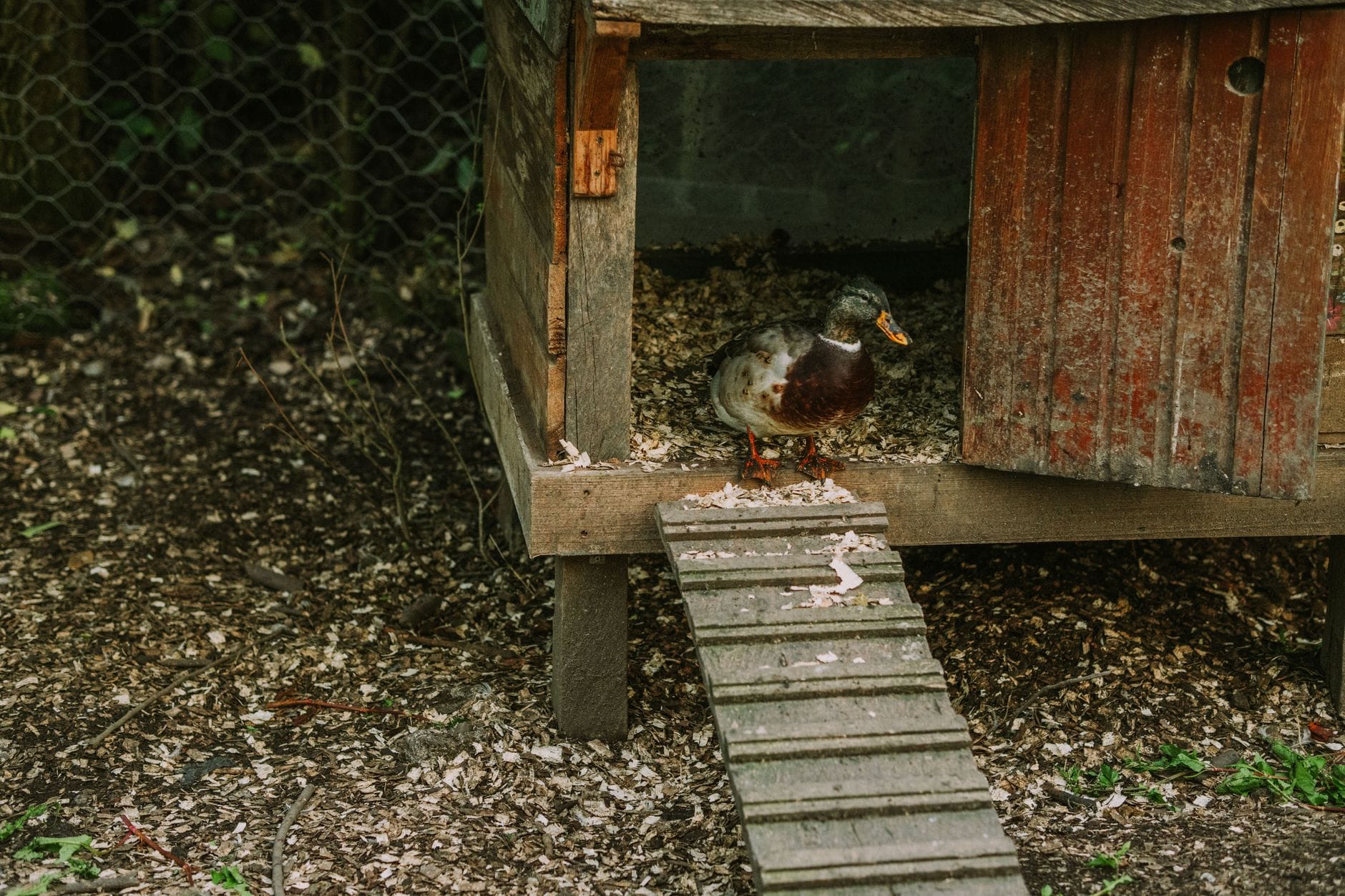
Beyond that, duck housing is refreshingly simple. Ducks do not roost, so they need no perches: they sleep on the floor. Give them a good, deep layer of clean bedding such as straw or wood shavings, plenty of ventilation (ducks are damp and a stuffy house gets humid fast), and a nesting spot at ground level, since they lay on the floor rather than in a raised box. A converted chicken coop, a purpose-built duck house or even a robust dog kennel can all work, as long as it is dry, airy and fox-proof.
- 1
Make it fox-proof
Solid construction, secure latches a fox cannot nudge open, and a fully enclosed run or a house you shut at dusk every single night.
- 2
Keep it dry and airy
Deep, dry bedding on the floor and good ventilation. Ducks produce a lot of moisture, so damp, stuffy houses cause health problems.
- 3
Skip the perches
Ducks sleep on the ground and do not roost, so no perches are needed. Provide a ground-level nesting area with plenty of bedding instead.
- 4
Plan for mud
Site the house and run somewhere you can manage the wet: hardstanding, bark chip or moveable housing so the ground gets a chance to recover.
What should you feed ducks and ducklings?
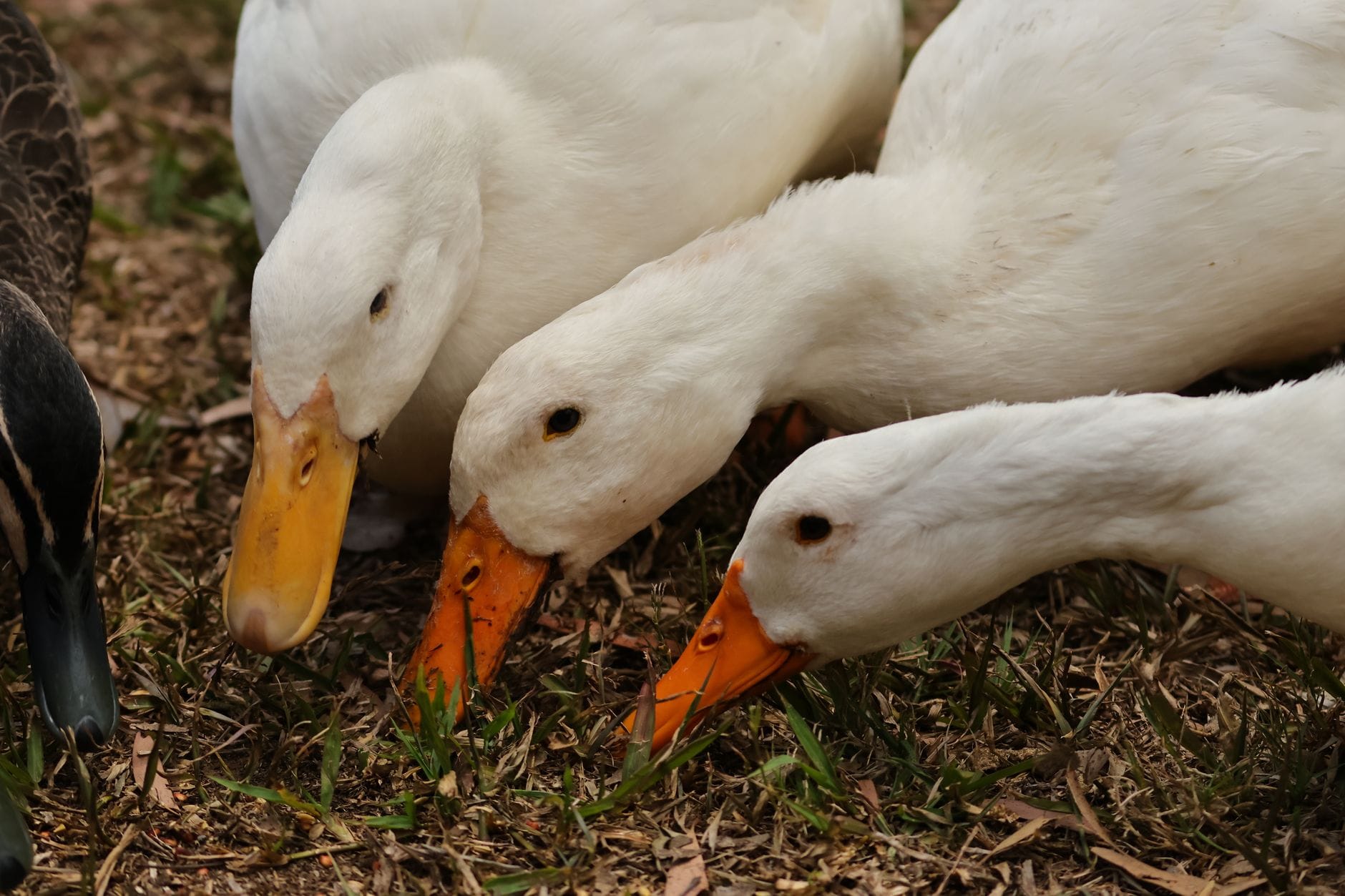
Adult ducks do well on proper waterfowl or poultry feed: a good layer's ration for laying females, plus access to grit, and greens and foraging on top. They will find a lot of their own protein in slugs, worms and insects, which is part of their charm. Avoid feeding bread, which is poor nutrition and does them no favours.
Ducklings are where new keepers most often go wrong, and it matters. Growing ducklings need two to three times more niacin (vitamin B3) than chicks. Plain chick crumb is often too low in niacin for ducklings, and some chick crumb is medicated, which is not suitable for them. A duckling short on niacin can develop weak or bowed legs and struggle to walk, sometimes within a few weeks.
The fix is easy. Use a purpose-made waterfowl or duck starter where you can find one. If you can only get chick crumb, make sure it is unmedicated and add brewer's yeast at roughly a tablespoon per cup of feed to top up the niacin. Brewer's yeast is safe and cannot be overdone this way, so it is a simple insurance policy for strong legs.
Duck eggs: what are they like?
Duck eggs are one of the best reasons to keep ducks. They are larger than hen's eggs, with a bigger, richer yolk and more fat, which is why bakers love them: they make cakes, custards and pastry noticeably richer and give sponges a lovely lift. The shells are thicker too, so they keep well.
A good laying breed like a Khaki Campbell can out-lay a hen over a year, and ducks often keep laying through cold, dark spells when chickens have tailed off. If you have friends who bake, you will never be short of takers for a surplus. Do give any customers or recipients a heads-up, as some people find the richer flavour and yolk take a little getting used to.
The mud reality of a British winter
This is the part no one warns you about enough. Over a wet UK winter, a duck run can turn into a genuine quagmire. Between the rain, the constant splashing and the wetter droppings, grass gives up quickly and bare earth becomes deep, sticky mud that is unpleasant for you and not great for the ducks' feet.
Plan for it from the start. Rotate the ground if you can so no patch takes a battering all winter. Use hardstanding, bark chip or gravel around the busiest areas, especially near feed and water. Keep drinkers and pools over drainable spots and tip them somewhere different when you can. Moveable housing and moveable water are your friends. None of this eliminates the mud, but it keeps it manageable rather than miserable.
Avian flu and housing orders
Avian influenza (bird flu) is a serious, ongoing issue in the UK, and it affects every keeper, not just big commercial farms. A GB-wide Avian Influenza Prevention Zone (AIPZ) is often in force, and it requires all keepers, right down to a few backyard birds, to follow enhanced biosecurity: keeping feed and water where wild birds cannot reach it, disinfecting footwear, cleaning housing, keeping records and reporting any drop in laying or signs of illness.
When the risk rises, the government can also declare a housing order, which legally requires you to keep your birds fully housed and away from wild birds. During a national housing order, your free-ranging ducks have to stay under cover, which is far easier if your setup already includes a covered, roofed area they can use. This is another reason registering matters: it is how you get official updates when the rules change.
Is duck keeping right for you?
Ducks are a joy: hardy, comic, productive and perfectly suited to the damp corner of the world we garden in. If you want reliable eggs, natural pest control and birds that positively enjoy a rainy day, they are hard to beat.
Go in knowing the trade-offs, though. They are messier and wetter than chickens, the mud in winter is real work, and you have legal duties around registration and biosecurity that you must take seriously. Get the water, housing, feed and paperwork right, plan for the mud, and you will have hardy, characterful birds that earn their keep and make you smile every time you go down the garden. For the wider poultry basics that apply to ducks too, our chicken keeping guide is a good companion read.
Frequently asked questions
Sources
- Register as a keeper of less than 50 poultry or other captive birds , gov.uk
- New mandatory bird registration: what do keepers need to know , gov.uk (Government Vets blog)
- National Housing Order declared to protect poultry from Avian Influenza , gov.uk
- Raising Waterfowl , British Waterfowl Association
- British Waterfowl Association , British Waterfowl Association
Kit for this job (Ad)

Intex inflatable square paddling pool 86x86x25 cm, random colors (pink or lime green), 1 unit | inflatable square pool, random pink or lime green colour, garden water play, 1 unit
Check price on Amazon →
Novital Ascott 30lt Poultry Drinker,red/white
Check price on Amazon →
Brambles Floating Swan and Duck Food, 1.75 kg
Check price on Amazon →
Intex My First Pool
Check price on Amazon →We may earn a small commission, at no cost to you. We only list kit we'd use.
Written by
UK Homesteading Team
Editorial team
The UK Homesteading editorial team, offering UK-specific, evidence-led guidance on growing, keeping, preserving and the law.