The ranked checklist
Before you panic, work down this list. The answer's usually in the top three.
1. Daylight
Hybrids need 12+ hours of daylight to lay reliably, and UK winter gives under 10 for the best part of four months. A complete stop through December and January is biology, not a problem. Laying picks back up as the days lengthen from late January.
2. Moult
An autumn moult is the standard back-garden explanation for a sudden stop between August and November. You'll spot feathers scattered round the coop and run, often thinning patches on the back or neck. The energy that would normally build eggs goes into growing feathers instead. Laying resumes once the new plumage's finished, usually 6 to 10 weeks later.
Help her through it with a bit more protein: a sprinkle of dried mealworms, or switch to a 17 to 18% protein "moulting" feed for the duration.
3. Broody
A broody hen sits tight in the nest, puffs up if you approach, makes a distinctive low growl, and plucks feathers from her own breast. She'll stop laying for as long as she sits. And she'll stop the others too, by hogging the nest.
The classic break: lift her out twice a day and put her in a wire-bottomed crate (a dog crate does the job) for 2 to 3 days with food and water but no nesting material. The cool air under her belly resets her hormones, and she'll be back laying within a fortnight.
4. Stress
Hens feel change more than you'd think. Any of these can stop laying for 1 to 4 weeks:
- A predator scare, seen or just heard
- New birds joining the flock
- Loud building work nearby
- A house move or coop relocation
- Family away and someone unfamiliar doing the feeding
- A dog or cat forever at the run mesh
Find the stressor, remove it, and laying comes back on its own. Don't reach for extra food or vitamins. She's not deficient, she's anxious.
5. Age
Commercial hybrids drop off sharply after 2.5 to 3 years. Pure breeds taper more gently but rarely lay much past year five. A 4-year-old Warren giving you one egg a week instead of six isn't sick. She's simply done her main job.
There's no fix for this one. What you do about a non-laying hen, keep her, rehome her, or not, is a personal decision, and it's worth having that conversation honestly before you get your first flock.
6. Hidden nesting
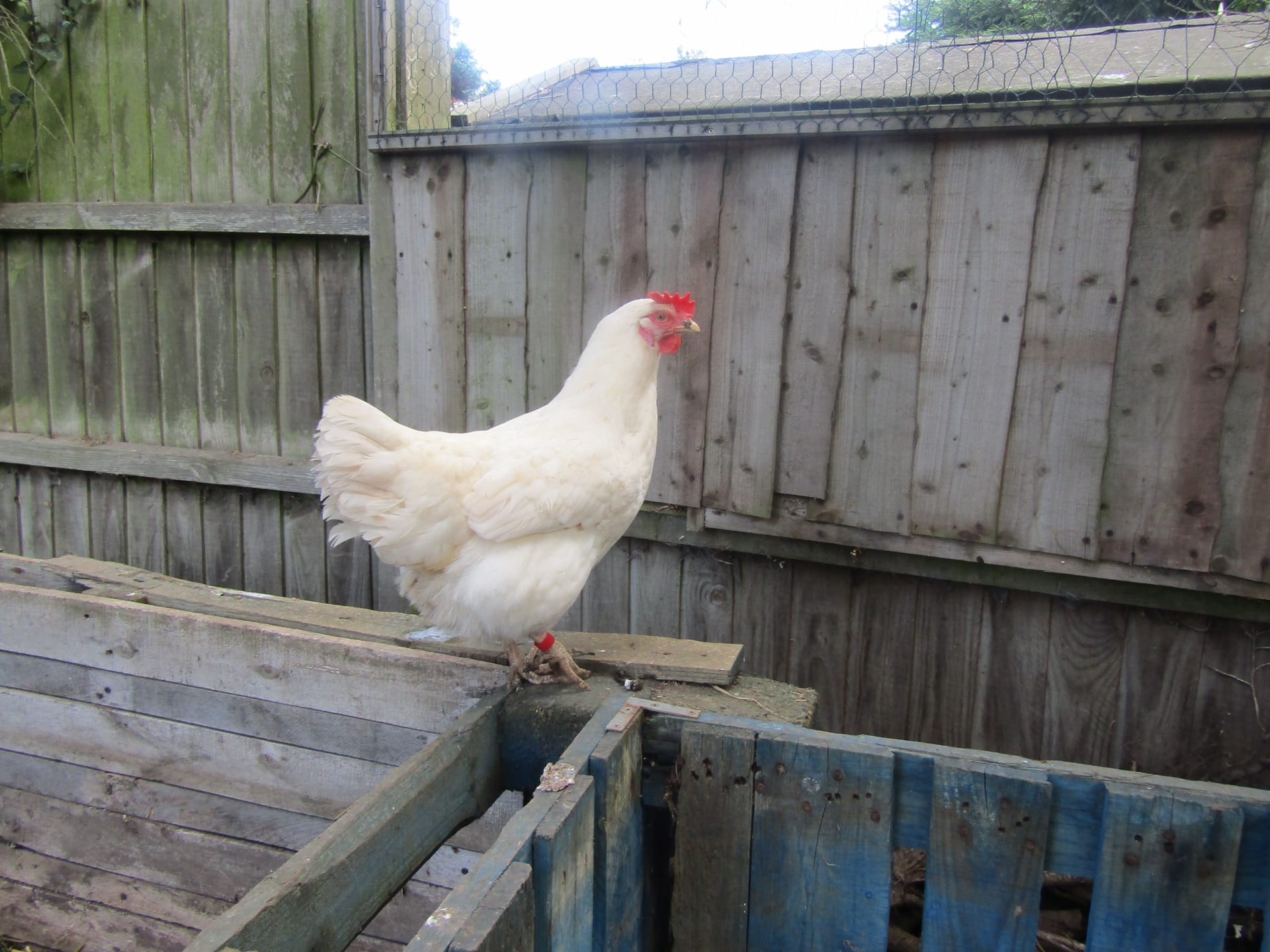
Already touched on above, but worth its own line. Free-ranging hens sometimes settle on a hidden spot. The corner of a shed, behind the compost bin, under a low shrub. And the eggs quietly pile up unseen. A five-minute search of the obvious hiding places usually solves it.
7. Parasites
Red mite is the classic back-garden culprit. Invisible by day, living in coop crevices, coming out at night to feed. Affected birds turn anaemic and listless, and stop laying. Check by wiping a white sheet of paper under the perch in the morning; red smears mean mite.
Treatment: deep-clean the coop, blow-torch the corners, scatter diatomaceous earth into cracks and along perches, and repeat weekly for a month. Bad infestations need a chemical mite treatment from a poultry-supply shop.
Worms are the other parasite to watch for. A 6-monthly Flubenvet treatment (mixed into feed, no withdrawal period) is the standard fix.
8. Illness
The least common cause, and the most serious. Signs that point to illness rather than the seven above:
- Off her food, not drinking
- Hunched, fluffed-up posture
- Sitting alone, away from the flock
- Swollen, hard or distended abdomen (a penguin-like stance)
- Pale comb (anaemia or internal bleeding)
- Runny green or yellow droppings for more than 2 days
- Laboured breathing, gaping, sneezing
Any of those means a vet visit. Egg binding, an egg stuck in the oviduct, is an emergency: a warm bath, a little olive oil gently around the vent, and a same-day vet if she hasn't passed the egg within a few hours.
A bright hen who's not laying is usually just resting, moulting, broody or short on daylight. A dull hen who's not laying is the one to worry about.
The kitchen-table tests
Three quick checks before you pick up the phone to the vet:
- Pick her up and feel her weight. A laying-age hen should feel solid, with a defined keel bone but flesh either side of it. Bony suggests underweight, possibly parasites or illness.
- Check the vent. Clean, pink, slightly moist is healthy. Caked with droppings, swollen, or with a hard mass is a problem.
- Look at the comb and wattles. Bright red means laying age and hormonally active. Pale, shrivelled or grey usually just means moult or winter rest, though combined with other signs, it's worth digging further.
Most laying gaps in a UK back garden sort themselves out in 2 to 6 weeks with no intervention beyond figuring out the cause. The hardest part is patience: keep watching, resist reaching straight for supplements, and the bird will usually tell you what's going on.
This guide is general information, not formal legal, financial, medical or veterinary advice. UK rules, prices and best practice change, and some rules differ across England, Scotland, Wales and Northern Ireland, so always check the current position with the relevant official source (such as gov.uk, the NHS, the FSA, DEFRA or APHA, or the RHS) or a qualified professional before acting. Last checked July 2026.
Frequently asked questions
Sources
- Bird flu (avian influenza): how to spot it and report it , Department for Environment, Food & Rural Affairs / APHA
- Code of practice for the welfare of laying hens and pullets (covers backyard flocks) , Department for Environment, Food & Rural Affairs
Kit for this job (Ad)

Lock & Lock HPL954 Multi-Use Storage and Transportation Box for 12 Eggs
Check price on Amazon →
Apollo 3497 Egg cabinet CREAM, Wood, 25x18x12
Check price on Amazon →
Johnsons Poultry Mite & Lice Powder,White
Check price on Amazon →
MULTI-MITE 10KG Bag Feed Grade Diatomaceous Earth DE Powder for Dogs Cats Poultry Animal Bedding & Housing Pet Areas, Stables, Gardens. 100% Natural Highly Absorbent & Desiccating DEFRA Registered
Check price on Amazon →We may earn a small commission, at no cost to you. We only list kit we'd use.
Written by
UK Homesteading Team
Editorial team
The UK Homesteading editorial team, offering UK-specific, evidence-led guidance on growing, keeping, preserving and the law.