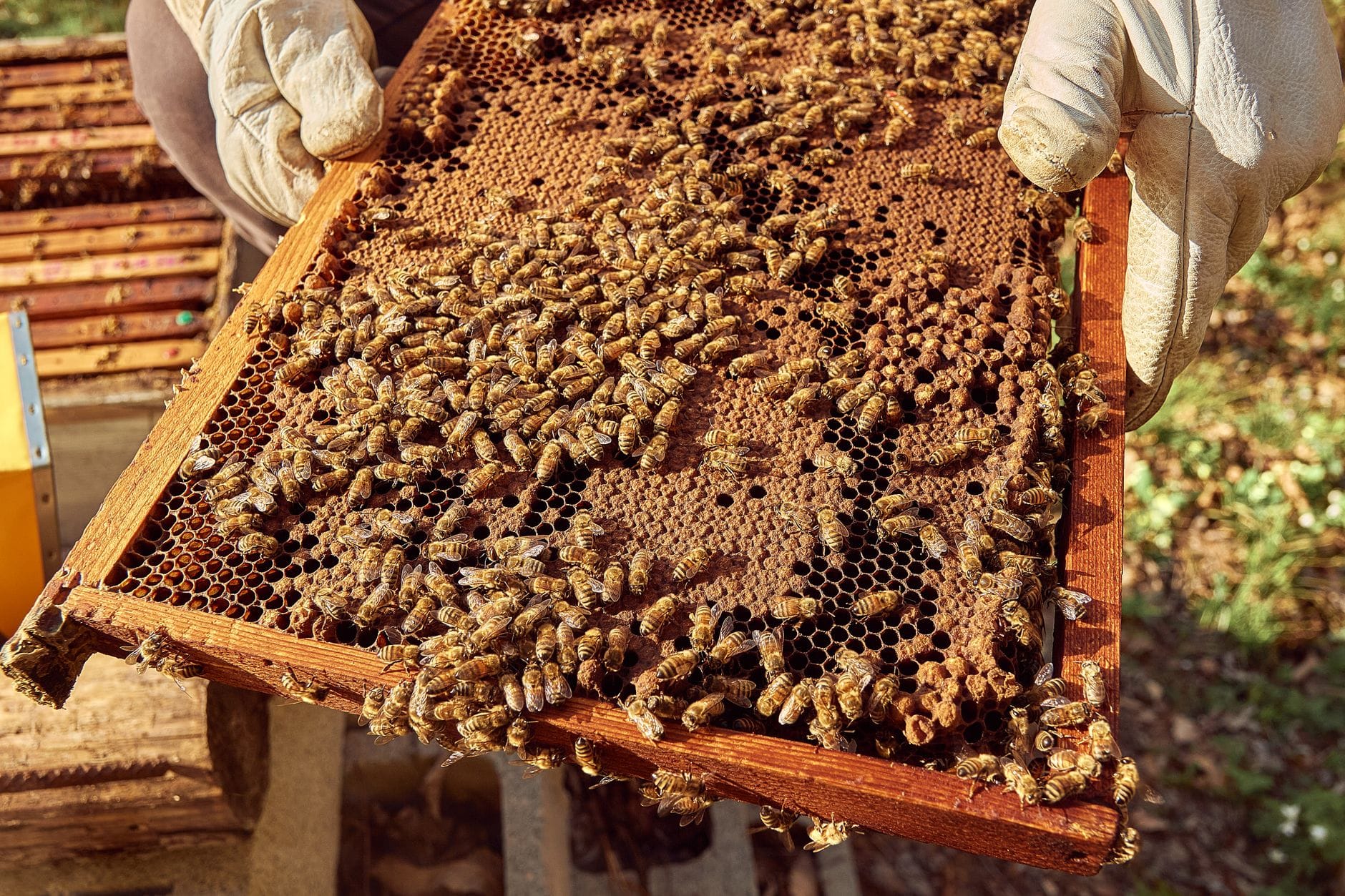
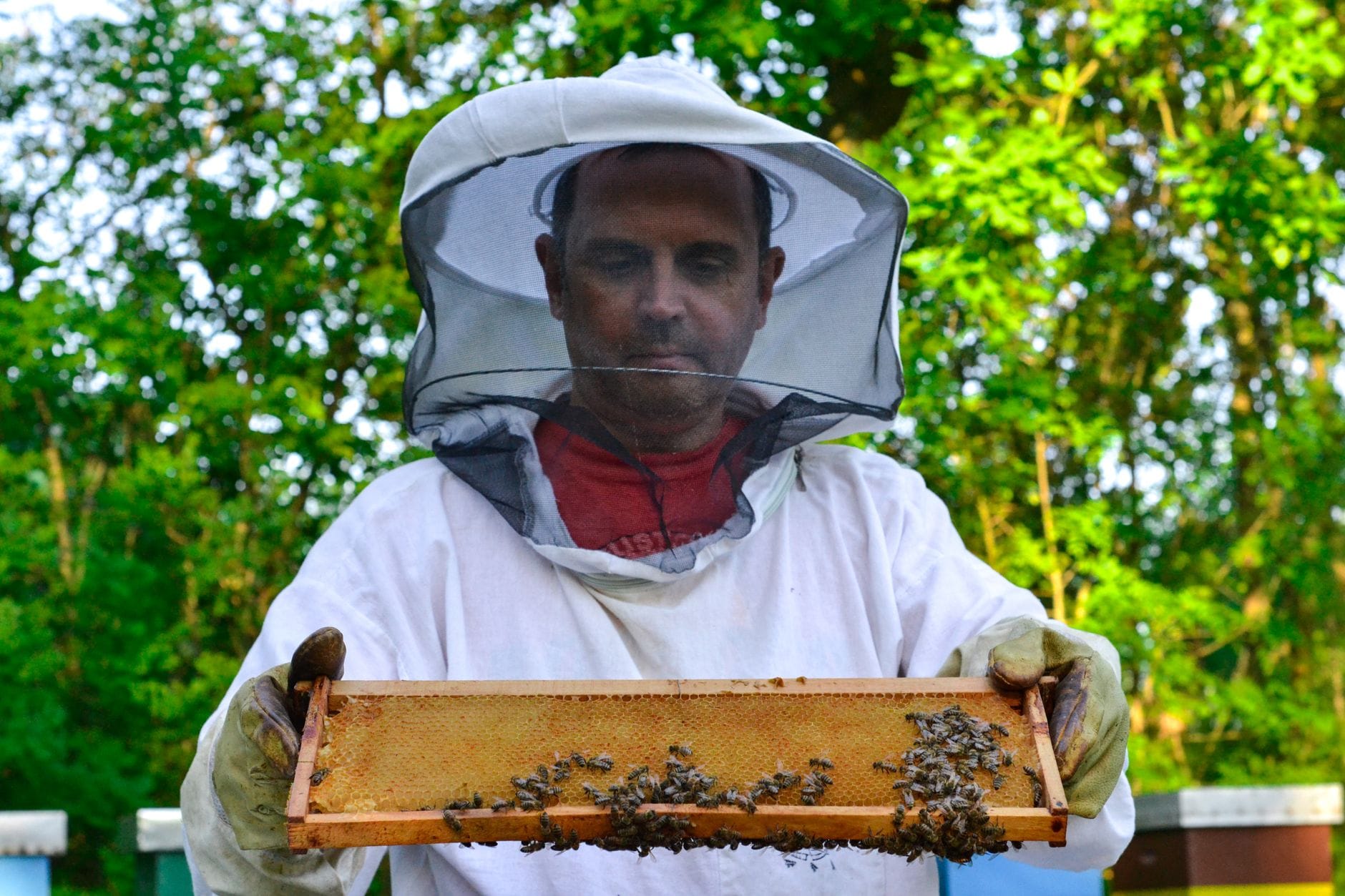
Walk into any beekeeping supplier and you are met with a wall of boxes, all subtly different, all promising to be the one for you. National, WBC, Langstroth, Commercial, Smith, top-bar, Warré. It is one of the first real decisions a new beekeeper faces, and it feels weightier than it is, because the boxes are only wooden houses and the bees do the clever part. Still, the choice is worth getting right, because a hive is a system: once you buy into one, your frames, your foundation, your spare boxes and even the nucleus of bees you order all have to match it. Change your mind later and you are buying twice.
There is good news, though. For the overwhelming majority of people starting out in the UK, the sensible answer is settled, and it is the National. The rest of this guide explains why, walks through the other hives you will hear about, and helps you spot the one occasion where a different choice genuinely makes sense. If you are still weighing up whether to keep bees at all, start with our beginner's guide to keeping bees; if you have decided and want the full shopping list, see beekeeping equipment for the UK.
First principles: a hive is a system, not just a box
Before the individual hives, one idea underpins the whole decision. A beehive is a set of stacking boxes built around a frame size, and everything you buy has to belong to the same family. A nucleus of bees comes on frames of a particular size; those frames have to fit your brood box; your supers, foundation and spare parts all follow from that. Mixing systems is the classic beginner headache, and suppliers warn about it repeatedly: a National nuc will not fit a Langstroth brood box, and Langstroth bees will not sit in a National.
So the real question is not "which box looks nice" but "which system will be easiest for me to live inside for the next five years". That framing is why availability of parts and local support end up mattering far more than the small differences in the wood.
The removable-frame hives (what almost everyone keeps)
Nearly all modern hives share one invention: the removable frame, and with it the "bee-space", the roughly 8 mm gap that bees leave clear rather than filling with comb or propolis. The Reverend Lorenzo Langstroth pinned this down in the middle of the nineteenth century, and it is what lets you lift out a single comb to inspect the colony, control swarming and harvest honey without wrecking the nest. Everything below, apart from the natural hives at the end, uses it.
National: the UK standard
The Modified National, usually just called the National, is the default British hive and the one you will see in most apiaries and on most training courses. Technically it is a single-walled box, but unlike the plainer single-walled hives it uses extra timber to form a rebate, which gives you proper finger-tip handholds on each box. That sounds trivial until you are lifting a super full of honey; the National is genuinely easier to grip than its rivals.
It takes British Standard frames, which it shares with the WBC and the Smith. Its main quirk is the brood box. The National was originally specced around the old, low-laying English black bee, so a standard brood box holds only about eight frames of brood. Today's more prolific crossbred queens can find that cramped, and the usual fixes are a deeper "14×12" brood box, running a "brood and a half" (a standard brood box plus a super for brood), or two brood boxes. None of this is a problem, it is just a decision you make once you see how strongly your colony lays.
You can buy a National in western red cedar, which weathers beautifully and needs no treatment thanks to the natural oils in the wood, in cheaper pine or other softwood, which does need a coat of bee-friendly preservative, or in polystyrene, which is well insulated and light but cannot be scorched clean with a flame and can suffer condensation. For a first hive, the National ticks every box that matters to a beginner.
WBC: the picture-book hive
The WBC is the hive on the greetings card: white, tiered and unmistakably a beehive. It was designed by the Reverend William Broughton Carr around 1890 and given its familiar sloping shape by James Lee and son in 1899. It is double-walled, which is its whole point. The outer sections, called lifts, stack around the inner working boxes and create an insulating air gap that holds warmth in winter and takes the edge off summer heat.
Reassuringly, it uses the same British Standard frames as the National, so the two are frame-compatible, although a WBC brood box holds one fewer frame than a National. Where it costs you is handling. You must lift off the outer lifts before you can even open the hive, there are simply more parts to move about, it is more expensive than a plain National for the same colony, and it is awkward to shift when it is full of bees. Choose a WBC because you want a beautiful hive in the garden and value the extra insulation, and because you are happy to trade a little speed and money for it. It is a lovely hive; it is just not the easiest one to learn on.
Langstroth: the world standard
Outside the UK, the Langstroth is the hive. It is the most widely used design on the planet and the workhorse of commercial beekeeping. Its boxes are larger than the National's, which gives the queen a generous brood area and tends to translate into bigger honey crops, and it is the basis for many modern insulated and thermal hive systems, as well as the well-known Flow hive.
The reasons it is not the automatic UK beginner's choice are practical rather than technical. In UK hobby circles the National still dominates, so Langstroth nucs, spare parts and, crucially, local advice can be patchier depending on where you live and which association you join. Its frames are also larger than the National's and not interchangeable with them. If you specifically want a bigger, higher-yielding system, plan to expand seriously, or fancy a modern insulated Langstroth-format hive, it is an excellent choice, provided you can reliably source Langstroth bees and support near you. If you cannot, the flow of good advice you get from a National may be worth more than the extra honey.
Commercial and Smith: the useful variants
Two more single-walled hives come up often enough to know about. The Modified Commercial shares the National's outer dimensions, so it can use a National roof and floor, but it takes wider, deeper frames that give a roomier single brood box. That appeals to keepers with very prolific queens who want more brood space without stacking boxes. Some run a Commercial brood body under National supers to get the best of both, at the cost of juggling two frame sizes.
The Smith is the third hive covered, alongside the National and WBC, by the old British Standard. It uses National-size frames but with short lugs and top bee-space, which makes for a light, economical, compact hive. It is especially popular in Scotland and the Borders, where its lightness makes it easier to cart up to the heather moors for the late-summer flow. For a typical lowland beginner it is a niche pick, but it is a sound hive.
The natural hives: top-bar and Warré
Not everyone wants stacking boxes and sheets of wax foundation. Some keepers prefer to let bees build their own comb in their own shapes, arguing it is closer to how bees live in the wild, and there are two hives built around that philosophy.
A top-bar hive is a long, horizontal box with sloping sides. The bees are given bare wooden bars across the top and build their comb hanging from them; because the walls slope inward, the comb does not stick to the sides and each bar can be lifted out. The great appeal is that there is no heavy lifting, ever, because you never stack a tower of honey-filled supers. The Warré works on a similar foundationless principle but stacks vertically and is allowed to grow downwards, mimicking a colony filling a hollow tree.
Both come with genuine trade-offs. Honey yields tend to be lower than a stacked box system. You cannot spin natural comb in an ordinary extractor, so you crush and strain it or use a honey press, and you can read more about that in our guide to harvesting honey in the UK. The comb is fragile and the bees may build it across several bars, which makes inspections slower and messier, and standard parts are hard to buy, so keepers often build their own. None of this rules them out, but they reward a keeper who already understands what a healthy colony looks like. As a rule they make a better second hive than a first.
Comparing the main hives
Here is the shape of the field at a glance. Treat "beginner-friendly" as shorthand for how easy the hive is to learn on and get help with in the UK, not a judgement on the bees, who cope with any of them.
| Hive type | UK parts and support | Beginner-friendly | Honey yield | Inspection and handling |
|---|---|---|---|---|
| National (British Standard) | Excellent, the UK default | Yes, the recommended start | Good | Easy, built-in handholds |
| WBC | Good, uses British Standard frames | Workable but fiddly | Good | Slower, remove outer lifts first |
| Langstroth | Patchier in UK hobby circles | Fine if you can source bees and advice | Higher, bigger boxes | Straightforward but heavier boxes |
| Commercial | Shares National roof and floor; frames less common | For those wanting more brood room | Good, deeper brood | Similar to National |
| Smith | Niche, strong in Scotland | Fine, good for moving to heather | Good | Light, short-lug frames |
| Top-bar | Limited, often home-built | Low-intervention ethos, harder to manage | Lower | No frames, comb is fragile |
| Warré | Limited, niche | Low-intervention, hard to inspect | Lower | Boxes added below, little inspection |
How to actually choose
Put the romance aside for a moment and the decision usually makes itself. Ask three questions. First, what does my local association use, and what will my mentor be teaching on? If the answer is National, and it very often is, that alone is a strong reason to match them. Second, what do I want from beekeeping: a jar or two of honey and some pollinators, in which case almost any hive is fine, or a serious harvest and room to expand, which nudges you toward Langstroth or Commercial. Third, how much do I care about the hive looking lovely in the garden, which is the one honest reason to pay more for a WBC.
For the great majority of people the three answers point the same way, and that way is a National. Buy it, order your bees on National frames to match, and resist the temptation to collect a menagerie of different hives in your first year. Standardising on one system means every frame fits every box, you can lend and borrow kit with other local keepers, and swarm control and uniting colonies are far simpler. The most experienced beekeepers often run a single hive type across a whole apiary for exactly that reason.
Whatever you choose, remember the golden rule that trips up more beginners than any other: decide the system first, then buy the bees and the frames to fit it, and never let a bargain box in the wrong size lure you into mixing standards. Get that right and the hive itself becomes the easy part of beekeeping.
This guide sets out the consensus view from UK suppliers and beekeeping associations; hive fashions, and prices, do shift over time, so check current supplier listings and, above all, ask your local association what they keep before you buy. Last checked July 2026.
Frequently asked questions
Sources
- Choosing the Ideal Hive , E H Thorne (Beehives) Ltd
- Getting Started with Beekeeping (Becoming a Beekeeper) , British Beekeepers Association (BBKA)
- Types of Beehive , Rotherham Beekeepers Association
- Choosing Your First Beehive: National vs WBC vs Langstroth vs Poly vs Thermal , Beekeeping Supplies UK
- Hive Information , Mid Devon Beekeepers' Association
Kit for this job (Ad)

Beekeeping For Dummies
Check price on Amazon →
The Bee Manual: The Complete Step-by-Step Guide to Keeping Bees (New Ed)
Check price on Amazon →
Hive Alive Bee Food Supplement - Natural Honey Liquid Bee Feed Enhancer - Beekeeping Supplies for Autumn Spring Feeding - Lower Winter Mortality, Improve Colony Health, Honey Production 100ml 10 Hives
Check price on Amazon →
QWORK® 3 Pcs Bee Feeder Water Dispenser, Plastic Bee Entry Feeder Beekeeping Equipment Liquid Feeding System
Check price on Amazon →We may earn a small commission, at no cost to you. We only list kit we'd use.
Written by
UK Homesteading Team
Editorial team
The UK Homesteading editorial team, offering UK-specific, evidence-led guidance on growing, keeping, preserving and the law.