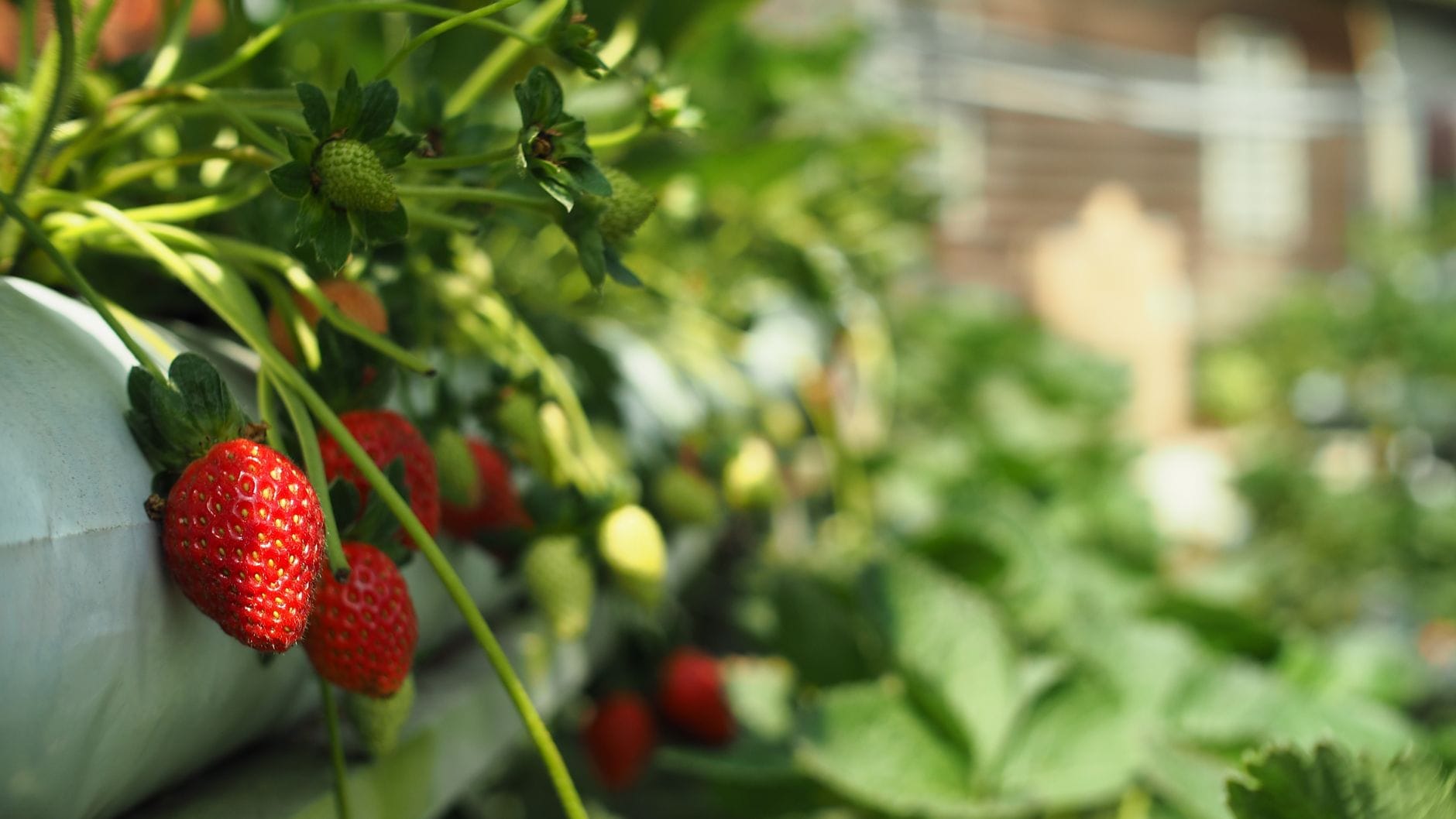
Few crops reward a small garden as generously as raspberries. A short row tucked along a fence gives you bowls of fruit that would cost a small fortune in the shops, and the plants keep coming back year after year with very little from you. They belong to a proper productive plot alongside the other easy wins in our fruit growing section, and they are a natural next step once you have got the hang of something like strawberries.
The trick is understanding one distinction before you spend a penny. Get that right and everything else falls into place.
Summer or autumn fruiting? The choice that changes everything
Raspberries come in two camps, and they behave so differently that you almost need to think of them as separate crops.
Summer-fruiting raspberries produce their fruit in June and July on canes that grew the previous year. These older canes are called floricanes. The plants are tall and vigorous, often reaching well over head height, so they need a permanent post-and-wire structure to lean on and to keep the fruit off the ground.
Autumn-fruiting raspberries fruit from August into October on canes that grew that same year, known as primocanes. They stay shorter, usually around 1.2 to 1.5m tall, and many varieties are self-supporting enough to manage without wires in a sheltered garden.
For a first-timer, autumn-fruiting raspberries are the obvious starting point. The pruning is a single simple job, you can usually skip the support structure, and the fruit ripens at a time of year when raspberry beetle is much less of a problem. A variety like Autumn Bliss is a dependable, widely sold choice.
Autumn raspberries ask almost nothing of you and hand back fruit into October.
Where should you plant raspberries?
Raspberries are plants of the woodland edge, so they enjoy a sunny, sheltered position but will tolerate a little light shade. What they really care about is the soil. They want fertile, moisture-retentive ground that still drains freely, ideally slightly acidic at around pH 6 to 6.7. They dislike thin chalky soil, and they will not put up with waterlogging, especially over winter, which rots the roots.
If your soil is heavy or wet, work in plenty of garden compost or well-rotted manure before planting, or build up a low ridge to lift the roots clear of standing water. Digging in home-made compost is one of the best uses for a finished heap, which is worth reading up on in our guide to composting.
How to plant raspberry canes
The cheapest and best way to buy raspberries is as bare-root canes, sold dormant from late autumn through to early spring. They look like nothing more than woody sticks with a tangle of roots, but they establish beautifully. Plant them any time between November and March, avoiding days when the ground is frozen solid or sodden.
- 1
Prepare the ground
Choose a sunny, sheltered spot and dig in plenty of well-rotted manure or garden compost to boost fertility and hold moisture. Clear out perennial weeds first, as raspberries are hard to weed around once established.
- 2
Soak the roots
Give the bare roots a good soak in a bucket of water before planting so they go in fully hydrated.
- 3
Plant shallowly
Set each cane so the topmost roots sit no more than 5cm below the surface. Raspberries are shallow-rooted and planting too deep sets them back. Spread the roots out and cover with soil.
- 4
Space them out
Space canes about 40 to 45cm apart in the row. If you are planting more than one row, allow around 1.5 to 1.8m between rows so you can reach in to pick and prune.
- 5
Firm and water
Firm the soil gently around each cane with your heel and water well. Then cut the cane down to about 25cm to encourage strong new growth from the base.
Do raspberries need support?
Summer-fruiting raspberries do, because their tall canes will flop and snap under a crop otherwise. Knock in a stout wooden post at each end of the row, ideally around 2m tall, and run two or three horizontal wires between them. As the new canes grow, tie them in along the wires, spacing them about 15cm apart and cutting out any weak or overcrowded shoots.
Autumn-fruiting raspberries are shorter and usually cope without a structure in a sheltered spot. In a windy, exposed garden, a single wire at around 90cm with the canes tied loosely to it is plenty. This is a large part of why autumn types are less work overall.
Watering, mulching and feeding
Raspberry roots sit close to the surface, which makes the plants vulnerable to drying out. Keeping them consistently moist is the single biggest thing you can do for a good crop, particularly while the fruit is swelling. Water new plantings well through their first summer and during any long dry spells.
A generous mulch does most of the hard work for you. In late winter or early spring, lay a 5 to 7.5cm layer of organic matter such as garden compost or well-rotted manure over the root area, keeping it clear of the canes themselves. This locks in moisture, feeds the soil and smothers weeds. Well-mulched raspberries in decent ground often need no extra feed at all. If you are growing them in a container, feed monthly through the growing season with a general-purpose liquid fertiliser, as pots run out of nourishment quickly.
How and when to prune
This is where the summer and autumn distinction earns its keep.
For summer-fruiting raspberries, prune straight after the last fruit is picked, usually in August. Identify the canes that carried fruit: they are the older, brown, woody ones. Cut those right down to ground level. Leave the fresh green canes that grew alongside them this year untouched, and tie them in to the wires. Those new canes will bear next summer's crop.
For autumn-fruiting raspberries, wait until February and simply cut every cane down to the ground. All of it. New canes push up in spring and fruit the same autumn, so there is nothing to distinguish and nothing to save. It is genuinely the easiest pruning job on the plot, and it is why autumn types suit anyone starting out. If you want to walk the summer routine step by step, BBC Gardeners' World has a clear illustrated guide.
Keeping raspberries in bounds
Raspberries spread by sending up suckers from their roots, and a happy plant will happily march out into the lawn or the neighbouring bed. Pull up or dig out any canes that stray outside the row to keep the patch tidy and productive. Far from being a nuisance, this is a free source of new plants: lift healthy suckers with a bit of root attached and replant them elsewhere. Only propagate this way from recently bought, certified stock, because older plants can carry virus that you do not want to spread.
When are raspberries ready to pick?
Pick raspberries when they are richly coloured, plump and slide off the plug easily with the gentlest tug. If you have to pull, they are not ready. Harvest on a dry day where you can, because damp berries turn mouldy fast and do not keep. Raspberries do not ripen further once picked, so go over the plants every couple of days at the height of the season. They freeze well, so any glut need not go to waste.
Common problems and how to handle them
Raspberry beetle is the one most people notice, usually as a small grub discovered mid-mouthful. The adults overwinter in the soil, so turning the ground over in late autumn and early spring disrupts their life cycle. Encouraging natural predators helps, and pheromone-baited traps are available if the problem is persistent. Because the beetle mainly troubles summer-fruiting raspberries and largely misses fruit ripening after late August, growing autumn types is itself a neat organic answer.
Grey mould thrives in damp, crowded conditions, so keep the canes well spaced, pick regularly and clear away any spoiled fruit. Virus is the slow one to watch for: over the years old plantings can become stunted and distorted, at which point the honest fix is to start again with fresh certified canes in a new spot. A raspberry patch will crop well for a decade or more, but it does not last forever, and knowing when to renew it is part of growing them well.
Plant a short row this winter, keep it mulched and watered, and by next summer or autumn you will be picking fruit that never quite makes it as far as the kitchen.
Frequently asked questions
Sources
- How to grow raspberries , RHS
- Raspberry Beetle: How to Prevent Damage , RHS
- How to Grow Raspberries , BBC Gardeners' World
- Raspberry growing guide , Garden Organic
Kit for this job (Ad)

gonicc 8" Professional Secateurs Sharp Bypass Pruning Shears (GPPS-1002), Tree Trimmers Secateurs,Hand Pruner, Garden Pruner, Gardening Scissors, Bonsai Tools | Arthritis Friendly Garden Scissors & Plant Clippers, Sap Groove Design, Effortlessly Prunes 3/4" Branches.
Check price on Amazon →
GRÜNTEK Professional Bypass Secateurs 20 mm Cut – SK5 Teflon-Coated Blade 48 mm – Ergonomic Garden Pruning Shears | Garden Secateurs Heavy Duty | Precise, Clean Cutting
Check price on Amazon →
Spear & Jackson CUTTINGSET3K Kew Gardens Collection Adjustable Width Bypass & Anvil Secateur Set
Check price on Amazon →
Garden Netting for Plants Fruit Veg Patch Grass Seeds, Anti Bird Netting Kit with Plastic Ground Pegs, Pond Netting Cover, Plant Netting Protection Garden Mesh Fence (Green, 4x5M)
Check price on Amazon →We may earn a small commission, at no cost to you. We only list kit we'd use.
Written by
UK Homesteading Team
Editorial team
The UK Homesteading editorial team, offering UK-specific, evidence-led guidance on growing, keeping, preserving and the law.