Selling online sounds like the obvious next step. You have a glut of something, or a craft you are quietly proud of, and half the world is a click away. The trick is that "online" is not one channel, it is three quite different ones, and picking the wrong one for what you make is the quickest way to lose money and heart. Soap and dried flowers want a shop window like Etsy or your own site. A dozen eggs wants a neighbour who can walk round with a box. This guide sorts out which route suits which produce, what Etsy actually costs (from Etsy's own current figures, not the myth), and the bits of law that switch on the moment you sell to someone you cannot see.
It is a practical business guide, not financial, tax or legal advice. Figures move, so treat platform fees as a starting point and confirm the current numbers on the platform's own page before you price anything up.
Which route for what you make
Before any of the how-to, get this decision right, because everything else follows from it. Three broad routes, three jobs they are good at.
| Route | Best for | Reach vs margin | The catch |
|---|---|---|---|
| Etsy / marketplaces | Craft and non-perishables: soap, wool, dried flowers, seeds, candles, cards | Big built-in audience, thinner margin after fees | Fees stack up; you don't own the customer |
| Your own website (Shopify/Wix/simple site) | The same craft, once you have some regulars | You keep most of the sale, but you must bring the traffic | No footfall unless you market it yourself |
| Local Facebook groups / Marketplace / Nextdoor / Instagram | Perishables and pickup-only: eggs, veg, plants, cut flowers | Local reach, almost no fees, collection not postage | Small radius; you're on the phone arranging pickups |
The dividing line is simple: can it survive the post, and is it worth posting? Light, non-perishable, decent-value things (a bar of soap, a skein of yarn, a bunch of dried flowers) are made for a marketplace or your own online shop. Anything fresh, heavy or fragile is happier sold locally for collection. Most homesteaders end up running two of these at once, and there is no rule against it.
Etsy and marketplaces: reach, at a price
Etsy is where most people start, and for good reason. It hands you an audience that is already there and already searching for "handmade soap" or "British wool", so you get found without doing your own marketing. That reach is the whole point. TheSoapTreeYorkshire, a Yorkshire Etsy shop, has racked up thousands of sales and a 4.9 rating across several thousand reviews, which is the kind of visibility a brand-new website simply cannot buy overnight. In dried flowers, woodfarmdriedflowers shows the same pattern: a farm-based shop building a five-star reputation from repeat buyers on a platform that already has the traffic.
The catch is the fees, and the "Etsy is free to list" line you will hear is not the whole story. Here is what Etsy charges, taken from Etsy's own current UK fees and payments pages (these can change, so check current before you price up):
- Listing fee: 0.20 USD per item. You are charged whether it sells or not, listings expire after four months, and if you list several of the same item it renews at 0.20 USD after each one sells.
- Transaction fee: 6.5%. Charged on the price you show plus what you charge for delivery and gift wrap.
- Payment processing (UK bank account): 4% + 0.20 GBP per order. This is the Etsy Payments fee for sellers based in the United Kingdom.
- Regulatory Operating fee: 0.48% for UK sellers, on the item price plus postage.
- Offsite Ads fee: 12% or 15% on any sale that came through Etsy's off-platform advertising. If your shop has made under 10,000 USD in the past year you pay 15% (and can opt out while under that threshold); once you cross 10,000 USD it becomes 12% and you cannot opt out. The fee is capped at 100 USD per order.
Put roughly, before postage Etsy tends to take somewhere around a tenth of each sale, and noticeably more when an Offsite Ad drove it. That is not a reason to avoid Etsy. It is a reason to price with the fees built in, rather than discovering them at payout.
Other marketplaces exist (eBay for a broader craft audience, Folksy as a UK-only handmade site, Not On The High Street for a more curated feel), and the logic is the same everywhere: you are renting an audience, and the rent is a slice of every sale. Read each one's own fees page the same way you would Etsy's.
Your own website: keep more, work more
Once you have a handful of regulars, a shop of your own starts to make sense. On Shopify or Wix, or even a simple one-page site with a payment button, you keep far more of each sale (a payment processor like Stripe takes its cut, but there is no marketplace commission on top), and you can build a mailing list, run your own offers and turn one-off buyers into repeat ones. You own the customer, not the platform.
Blacker Yarns, a British wool company, is a good picture of the own-site model: it sells its yarns and fleece through its own online shop, so the brand, the customer and the margin all stay with the business rather than a marketplace. That is the upside.
The downside is footfall. A website is a shop on a back street: nobody walks past. Every visitor has to be sent there by you, through Instagram, a newsletter, word of mouth, a local paper, or your stall at the market. This is where your own site and your marketing become the same job, and it is worth reading our guide to marketing your smallholding alongside this one, because a website with no marketing behind it is very quiet indeed. The honest split is: marketplace for reach, own site for margin. Plenty of people run Etsy to get discovered and their own shop to keep the good customers coming back.
Local groups: how to sell the perishable stuff
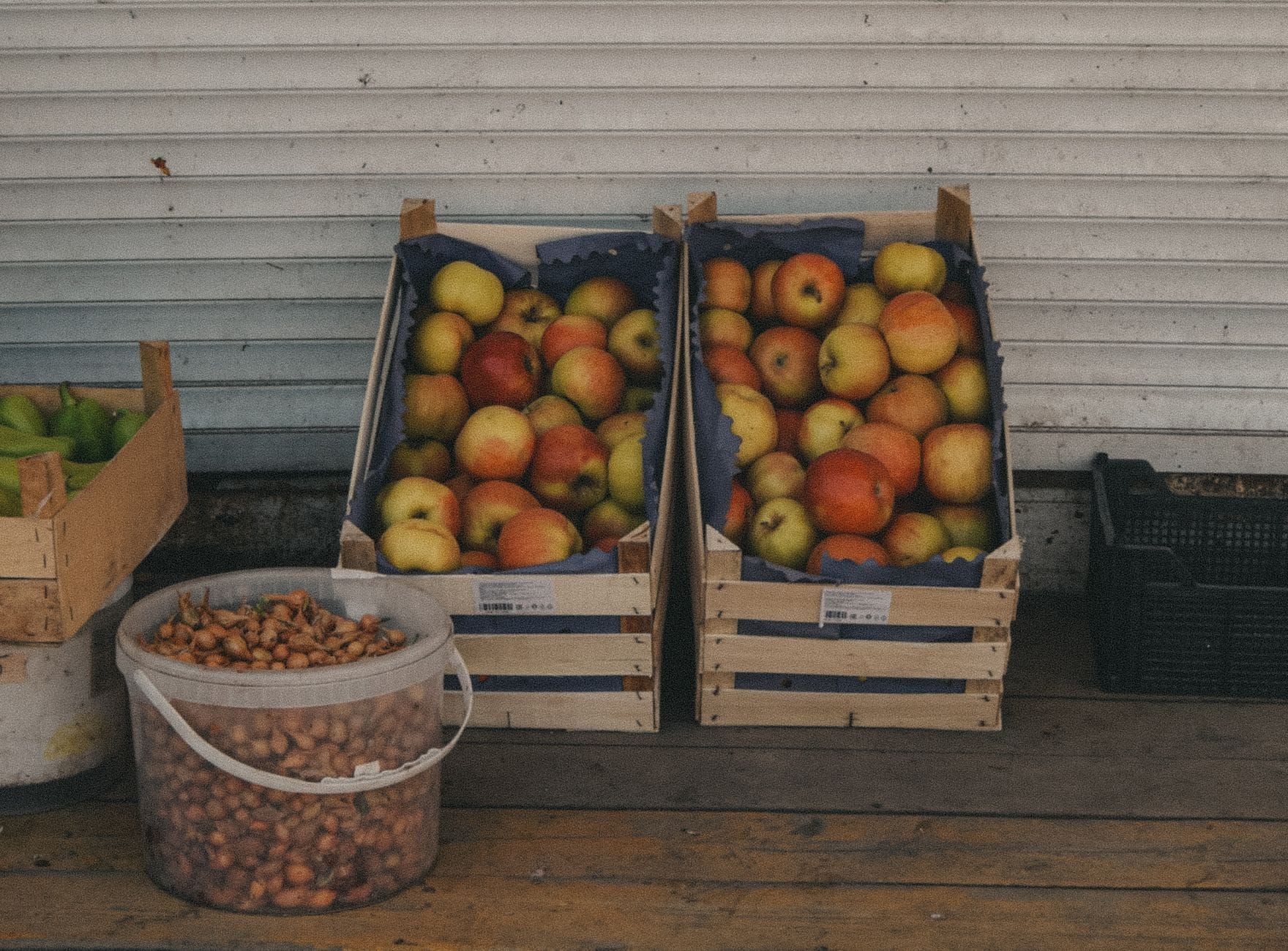
For eggs, veg, plants, cut flowers and anything else that will not post, the internet is still useful, just in a different way. A town or village Facebook selling group, Facebook Marketplace, Nextdoor or a simple Instagram shopfront lets you reach people within a few miles and arrange collection or a local drop, without a parcel ever entering the picture. You post a photo of this week's eggs or seedlings, people comment or message, and they collect. No listing fees, no postage maths, and you are dealing with neighbours.
Cut flowers are the classic example. Many growers in the Flowers from the Farm network (a UK-wide community of British flower farmers) sell their seasonal, can't-travel-well blooms exactly this way: local collection, honesty stalls, and social media to say what is ready this week. The flowers are too delicate and too seasonal to post nationally, so "online" for them means Instagram and local groups, not a courier.
Eggs deserve a specific flag. Selling your own hens' eggs to neighbours is one of the easiest starts there is, but once you sell to the public there are rules on grading, labelling and what you can claim, so treat "eggs at the gate" as its own small topic rather than assuming it is completely free of red tape.
The economics: postage, photos and reviews
The thing that quietly decides whether online selling is worth it is postage, and it bites hardest on heavy, low-value items. A jar of jam is the worst-case example: it is heavy for its price, so second-class postage plus a box and padding can cost nearly as much as the jam itself, which makes a single jar barely worth listing. That is why preserves online tend to sell as gift sets and boxes, where the postage is spread across several jars, rather than one at a time. Soap is the opposite: light, robust, high value for its weight, and it travels beautifully, which is exactly why it is one of the best online sellers a homesteader can make.
So before you list anything, do this one sum: weigh it fully packed, price the postage, and see what is left after the platform fees. If postage and fees swallow the margin, either bundle it up to a size that carries the cost, or keep that product for local sales and put something lighter online.
The other half of the economics is presentation, because online you sell on a photograph and a story, not a sniff and a squeeze.
Getting your online shop off the ground
- 1
Pick the route to match the produce
Non-perishable craft to Etsy or your own site; fresh and pickup-only to local Facebook groups, Marketplace, Nextdoor or Instagram. Do not force a perishable onto a postage-based platform.
- 2
Sort the legal basics first
Register as a food business if you sell food, get your allergen labelling right, and check whether cosmetics or plant rules apply to you. Do this before you take a penny, not after.
- 3
Photograph it in good light
Natural daylight, a clean background, a few angles, and a shot that shows scale. Clear, honest photos do the selling online, and they are the single biggest lever a small shop has.
- 4
Write a real description with a story
What it is, size and weight, ingredients or materials, and a line about who made it and where. 'Cold-process soap made on our smallholding in Yorkshire' beats a bare list of ingredients.
- 5
Price with fees and postage built in
Add up the platform fees and the packed postage first, then set a price that still leaves a margin. Never price off the raw ingredient cost alone.
- 6
Earn reviews, then look after them
Post promptly, pack carefully, answer messages quickly. Early five-star reviews are what lift a new shop out of obscurity, so treat the first customers like gold.
Reviews are the quiet engine of an online shop. A new listing with no reviews is a gamble for a buyer; a shop with a wall of genuine five-star feedback sells almost on autopilot. That is not something you can buy, only earn, one well-packed parcel at a time.
Selling food online: the extra care
If you are posting or selling food online, two things matter more than they do at the farm gate. First, you are still a food business, so registration and hygiene rules apply just as they would at a market. Registration is free, cannot be refused, and you do it with your council at least 28 days before you start. Our guide to registering as a food business walks through who needs to and how.
Second, allergen and labelling information has to reach the customer before they buy, not just on the jar when it turns up. Online, that means the required details in the listing itself. This is exactly the sort of thing that trips up an otherwise lovely small shop, so it is worth getting right up front, and our guide to food labelling and allergen law covers what has to be shown and where. The honest summary for fresh food is the one from the top: posting it is hard, so local pickup almost always wins.
Keep it legal: a quick pointer
Selling online switches on a few rules that face-to-face selling does not, and none of them are hard once you know they exist.
Get those three sorted, register as a food business if food is on your list, and the rest of selling online is really just good photos, fair postage and looking after your customers. Start with one product you are proud of, on the route that suits it, and build from there.
This is general business information for UK homesteaders and smallholders, not financial, tax or legal advice. Platform fees, thresholds and consumer rules change, so always confirm the current figures on the platform's own fees page and the current rules on GOV.UK before you price up or commit. Etsy fees quoted here were taken from Etsy's own UK Fees & Payments and Etsy Payments pages and last checked in July 2026; treat them as "check current". If in doubt about food, cosmetics, plant or consumer law, check the linked GOV.UK guidance or speak to your local council or Trading Standards.
Frequently asked questions
Sources
- Fees & Payments Policy (listing, transaction, Offsite Ads and Regulatory Operating fees) , Etsy
- Etsy Payments Policy (payment processing fee by country) , Etsy
- What is a Regulatory Operating Fee? , Etsy Help Centre
- TheSoapTreeYorkshire (example UK Etsy soap shop) , Etsy
- woodfarmdriedflowers (example UK Etsy dried-flower shop) , Etsy
- Flowers from the Farm (network of British cut-flower growers) , Flowers from the Farm
- Blacker Yarns (British wool sold through its own website) , The Natural Fibre Company / Blacker Yarns
- Accepting returns and giving refunds: the law (distance selling, 14-day cancellation) , GOV.UK
- Online and distance selling for businesses , GOV.UK
- How we are keeping plants healthy in the age of online sales (plant passports and distance sales) , Animal and Plant Health Agency (GOV.UK blog)
Written by
UK Homesteading Team
Editorial team
The UK Homesteading editorial team, offering UK-specific, evidence-led guidance on growing, keeping, preserving and the law.