When people picture selling their homegrown produce, they often picture the wrong thing: a website, an online shop, a logo, a national audience of strangers who somehow find them. In reality, almost nobody's first customers arrive that way. Your first customers are the people already near you: the neighbour two doors down, the car that slows at your gate, the parent you chat to at the school gate, the colleague who mentions they can never get decent eggs. Warm and local first. Wider and colder much later, if at all.
This matters because it changes what you should actually do this week. You do not need to build anything clever. You need a surplus, a price, and a way for the people nearby to know you have it. That is genuinely most of the job at the start. This guide walks through who those first customers are, which selling channel suits a complete beginner, and how real UK growers turned a bit of curiosity into a handful of loyal regulars. Once you have those regulars, a veg box scheme is one of the best ways to turn them into steady, repeat orders.
Start with who is already near you
Before you think about "channels" and "marketing" at all, list the people who already know you or already pass your door. That list is where your first sales come from.
- Neighbours and the immediate village. The oldest route there is. A word to a few neighbours that you have spare eggs, and a note on the village noticeboard, will often clear a modest surplus without you doing anything else.
- Passing traffic. If you are on a road with any footfall or slow-moving cars, a clear sign at the gate does the selling for you, day and night, with no one manning it.
- The school gate, the workplace, the sports club. These are ready-made networks of local people who see you regularly. Growers on The Farming Forum give exactly this advice for a first flock's eggs: find a few private regular customers through work or relatives before you go anywhere near dealing with the public at large.
- Local Facebook and WhatsApp community groups. Most villages and towns now have a "spotted in" or "community" Facebook group and a neighbourhood WhatsApp. A single friendly post that you have flowers, eggs or veg for sale reaches dozens of genuinely local people for free, and it is where a surprising amount of rural buying and selling now happens.
- Friends, family and word of mouth. On The Accidental Smallholder forum, one keeper sums up a very common pattern: they have sold all their eggs to friends, family and neighbours for years and never needed anything more formal. For a small surplus, that circle may be the whole business.
The point of starting here is not just that it is easy. It is that these people already trust you, they will forgive early wobbles, and they are the ones who will recommend you to the next customer. A cold stranger online does none of that.
The channels, and which suit a beginner
Once you know who is near you, you need a way to reach them and take their money. Not all channels are equal for a beginner. Some have almost no barrier to entry; others need stock, time, fees or a track record before they make sense. Here is roughly how they stack up.
| Channel | Barrier for a beginner | Best for |
|---|---|---|
| Gate stall / honesty box | Lowest: no fee, no staffing, no website | Eggs, seasonal veg, cut flowers, passing traffic |
| Local Facebook / WhatsApp group | Very low: free, instant local reach | Announcing surplus, building an order list |
| Word of mouth | None, but slow to build | Everything, especially repeat custom |
| Village noticeboard / parish mag | Very low: a card or small ad | Reaching locals who are not online |
| A few boxes to neighbours | Low: a handful of regulars | Testing a veg box idea before scaling |
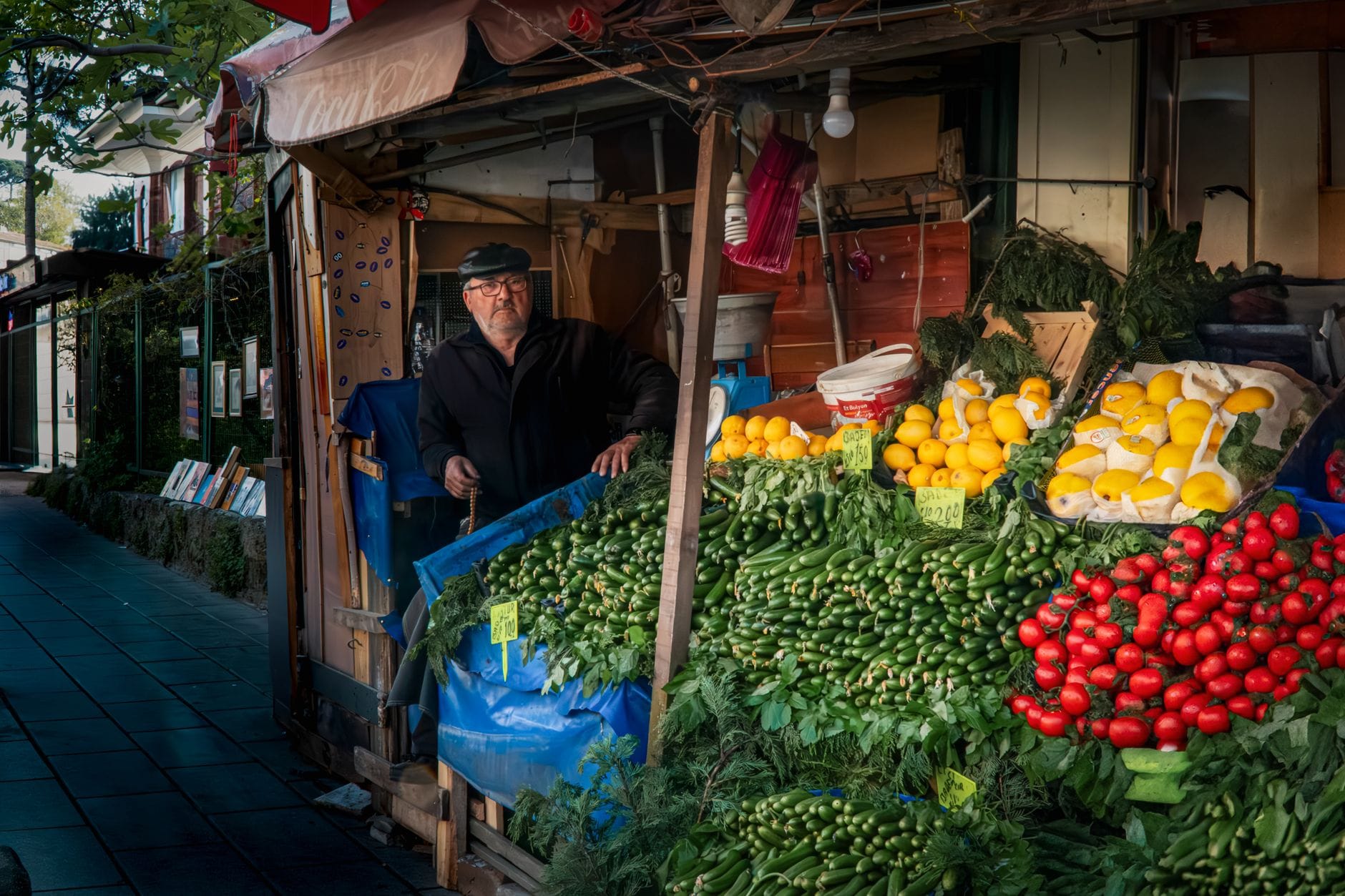
| Car boot / local market stall | Medium: a small pitch fee, a morning | Surplus, crafts, preserves, meeting buyers |
| Farmers' market | Higher: fees, standards, a waiting list | Once you have volume and consistency |
| Veg box round / CSA | Higher: reliable weekly supply needed | Once you have proven regular demand |
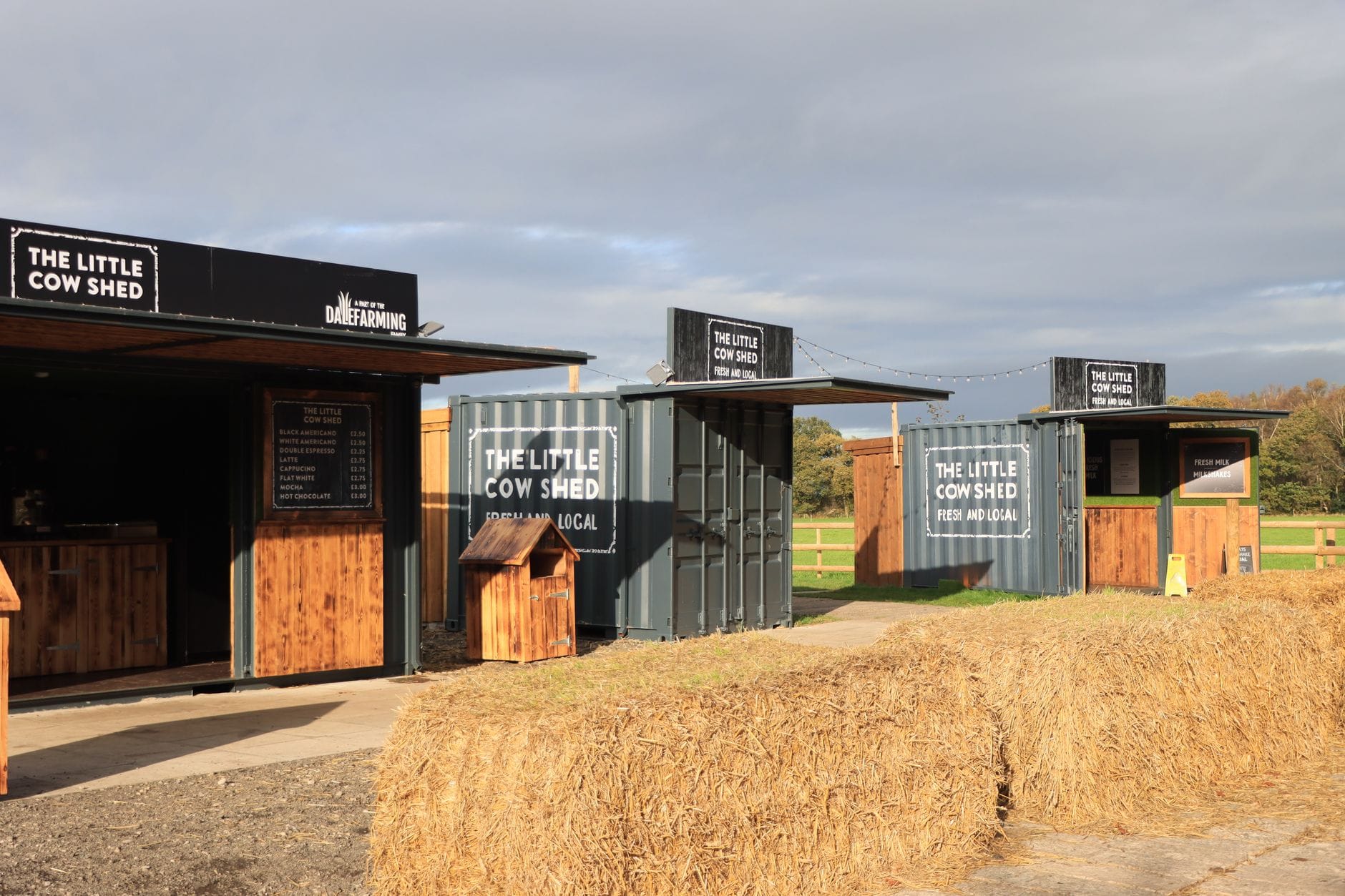
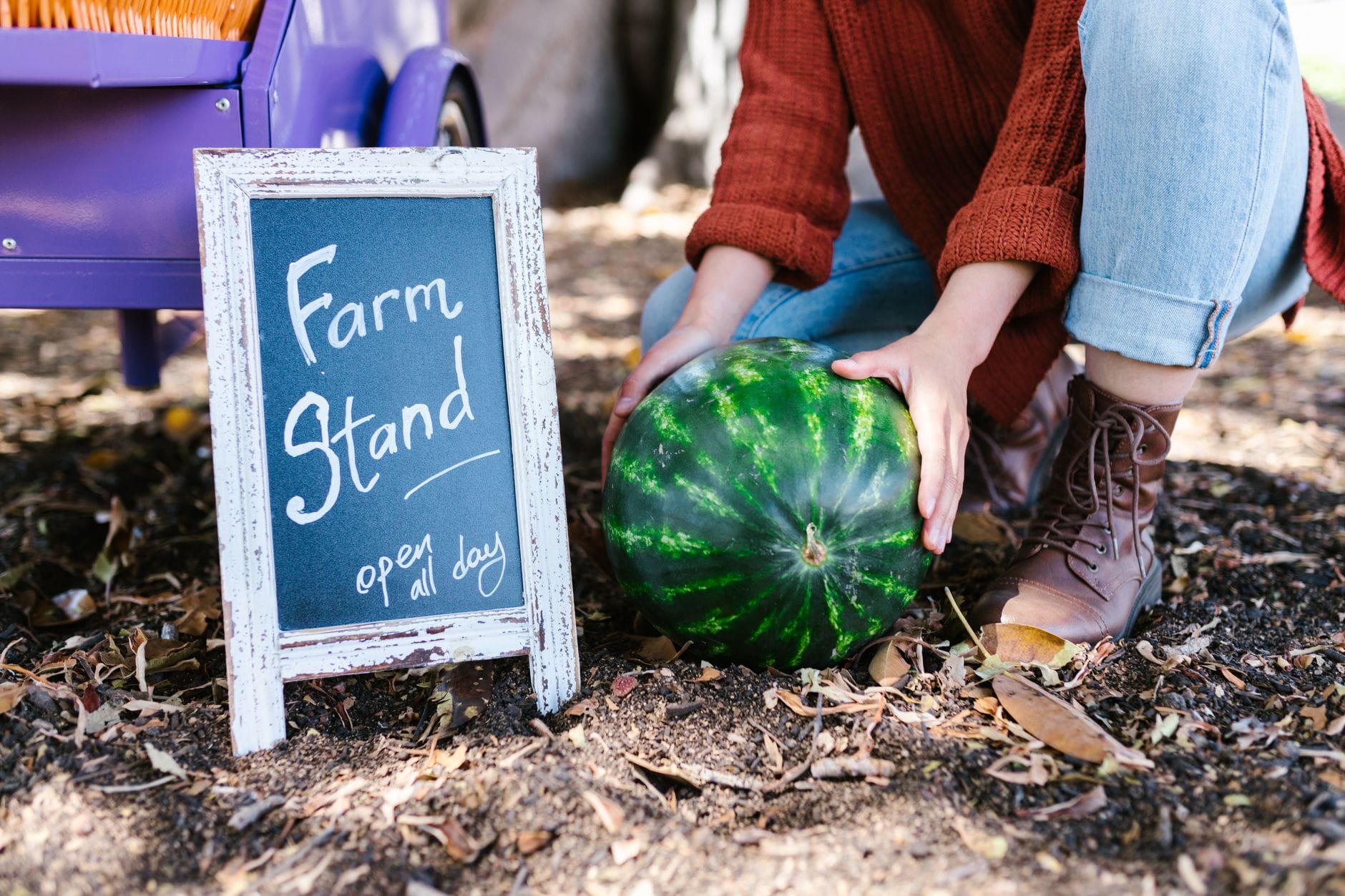
For most people starting out, the gate stall or honesty box is the obvious first move, because the barrier is close to zero. There is no pitch fee, nothing to man, and no website. You put out what you have with a clear price and an honesty box, and the passing traffic does the rest. It is such an established part of rural life that The Guardian ran a whole photo-essay on England's honesty boxes selling "eggs, marrows and chutney". It also does something valuable: it tells you cheaply whether anyone actually wants what you are offering, before you commit to a market pitch or a delivery round. Our guide to a roadside stall or honesty box covers how to keep it legal and cut down on non-payment.
A local Facebook group is the natural partner to the gate: the gate catches passing traffic, the group reaches the locals who never drive past. Between the two, plus a bit of word of mouth, you can run a genuinely useful small operation without ever building a website. Step up to a farmers' market or a proper veg box round only once you have the volume and the consistency to justify it, not before.
How real producers turn interest into repeat buyers
Finding a first buyer is easy. Getting them to come back, and to tell their neighbour, is the whole game. Here is what the growers who make it work actually do.
Be consistent and reliable. This is the big one. Be there every week, at the same time, and try hard not to run out. A customer who arrives to an empty stall or a "sold out" post twice will quietly stop bothering. Reliability is what turns a curious one-off into a standing order.
Keep the quality high and tell the story. People buy local produce partly because it is better and partly because of where it comes from. Debbie Richards, who left a career in HR to start the Cambridgeshire flower farm Nature's Posy, is blunt that flowers "have to be a professional standard" and that anything that does not make the grade should be composted, not sold. The quality is the marketing.
Make ordering effortless. A simple WhatsApp broadcast list, a free Facebook page, or a clipboard at the gate is worth more than any website at this stage. The easier it is to say "yes, put me down for a dozen", the more people will.
Price fairly and honestly. Clear, sensible pricing builds trust. Wild bargains train people to expect the impossible; overpricing loses the goodwill that makes local selling work in the first place.
Give the odd taster, and ask for the recommendation. A spare bunch, a couple of eggs, a jar to try: small generosity comes back around. And in a village a personal recommendation from a trusted neighbour travels further and faster than any advert, so it is worth actually asking happy customers to mention you to their friends.
There is a longer playbook for all of this in our guide to marketing your smallholding, and if you want those regulars to become predictable income, see building recurring income.
The beginner sequence: start tiny, then widen
Almost every successful small producer grew the same way: they started with a genuine surplus, sold it to warm local people, learned what worked, and only then widened the channel. Charles Dowding, now one of Britain's best-known market gardeners, started a box scheme in Somerset in 1983 with, in his words, "just six boxes in that first year", and built up over the following years to selling locally in boxes, through a market stall, and eventually to shops in Bristol, Bath and London. He did not begin with the shops. He began with six boxes.
Finding your first customers, in order
- 1
Start with a surplus, not a plan
Sell only what you genuinely have spare at first: a few dozen eggs, a glut of courgettes, a bucket of dahlias. This keeps the risk near zero while you learn.
- 2
Tell the warm circle first
Neighbours, family, colleagues, the school gate, the local Facebook or WhatsApp group. Put a sign at the gate. These are your easiest, most forgiving first customers.
- 3
Pick the lowest-barrier channel
A gate stall or honesty box, plus a post in the local group. No fees, no website, no pitch to man. Let it tell you whether there is real demand.
- 4
Win a handful of regulars
Turn up consistently, do not run out, keep quality high, make ordering easy. A dozen loyal locals is a real business; chase repeat custom, not one-off sales.
- 5
Learn what actually sells
Notice what shifts fast and what sits there. Grow more of what sells locally, drop what does not. Let the customers tell you what to plant next year.
- 6
Widen the channel only when demand outgrows supply
When your local outlets cannot absorb what you produce, step up: a market stall, a proper veg box round, a farmers' market. Build the website once you have regulars, not before.
Dr Matt Swarbrick, who runs the CSA-style veg box scheme at Henbant Farm near Caernarfon profiled by Farming Connect, shows the same instinct even as the business grew to around 80 households. He told Farming Connect they "started with a bigger radius of customers but as demand has got bigger closer to home, we have been able to make it more local". The direction of travel for a healthy small producer is often inwards, towards a tighter, more local, more loyal base, not endlessly outwards.
An honest word on demand and patience
Two honest points to hold onto, because they save disappointment.
First, it takes time and consistency. Debbie Richards is candid that in her first year she "was stressed about not selling" and that a farmers' market attempt "didn't work that well" at first; her hard-won lesson is that "it takes time to grow things, time to build a customer base". A slow start is normal, not a sign you have failed.
Second, demand is finite, and some things sell themselves while others need finding. Eggs, seasonal vegetables, cut flowers, honey and seasonal fruit have steady, familiar local demand, and a village will happily take a modest weekly supply. Crafts, preserves, niche or higher-priced products are harder: one village rarely provides enough buyers, so they suit markets, fairs or online selling rather than the gate. Match the channel to both the produce and the volume. A few hens' worth of eggs is a warm, local, word-of-mouth business; a shed full of a niche product needs a much wider net from day one.
Keep it legal
None of this is a licence to skip the rules. Selling eggs, meat, dairy, preserves or prepared food brings food-safety, labelling and registration duties, and even a gate honesty box has legal points worth getting right. Before you put anything out, check the specific requirements for what you are selling: start with our guide to a roadside stall or honesty box, and register with your local authority where required. Farmers Weekly's overview of selling food and drink to the public is a useful sense-check on the wider obligations. Get the produce and the customers moving first, but keep the paperwork honest as you go.
This is general business information, not financial, legal or tax advice. The examples and any illustrative figures are drawn from named UK growers and public sources and will not match your own situation. Run your own numbers, check the current rules for what you are selling with your local authority, and speak to an accountant about tax. Last checked July 2026.
Frequently asked questions
Sources
- Charles Dowding's life, and his story of no dig , Charles Dowding (charlesdowding.co.uk)
- Charles Dowding farmer profile , Agricology
- From HR to flower farmer (Debbie Richards, Nature's Posy) , Flowers from the Farm
- How Farming Connect support gave grower confidence to launch veg box business (Henbant Farm) , Farming Connect (Welsh Government / Business Wales)
- Where to sell eggs (forum discussion) , The Farming Forum
- Selling Eggs (forum discussion) , The Accidental Smallholder
- Eggs, marrows and chutney: England's honesty boxes in pictures , The Guardian
- So you want to... sell food and drink to the public? , Farmers Weekly
Written by
UK Homesteading Team
Editorial team
The UK Homesteading editorial team, offering UK-specific, evidence-led guidance on growing, keeping, preserving and the law.