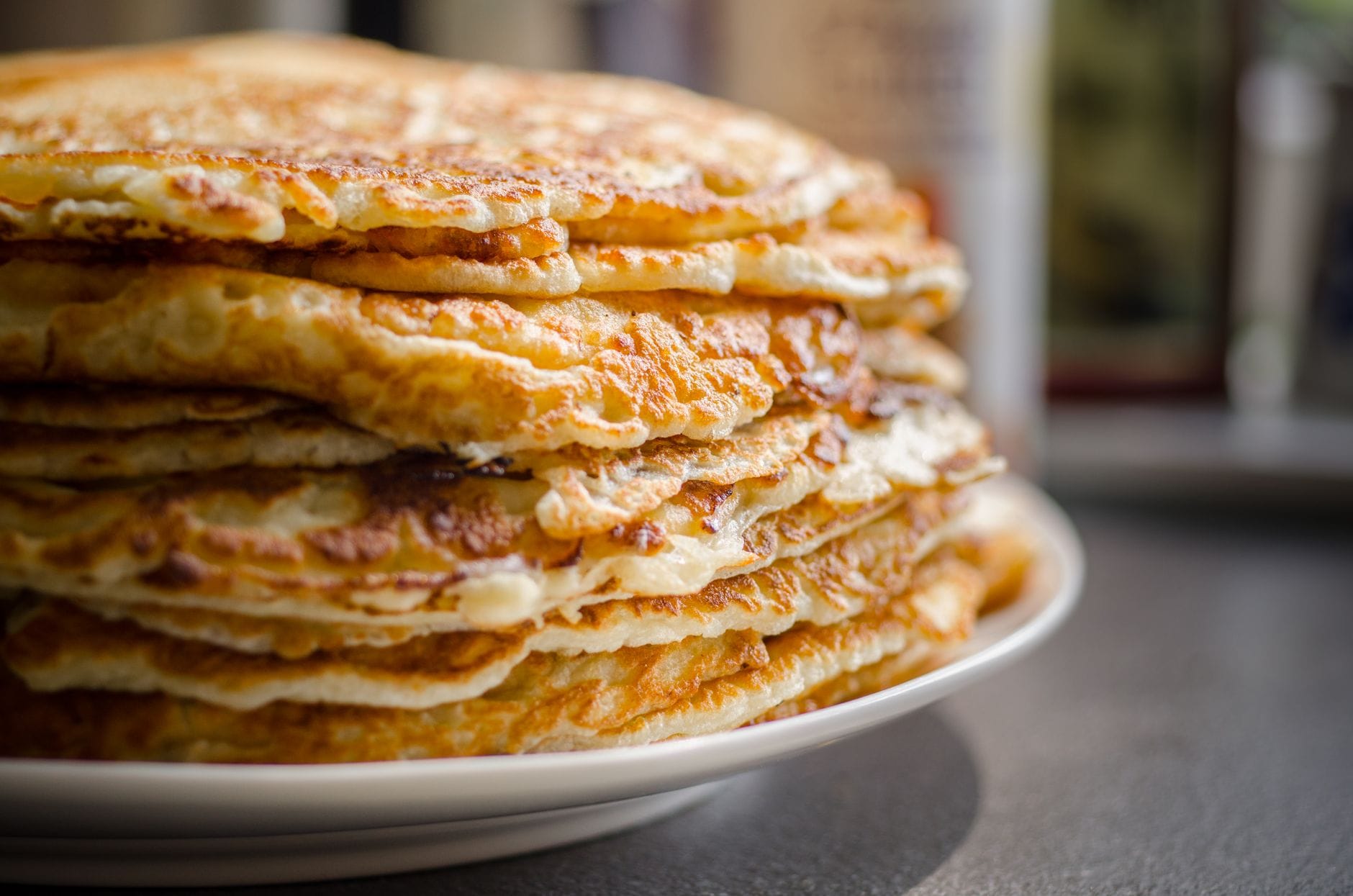
There's nothing quite like a proper homemade crumpet, holey top drinking up melted butter. They take a bit of patience but no real skill, just a loose yeast batter and a low, steady heat.
The holes are the whole point, and they come from a wet batter, a late hit of bicarbonate of soda, and resisting the urge to turn the heat up. The recipe is below, with more on how those holes form underneath it.
How to Make Crumpets: A UK Recipe
Makes About 9 crumpets
Prep
15 min
Cook
20 min
Total
35 min
Makes
About 9 crumpets
Ingredients
Method
- 1
Whisk the flour, yeast and sugar with the warm milk (and about 25ml of the water if needed) to a smooth, thick, lump-free batter.
- 2
Cover and leave somewhere warm for 45 to 90 minutes, until the surface is covered in bubbles and the batter has risen and then just started to fall back.
- 3
Dissolve the bicarbonate of soda and salt in the reserved 150ml of warm water, then whisk it into the batter, adding just enough to reach a pourable, double-cream consistency. Rest, covered, for 20 to 30 minutes.
- 4
Set a heavy flat griddle or frying pan over a medium-low heat. Grease the inside of the rings well and lightly oil the pan.
- 5
Ladle batter into each ring to about 2cm deep, below the rim.
- 6
Cook undisturbed for 8 to 10 minutes, until holes open across the top, the bubbles burst, and the surface looks set and almost dry.
- 7
Lift off the rings, flip the crumpets, and cook for just 1 to 2 minutes to colour the tops.
- 8
Cool on a wire rack, and toast to serve, with plenty of butter.
Cook’s notes
- Consistency test: the batter should coat the back of a spoon and drop thickly off it. If it runs like water, whisk in a spoon of flour; if it sits in a mound, loosen it with a little warm water.
- Rings give the tall, straight-sided classic shape and are worth using. Without them the batter spreads into thin, lacy pikelets, which are still good, just flatter.
- White strong flour is the standard for chew and structure. Swapping up to half for plain flour gives a softer crumb.
- Crumpets are best made ahead and toasted. Cool them fully, freeze, and toast straight from frozen until hot and crisp.
- Re-grease the rings every single batch, and keep the heat low. Patience on the first side is what earns the holes.
What you’ll need
- Large bowl and whisk
- Heavy flat griddle or frying pan
- 8cm crumpet rings, greased inside every batch
Troubleshooting
The tops are smooth, with no holes.
The batter was too stiff or under-proved. Thin it to pourable double cream and prove it until it's genuinely bubbly, and make sure the bicarb went in.
They're gummy in the middle.
You flipped them too soon, or the heat was too high. Cook longer on a lower heat until the top is almost dry before flipping.
The batter leaked out under the ring.
The batter was too thin, or the ring wasn't flush. Thicken it slightly and press the greased ring flat to the pan.
They stuck and tore when I lifted the ring.
The ring was under-greased. Grease the inside generously every batch.
The base burnt before the top set.
The pan was too hot. Drop to medium-low and give the tops time to tunnel and set.
More about crumpets
A batter, not a dough. A crumpet is made from a pourable yeast batter, not a kneaded dough. The very high proportion of liquid means there's no gluten network to knead; you simply whisk and ferment, and the batter is loose enough to pour and level itself inside a ring.
Where the holes come from. As the greased ring sits on a low heat, the base sets first while the top is still liquid. Carbon-dioxide bubbles rise, burst at the surface, and leave open channels straight down through the crumpet, the signature honeycomb that soaks up butter.
Two raising actions, two jobs. The yeast ferments during the long first rise, building flavour and the airy structure. The bicarbonate of soda, whisked in with a little water just before cooking, reacts quickly to throw off an extra burst of gas at the griddle, and that's what makes the bubbles pronounced and the top reliably holey. It's why the bicarb goes in late, not with the dry ingredients.
Why the batter must be just right. Too thick and the gas can't tunnel, giving a smooth, cakey top; too thin and it leaks under the ring. Pourable double cream is the sweet spot.
Rings and low heat. The ring gives height and straight sides, and low, patient heat gives the bubbles time to form and set before the base browns. Rush either and you get flat, dense or gummy crumpets.
Frequently asked questions
Written by
UK Homesteading Team
Editorial team
The UK Homesteading editorial team, offering UK-specific, evidence-led guidance on growing, keeping, preserving and the law.