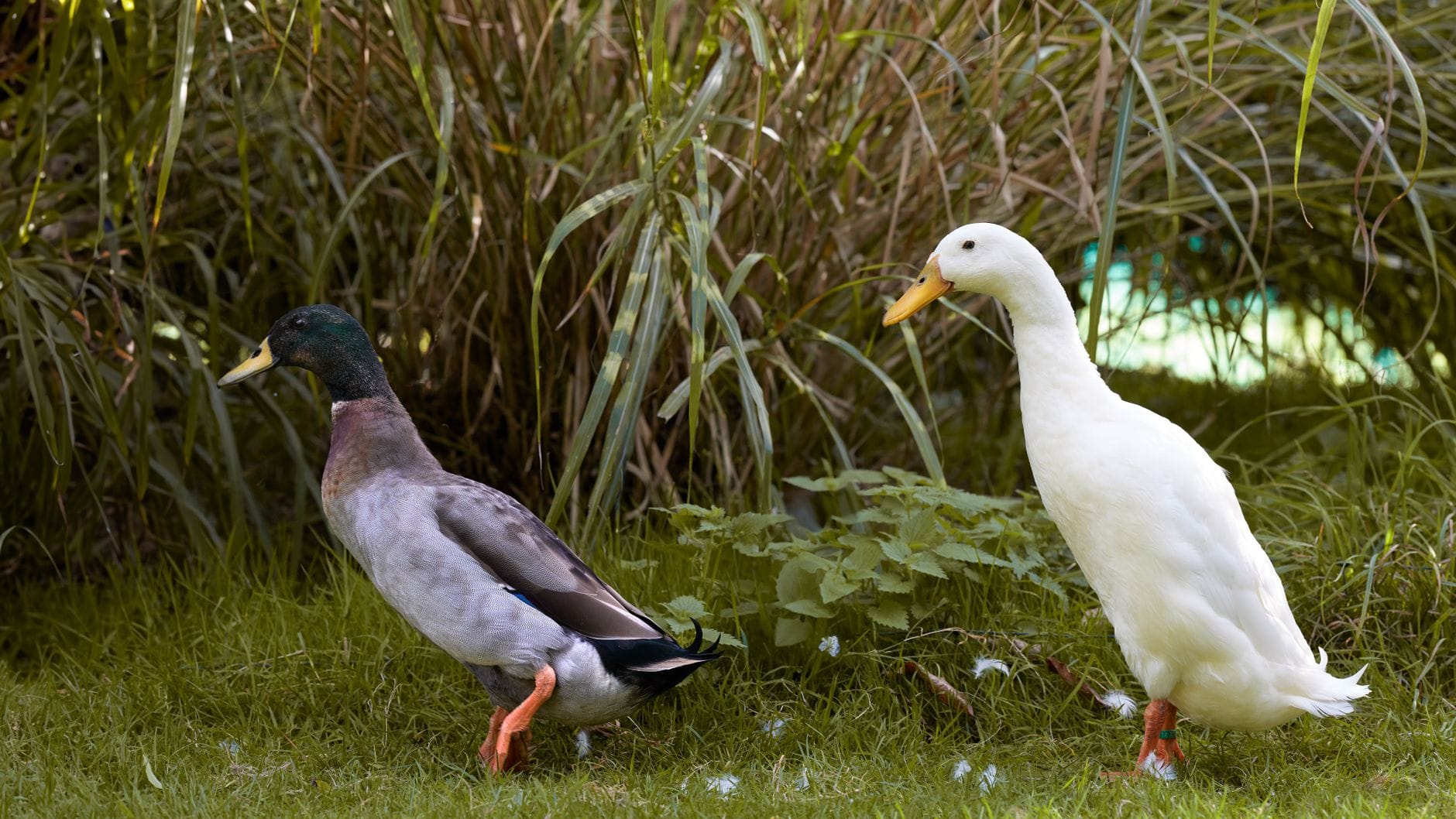
Ducks are famously easy-going eaters, which is exactly why so many end up on a poor diet. They will happily gobble bread, scraps and whatever the children throw them, look perfectly cheerful doing it, and quietly suffer for it. The good news is that feeding ducks well is genuinely simple once you know the shape of it: a complete pelleted feed as the staple, the right level of niacin while they are growing, grit to grind it down, sensible treats, and clean water always within a beak's reach of the food. Get those five things right and the rest is detail.
This guide is about domestic and backyard ducks: the birds in your garden, run or paddock. If you are just starting out, read it alongside our beginner's guide to keeping ducks in the UK, and if you are still choosing birds, our roundup of the best duck breeds for the UK will help you match a breed to your setup.
The staple: a complete pelleted feed
The foundation of any duck's diet should be a complete, balanced feed made for waterfowl or poultry. "Complete" is the key word: it means the feed already contains the right balance of protein, energy, fibre, vitamins and minerals, so your birds are not relying on you to assemble a diet from bits and pieces.
For adult laying ducks, poultry or waterfowl layers pellets are ideal. These sit at around 16 to 18 per cent protein and include added calcium, usually around 2 to 3 per cent, which laying ducks need to build strong eggshells. If you already keep hens, the good news is that ducks and hens can generally share the same layers pellets, provided you handle the niacin point below for any youngsters.
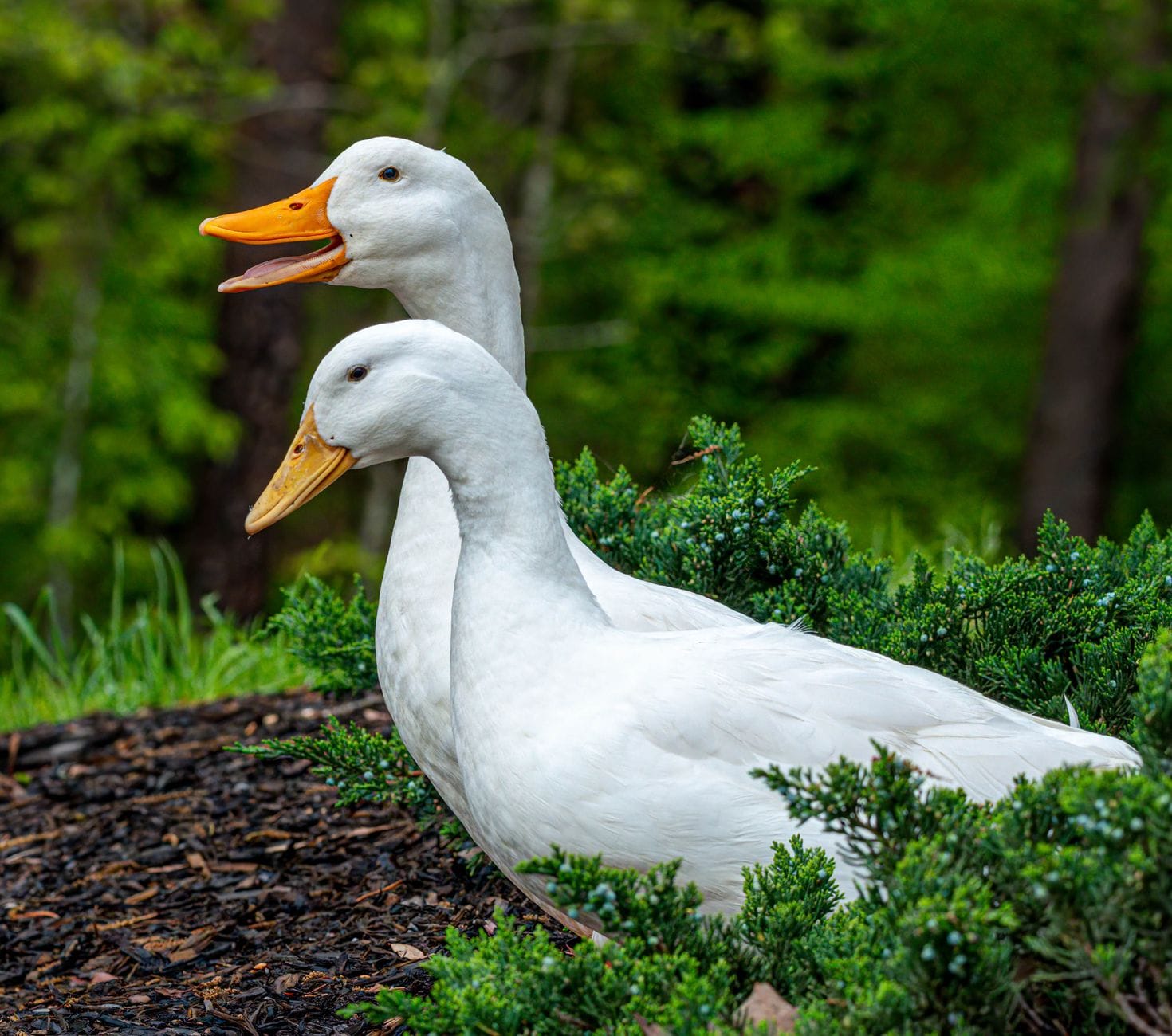
One practical tip: choose pellets over mash. Mash is a floury, powdery feed, and because ducks feed with a scooping, dabbling motion and love to take their food to water, damp mash clogs around their bill and can block their nostrils. Firm pellets keep their faces clean and cause far less waste. Because of the shape of their bills, ducks also struggle with the small pecking feeders made for chicks, so a shallow trough-style feeder suits them much better.
The niacin point: the one thing new keepers miss
If you remember one thing from this guide, make it this. Niacin, better known as vitamin B3, is essential for healthy bones and growth, and ducklings need considerably more of it than chicks do because they grow so quickly. A shortage in the early weeks causes weak, bowed or bent legs, poor growth and difficulty walking, and by the time it shows it can be hard to put right.
Purpose-made duck and waterfowl starter crumb and grower pellets are formulated with the higher niacin level ducklings need, which is the simplest reason to buy a proper waterfowl starter rather than a generic chick feed. The trap is ordinary chick crumb: it is designed for chickens, which need less niacin, so it can leave ducklings short.
Peas are worth a special mention here. Fresh, frozen or dried peas are both a favourite duck treat and a natural source of niacin, so a scatter of defrosted frozen peas is a genuinely useful supplement as well as good entertainment.
Grit: how ducks actually digest their food
Ducks have no teeth. They grind their food in a muscular part of the stomach called the gizzard, and to do that they need hard, insoluble grit, essentially tiny stones that sit in the gizzard and act like millstones. Ducks that free-range on soil pick up grit naturally as they forage, but birds kept on grass, in a run or on hard standing should be offered a separate pot of insoluble poultry grit alongside their feed so they can help themselves.
Do not confuse insoluble grit with soluble grit such as crushed oyster shell. Oyster shell dissolves and provides calcium for eggshells, which is useful for laying ducks, but it does not do the grinding job. Offer both if you keep layers: a pot of insoluble flint grit for digestion, and oyster shell or a similar calcium source for shell strength.
Greens, treats and forage
Ducks are natural foragers, and letting them do it is one of the pleasures of keeping them. That serrated fringe along the edge of a duck's bill lets it strain plants and small creatures from water and mud, and left to their own devices ducks will happily work through grass shoots, seeds, slugs, snails, worms, insects and aquatic invertebrates. This is genuinely good for them, and ducks earn their keep as gentle pest controllers in an orchard or veg patch.
On top of a complete pellet and their own foraging, sensible extras add variety and keep birds occupied:
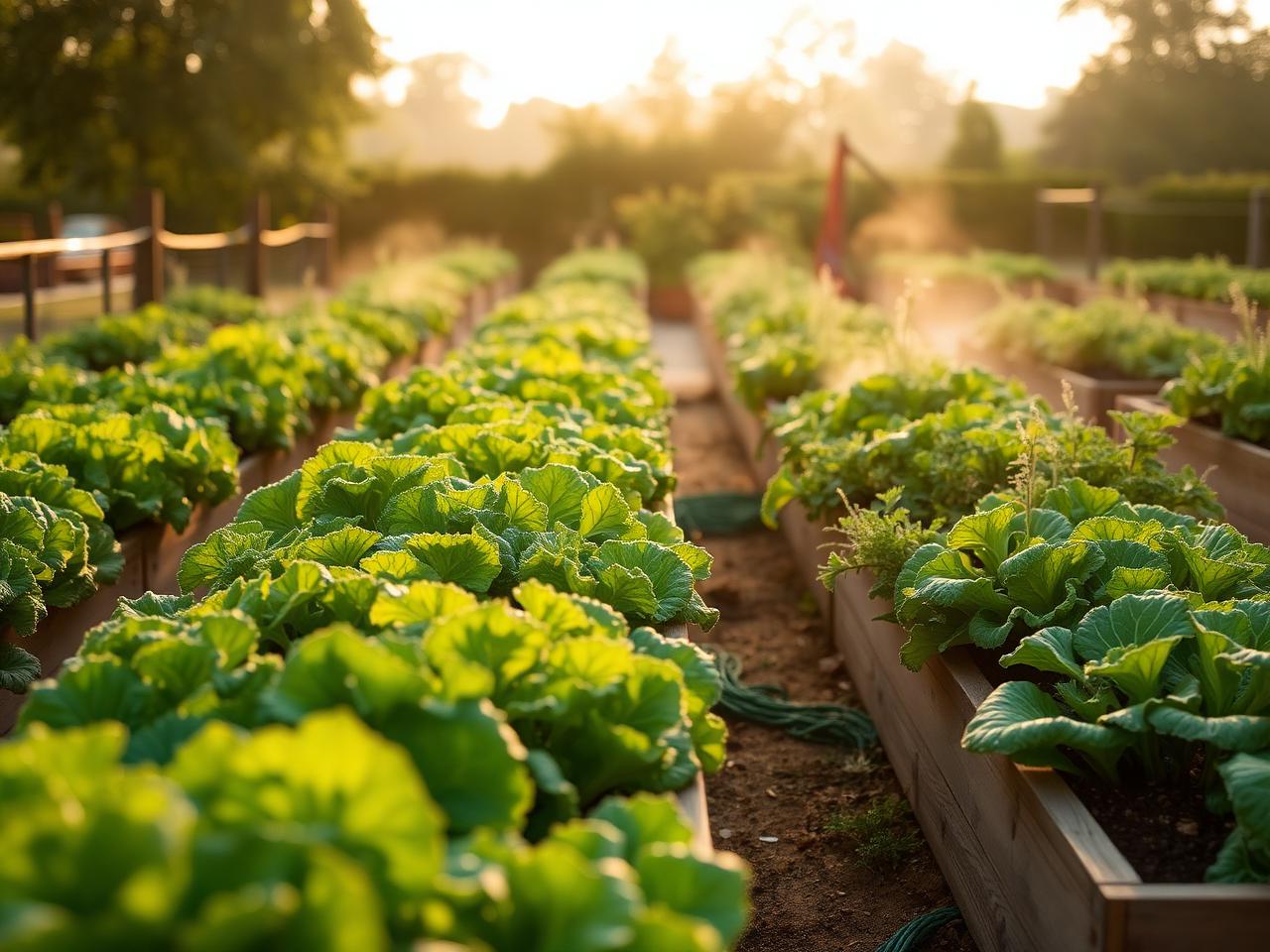
- Leafy greens such as kale, rocket, lettuce, chard and cabbage, torn into pieces. A good use for the salad bag you were about to throw out.
- Peas and sweetcorn, fresh, frozen and defrosted, or tinned and drained. Ducks adore them and peas bring that niacin bonus.
- Oats, including rolled or porridge oats, scattered as a treat.
- A little mixed corn in the afternoon, ideally tossed into a shallow tray of water so the ducks can dabble for it.
Keep treats to a modest share of the daily diet, perhaps a rough tenth, so they do not crowd out the balanced pellet. Too many rich treats and too much protein can actually cause problems, including a wing deformity known as angel wing in fast-growing youngsters.
Water: never separate it from food
This is the point people most often get wrong. Ducks cannot swallow dry food properly without water, and they use water to rinse and clear their bills, keep their nostrils clear and wash their eyes. That means clean, fresh drinking water must be available at all times, and it must be right next to the food so they can eat and drink in quick succession.
The water needs to be deep enough for a duck to submerge its whole head, which is how it keeps its eyes and nostrils clean, but positioned so that food and bedding do not constantly fall in and foul it. Ducks are messy drinkers and will dabble feed into their water, so plan on changing and cleaning it often, at least daily. Adult ducks drink a surprising amount, roughly a litre or two each per day and more in hot weather, so a couple of birds get through more than you would think.
You do not need a pond to keep ducks happy, but they should have enough water to dunk their heads and ideally to bathe. For the full picture on drinkers, bathing water and housing, see our guide to duck housing and water in the UK.
Feeding by life stage
What you feed changes as ducks grow. Here is the usual progression for domestic ducks in the UK.
| Life stage | What to feed | Key point |
|---|---|---|
| Ducklings, 0 to about 3 weeks | Waterfowl or duck starter crumb, available at all times | High niacin for fast growth; add yeast if using plain chick crumb |
| Growers, about 3 to 16-18 weeks | Duck or waterfowl grower pellets | Protein steps down for steady growth; keep water beside feed |
| Laying ducks | Poultry or waterfowl layers pellets, ~16-18% protein | Added calcium for eggshells; offer oyster shell too |
| Non-laying adults and drakes | Layers or a maintenance pellet, fed to appetite | Do not overfeed rich, high-protein feed |
Ducklings should have starter crumb available on a free-access basis so they can eat little and often, fed from a shallow trough rather than a chick feeder. Give them shallow drinking water they cannot fall into and drown in, and keep any swimming water out of reach until they are big enough and properly feathered. From around three to four weeks, move them gradually onto a grower ration, and by roughly sixteen to eighteen weeks they can go onto adult layers pellets.
What to avoid: the firm rules
Most of what harms ducks comes down to a short list. This is the part to take seriously.
There is one more hazard that is easy to overlook, and it becomes real in a British heatwave.
The short version
Feed a complete waterfowl or poultry pellet as the staple, with layers pellets for laying ducks. Get the niacin right for ducklings by using a proper waterfowl starter, or by adding yeast to chick crumb until ten to twelve weeks. Offer insoluble grit for digestion and oyster shell for laying birds. Use greens, peas, corn, oats and their own foraging as extras, not the main meal. Keep clean water available at all times, right beside the food, and change it often. And steer well clear of mouldy food, large amounts of bread, avocado, and stagnant water in hot weather. Do that, and your ducks will be healthier, lay better and live longer for it.
Feeding is only one part of keeping ducks well. Pair it with the right shelter, safe water and a fox-proof setup, covered in our guides to keeping ducks for beginners, choosing the best duck breeds for the UK and duck housing and water.
Guidance last checked July 2026. Always follow the feeding directions on your specific bag of feed, and speak to a vet if a bird shows signs of illness such as weakness, leg problems or loss of appetite.
Frequently asked questions
Sources
- Caring for pet ducks and geese , RSPCA
- Duck care: feeding your ducks , Omlet UK
- Feeding ducklings , Smallholder Range (W & H Marriage & Sons)
- Basic duck keeping , The Fancy Feed Company
- What do ducks eat? Six things you can feed ducks , Canal & River Trust
- Avian botulism in UK wild waterbirds , Animal and Plant Health Agency (GOV.UK)
Kit for this job (Ad)

Extra Select Premium Floating Swan and Duck Feed, 5 Litre
Check price on Amazon →
Novital Ascott 30lt Poultry Drinker,red/white
Check price on Amazon →
Brambles Floating Swan and Duck Food, 1.75 kg
Check price on Amazon →
Fancy Feeds Layers Pellets Complete Poultry Feed, 20 kg
Check price on Amazon →We may earn a small commission, at no cost to you. We only list kit we'd use.
Written by
UK Homesteading Team
Editorial team
The UK Homesteading editorial team, offering UK-specific, evidence-led guidance on growing, keeping, preserving and the law.