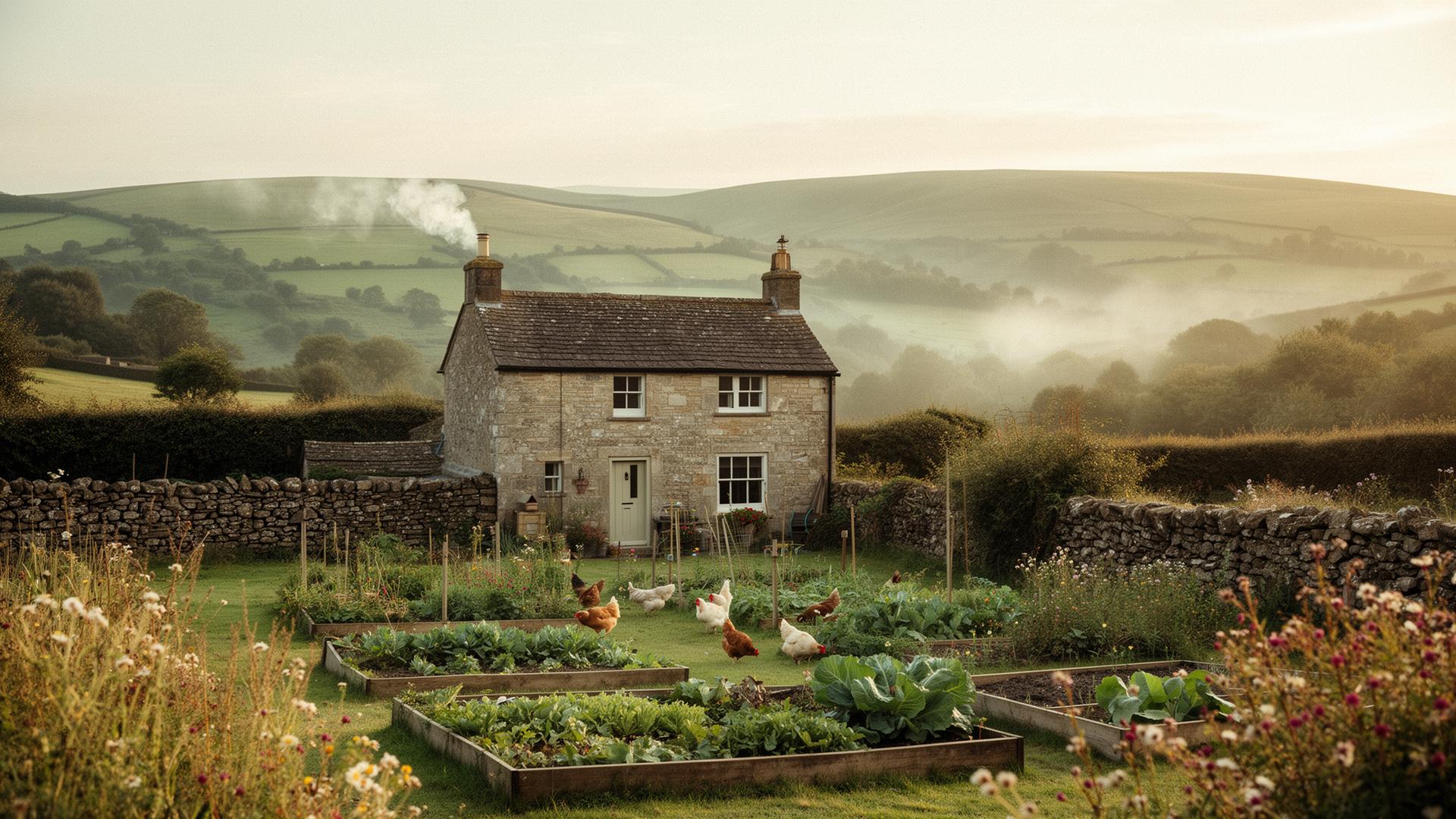
You've probably pictured it. A row of runner beans, a couple of hens scratching about, jars of something ruby-red cooling on the windowsill. The good news is that version of self-sufficiency is real and very doable in Britain. The less good news is the fantasy version, the one where you never set foot in a supermarket again, mostly isn't. Let's sort out which is which, and give you a gentle first year that actually fits around a job and a normal-sized garden.
So what does "self-sufficient" actually mean?
Nobody tells you this at the start: there's no finish line. Self-sufficiency is a dial, not a badge. At one end is a windowsill of basil and a bag of home-grown potatoes. At the other is a smallholding with goats, a polytunnel and a wood store. Almost everyone lives somewhere in the middle, and moves along the dial as their time, space and confidence grow.
So forget "becoming self-sufficient" as a single heroic event. A better question is: what could you produce, make or mend yourself this year that you currently buy? That might be salad leaves in June. It might be your own bread, or jam from a neighbour's plum tree, or learning to fix a bike instead of binning it. All of it counts. None of it requires you to sell the car and buy a wax jacket.
Self-sufficiency is a dial, not a badge. The only wrong move is deciding it's all or nothing, then doing nothing.
Why do people bother?
Everyone's got their own reason, and they're all valid. For a lot of people it's the food. A tomato you grew yourself, still warm from the sun, genuinely does taste better than anything in a plastic punnet, and you know exactly what went into it. For others it's the money, though we'll be honest about that one further down. For plenty it's simpler than either. It's the quiet satisfaction of making something with your hands, of the shorter walk to the bottom of the garden instead of the aisle.
There's a wellbeing angle too, and it's not woolly. Getting outside, growing living things, working with the seasons, it's good for the head as well as the pantry. And there's a real resilience in knowing you could make a loaf, patch a jumper or grow a few weeks' worth of greens if you had to. Not because the world's ending. Just because it feels good to be a bit more capable than you were last year.
Where should you actually start?
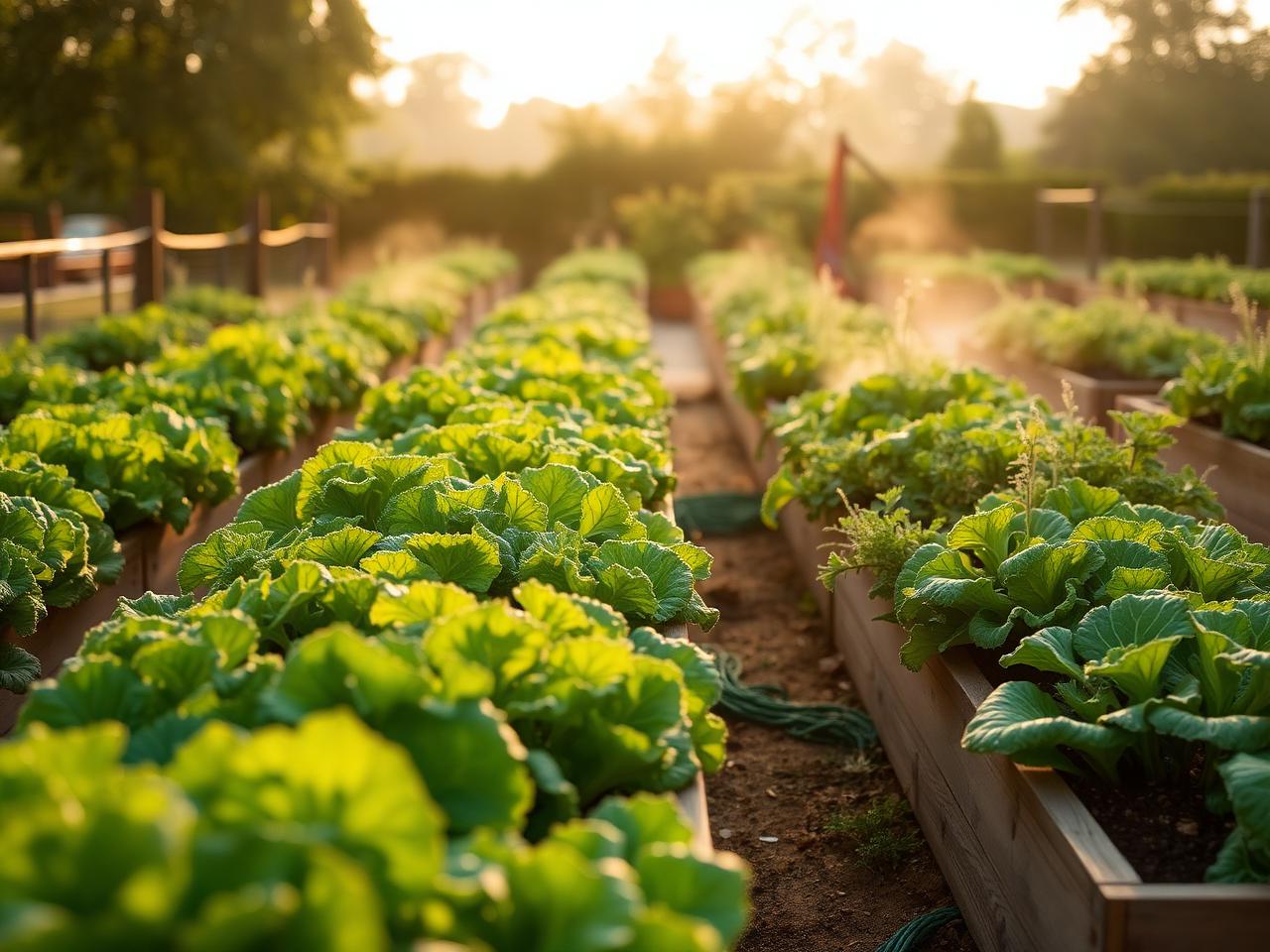
Start with food, and start absurdly small. The classic beginner mistake is to dig up half the lawn in March, plant forty different things, and be defeated by weeds and slugs by July. Don't do that. Pick three or four crops that are hard to kill and quick to reward you.
The Royal Horticultural Society's beginner list is a good place to steal from: courgettes, salad leaves, radishes, beetroot, runner beans, potatoes in a bag. Radishes are ready in about four weeks. Cut-and-come-again salad keeps giving for months from one sowing. Grow those well, feel the little hit of pride, and you'll want to do more next year. That momentum matters far more than the size of your first harvest.
Once you're growing, the natural next skill is preserving, because sooner or later you'll have a glut. Nobody eats twelve courgettes in a week. Learning to freeze, ferment, pickle or make jam is how a good summer feeds you into the winter, and it's where growing your own starts to feel properly worth it. After that, if you've caught the bug, comes livestock. A few hens for eggs are the traditional next step, and rightly so, but they're a genuine daily commitment, not a garden ornament.
Our grow your own hub walks through crops in detail, and the kitchen hub covers preserving from your first jam to your first ferment.
Food, energy, skills or money: which comes first?
It helps to split self-sufficiency into four buckets, because they're not equally easy for a beginner on a normal plot.
Food is where nearly everyone starts, and where the effort pays back fastest. Even a few pots of herbs and salad shave something off the shop and teach you a lot.
Skills are the sleeper hit. Learning to bake bread, mend clothes, cook from scratch, preserve a harvest or do basic repairs costs almost nothing, works in a flat, and pays you back forever. If you want the biggest return for the least land, this is it.
Money is where people get the most starry-eyed and the most disappointed. Growing your own can save you money, especially on herbs, salad and soft fruit that are pricey to buy and cheap to grow. But if you tot up compost, seeds, a water butt and your time, year one is often a wash or a small loss. It gets better as you reuse kit and save your own seed. Treat savings as a slow bonus, not the reason.
Energy is the hardest bucket in Britain and the one to be most realistic about. Meaningful energy independence means solar panels, batteries, maybe a wood burner and serious insulation, and that's real money and often planning permission. Most people are far better off cutting what they use before dreaming of generating their own. If it's calling to you, read the honest version on our off-grid hub before spending a penny.
Can you really go fully self-sufficient in Britain?
Short answer: on a normal garden or allotment, no. And that's perfectly fine.
Growing all your own food takes a surprising amount of land. Staples like wheat, cooking oil, sugar and enough protein to live on need space, kit and skills most of us haven't got and won't get. Our climate doesn't help either. A wet British summer can flatten a crop you were relying on, which is exactly why the old hands always plant a bit more than they need and never bet the dinner on one row.
So drop "fully self-sufficient" as a goal. Aim for "more self-sufficient than last year" instead. That's a target you can actually hit, over and over, for the rest of your life. The people who last at this aren't the purists who tried to grow everything and burned out by August. They're the ones who grew a bit more each season and enjoyed the shop for the rest.
What could a realistic first year look like?
Here's a gentle year that assumes a small garden, a full life, and no prior experience. Nudge the timings by a few weeks depending on where you are, because the north runs later than the south.
- 1
Winter (Jan to Feb): plan small and cheap
Pick three or four easy crops, no more. Order seeds, sort a couple of pots or a small bed, and set up a water butt if you can. This is the daydreaming season, so enjoy it, but keep the list short.
- 2
Early spring (Mar to Apr): first sowings
Sow salad leaves, radishes and beetroot. Start courgettes and beans off on a windowsill. Don't panic about slugs yet. The aim is simply to get things growing and build the habit of a daily potter.
- 3
Late spring (May): plant out and tidy
Once frosts have passed, move your tender plants outside. Keep sowing salad every few weeks so it never runs out. Start a compost heap or bin with your kitchen scraps and garden waste.
- 4
Summer (Jun to Aug): harvest and the first glut
This is the payoff. Pick often to keep plants cropping. When the courgettes get silly, learn one preserving skill: a simple jam, a pickle, or just freezing a batch. That's your food reaching into winter.
- 5
Autumn (Sep to Oct): lift, store and reflect
Harvest the last of it, dig up your potatoes, and store what keeps. Jot down what worked and what flopped. Every gardener keeps notes, because next year's you will be grateful.
- 6
Winter again: decide your next rung
Rest, eat your preserves, and pick one thing to add next year. A bit more space, a fruit bush, a new skill, or maybe start researching hens. One rung at a time is the whole trick.
What does it cost to get going?
Less than you'd think, if you're sensible. You can make a real start for the price of a few packets of seed, a bag of peat-free compost and some pots you already own. Yoghurt tubs make fine seed pots. A sunny windowsill is a free propagator. Plenty of allotment old-timers are magnificently thrifty, and it's half the fun.
The costs creep in when you scale up: raised beds, a greenhouse, netting, water storage, and eventually a hen house and run. None of it is compulsory, and most of it can wait or be found second-hand on the local car boot or online. The one thing worth spending on early is decent soil or compost, because everything grows from there. Start cheap, prove to yourself you enjoy it, then invest. That order round the wrong way is how sheds fill up with regret.
The honest summary? Self-sufficiency in Britain is one of the most rewarding things you can take up, as long as you take it up gently. Grow a little. Waste less. Learn a skill or two. Keep the shop for the rest, guilt-free. Do that, and this time next year you'll be a bit more capable, a bit better fed, and quietly rather pleased with yourself.
Frequently asked questions
Sources
- Register as a keeper of less than 50 poultry or other captive birds , GOV.UK (Animal and Plant Health Agency)
- Grow your own fruit, vegetables and herbs , Royal Horticultural Society
- Getting started with vegetables , Royal Horticultural Society
Written by
UK Homesteading Team
Editorial team
The UK Homesteading editorial team, offering UK-specific, evidence-led guidance on growing, keeping, preserving and the law.