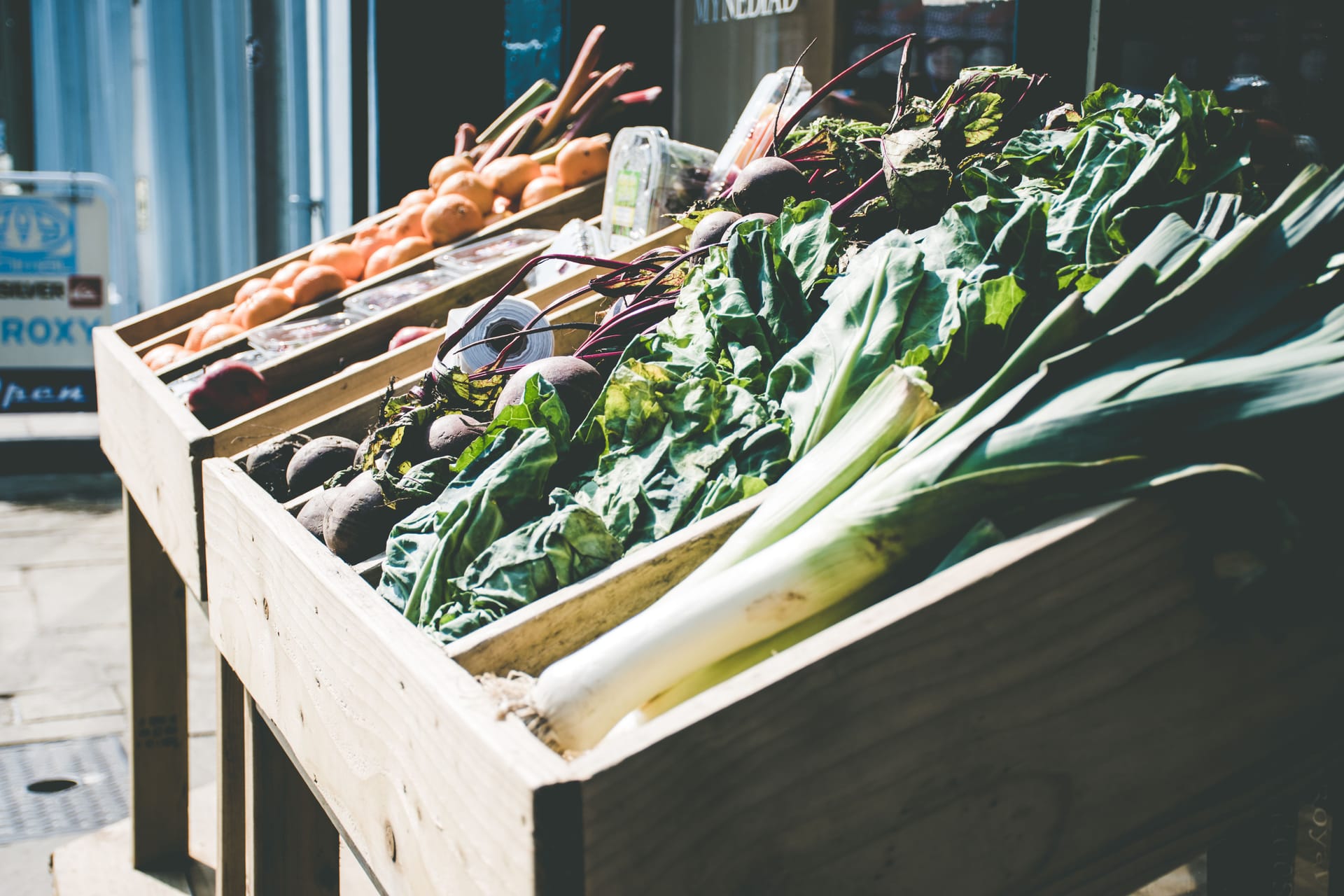
One of the quiet upsides of working the land is that the farming itself sits outside the business rates system altogether. Not reduced, not discounted: exempt. Your fields, your barn, your livestock shed are not even measured for rates. It catches people out in a good way, and then in a bad way, because the exemption is narrower than it first looks and it can slip the moment you start earning from anything other than agriculture.
This guide walks through what the exemption covers, where the carve-outs bite, and what happens when you diversify into the classic smallholding sidelines: a farm shop, a holiday let, glamping, livery, storage. It also flags the small-business relief that often wipes out a modest rated bill, explains why the farmhouse is council tax rather than rates, and sets out the four different national systems, because this is devolved and the figures are not the same across the UK.
Before the detail, one thing to hold onto: every money figure below moves. Multipliers are reset each April, rateable values are revalued periodically (the last revaluation took effect on 1 April 2026), and relief thresholds get changed at Budgets. The figures here are current as at July 2026. Always confirm the live numbers with the Valuation Office Agency (VOA), your council, mygov.scot or Land and Property Services before you rely on them.
Farmland and farm buildings pay no business rates
This is the heart of it. The Local Government Finance Act 1988, Schedule 5, paragraph 1, says:
"A hereditament is exempt to the extent that it consists of any of the following": (a) agricultural land; (b) agricultural buildings.
"Exempt" is stronger than "relieved". An exempt property is not entered in the rating list and there is no bill to relieve. GOV.UK puts the practical version plainly: you may not have to pay business rates on "agricultural land and buildings used for agricultural purposes, including fish farms". That covers the ordinary run of a working smallholding: the grazing, the hay meadow, the veg beds, the livestock barn.
What actually counts as "agricultural"
Here is where homesteaders trip, because the legal meaning is specific.
Agricultural land (Schedule 5, paragraph 2(1)) is land used as arable, meadow or pasture only; land for a plantation, wood or saleable underwood; land over 0.10 hectare used for poultry farming; a market garden, nursery ground, orchard or allotment; and land used solely with an exempt agricultural building.
But the same paragraph then strips out the bits people assume are covered. Paragraph 2(2):
"agricultural land does not include": (a) "land occupied together with a house as a park", (b) "gardens (other than market gardens)", (c) "pleasure grounds", (d) "land used mainly or exclusively for purposes of sport or recreation", and (e) "land used as a racecourse".
So the paddock you keep for the pony's turnout, the lawn, the wildlife pond you dug for pleasure, the bit of field you mow for the kids to kick a ball on: none of that is "agricultural land" in the legal sense, even though it is green and rural and part of your holding.
Agricultural buildings (paragraphs 3 to 7) must not be dwellings, must be occupied with agricultural land, and must be used solely for agricultural operations. A livestock building has an extra test: it must be surrounded by or contiguous to at least 2 hectares of agricultural land. "Livestock" is defined broadly and, per paragraph 8(5), "includes any mammal or bird kept for the production of food or wool or for the purpose of its use in the farming of land". Your meat sheep, your laying hens, your house cow all count. Horses kept for riding do not.
When the exemption is lost: diversifying
Diversification is where a smallholding meets the rating list. The principle is simple: hospitality, retail, storage and events are commercial uses, so they are rateable unless a specific exemption or relief applies, while genuine agricultural use is exempt. The moment a building or a slice of land is used more than incidentally for one of these, the VOA can enter that part and rate it.
The usual triggers on a homestead are:
- a farm shop or cafe fitted out and open to the public
- holiday lets, glamping pods or shepherd's huts let out commercially
- storage units or a contracting yard let or run as a business
- events, weddings or experiences
- livery, and stables generally
On stables, GOV.UK is direct: "You usually need to pay business rates on your stables, unless you use your horses for farming." Keeping or breeding horses for riding, competition or livery is not agriculture, so those stables are rateable. If they happen to sit in your garden you might pay council tax on them instead. It is a fine call, so ask the VOA.
Two things soften this. First, only the non-agricultural part is rated, not the whole farm. Second, the use has to be real, not trivial. The "solely used" test in paragraph 8(3) says that in deciding whether a building is used solely for agriculture, "no account shall be taken of any time during which it is used in any other way, if that time does not amount to a substantial part of the time". Selling your own surplus eggs from an honesty box by the gate does not turn your barn into a rateable shop. Fitting that barn out with a counter, a chiller and opening hours is a different story.
Small Business Rate Relief often takes the bill to nothing
Even where a building becomes rateable, the bill is frequently zero once relief is applied, because diversified rural units tend to have modest rateable values.
In England (Small Business Rate Relief):
"You will not pay business rates on a property with a rateable value of £12,000 or less... For properties with a rateable value of £12,001 to £15,000, the rate of relief will go down gradually from 100% to 0%."
You generally get it only if your business uses one property (with some room for a low-value second one). And even if you do not qualify for the relief itself, a property with a rateable value below £51,000 is billed on the lower "small business multiplier". For 2026 to 2027 that multiplier is 43.2p, against the standard 48p. These rates are set annually, so treat them as a snapshot and check the current figure.
Holiday lets and glamping: council tax or business rates?
A holiday let can sit on either council tax or business rates, and which one depends on how much you actually let it. In England, from 1 April 2023, a property is valued for business rates as self-catering only if, over the last 12 months, it was:
"available to let for short periods commercially for at least 140 nights... actually let for at least 70 nights."
You also have to intend to keep hitting 140 available nights. Miss the thresholds and it goes back to council tax. Wales sets a far tougher test: available to let for at least 252 nights and actually let for at least 182 (from short stays of 28 nights or less). That gap matters if you are near the border or comparing advice written for the wrong nation.
Glamping pods, shepherd's huts, yurts and similar are generally treated as self-catering accommodation and assessed the same way. We say "generally" deliberately: there is no separate statutory night-test written specifically for glamping, the treatment turns on the facts of your setup, and the VOA decides. So take the self-catering rules as your starting point and confirm your own case rather than assuming.
The farmhouse is council tax, not business rates
The house you live in is domestic property. It pays council tax, entirely separately from the agricultural exemption that covers your land and buildings. So a typical working smallholding has two things going on at once: an exempt agricultural holding, and a council-tax band on the farmhouse.
Where a building is genuinely mixed, the two can split. If you run a business from part of your home, the domestic part stays on council tax and the business part can be rated. As noted above, stables in your garden may be treated as domestic and fall under council tax rather than rates. Some councils also charge extra council tax on second homes and on long-term empty properties, which can be relevant if you own a cottage on the holding you do not live in. The premium levels are set locally and change, so check your own council's current policy rather than relying on a headline figure.
Four nations, four systems
This is devolved, and the differences are real. Never quote an England figure as if it applies across the UK.
| Nation | Agricultural exemption | Small-business relief | Holiday-let test |
|---|---|---|---|
| England | Exempt (Local Government Finance Act 1988, Sch 5) | No rates at a rateable value of £12,000 or less; taper to £15,000 | Available 140 nights and let 70 nights |
| Wales | Exempt (same Act; applies to England and Wales) | 100% relief at £6,000 or less; taper to £12,000 | Available 252 nights and let 182 nights |
| Scotland | Agricultural land and buildings sit outside the valuation roll (see note) | Small Business Bonus Scheme: 100% up to £12,000, within a combined rateable value of £35,000 (each property £20,000 or less) | Separate Scottish rules apply via the assessor |
| Northern Ireland | Run entirely by Land and Property Services (see note) | Separate NI reliefs, not the GB scheme | Separate NI rules via LPS |
A couple of important caveats behind that table:
- Scotland runs its own non-domestic rates system, not the England and Wales Act. In practice, agricultural land and buildings are not entered on the Scottish valuation roll, so there is nothing to charge, and the Small Business Bonus Scheme then covers any rated (non-agricultural) part of your holding. We describe this as practice rather than quoting the England and Wales Schedule 5, which does not apply north of the border. Check your position with the Scottish Assessors and mygov.scot.
- Northern Ireland is a completely separate system with no GB-style business rates. Land and Property Services (LPS) values property and bills rates: domestic rates are based on a property's capital value, and non-domestic rates on a Net Annual Value multiplied by a poundage made up of a regional and a district rate. Agricultural land and buildings are generally outside the rating system in NI, but because the whole framework is different, confirm your own case directly with LPS rather than assuming the GB rules carry over.
The traps people fall into
Before you build or sell: check these
- Work out which parts of your holding are genuinely agricultural and which are not (gardens, paddocks, recreation land and horse facilities usually are not).
- Before you diversify, decide whether the new use will be more than incidental, because that is what pulls a building into the rating list.
- Find the rateable value of any rated part on the VOA website, then apply Small Business Rate Relief before assuming you owe anything.
- If you start a farm shop, holiday let, glamping or livery, report the change of use to the Valuation Office.
- For a holiday let, check the night thresholds for your nation to see whether it is council tax or business rates.
- Remember the farmhouse is council tax, separate from the land and buildings, and check your council's stance on second-home or empty-property premiums.
- In Scotland use mygov.scot and the Scottish Assessors; in Northern Ireland deal with Land and Property Services, because neither follows the England and Wales rules.
This is general guidance, not legal or financial advice, and the rules and figures change and vary by nation. Always check the current GOV.UK, legislation.gov.uk, mygov.scot or Land and Property Services pages linked below, and confirm any borderline case with the Valuation Office Agency (or the Scottish Assessors or LPS) and your local council before you build or sell.
This guide is general information, not formal legal, financial, medical or veterinary advice. UK rules, prices and best practice change, and some rules differ across England, Scotland, Wales and Northern Ireland, so always check the current position with the relevant official source (such as gov.uk, the NHS, the FSA, DEFRA or APHA, or the RHS) or a qualified professional before acting. Last checked July 2026.
Frequently asked questions
Sources
- Local Government Finance Act 1988, Schedule 5 (exemption: agricultural premises) , legislation.gov.uk
- Business rates relief: exempt properties , GOV.UK
- Business rates relief: small business rate relief , GOV.UK
- Business rates: self-catering and holiday let accommodation , GOV.UK
- Introduction to business rates (overview, including stables) , GOV.UK
- Non-domestic rates relief: Small Business Bonus Scheme (Scotland) , mygov.scot (Scottish Government)
- Non-Domestic Rates: Small Business Rates Relief (Wales) , Business Wales (Welsh Government)
- Properties you pay rates on (Northern Ireland) , nidirect (NI Executive) / Land and Property Services
- Farm diversification and business rates (context) , Farmers Weekly
Written by
UK Homesteading Team
Editorial team
The UK Homesteading editorial team, offering UK-specific, evidence-led guidance on growing, keeping, preserving and the law.