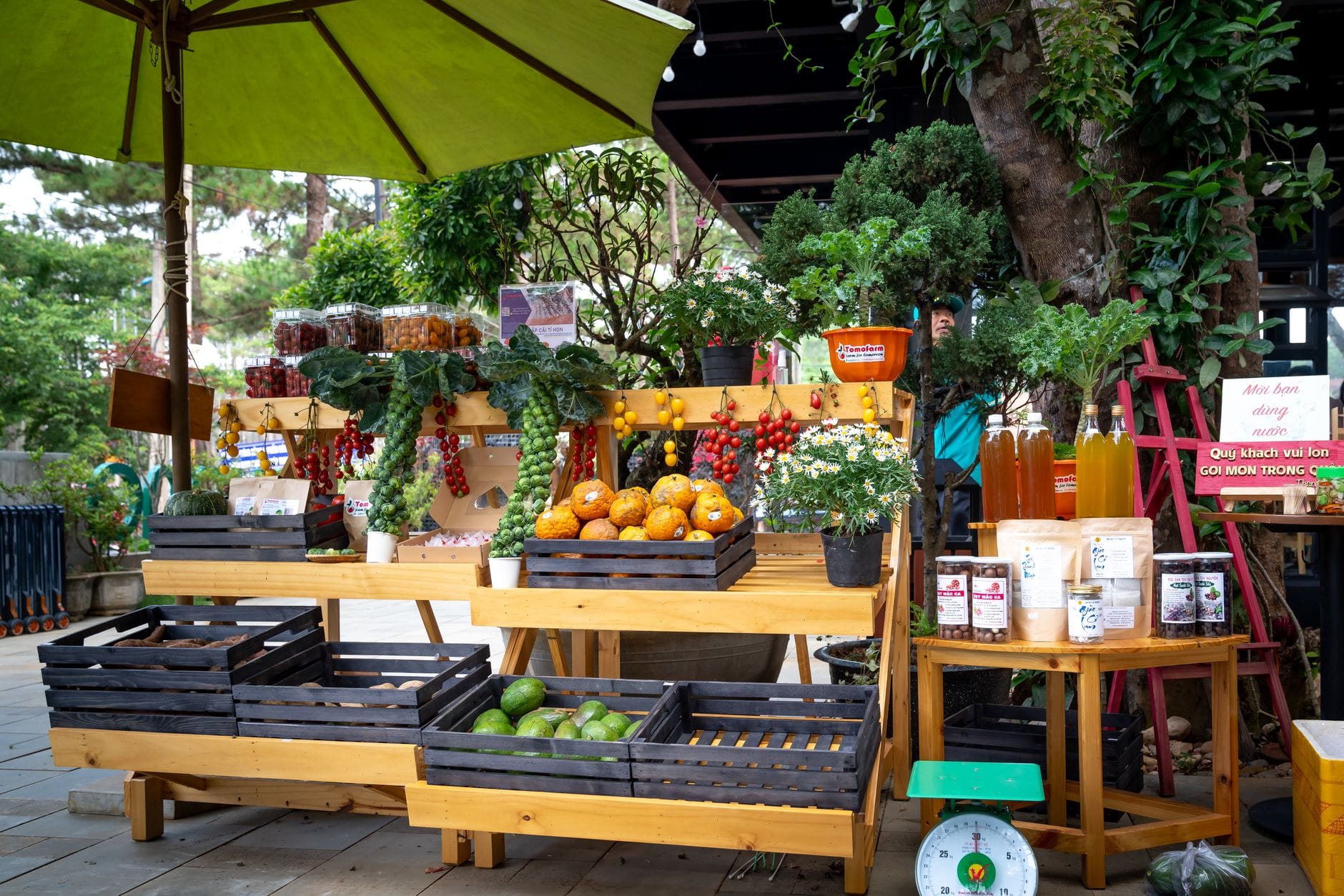
Selling a dozen eggs or a few jars of chutney feels a world away from running a business, and mostly it is. But the question of insurance trips people up, because two different ideas get muddled together: what the law actually makes you buy, and what a market, a fair or plain common sense makes you buy. They are not the same, and getting them straight saves both money and worry.
This guide is general information, not insurance or legal advice. Cover, limits and premiums vary a lot between insurers and change over time, so treat everything here as a starting point, get your own quotes, and read the policy wording before you rely on it.
The three types of cover, in plain English
Almost all the liability insurance a smallholder runs into is one of three things.
- Public liability covers injury to a third party, or damage to their property, arising from your activities. A customer trips over your crate at the market. Your gazebo blows over and dents a car. That is public liability territory.
- Product liability covers harm caused by something you supplied. Someone is made ill by your food, or reacts to an undeclared allergen. That is a product claim. Public and product liability are very often sold together as "public and products liability".
- Employers' liability covers injury or illness to people who work for you, whether paid staff or, in many cases, volunteers who lend a hand.
Keep those three in mind, because the legal position is completely different for each.
What the law actually makes you buy
Here is the part that surprises people. To sell eggs, honey or homemade produce, the law does not require you to hold public liability or product liability insurance at all. NFU Mutual put it plainly: public liability "isn't a legal requirement but it's highly recommended". No statute says you must insure before you can sell a jar of jam.
The one insurance that is compulsory by law is employers' liability, and only if you employ people.
There is an exemption, but it is narrow. You do not need employers' liability if you only employ close family: a husband, wife, civil partner, parent, grandparent, child, grandchild, sibling, or the step and half equivalents. The moment someone outside that list works for you, the exemption falls away.
Required by the market, not by the law
So if public liability is not the law, why does everyone seem to insist on it? Because organisers do, even though Parliament does not.
Markets, fairs, festivals and fetes very commonly make public liability a condition of booking a pitch, and many will not even let you book without seeing a valid certificate. As one guide for market traders sums it up, it is "not technically the law", but "it's often a condition of entry, which amounts to the same thing in practice".
The level they ask for varies:
- Some smaller markets accept lower limits, so check the exact figure with the organiser.
- Bigger venues may want 2 million pounds or more.
- Anything involving food may require 5 million pounds, because the risk of a claim is higher.
Specialist smallholder policies tend to carry generous liability limits as standard. Smallholder Protect includes 5 million pounds of public liability; NFU Mutual's smallholder cover offers a range. Always confirm the exact figure the organiser needs before you turn up, because a pitch you cannot use is a wasted booking.
Product liability: the risk that follows the jar home
Public liability is about your stall. Product liability is about your produce, and it carries a legal sting worth understanding, because it is the strongest reason to insure even when nobody is forcing you.
Product liability in the UK runs on strict liability under the Consumer Protection Act 1987. Strict means the injured person does not have to prove you did anything wrong.
Read that middle line again, because it catches smallholders directly. Put your own name or brand on your eggs, honey or jam and you are a "producer" who can be held liable. "I did nothing wrong" is no defence, because carelessness is not what the claim turns on.
None of this means insurance is legally required. It means the liability itself is real and hard to shake off, so product liability cover exists to pay a claim you cannot otherwise dodge. That is the honest case for holding it.
Your home insurance almost certainly won't cover selling
A common and costly assumption is that a home policy stretches to cover a bit of selling from the kitchen. It generally does not.
Standard home insurance excludes business or trading use, and running a business from home without declaring it can invalidate the policy. As GoCompare warns, "if you don't disclose the fact that you're using your home for business purposes, this could invalidate your home insurance and leave you out of pocket". Contents cover also tends to exclude or limit stock you are holding for sale, and customers coming to your door may need liability a home policy simply does not provide.
The cleaner route is a smallholder or small-farm policy that combines home, land, produce and liability in one place. But there is a nuance here that genuinely catches people out.
What it costs, and how to get a sensible quote
Premiums depend on what you keep, what you make, how you sell and the cover you choose, so anyone quoting you a firm figure sight unseen is guessing. Two real starting prices give a rough sense of scale:
- Smallholder Protect quote whole policies (property, livestock and liability including 5 million pounds public liability plus employers' liability) from 360 pounds a year.
- Hiscox advertise small-business public liability from around 5.20 pounds a month (a promotional starting price, so check their current figure), and that is general small-business cover, not smallholder-specific.
Both are starting prices, not what you will necessarily pay. For anything else, get quotes rather than trust a range. GOV.UK points people to BIBA (the British Insurance Brokers' Association) to find a broker, which is a good move if your set-up is at all unusual.
Insurance is not the same as staying legal
One last thing to keep separate in your head. Insurance pays for things that go wrong. It does not make you compliant with food law. Those are two different jobs.
Before you sell food, you also need to sort the legal duties: registering as a food business, and getting your labelling and allergen information right. Being insured does not excuse skipping either, and skipping them can land you in trouble regardless of your cover.
- Read our guide to registering as a food business to see when you must register (it is free and quick).
- Read our guide to food labelling and allergen law for what has to go on the jar and the stall.
Before you sell: check these
- Are you taking on anyone outside close family, even an unpaid helper? If so, you likely need employers' liability (minimum 5 million pounds).
- Which markets or fairs are you booking? Ask each organiser the public liability level they require before you commit.
- Do you put your name or brand on your produce? Then you are a "producer" under the Consumer Protection Act 1987 and carry strict product liability. Product cover is prudent.
- Do you sell anything processed (jam, chutney, bakes, cooked food)? Tell the insurer, and check it is not excluded from a basic smallholder extension.
- Have you told your home insurer you are selling? Undeclared business use can void the policy.
- Have you sorted the legal side, food business registration and labelling, separately from the insurance?
Insurance for a smallholding is worth getting right rather than guessing at. Get a couple of quotes, describe exactly what you make and sell, read the wording, and if anything is borderline, ask the insurer or a broker before you rely on the cover. This is general information and not insurance or legal advice, so confirm the current position for your own set-up before you trade.
This guide is general information, not formal legal, financial, medical or veterinary advice. UK rules, prices and best practice change, and some rules differ across England, Scotland, Wales and Northern Ireland, so always check the current position with the relevant official source (such as gov.uk, the NHS, the FSA, DEFRA or APHA, or the RHS) or a qualified professional before acting. Last checked July 2026.
Frequently asked questions
Sources
- Employers' liability insurance , GOV.UK
- Consumer Protection Act 1987, Part I (Product Liability) , legislation.gov.uk
- Product safety: unsafe goods, liability , Business Companion (Chartered Trading Standards Institute)
- Business liability insurance , NFU Mutual
- Smallholder Protect insurance , Smallholder Protect
- Do I need public liability insurance to sell at markets or fairs? , ByteStart
- Working from home insurance , GoCompare
- Public liability insurance , Hiscox
Written by
UK Homesteading Team
Editorial team
The UK Homesteading editorial team, offering UK-specific, evidence-led guidance on growing, keeping, preserving and the law.