A hot shower is one of the small luxuries people quietly worry about giving up when they move off-grid, and it is also one of the easiest to keep. Heating water without the mains is a thoroughly solved problem in the UK. The twist is that the thing which lets each method down is our weather and our latitude, and no single source covers a full British year comfortably on its own. Solar thermal is brilliant from spring to autumn and tired by December. A wood stove with a back boiler is a winter hero and a nuisance to light on a warm July evening. Surplus solar electricity is generous on a bright day and absent on a dull one. So the real skill is not picking a winner, it is combining a couple of sources into one well-insulated store so that something is always warming your water.
This guide runs through the main ways off-grid homes make hot water, how to size and insulate the store they all feed, and the three safety points you genuinely cannot skip: a solid-fuel boiler stove that must never be run as a sealed pressurised system, Legionella in a lukewarm cylinder, and scalding at the tap. If you are still planning the wider setup, it sits alongside our guides to off-grid heating and to home battery storage.
The methods, side by side
Before the detail, here is the shape of the choice. Each row is a way to heat water off-grid; read across for when it earns its keep and what to watch.
| Method | Best season | Fuel or input | Main watch-out |
|---|---|---|---|
| Wood stove with back boiler | Autumn and winter | Logs (own or bought) | Needs a heat leak or heat-dump and an open vent; competent installer only |
| Solar thermal | Spring to autumn | Free sunshine | Little use in deep winter; needs a sunny roof and a bigger cylinder |
| Immersion from surplus PV or battery | Sunny days, spring to autumn | Spare solar electricity | Only heats when there is surplus power; slow if the sun is weak |
| LPG or bottled-gas instant heater | All year | Bought gas | Ventilation and flue, annual Gas Safe service, carbon monoxide alarm |
| Thermal store or heat battery | All year (combines sources) | Whatever you feed it | Sizing and insulation; loses heat if under-lagged |
| Simple options (kettle, solar shower bag, gas califont) | Any, or camping and cabins | Various | Small volumes only; a stopgap, not a whole-house supply |
The only fully sourced cost figure worth quoting is solar thermal: the Energy Saving Trust puts a typical installed system at around £5,300. The others vary so much with your existing plumbing, the size of tank and how much you do yourself that any single number would be misleading, so treat costs as something to get quoted locally rather than guess.
Wood stove with a back boiler
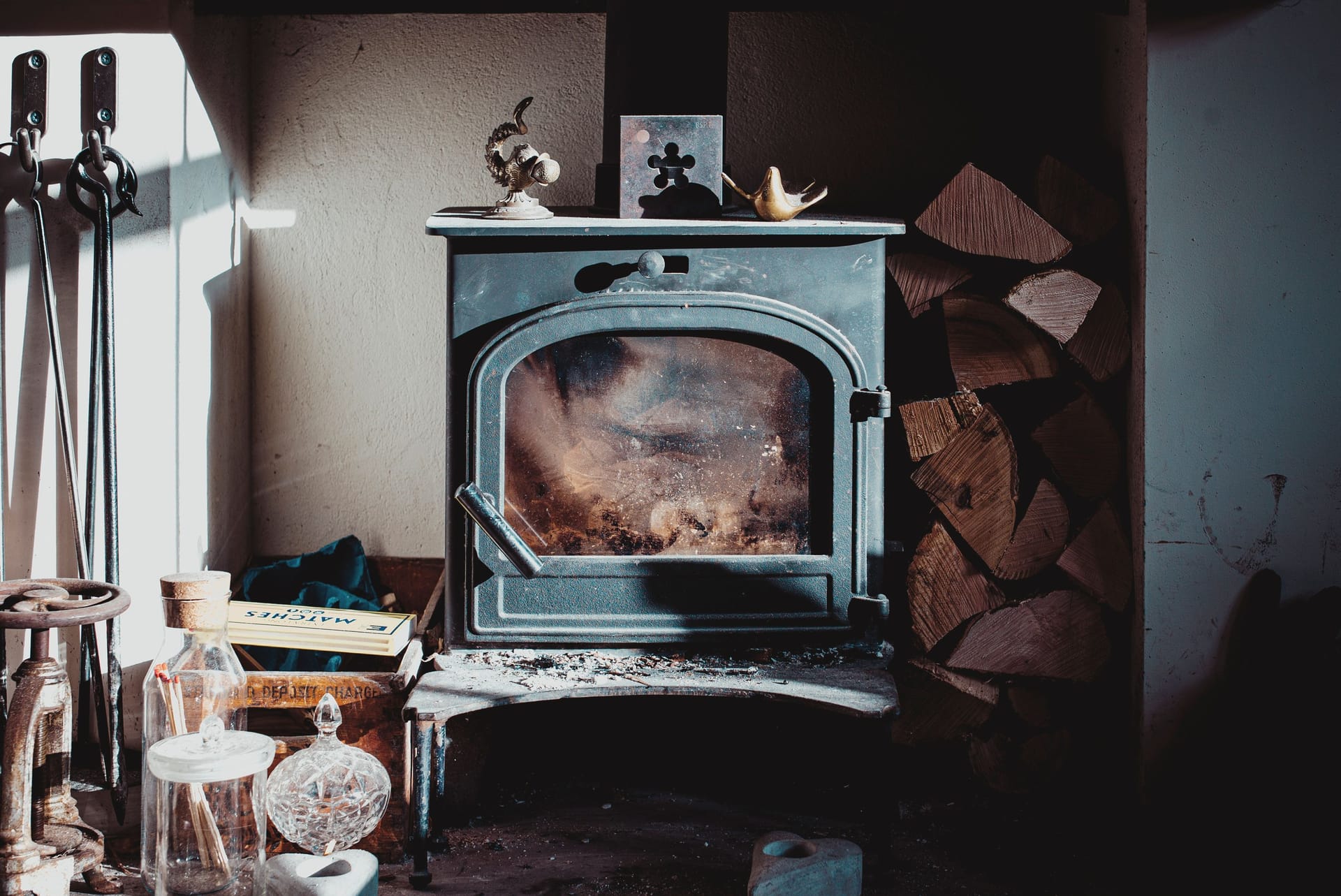
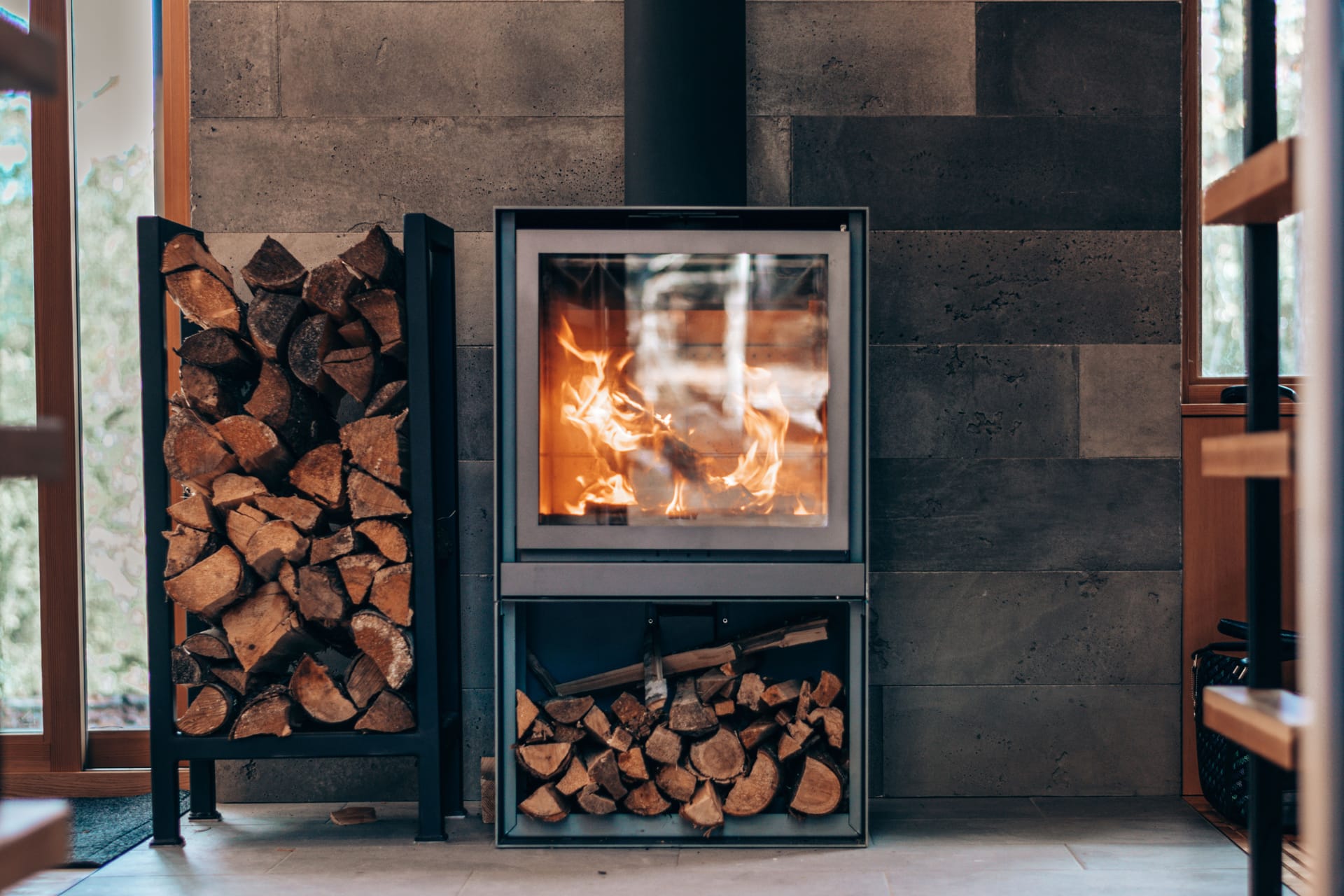
If you are already burning wood to heat the room, a back boiler is the closest thing to free hot water an off-grid home can get. A boiler stove or "wetback" has a water jacket or boiler built into the firebox; as the fire burns, it heats water that circulates to your cylinder or thermal store. There is a real difference in how much heat goes where: the Energy Saving Trust notes that a dedicated boiler stove can put around 65% of its output into water, whereas a stove with a smaller back boiler may put only about 20% into water and the rest into the room. Pick the balance that suits you, a boiler stove if hot water is the priority, a room stove with a modest back boiler if warmth comes first.
The reason this needs doing properly is simple physics. You cannot turn a fire off. When the cylinder is up to temperature and you are still burning, that heat has to go somewhere, or pressure and temperature in the system climb. A correctly designed solid-fuel system therefore always includes a route for surplus heat to escape, traditionally a heat leak or heat-dump radiator plumbed on a gravity circuit so it works even if a pump stops, and it is normally run open-vented rather than as a sealed, mains-pressure system.
A wood back boiler is at its best paired with a thermal store, because a batch of logs releases a lot of heat in one go and a store can soak it up. It is the classic winter partner to solar thermal: the panels do the summer, the stove does the winter, and the store lets them share a tank.
Solar thermal
Solar water heating, or solar thermal, uses roof-mounted collectors to heat a fluid that is pumped through a coil in your cylinder. There are two flavours: flat-plate collectors, which are cheaper and tuck neatly onto or into the roof, and evacuated tubes, which cost a bit more but tend to perform better in cold, dull conditions because each glass tube is insulated by its vacuum. Either way, the system runs all year but its output follows the sun. The Energy Saving Trust's figures are the ones to plan around: roughly 90% of a household's hot water in summer, dropping to about 25% in winter.
That seasonal swing is the whole story for an off-gridder. Solar thermal is a spring-to-autumn workhorse and a modest contributor in the depths of winter, which is precisely why it is so often paired with a wood back boiler. You will need a sunny, ideally south-facing roof and a hot water cylinder designed for solar, usually one with an extra coil low down for the solar input and a second heat source, such as an immersion or the stove, higher up.
Immersion from surplus solar PV or a battery
If your off-grid power comes from solar panels and a battery, there will be bright days when the battery is full and the panels are still generating. Rather than waste that surplus, a PV diverter (also called a solar or immersion diverter) senses the spare power and sends it to the immersion element in your cylinder, heating water instead of exporting or curtailing it. As one UK explainer puts it, a diverter directs excess electricity to an immersion heater rather than letting it go to waste.
Off-grid, this is a genuinely useful top-up: on a sunny day it can bring the tank up without touching your battery reserve. The limits are the flip side. It only heats when there is real surplus, so a dull week gives you little, and an immersion is a hungry load that competes with everything else on a small system. Treat it as one input, not the backbone. Our guide to home battery storage covers how the generation and storage side fits together.
LPG or bottled-gas instant heaters
For sheer reliability regardless of the weather, an instant gas water heater is hard to beat. An LPG or bottled-gas unit heats water on demand as it flows through, so there is no cylinder to keep warm and it works in January as well as July. That makes it a popular backbone or backup for cabins and homes where solar and wood cannot always be relied on. The cost is that it burns a bought fuel and it burns it indoors, which brings the one hazard the free methods do not: carbon monoxide.
A thermal store to bring it all together
The neatest way to run more than one heat source is a thermal store, sometimes marketed as a heat battery or accumulator. Instead of storing potable hot water, it stores a large volume of heated water that several sources can feed and from which your hot water and heating are drawn through heat exchangers. The Energy Saving Trust describes a purpose-built store as taking inputs from several technologies at once, provided it is designed and sized for them, and notes it works particularly well with wood-fuelled heating and solar water heating together.
Sizing depends on what feeds it. A small store of around 300 litres suits a pellet or log stove with a back boiler, whereas a log batch boiler needs a large accumulator, commonly 500 to 5,000 litres, to swallow all the heat from a burn at once. For most off-grid homes the appeal is simpler: one well-insulated tank that the stove heats in winter, the sun heats in summer, and an immersion tops up in the shoulder seasons, all managed automatically. Let the installer size it as part of the whole system rather than picking a tank in isolation.
Sizing, insulation and the simple fallbacks
Whatever you feed it, the store itself matters. The Hot Water Association's rule of thumb is to allow 35 to 45 litres of cylinder capacity per person, so roughly 120 litres for a couple and 180 to 210 litres for a family of four. Off-grid there is a case for the larger end, because a bigger store banks a good burn or a sunny afternoon and carries you overnight without re-firing. The trade-off is heat loss, so any generous cylinder needs thick, complete insulation, and it is worth lagging the first metre or two of pipework off the tank as well. A poorly-lagged tank in a cold utility room can waste much of what your stove worked to make.
For a cabin, a weekend bolthole or the early bare-bones phase of a build, you do not need any of this. A kettle on the stove, a black solar shower bag hung in the sun, or a small camping gas califont will get you clean. They only handle small volumes and the gas ones still need ventilation and a CO alarm, but as a stopgap while the real system goes in, they are perfectly sensible.
The honest conclusion: combine
The single most useful thing to understand about off-grid hot water is that the experienced answer is almost never one source. A typical robust setup is solar thermal for the bright half of the year, a wood stove with a back boiler for the cold half, and a modest immersion fed by surplus solar or a battery to bridge the dull weeks in between, all feeding one well-insulated store. Each covers the others' weak season, with an LPG instant heater as a weatherproof backup if you want belt and braces. Plan the store first, plan the sources around it, get the boiler-stove plumbing and the gas work done by competent registered installers, and the hot shower stops being something you worry about. For the wider picture, see our guides to off-grid heating, wood-burning stove regulations, and home battery storage.
This is general guidance to help you plan, not installation instructions or professional advice. Solid-fuel and gas heating systems must be designed and fitted by competent registered installers (HETAS for solid fuel, Gas Safe for gas) to the current Building Regulations, and the safe temperature and Legionella guidance above comes from the HSE. Figures and rules change, so check the current position with the linked sources and your installer before committing. Last checked July 2026.
Frequently asked questions
Sources
- Managing legionella in hot and cold water systems (temperature control) , Health and Safety Executive (HSE)
- Scalding and burning (safe water temperatures and TMVs) , Health and Safety Executive (HSE)
- Solar water heating , Energy Saving Trust
- Thermal energy stores , Energy Saving Trust
- How to protect your home and family from the invisible danger of carbon monoxide , UK Health Security Agency (UKHSA)
- Safety check your gas appliances , Gas Safe Register
- HETAS engineers' training manual (solid fuel; heat leak radiator on a gravity primary circuit) , HETAS
- Sizing a hot water cylinder (35 to 45 litres per occupant) , Hot Water Association
- Solar power diverters: are they worth it? , Sunsave
Kit for this job (Ad)

Camplux AY132 Tankless Propane Gas Water Heater White 5L
Check price on Amazon →
GASLAND BE158B 6L Gas Water Heater, Freestanding Tankless Hot Water System with Portable Handle, Instant LPG Water Heater for Campervans, Road Trips & Outdoor Use
Check price on Amazon →We may earn a small commission, at no cost to you. We only list kit we'd use.
Written by
UK Homesteading Team
Editorial team
The UK Homesteading editorial team, offering UK-specific, evidence-led guidance on growing, keeping, preserving and the law.