Natural deodorant is one of those swaps that sounds simple and then quietly disappoints people, almost always for the same reason: they expected it to do a job it was never designed to do. So let's start with the honest bit that most product pages skip. A natural deodorant will help with the smell. It will not keep you dry the way your old antiperspirant did. Once you know that going in, the whole thing makes a lot more sense, and you can decide whether it is the right swap for you.
This guide walks through the real difference between a deodorant and an antiperspirant, how the natural versions actually work, a simple recipe you can make at home in metric, a gentler bicarb-free version for sensitive armpits, and a calm look at the aluminium question that keeps coming up. No scaremongering, just what the evidence says and how to make a decent tin of the stuff.
Deodorant is not antiperspirant, and that changes everything
These two words get used as if they mean the same thing, and they really do not.
An antiperspirant reduces how much you sweat. It does this with aluminium salts, which react with the moisture on your skin to form a temporary gel plug in the openings of your sweat ducts. Less sweat reaches the surface, so you stay drier. Odour drops too, as a side effect, because the bacteria that cause smell have less to feed on.
A deodorant, natural or otherwise, does not touch how much you sweat. It works purely on the smell. Fresh sweat is actually close to odourless. The whiff comes from bacteria on your skin breaking that sweat down, so a deodorant tackles the bacteria and the smell, not the wetness.
That is the crux of it. Move from an antiperspirant to a natural deodorant and you are choosing to smell fresh but still feel damp on a warm day, in a meeting that runs hot, or halfway up a hill. Plenty of people are genuinely happy with that once they expect it. The disappointment only comes when someone assumes a natural deodorant will keep them dry, and then blames the product for doing exactly what it says on the tin.
The aluminium question, answered calmly
This is the reason a lot of people go looking for a natural deodorant in the first place, so it deserves a straight answer rather than a scare.
The concern is that the aluminium salts in antiperspirants might be linked to breast cancer or to Alzheimer's disease. It is easy to see how the worry took hold: you apply the stuff daily, right next to the breast, and aluminium sounds industrial. But proximity and a metallic name are not evidence of harm, and the actual research is reassuring.
On cancer, Cancer Research UK is unambiguous: using deodorants, antiperspirants and body sprays does not increase the risk of cancer, and the best studies have found no link between aluminium, deodorants and breast cancer. A 2024 meta-analysis that pooled seven separate studies found no association between antiperspirant use and breast cancer risk. Only a tiny fraction of the aluminium you put on your skin is actually absorbed, and antiperspirant is nowhere near your main source of aluminium anyway. Food is.
On Alzheimer's disease, the picture is the same. The NHS page on the causes of Alzheimer's lists the things that genuinely raise your risk, such as age, genetics, cardiovascular factors and head injury, and aluminium from antiperspirants is not among them. Alzheimer's Research UK describes the aluminium and Alzheimer's connection as an unproven link, and concludes that we can be reasonably confident aluminium does not seem to be an important risk factor for the disease.
How natural deodorants actually work
Once you know the goal is odour, not dryness, the ingredient list makes sense. A typical natural deodorant is doing three jobs at once.
- Neutralising odour. This is usually bicarbonate of soda (known as baking soda in the US), which shifts the skin's surface away from the slightly acidic conditions odour-causing bacteria prefer. An increasingly popular gentler alternative is magnesium hydroxide, which does a similar job without the alkalinity that upsets some people's skin.
- Absorbing moisture. A fine starch such as arrowroot powder, or cornflour, soaks up a little surface wetness and gives the deodorant a smooth, dry-feeling finish. It does not stop you sweating, but it takes the edge off the damp.
- Carrying it all and caring for the skin. A soft base of shea butter, coconut oil or tallow holds everything together, glides on and conditions the skin. Rendered beef tallow is a traditional homesteading choice here because it is rich and skin-friendly; if you want to understand why it suits skin so well, see our guide to making a tallow balm, which uses the same base.
On top of those, a few drops of essential oil add scent and, in some cases, a little extra help against bacteria. This is optional, and it is the part to be most careful with, which we come back to under safety. If you are new to using essential oils on skin, our beginner's guide to essential oils covers dilution and which ones to be cautious with.
Make your own natural deodorant
This makes roughly one small jar. Quantities are given in metric with tablespoons for convenience. You will need a heatproof bowl, a saucepan for a water bath, and a clean jar or an empty deodorant tube to set it in.
A simple homemade natural deodorant
- 1
Melt the base
Gently melt about 45 g (3 tbsp) coconut oil, or the same weight of shea butter or soft tallow, in a heatproof bowl set over a pan of just-simmering water. Keep the heat low; you only need it liquid, not hot.
- 2
Stir in the odour neutraliser
Take the bowl off the heat and stir in 20 g (2 tbsp) bicarbonate of soda until smooth and lump-free. If your skin is sensitive, use half this amount, or use the bicarb-free version below.
- 3
Add the absorber
Stir in 16 g (2 tbsp) arrowroot powder (or cornflour). The mix should be a smooth, pourable paste. Add a little more arrowroot if it looks thin, a touch more melted base if it is stiff.
- 4
Scent it, lightly
If using essential oils, add no more than 10 to 15 drops in total and stir through. That keeps you at roughly one per cent, which is right for a leave-on product. Skip this step if you are unsure, or making it for a child.
- 5
Pour and set
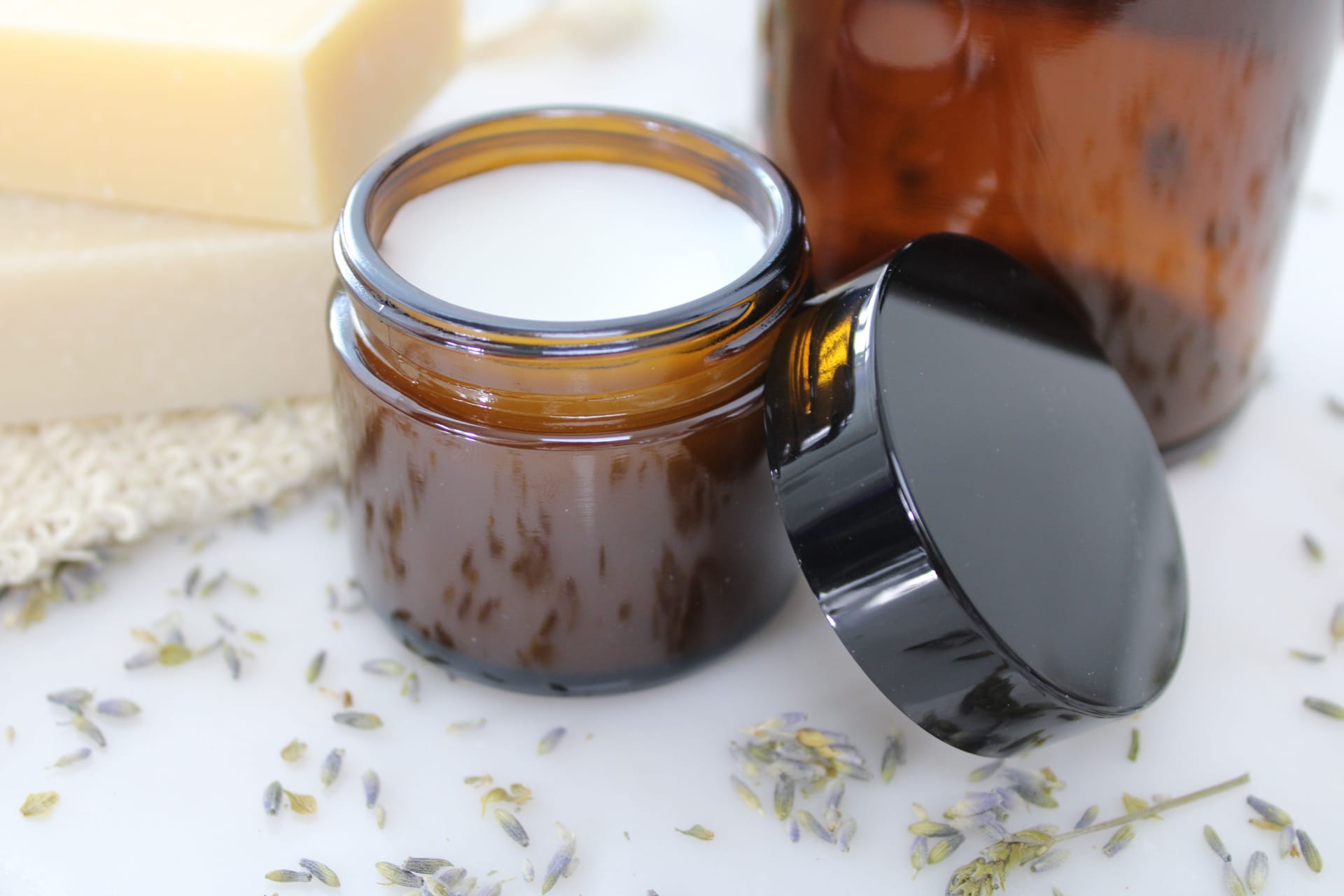
Pour into a clean jar or an empty deodorant tube. Leave at room temperature to set, or pop it in the fridge for 20 minutes to firm up faster. Label it with the date. It will keep for a few months.
For a bicarb-free version, aimed at anyone whose skin reacts to bicarbonate of soda, simply leave the bicarb out and instead use about 15 g (1 tbsp) magnesium hydroxide powder plus a generous 24 g (3 tbsp) arrowroot, with the same 45 g of base. It sets a little softer and is noticeably gentler, while still handling odour well. Many people who gave up on natural deodorant because of a rash get on fine with this one.
The "armpit detox": an adjustment, not a real detox
If you have used an antiperspirant for years and stop, your own smell may seem stronger or just different for a couple of weeks. Online this gets called an armpit detox, which makes it sound as though your body is purging trapped toxins. It is not.
What is really happening is more mundane and more reassuring. With the sweat ducts no longer being plugged, the community of bacteria on your skin resettles into a new normal, and that transition can be a bit whiffy while it finds its balance. For most people it settles within two to four weeks. Wash daily, let your new deodorant do its work, reapply when you need to, and give it time. You do not need a special detox mask or clay treatment to get through it, whatever the marketing says. Patience is the active ingredient.
Applying and reapplying
A little goes a long way. Warm a pea-sized amount between clean fingers so it softens, then smooth a thin layer onto clean, dry skin. Let it absorb for a moment before you dress, as the oils can mark clothing if you rush.
Because a natural deodorant works on odour rather than sweat, topping up through the day is normal and expected, not a failure. Keep your tin in your bag and reapply after exercise, in hot weather or whenever you feel you need a refresh. Avoid applying straight after shaving, when skin is at its most reactive; give it an hour or wait until the next day. And if you find one recipe is not quite holding up for you, try nudging up the magnesium or bicarb slightly, or reaching for the tin a little more often.
Staying safe, and the rule about selling it
For personal use, homemade natural deodorant is low-risk as long as you patch test, keep essential oils well diluted and stop if your skin reacts. Essential oils deserve particular care: keep them to around one per cent of the mix, and if you are pregnant, breastfeeding or making a deodorant for a child, either leave them out or check which oils are advised against first. Keep the finished product, and your raw materials, away from young children and pets.
None of this should put you off making a jar for your own bathroom shelf. It is a genuinely satisfying, cheap and low-waste thing to make, and once your expectations are set to "fresh, not dry", most people find they get on with it far better than they feared.
This guide is general information, not medical advice, and it does not replace guidance from your GP or pharmacist. The health points about aluminium, cancer and Alzheimer's disease are drawn from Cancer Research UK, the NHS and Alzheimer's Research UK; if you have a specific concern about your own health, speak to a healthcare professional. Guidance and the cosmetics rules can change, so check the linked sources for the current position. Last checked July 2026.
Frequently asked questions
Sources
- Do cosmetics cause cancer? (deodorants, antiperspirants and body sprays) , Cancer Research UK
- Use of Antiperspirant Products and Risk of Breast Cancer: A Meta-Analysis of Case-Control Studies , PubMed (National Library of Medicine)
- Alzheimer's disease - Causes , NHS
- Aluminium and Alzheimer's: An unproven link , Alzheimer's Research UK
- Making cosmetic products available to consumers in Great Britain (Responsible Person and safety report) , Office for Product Safety and Standards (GOV.UK)
Kit for this job (Ad)

Essential Oils by Pure Aroma 100% Pure Therapeutic Grade Oils kit- Top 6 Aromatherapy Oils Gift Set-6 Pack, 10ML(Eucalyptus, Lavender, Lemon Grass, Orange, Peppermint, Tea Tree)
Check price on Amazon →
Native Deodorant Womens & Men – Alcohol & Aluminium Free - Coconut & Vanilla Scent - Naturally Derived with Shea Butter, Coconut Oil & Baking Soda - 72 Hour Odor Control (75g)
Check price on Amazon →
Salt of the Earth - Natural Deodorant Roll On - Lavender & Vanilla - 100% Natural Origin Ingredients - Vegan -Suitable for Men, Women & Kids - 75ml
Check price on Amazon →
MAYJAM Peppermint Essential Oils 100ML, Peppermint Oil for Diffuser, Humidifier, DIY, Home, Office
Check price on Amazon →We may earn a small commission, at no cost to you. We only list kit we'd use.
Written by
UK Homesteading Team
Editorial team
The UK Homesteading editorial team, offering UK-specific, evidence-led guidance on growing, keeping, preserving and the law.