Laundry stripping is one of those cleaning trends that went round social media because the results look so satisfying: a bath of clean-looking towels, a few hours in hot water, and a tub of grimy brown liquid at the end. It is genuinely useful in the right situation. It is also widely misunderstood, so this guide covers what it actually does, how to do it safely with UK ingredients, and, just as importantly, why you probably should not make a habit of it.
What laundry stripping actually is
Every time you wash, a little of what goes into the machine can stay behind in the fabric. Detergent that was over-dosed or never fully rinsed, fabric conditioner that coats the fibres, natural oils from your skin, and in hard-water areas a steady deposit of minerals all build up over months. You notice it when towels stop feeling absorbent, whites start to grey, and bedding smells faintly musty even straight out of the wash.
Laundry stripping tackles that build-up by soaking the items in very hot water with a few washing agents for several hours. The heat and the soak loosen the residue and release it into the water, which is why the water turns grey or brown. You then run everything through a normal wash to rinse it all away. It is a reset for accumulated residue, not a substitute for ordinary washing.
What it suits, and what to keep well away
Stripping is harsh, so it only suits robust, colourfast items. Good candidates are white and light-coloured cotton towels, bed sheets and pillowcases, cloth nappies, and hard-wearing cotton gym kit that a normal wash struggles to freshen.
What to avoid matters just as much:
- Delicates: wool, silk, cashmere and lace can be ruined by water this hot and a soak this harsh.
- Anything with elastane or a technical finish: sports leggings, sports bras, swimwear and waterproofs. The stretch fibres and coatings do not survive stripping, so most stretchy activewear is off the list even though it holds onto sweat.
- Anything not colourfast: brights and darks can bleed. If you must strip a colour, keep it well away from whites so nothing picks up stray dye.
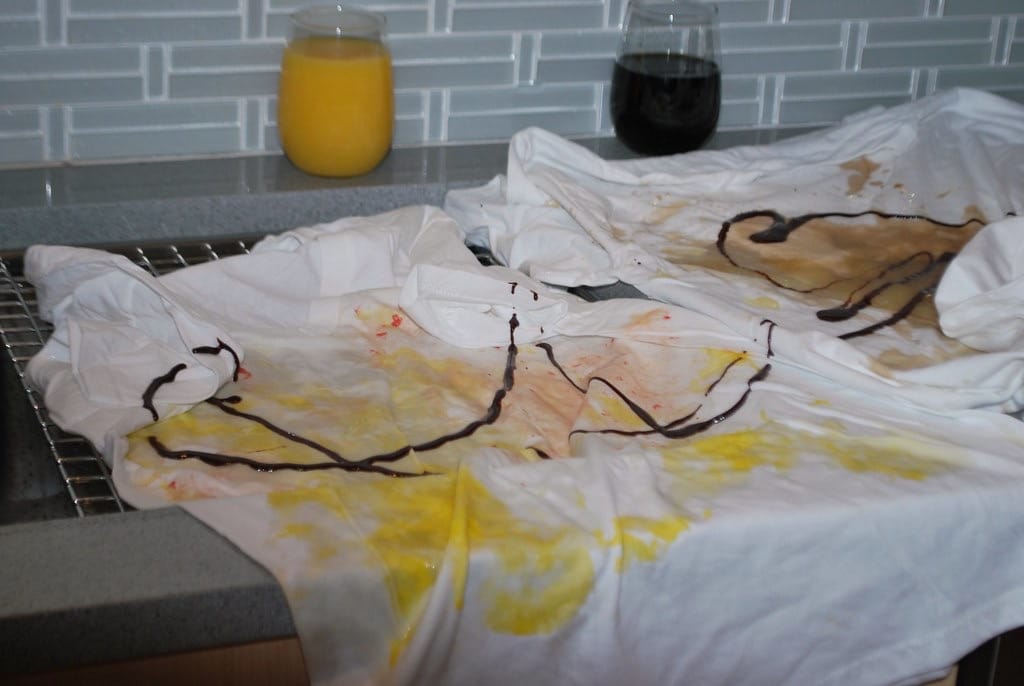
- Genuinely dirty or stained items: stripping is for residue, not mud, food or a drink spill. Those are jobs for proper stain removal and a good wash, not a residue soak.
Always check the care label first. If it asks for a cool or warm wash, the item will not tolerate the hot water stripping needs.
The UK ingredients (and the borax question)
Most recipes you will find online are American and call for borax. In the UK you cannot follow them as written, because proper borax is not sold to consumers here thanks to a GB and EU restriction on the raw chemical. That is not a problem: a borax substitute (usually sodium sesquicarbonate) does the same job in this recipe, and you can leave it out entirely if you prefer, since most of the work is done by the soda crystals and the hot soak.
For a UK strip you want three things:
- Soda crystals (washing soda, sodium carbonate). The workhorse. Soda crystals soften the water and cut grease, which is exactly what loosens the residue. They are a longstanding British laundry staple. There is more on them in our guide to soda crystals and what they are good for.
- A borax substitute (optional). A mild booster with a slight whitening effect. Buy a borax substitute, not borax.
- A scoop of powdered laundry detergent. Powder dissolves faster than liquid for this. A non-biological powder is a gentler choice if you like.
Make sure nothing you use contains added fabric conditioner or softener, since that is one of the residues you are trying to remove.
How to strip laundry, step by step
Laundry stripping method
- 1
Wash the items first
Counter-intuitive, but you strip already-clean laundry. Run the items through a normal wash so you are removing residue, not everyday dirt.
- 2
Fill a bath or big tub with the hottest safe water
A bathtub is the usual choice for towels and sheets; a large basin or bucket works for smaller loads. Use the hottest water you can safely handle and put your gloves on before you go near it.
- 3
Add the washing agents
For a full bath, stir in roughly 4 tablespoons (about 60 g) soda crystals, 4 tablespoons of borax substitute (or leave it out), and a couple of scoops of powdered detergent (about 120 g). Scale it down for a basin. The traditional ratio is one part soda crystals to one part borax substitute to two parts detergent.
- 4
Stir until fully dissolved
Mix well so there are no undissolved crystals sitting at the bottom, which could otherwise mark the fabric.
- 5
Submerge the clean items and soak
Push everything under so nothing floats clear of the water. Leave it to soak for about 4 to 6 hours, until the water has cooled, stirring and pushing the items down every hour or so to help the residue release.
- 6
Drain, then rinse in the machine
The water will look grubby. Drain it, wring the items out, and run them through a full wash cycle with no detergent and no fabric conditioner, purely to rinse. Then dry as usual, ideally on the line.
- 7
Clean the bath
Give the bath or tub a good clean afterwards, because it will be left with a film of the residue you just removed.
The honest truth: why the water is brown, and why you should rarely do this
The brown water is the whole appeal, so it is worth being straight about it. Most of that colour genuinely is residue leaving the fabric, and hard-water households tend to see the most dramatic results. But part of the colour is simply dye bleeding from the fabric in the very hot water, which is exactly why you only strip colourfast items and keep colours away from whites. So the grimy tub is partly dirt and partly the fabric giving up a little of itself.
Here is the part the satisfying videos leave out. Laundry stripping treats a symptom, not the cause. That build-up almost always comes from one of a few everyday habits, and fixing those is the real answer:
- Over-dosing detergent. More does not mean cleaner. Excess detergent does not rinse away and slowly coats the fabric. Follow the dose on the pack for your load size and water hardness. If you want to move to a gentler, lower-residue routine, see our guide to natural laundry detergents.
- Too much fabric conditioner. Conditioner works by leaving a coating on the fibres, and on towels that coating kills absorbency and traps odour. Use less, or switch to a fabric conditioner alternative such as a splash of white vinegar in the drawer.
- Hard water. In hard-water areas minerals build up fastest of all. Adding a scoop of soda crystals to your normal wash softens the water, which both improves cleaning and lets you use less detergent, heading off the build-up before it starts.
- Overloading and under-rinsing. A stuffed drum cannot rinse properly, so residue stays put. Do not cram the machine, and run the occasional hot wash (60°C) on towels and bedding to keep oils and build-up in check.
Cleaning experts are refreshingly blunt about this. Good Housekeeping's cleaning director, asked whether laundry stripping is worth it, answered plainly that if you are washing correctly you should not need to strip your towels and sheets on a regular basis. So by all means do it once to rescue a set of tired, greying towels, especially if you are in a hard-water area without a softener. Just treat a spectacular tub of brown water as a nudge to change what you do every week, rather than a party trick to repeat every month.
Last checked July 2026. Laundry stripping is an occasional deep-clean, not a routine: if your laundry keeps needing it, adjust your everyday washing (dosing, fabric conditioner, water hardness and load size) first. Always follow the care label, and never mix cleaning products.
Frequently asked questions
Sources
- What is laundry stripping and how do you do it? , Good Homes Magazine
- Is laundry stripping worth your time? Our cleaning director shares her honest take , Good Housekeeping
- Laundry cleaning tips (soda crystals, borax substitute and water softening) , Dri-Pak
Kit for this job (Ad)

Baking Soda, Sodium Bicarbonate (1KG Bucket) UK MADE Pure Baking Soda for Cleaning, Cooking, Bath Bombs, Odours and Teeth Cleaning. Eco Friendly Bicarbonate of Soda.
Check price on Amazon →
D.P.WASH SODA CRYSTALS 1KG
Check price on Amazon →
Dri Pak Soda Crystal, 1kg (Pack of 3)
Check price on Amazon →
Dri-Pak Clean & Natural Bicarbonate of Soda 500g
Check price on Amazon →We may earn a small commission, at no cost to you. We only list kit we'd use.
Written by
UK Homesteading Team
Editorial team
The UK Homesteading editorial team, offering UK-specific, evidence-led guidance on growing, keeping, preserving and the law.