Real homemade lemonade, all sharp lemon and gentle sweetness, is one of the simplest and most rewarding drinks to make, and nothing like the clear fizzy stuff sold as lemonade in the UK. A handful of lemons makes a jugful.
The two small tricks that make it are dissolving the sugar into a syrup first, and steeping a little zest for depth. The recipe is below, with more on getting the balance right underneath it.
How to Make Lemonade: A Real UK Recipe
Makes About 1.5 litres (6 glasses)
Prep
15 min
Cook
5 min
Total
20 min
Makes
About 1.5 litres (6 glasses)
Ingredients
The lemons
The syrup
To finish
Method
- 1
Pare the zest from 3 of the lemons, taking only the yellow and none of the white pith, and drop it into a large heatproof jug or bowl.
- 2
Warm the sugar with the 250ml of water until it has fully dissolved into a clear syrup, then pour it hot over the zest.
- 3
Leave the zest to steep in the hot syrup for at least 15 to 20 minutes, or let it cool fully for more depth.
- 4
Squeeze the juice from all 6 lemons and stir it into the cooled syrup.
- 5
Strain out the zest through a sieve.
- 6
Top up with 1 to 1.25 litres of cold water, tasting as you go, until the sweet-and-sharp balance is right.
- 7
Chill, then serve over ice. For sparkling lemonade, pour the concentrate two-thirds full and top up with sparkling water.
Cook’s notes
- Still or sparkling: make one still concentrate and decide at the glass, cold water for still or sparkling water to fizz it up. Don't carbonate the whole batch.
- Pink lemonade: muddle or briefly simmer about 100g of raspberries or strawberries, sieve out the seeds, and stir the pink juice into the base.
- Every batch of lemons differs, so adjust to taste: a little more cooled syrup for a sharp batch, a squeeze more juice or a pinch of salt for a flat one.
- Keep it in a sealed jug or bottle in the fridge and drink within 3 to 4 days, giving it a stir as it settles.
- It freezes well, so pour the concentrate into ice-cube trays or tubs and freeze for up to 3 months; lemonade cubes also chill a glass without watering it down.
What you’ll need
- Vegetable peeler, for the zest
- Small pan
- Large heatproof jug or bowl
- Sieve
Troubleshooting
It's too sweet.
Add more fresh lemon juice, or dilute with more cold water. A tiny pinch of salt also lifts it.
It's too sharp.
Stir in a little extra cooled sugar syrup, never dry sugar, which won't dissolve.
It tastes bitter.
That's pith or over-steeped zest. Pare the zest thinner next time, taking only the yellow, and steep it for less time.
It's gritty at the bottom.
The sugar wasn't made into a syrup. Always dissolve it in warm water first.
It tastes weak and watery.
You've diluted it too far. Add more concentrate, or a fresh squeeze of lemon.
More about lemonade
Why a syrup, not spooned-in sugar. Sugar dissolves fully in warm water but only partly in cold, acidic juice. Pre-dissolving it into a syrup means every mouthful is evenly sweet, with no gritty crystals settling at the bottom.
Zest and juice do different jobs. The juice brings the sharp, sour acidity, while the zest holds the fragrant lemon oils that give aroma and depth. Use juice alone and it tastes thin and one-note; steep a little zest and you get rounded, real-lemon flavour. Only ever the yellow zest, as the white pith is bitter.
Balance is a ratio, not a fixed recipe. Good lemonade is the interplay of sour juice, sweet syrup and dilution. Because lemons vary in size and sharpness, the quantities are a starting point, and the final tasting adjustment is what really makes it.
Real lemonade versus shop fizzy. Traditional homemade lemonade is a still, or lightly sparkling, drink of real lemon juice, sugar and water, often cloudy from the natural pulp and zest oils. The clear fizzy 'lemonade' sold in the UK is a carbonated soft drink that often contains little actual lemon. Cloudy simply means the pulp and zest were left in rather than filtered out.
Frequently asked questions
Kit for this job (Ad)
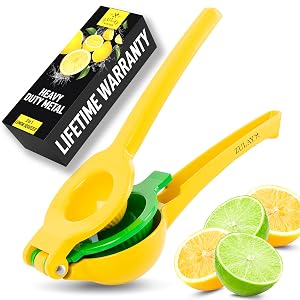
Zulay Kitchen Metal 2-In-1 Lemon Lime Squeezer - Hand Juicer Lemon Squeezer Gets Every Last Drop - Max Extraction Manual Citrus Juicer - Easy-to-Use Lemon Juicer Squeezer Lemon Squeezer Manual
Check price on Amazon →
Zulay Kitchen Cast Iron Juicer - Manual Citrus Press and Lemon Squeezer - Premium Quality Heavy Duty Manual Juicer for Orange Juice and Lime Squeezer, Black
Check price on Amazon →
Braun House Hold CJ3000 Electric Citrus Press, 350 ml Bowl with Scale, Adjustable Pulp Control, Automatic Start/Stop, Cable Storage - White
Check price on Amazon →
Delove Canning Funnel Set for Wide & Regular Mason Jars - Stainless Steel, 3 Pack (Small & Large)
Check price on Amazon →We may earn a small commission, at no cost to you. We only list kit we'd use.
Written by
UK Homesteading Team
Editorial team
The UK Homesteading editorial team, offering UK-specific, evidence-led guidance on growing, keeping, preserving and the law.